
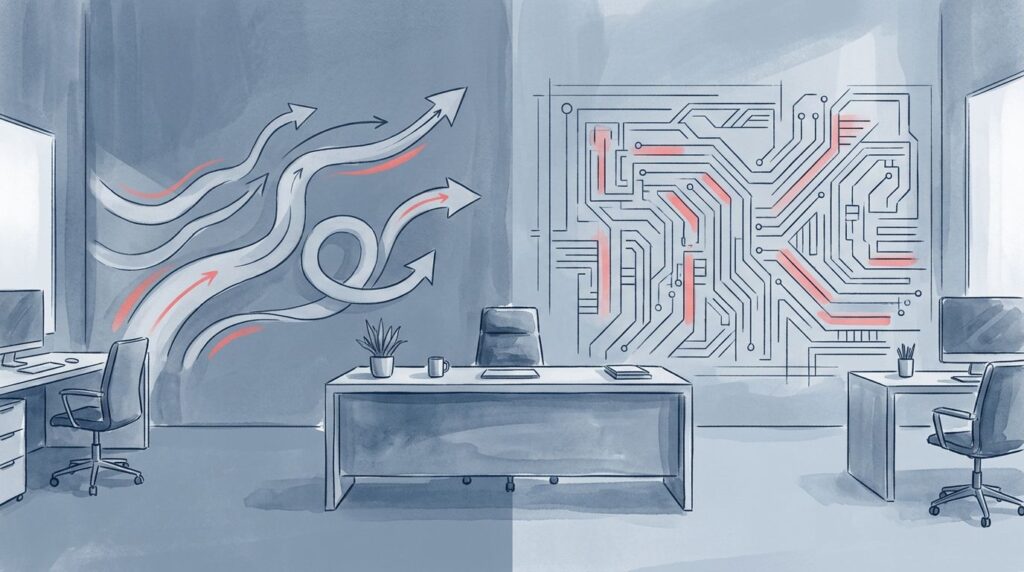
The wrong choice here usually costs you twice. You pay for the advice, then you pay again when nobody owns the decision after the meeting ends.
If you are a CEO or COO, especially a non-technical founder, the line between a fractional CTO and a technology consultant can feel blurry. In the fractional CTO vs technology consultant decision, one provides strategic guidance to help you lead through complexity. The other helps you solve a specific problem. If you pick the wrong one, you get motion without control.
This matters most when technology is no longer background noise. It is touching growth, risk, reporting, vendors, and board confidence. That is when you need the right kind of technical leadership, not just more tech talk.
Key takeaways for busy CEOs
- A fractional CTO gives you ongoing executive technology leadership with accountability for outcomes. A technology consultant gives you scoped advice or a project result.
- If you have a technical leadership gap, weak ownership, or board pressure, a fractional CTO usually fits better.
- If you need a technology audit, due diligence, or a narrow fix, a consultant may be the cleaner choice.
If you need a decision maker, hire leadership. If you need a deliverable, hire a consultant.
What each role is really for
The cleanest way to think about this is simple. A fractional CTO leads. A technology consultant advises.
| Factor | Fractional CTO | Technology Consultant |
|---|---|---|
| Core role | Part-time executive senior technology leader | Outside technical advisor for a defined problem |
| Accountability | Ongoing ownership of decisions and follow-through | Delivery of analysis, recommendations, or a scoped project |
| Best fit | Growth, transition, board reporting, vendor control, roadmap clarity | Technology audit, assessment, IT infrastructure, software development, platform review, or technical due diligence |
| Time horizon | Part-time, ongoing | Project-based, finite |
| Output | Strategy, operating rhythm, decision rights, board-ready reporting | Findings, options, and a report |
If you want to go deeper on the service model itself, fractional CTO services are built for companies that need senior judgment without a full-time hire.
You may also hear people call this an outsourced CTO, virtual CTO, or part-time CTO. In adjacent roles, the same logic applies to a fractional cio, fractional CISO, virtual CISO, or interim CISO. The label matters less than the work.
That is why Raconteur’s overview of fractional CTOs describes the fractional CTO role as a fit for growth companies that need senior technical leadership without the full-time cost.

When a fractional CTO fits your company
You usually need a fractional CTO when the business, particularly startups and scaleups, has outgrown informal technology leadership. That often means founder-led technology decisions, vendor-led decisions, or manager-led decisions are no longer enough.
This is the point where when to hire a fractional CTO stops being a theoretical question and starts being a leadership one. You need someone who can connect growth, execution, product development, risk, and spend.
A fractional CTO is also a strong fit when the board wants clearer answers, priorities keep drifting, or your team has good operators but no executive owner. That is the gap between effort and leadership. It is also why technical leadership matters more than another dashboard.
If the CTO left, a major initiative is slipping, or the company is in transition, an interim CTO may be the better answer. That is immediate control, not long-term advisory work.
The best CEOs use this model when they need a technology leader for growing companies who can create calm, make calls, keep the business moving, and excel at scaling engineering teams. They do not need more noise from a fractional CTO. They need a steady hand.
When a technology consultant makes more sense
A technology consultant is the better call when the problem is narrow and the scope is clear. You need analysis, a recommendation, or a specific fix. You do not need someone in the seat making ongoing executive calls. Unlike a tech agency that focuses on staff augmentation, consultants deliver targeted advice.
That can include a technology health check, technology audit, technology assessment, cybersecurity risk assessment, IT security assessment, technology due diligence, technical due diligence, vendor due diligence, software platform evaluation through a rigorous vetting process, technology vendor selection, or architecture decisions. In some cases, it is the right move for acquisition readiness, cybersecurity due diligence, or a CTO transition plan.
If you are staring at tool sprawl, shadow IT, technical debt, or an overloaded systems inventory, a consultant can help you sort the mess. If you still need someone to own the next decision, you are back in fractional CTO territory.
The cost question is not the real question
CEOs often ask about fractional cto cost first. That is understandable. It is also the wrong first question.
The better question is this, what are you paying for, and who is accountable after the meeting ends? A consultant may cost less up front. A fractional CTO may cost more. But the real issue is whether your business gets clearer decisions, better ownership, and less drag.
That is where technology spend optimization, technology ROI, tech spending ROI, IT cost optimization, and IT cost reduction come in. You are not buying hours. You are buying better outcomes, including digital transformation where fractional CTO leadership drives sustainable results.
The board angle matters too. You need technology governance, technology governance for CEOs, technology governance for boards, board technology reporting, board-ready technology reporting, and board-ready reporting that directors can trust. If cyber risk is part of the picture, that means board cybersecurity reporting, cyber risk reporting to the board, and a clear cyber risk appetite.
You also need technology risk oversight, technology risk management, a practical technology risk management framework, cybersecurity oversight with cybersecurity requirements, oversight of managed it services, third-party risk management, third-party risk reporting, vendor risk management, vendor management, vendor due diligence, vendor offboarding, and a vendor incident response plan.
The same goes for resilience. You want business continuity planning, disaster recovery planning, incident response readiness, ransomware readiness, and an executive incident response checklist before you need them.

How CEOs decide without overthinking it
Use a simple filter.
- Name the real problem.
Is this a leadership gap, a reporting gap, a vendor control issue, or a one-off project? - Name the owner.
Do you need someone who can make the calls with execution capacity, or someone who can hand you a report? - Match the engagement to the clock.
If you need ongoing fractional technology leadership, you want a fractional CTO. If you need scoped technology strategy consulting, you want a consultant.
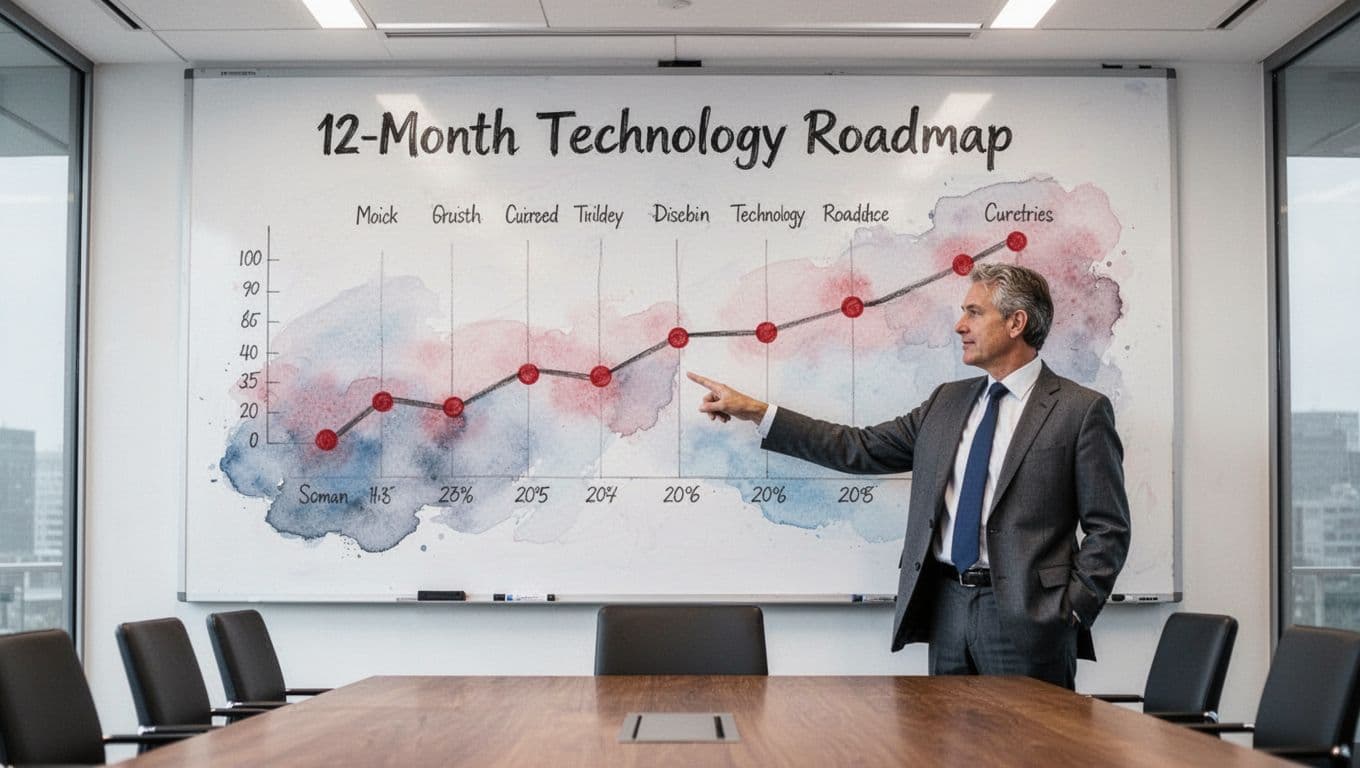
If you want a fast way to sort it out, start with a one-page technology strategy. That is often the cleanest path to a 12-month technology roadmap and a sharper decision rights map.
You can also Get an Executive Technology Clarity Check if your decisions feel scattered, risky, or too dependent on the wrong people, particularly when hands-on involvement is a factor.
This is also where AI governance, AI adoption strategy, AI transformation strategy, responsible AI, AI acceptable use policy, and AI vendor due diligence belong. If artificial intelligence is becoming part of the business, someone has to own the guardrails. That is fractional CTO leadership work, not tool shopping.
Conclusion
The fractional CTO vs technology consultant difference is not a small detail. It is the difference between ongoing leadership and a scoped answer to a specific problem.
If your business needs stronger visibility, clearer ownership, and better decisions across growth, risk, and execution, you are probably in fractional CTO territory. If you need a targeted assessment or a defined deliverable, a consultant may be enough. The job is to match the help to the problem, not the title to the trend. Choose the technical leadership that guides your business forward.
FAQ
Is a fractional CTO the same as a virtual CTO?
Usually, yes. You may also hear virtual CTO, outsourced CTO, or part-time CTO. The label changes. The real question is whether you need ongoing executive technical leadership that a fractional CTO provides or a project-based advisor.
Can a technology consultant replace a fractional CTO?
Not for long. A consultant can solve a defined issue, but they usually do not own the operating rhythm, board reporting, software development lifecycle management, or follow-through. If you still need someone to lead the technology agenda, you need a fractional CTO.
How can a fractional CTO help with fundraising support?
A fractional CTO strengthens your fundraising support by building investor-ready technical roadmaps, validating product strategy, and adding executive credibility to your pitch.
When should you move to a full-time CTO?
You make that move when technology is central enough to need a permanent executive every day. If you are still defining the roadmap, tightening governance, or closing a technology leadership gap, a fractional model often gives you more room to think before you hire.