
When you're upgrading your legal tech, an implementation partner acts as your guide, helping your organization navigate the entire modernization process. This isn't just about installing software. A genuine partner digs in to align new technology with your core mission, refines your team's daily workflows, and makes sure the systems you invest in actually produce tangible results for your staff, funders, and the communities you serve.
Key Takeaways for Leaders in Justice Organizations
- Focus on the Problem, Not the Platform: The best technology upgrades start by identifying a specific operational chokepoint, like chaotic grant reporting or broken referral handoffs, not by shopping for a new tool.
- Prioritize a Partner, Not a Vendor: A vendor sells software. A partner invests in your mission, understands your ecosystem, and provides the calm, seasoned guidance needed to manage change with an overworked staff.
- Build a Defensible Plan: A successful modernization path starts with quick, practical wins to reduce risk and free up staff time in the first few months, followed by a one- to three-year roadmap your board and funders can confidently support.
- Measure What Matters: Success isn’t a "go-live" date. It’s a measurable reduction in manual work, safer handling of sensitive client data, and clearer evidence of your impact.
Moving From Chaos to Clarity in Legal Tech

Does this sound familiar? A grant deadline is looming, and you're scrambling to pull data from a dozen disconnected spreadsheets. A critical referral gets dropped, leaving a vulnerable person without the support they need. Your staff is burning out, bogged down by manual workarounds and clunky tech that eats up hours better spent on high-impact work.
This isn't just a technology problem; it’s a systems and capacity crisis. As many justice-focused organizations grow, their operational infrastructure—often built on fragile, disconnected tools—struggles to keep up. The result is a constant, low-grade stress that directly undermines the critical work your frontline advocates are doing every day.
The Vendor vs. Partner Distinction
Finding the right help starts with a crucial distinction: are you looking for a vendor or a strategic partner? A vendor sells you a product. A partner, on the other hand, invests in the success of your mission.
They bring a seasoned, calming perspective, starting not with a sales pitch but by listening to understand how your team actually works. Their objective is to map out a realistic, phased journey from constant fire drills to a stable and predictable technology foundation. Your team doesn't need another password to forget; they need systems that tame the chaos, secure sensitive client data, and give you clear proof of your impact.
To get there, you need a partner who can help you build a solid, defensible plan. Understanding the difference in approach is the first step toward finding the right fit for your organization. The table below breaks down what separates a transactional relationship from a true partnership.
| Focus Area | Typical Vendor Approach | Strategic Partner Approach |
|---|---|---|
| Initial Engagement | Product demonstration and feature list. | Deep discovery of your mission, pain points, and workflows. |
| Core Goal | Close the sale and complete the installation. | Achieve your long-term operational and mission-based outcomes. |
| Expertise | Deep knowledge of their specific software. | Broad expertise in your sector's ecosystem, compliance, and change management. |
| Measurement of Success | System go-live and final payment. | Measurable ROI, staff adoption, and improved service delivery metrics. |
| Relationship | Transactional and project-based. | Long-term, advisory, and invested in your sustained success. |
A strategic partner doesn't just hand over the keys; they teach you how to drive and help you map out the road ahead.
What to Expect From This Guide
Think of this guide as a practical field memo for leaders who know they need to modernize but aren't sure where to begin. It's a playbook for finding, vetting, and working with a true implementation partner for legal tech upgrades—an advisor who respects your team, understands your world, and can confidently defend a modernization plan to your board and funders.
To truly move from chaos to clarity, it often pays to work with firms that offer specialized support for the legal sector, as they already understand the unique operational pressures you face.
Defining Your Objectives Before You Talk to Partners
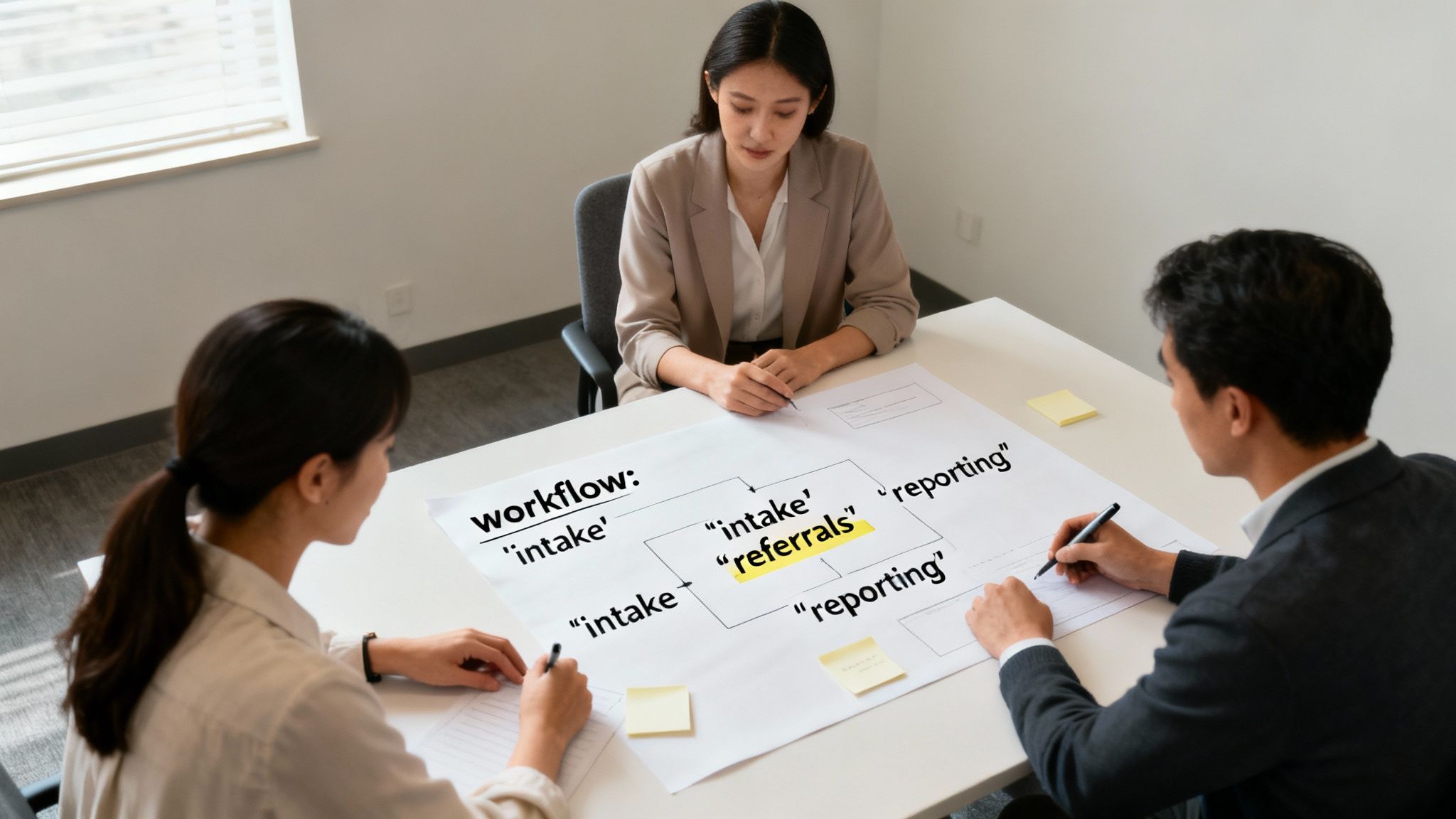
Before you talk to any implementation partner for legal tech upgrades, you must get crystal clear on the problem you're trying to solve. Too often, organizations jump straight to a solution—"We need a new case management system!"—without ever truly diagnosing what’s broken. That's a surefire way to end up with an expensive project that nobody uses because it doesn't solve the real problem.
The best place to start is by zeroing in on a real, tangible chokepoint in your workflow. Don't focus on shiny projects; focus on the friction. Is it the client intake process, where clunky forms and manual data entry create a massive bottleneck? Is it the referral handoff between teams, where information gets lost? Or maybe it's the grant reporting fire drill, where someone manually pieces together data from five different sources.
From Vague Frustration to a Clear Problem Statement
To get to the heart of the matter, you have to talk to the people on the front lines. This isn’t a task for a survey. It requires sitting down with your program managers, paralegals, and administrative staff to map out how work actually gets done—not how it’s supposed to look on a flowchart.
Get them talking with real, open-ended questions:
- "Walk me through the last time you had to prepare a funder report. Where did all the data come from?"
- "What are the top three things that cause a client referral to get delayed or dropped?"
- "If I gave you two extra hours in your day, what's the first manual task you'd get rid of?"
These conversations will reveal the hidden labor and duct-tape workarounds holding your processes together. You’ll likely discover the real pain isn't just one bad software tool, but a completely broken workflow that snakes across multiple systems and teams.
The global legal tech market is exploding and is on track to hit USD 35.6 billion by 2027. But a shiny new tool doesn't guarantee success. In fact, research shows that 54% of tech projects face user resistance. This is precisely where a good implementation partner can make or break your initiative, helping you navigate the change management that so many projects overlook. If you want to dive deeper, you can explore more insights on legal tech implementation and industry trends.
Identifying Your Top Operational Bottlenecks
Once you’ve gathered this on-the-ground intel, bring your leadership team together to connect the dots. The goal here is to identify the top three operational bottlenecks that, if fixed, would create the biggest positive ripple effect across your entire organization.
The key is to frame them as sharp, specific problem statements.
For example, turn this:
- "Our data is a mess."
Into this:
- "Inconsistent data entry across three spreadsheets requires 40 hours of manual cleanup each quarter to produce reliable grant reports, delaying submissions and putting our funding at risk."
Or turn this:
- "Referral handoffs are slow."
Into this:
- "Our manual referral process between the intake and program teams creates an average seven-day lag, leading to a 15% drop-off rate for clients who need urgent immigration support."
This diagnostic process forces you to move from general complaints to quantifiable problems. A strong problem statement gives a potential partner a clear target to aim for and provides a baseline for measuring success. It becomes the north star for your entire project.
How to Build a Smarter RFP and Evaluation Checklist

A generic Request for Proposal (RFP) will get you generic, tool-focused vendors. If you want a real strategic partner who gets the high stakes of your work, your RFP has to go much deeper than technical specs. It needs to test for mission alignment, ecosystem fluency, and a genuine commitment to building your organization's capacity for the long haul.
Forget the standard checklist of software features. Think of your RFP as a field memo describing the real-world operational chokepoints you uncovered during discovery. Frame your needs around the actual experience of your clients and staff. This approach quickly weeds out partners who just want to sell you a platform and elevates those who can co-design a solution that truly works.
Beyond Technical Specs: The Questions That Really Matter
Your RFP must ask questions that reveal a potential partner's methodology and mindset. Their answers will tell you everything you need to know about whether they see themselves as a temporary installer or a long-term advisor.
Include prompts that test their understanding of the unique pressures within the justice sector.
- Change Management: "Our staff is already at capacity. Describe your approach to implementing a new system that minimizes disruption and builds buy-in from overworked, mission-driven professionals."
- Data Governance & Privacy: "We handle highly sensitive client information, including immigration status and histories of incarceration. Detail your process for implementing privacy-by-design principles and ensuring data governance that protects vulnerable populations."
- Ecosystem Knowledge: "Our work involves complex referral handoffs with courts, government agencies, and other nonprofits. Provide an example of how you’ve mapped and improved a workflow that crosses organizational boundaries."
These aren't trick questions. They force potential partners to move beyond canned responses and show you their real-world experience. You aren't just buying a tool; you're hiring a senior guide. Their answers should feel like they come from a calm, seasoned leader who has navigated these exact challenges before.
A strong RFP doesn't just ask what a partner can do; it asks how they think. It should be a test of their ability to provide calm, seasoned leadership, not just technical execution.
Structuring Your Evaluation for a Defensible Decision
Once proposals arrive, you need a structured way to evaluate them that goes beyond a gut feeling. A weighted evaluation scorecard is an essential tool for making a clear, defensible decision that your board and funders can stand behind, turning a subjective choice into an objective analysis.
Your scorecard should prioritize the qualities that matter most for a long-term partnership. While technical competence is table stakes, it shouldn't be the primary factor. For a deeper dive, our guide on technology vendor selection for justice organizations provides a comprehensive look at what to prioritize.
Here’s a sample structure to get you started:
| Category (Weight) | Evaluation Criteria |
|---|---|
| Mission & Ecosystem Alignment (40%) | Demonstrates a deep understanding of justice sector workflows, funding cycles, and the unique pressures on staff and clients. |
| Change Management & Adoption Strategy (30%) | Provides a realistic, empathetic plan for training, user support, and building momentum through quick, practical wins. |
| Technical & Project Management Approach (20%) | Outlines a clear, phased implementation plan with defined milestones, communication cadences, and risk mitigation strategies. |
| Cost & Long-Term Value (10%) | Presents a transparent pricing model that aligns with nonprofit budgets and shows a commitment to building your internal capacity over time. |
This weighted approach ensures you prioritize a partner’s ability to navigate the human side of change—which is where technology projects most often succeed or fail. It deliberately values their understanding of your world over a flashy product demo, helping you find an implementation partner for legal tech upgrades who is truly built to last.
Digging Deeper: How to Vet a Partner and Uncover Their True Expertise
Choosing an implementation partner is one of the most critical decisions you'll make. This choice will ripple through your organization for years, affecting everything from your team's day-to-day morale to your long-term effectiveness. This is the stage where you must look past the slick sales presentation and get under the hood of how a potential partner operates.
What you're really looking for isn't just a software expert. You need a calm, seasoned advisor who can guide you through the inevitable bumps in the road. Their ability to think strategically is far more valuable than their familiarity with any single platform.
Asking Questions That Reveal Strategic Thinking
A great partner doesn't just execute a plan; they think like a member of your leadership team, always connecting the technical nuts and bolts back to your core mission. They're the ones who can navigate difficult conversations, proactively manage risk, and build a roadmap that your staff and board can actually get behind.
To find that person, you have to move beyond generic questions like, "Do you have experience with legal aid?" Instead, throw them curveballs with real-world scenarios that reflect the pressures your team actually faces.
- "Picture this: we just landed an unexpected grant, but it comes with brand-new reporting requirements due in 60 days. How would you help us adapt our current implementation plan to hit that deadline without blowing up the whole project?"
- "Our attorneys are already maxed out and deeply skeptical of new technology. Tell me about a time you faced serious user resistance. What specific things did you do to get them on board?"
- "We have two department heads who are at odds over a critical client intake workflow. What’s your process for breaking that stalemate in a way that puts client needs first, not internal politics?"
Listen carefully to their answers. You're not looking for a quick technical fix. A great partner will talk about listening first, clarifying who gets to make the final call, and grounding the decision in measurable outcomes. Their response should feel calm and structured.
Gauging Their Grasp of Risk and the Broader Tech Ecosystem
Your organization doesn't operate in a vacuum. You have serious obligations to funders, regulators, and the communities you serve. A partner's approach to risk has to be rock-solid, and that goes way beyond basic cybersecurity. It's about data governance, vendor stability, and ethical responsibility. A thorough vendor risk management assessment isn't just a box to check; it’s essential for protecting your organization from future headaches.
The best partners don’t just build systems; they build resilience. They anticipate points of failure—a broken handoff, a data privacy concern, a sudden shift in funding—and design processes that can withstand the inevitable pressures of justice work.
The tech landscape is also shifting under our feet. A staggering 79% of legal professionals now use AI tools. Yet, only 40% are using solutions built specifically for the legal field, which signals a huge gap in strategic thinking. With 82% planning to ramp up their AI usage, you need a partner who can be a thoughtful guide, not just a cheerleader for the latest trend. If you want to grasp the urgency, you can discover more insights about these legal tech trends.
What to Ask Their References
When you get to the reference check stage, don't waste the opportunity with softball questions like, "Did you have a good experience?" This is your chance to get the unvarnished truth about what it's really like to work with them.
Get specific and ask pointed questions that reveal their true working style:
- On Leadership: "Tell me about a time when the project went completely off the rails. What did the partner do to get it back on track?"
- On Capacity Building: "When the project was over, was your team truly equipped to own the new system? Or did you feel like you were left dependent on them for ongoing support?"
- On Mission Alignment: "Can you give me an example of when the partner pushed back on something you asked for because they felt it didn't serve your long-term goals? How did they handle that conversation?"
The answers to these questions will give you a much clearer picture. You're searching for evidence of a partner who is confident but humble, who navigates complexity with a steady hand, and who, at the end of the day, understands that their job is to make your organization better at serving its mission.
Structuring the Engagement for Lasting Impact

You’ve picked the right partner. That’s a huge milestone, but the real work starts now. A successful project isn’t built on a handshake—it’s built on a solid foundation of clear expectations, shared governance, and a timeline that everyone agrees is realistic.
Without this structure, even the best partnerships can get derailed by scope creep, missed deadlines, and a nagging feeling that you’re not making any real progress.
The goal here is to move from a signed contract to a successful launch and, just as importantly, to build up your own team’s skills along the way. This all begins by setting up a governance framework right out of the gate, defining who makes what decisions, how often you’ll communicate, and who’s responsible for what on both sides.
The 30-90-365 Day Plan for Building Momentum
While a multi-year roadmap has its place, your team and your board need to see and feel progress much sooner. This is where a 30-90-365 day plan comes in. It’s a powerful way to break down a massive project into smaller, manageable chunks, with each phase designed to deliver real value and build confidence.
-
The First 30 Days: Secure a Quick, Practical Win
This first month is all about building trust. Focus on a small, high-impact pilot that solves one of the key pain points you identified earlier. Maybe it's automating a single, time-consuming report or smoothing out a clunky step in your client intake process. You’re looking for a tangible victory that makes someone’s day-to-day work noticeably better and reduces risk. That’s how you create internal champions. -
The First 90 Days: Drive Adoption and Improve Data Quality
With an early win under your belt, the next three months are about getting people to actually use the new system—and use it correctly. This is where your partner’s change management expertise comes into play. We’re talking hands-on training, clear documentation, and establishing new habits for data governance. The milestone here isn't just flipping a switch; it's seeing your team consistently using the tool and trusting the data it produces. -
The First 365 Days: Demonstrate Measurable Mission Impact
By the one-year mark, you need to be able to draw a straight line from the tech upgrade to a meaningful outcome for your mission. It's time to move beyond anecdotes and into hard numbers. The goal is to walk into a board meeting and present clear evidence—based on the KPIs you set from the start—that this investment was absolutely worth it.
This phased approach is critical. It respects your team’s capacity for change and ensures that the project delivers compounding value over time, rather than demanding a massive, disruptive "big bang" launch that no one is ready for.
Defining KPIs That Actually Matter
To prove this project worked, you have to measure the right things. Forget vanity metrics. A great implementation partner for legal tech upgrades will push you to define key performance indicators (KPIs) that are directly tied to the operational headaches you wanted to solve in the first place.
For a justice-focused organization, meaningful KPIs could look like:
- Reduced Time on Manual Reporting: A 40% reduction in staff hours spent pulling together grant reports.
- Fewer Errors in Critical Workflows: A 25% decrease in data entry mistakes that slow down client referrals.
- Increased Program Capacity: The ability to serve 15% more clients with the same number of staff, because intake and case management are just that much smoother.
Mitigating Common Pitfalls Like Scope Creep
Even the best-laid plans can go sideways. Scope creep—that slow, insidious addition of "just one more thing"—is a notorious project killer. A seasoned partner knows this and builds guardrails in from the very beginning.
This means having a clear change control process. When a great new idea pops up mid-project, it doesn’t get casually tacked on. Instead, it’s documented, evaluated for its impact on the timeline and budget, and then consciously approved or deferred by the project leaders. This discipline keeps everyone focused on the original goals and prevents the project from becoming an endless wish list.
Since so many legal tech tools are SaaS-based, it’s smart to review established SaaS onboarding best practices. Making user adoption a core part of your strategy from day one will save you a lot of headaches down the road.
Answering the Tough Questions: FAQs for Justice Leaders
When you're considering a significant tech upgrade, the leadership team always has questions. Here are some of the most common ones we hear from leaders in the justice space and our straight-up answers.
How do we get the board to approve the budget for this?
Stop talking about it as another "tech cost" and start framing it as a "capacity multiplier." Honestly, the most powerful tool you have is demonstrating the real, quantifiable cost of inaction.
Calculate the hours your team is currently burning on manual data entry, pulling numbers for grant reports, or wrestling with clunky software. Then, translate that wasted time into the mission-focused work that isn't getting done.
Walk into that board meeting and say something like: "Right now, our team is spending about 80 hours every quarter just getting the data together for our grant reports. If we automate that, those 80 hours go back to supporting 15 more advocates in the field."
And don't forget to play the risk card—because it's real. A modern, well-implemented system is one of your best defenses against a data breach involving sensitive client information. That's a fiduciary responsibility every single board member understands and takes very seriously.
Our staff is already drowning. How can we possibly handle a major change right now?
This is a completely valid concern, and it's precisely why bringing in an experienced, empathetic implementation partner is so critical. A good partner's job isn't to pile more on your team's plate; it's to start taking things off it.
They should know better than to attempt a massive, "big bang" rollout. The smart approach is a phased one that respects your team's current workload. You start small. Pick a single, high-pain workflow and run a pilot project. Success there builds trust and, more importantly, creates internal champions who can vouch for the new way of doing things.
The message to your team can't be, "Here's more work for you." It has to be, "We're bringing in experts to get rid of the most frustrating parts of your job so you can focus on why you came to work here in the first place."
A true partner co-designs the change management plan with your people, not just for them.
Can’t our small internal IT team just handle this?
Your internal IT manager and a strategic implementation partner have two very different, but equally important, jobs. Your IT person is the hero who keeps the lights on day-to-day. They manage hardware, software licenses, and user support. You can't function without them.
An implementation partner, on the other hand, steps in as more of a fractional Chief Technology Officer (CTO). Their focus is entirely strategic. They're the ones connecting your organization's mission to the right systems and workflows. They answer the "why" and "how" questions—from vetting vendors and designing data governance policies to making sure the project actually delivers a measurable impact on your mission. They don't replace your IT team; they provide the senior strategic horsepower a project of this scale requires.
What's the biggest mistake organizations make when choosing a partner?
Hands down, the most common and costly mistake is picking a partner because they're an expert on a specific software platform, rather than an expert on your world. A vendor might know a tool inside and out, but if they don't grasp the nuances of legal aid intake, multi-funder grant reporting, or the complexities of court referral handoffs, they will inevitably try to bend your work to fit their tool.
This "tool-first" approach is a classic recipe for disaster. It leads to terrible staff adoption and, more often than not, a project that withers on the vine. The right partner starts with your mission. They learn your workflows first. Only then do they help you find and shape the technology to support that reality. Always prioritize a partner’s deep expertise in the justice ecosystem over their narrow knowledge of one piece of software.
At CTO Input, we serve as the trusted, senior technology and digital risk leader for justice-focused organizations. We don't sell software. We provide a calm, seasoned advisor who starts with your mission and helps you build a simple, believable modernization path. If you're ready to turn your systems from a source of stress into a backbone that reliably supports your advocates, let's start a conversation.