

In December 2025, court services organizations are carrying heavy demand with public consequences. People expect e-filing to work, remote hearings to connect, and self-help services to be available when they need them. There’s almost no tolerance for downtime, and no slack in the staffing model when something breaks in judicial administration.
An Interim Chief Information Officer for court services organizations is a short-term, senior technology leader who steps in to steady operations fast. Not to create a big “transformation,” but with focused strategic planning to stop outages, restore confidence in numbers, and make the intake-to-outcome chain move again. It’s a practical move when systems are shaky, staff are stretched, or leadership is in transition.
This post focuses on outcomes you can see within weeks: fewer outages, faster work, and no service gaps.

Key takeaways
- Track reliability in Court Technology Services with uptime, repeat incidents, and time to restore service (recovery time).
- Reduce ticket drag by cutting backlog and eliminating the top repeat requests.
- Improve throughput by shortening cycle time from intake to service completion.
- Prevent handoff failures by clarifying ownership across teams and vendors.
- Protect continuity by testing fallbacks and vendor escalation before the next incident.
When an interim CIO is the fastest way to stabilize court services tech

“Stabilize” is not a vague IT promise. In court-adjacent services, it means people can complete critical tasks without delays, rework, or panic. Intake doesn’t stall. Hearings don’t fail because audio drops. Password resets don’t eat a morning. Vendors don’t point fingers while the public waits.
It also means leaders can answer basic questions with confidence: What’s down? What’s at risk? Who owns the fix? When will it be resolved?
This is where an interim Chief Information Officer helps. The role sits high enough to make decisions, but close enough to operations to see what’s breaking. And it’s time-boxed, which forces focus, providing the Information Resource Manager oversight required for stability.
For broader context on why many justice organizations end up in this fragile state, it’s worth scanning the U.S. Courts: Action Needed to Improve IT Management and Establish a Chief Information Officer. Even large systems struggle without clear CIO-level ownership, despite examples of federal excellence like the Administrative Office of the U.S. Courts.
Red flags leaders can see without being technical
You don’t need to read logs to know you’re in trouble. These signs, often stemming from the absence of a solid Information Technology Strategy, show up in calendar stress and staff burnout, particularly in the State Judiciary contrasting federal standards:
- Outages happen during peak hours, or right before deadlines. Risk: missed filings, late reports, and public trust damage.
- Case intake feels slow and inconsistent. Risk: people give up, or eligibility decisions happen too late.
- Password resets and account access take days. Risk: staff work around controls, and security gets worse.
- Teams use spreadsheets to track critical work because “the system can’t.” Risk: handoff failures and numbers that don’t match.
- Ownership is unclear between vendors and internal staff due to weak IT Governance. Risk: issues bounce around until they become emergencies.
- Renewals surprise you, and contracts auto-renew before anyone reviews them. Risk: money gets locked into tools that don’t support service delivery.
- Reports change month to month, and definitions drift. Risk: funders and boards lose confidence, even when programs are strong.
In court services, the harm is rarely abstract. A broken handoff can mean a missed referral, a lost appointment, or a person showing up without what they need.
What an interim CIO does in the first 10 business days
The first 10 days aren’t about big rewrites. They’re about quick clarity and fast decisions.
A strong interim CIO typically delivers:
- Rapid discovery interviews with program, operations, IT, and key partners, focused on “where work breaks.”
- A simple service map of the intake-to-outcome workflow, including handoffs, approvals, and reporting.
- An inventory of critical IT Infrastructure, systems and vendors, including e-filing touchpoints, video hearing tools, case management, identity and access, and reporting.
- A basic security and access review (who has admin rights, where MFA is missing, how accounts are offboarded).
- A short, board-friendly stability plan with owners and dates (usually 10 to 15 actions, not 100).
If you want a reference point for court technology priorities, the federal judiciary’s Long Range Plan for Information Technology in the Federal Judiciary: Fiscal Year 2025 Update is a useful read for how reliability, security, and modernization show up together.
30 to 60 day playbook to improve reliability, throughput, and service continuity
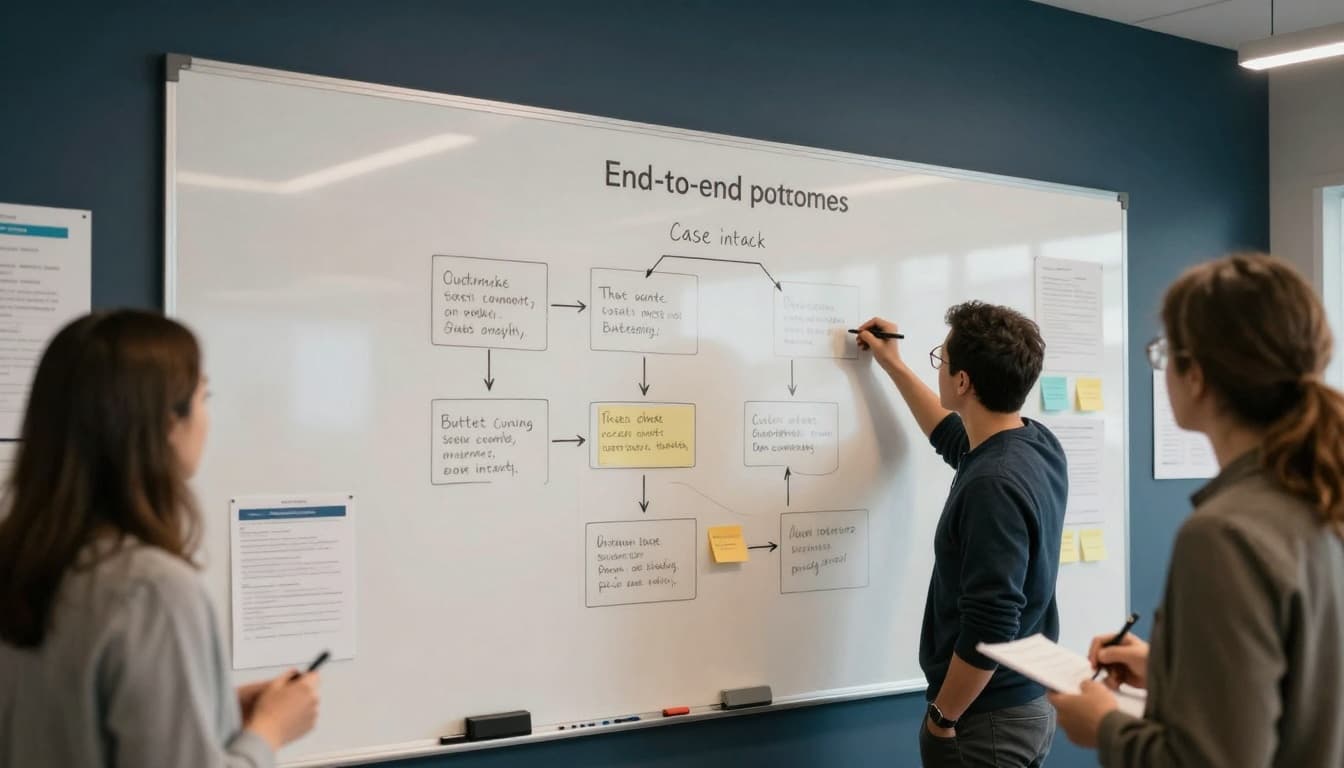
This window is where visible relief from IT Modernization and Digital Transformation should show up. Not perfection or a full system overhaul. Relief.
A practical target set for 30 to 60 days:
- Cut repeat incidents by 25 to 40%.
- Reduce ticket backlog by 20 to 30% (or freeze the growth and start trending down).
- Improve time to restore service (recovery time) by 30% for top incidents.
- Shorten intake-to-service cycle time by 10 to 20% in the highest-volume workflow.
Reliability first, stop the outages and recurring incidents
Reliability is your foundation. If the floor shakes, no one cares about new features.
Minimum baseline actions:
- Monitoring and alerting for the systems that matter, with clear thresholds for “slow” vs “down.”
- Incident roles (incident lead, comms lead, vendor lead), even if one person wears two hats.
- Light change control for high-risk systems (case management, identity, network, video hearing rooms), so fixes don’t create new outages.
- Patch and backup checks that are verified through Vendor Management and Budget and Spending Accountability, not assumed.
- A single system status source of truth so staff aren’t guessing in chat threads.
- Vendor escalation paths written down, with after-hours contacts when applicable.
Success looks like fewer “mystery slowdowns,” fewer repeat tickets, and a clear story when something fails. Many court-adjacent nonprofits face the same patterns; this overview of technology challenges legal nonprofits face is a helpful parallel.
Stop doing this: stop treating every incident as a one-off. If the same issue happens twice, it gets a root cause and a permanent owner.
Increase throughput by removing bottlenecks in the real workflow
Throughput is how fast work moves end to end, not how busy people look.
Start by mapping the real chain in your Case Tracking System: Intake, eligibility, scheduling, referrals, follow-ups, reporting. Focus on the top two bottlenecks and fix them first to boost Data Integrity. Common examples:
- Reduce no-shows with automated reminders and simple rescheduling options.
- Remove duplicate data entry by standardizing intake forms and pushing data into the system of record.
- Improve search and retrieval so staff aren’t hunting through shared drives.
- Add small integrations between case management, forms, and reporting, so handoffs don’t rely on copy and paste.
AI can help in narrow, governed ways: summarizing notes, transcription, translation, and redaction support. The reality in 2025 is that many organizations ban GenAI informally, then staff use it anyway on personal accounts. An interim CIO can set safe guardrails (approved tools, what data can’t be used, training, and audit habits) with Cybersecurity Skills so time savings don’t become a privacy incident.
Service continuity, plan for failure so services do not stop
Continuity is plain: what happens when a key system, vendor, or staff member isn’t available?
A simple continuity kit usually includes:
- Offline and manual fallbacks for intake and scheduling (with clear rules for later data entry that support Regulatory Compliance).
- Routine data exports from Cloud Solutions (so you’re not trapped in a vendor outage).
- Role-based access that avoids one “super admin” being the single point of failure.
- Short runbooks for the top incidents, written for real humans under stress.
- Tabletop drills twice a year, including vendor participation.
Cyber risk belongs here, because ransomware and account takeovers stop services as effectively as a power outage. If you need a structured way to pressure-test vendor readiness, use the vendor incident response plan maker to clarify steps and contacts before the next escalation call.
How to choose the right interim CIO and set them up to succeed
This hire succeeds or fails on fit and decision rights, not charisma.
Selection checklist, court services experience, security judgment, and calm execution
To bridge the IT Leadership Gap, look for someone who can:
- Run incident response without drama.
- Manage vendors with firm, respectful accountability.
- Set a workable data governance baseline (definitions, sources of truth, reporting cadence).
- Protect privacy and security with practical controls, not paperwork.
- Lead change with staff, not around them.
- Explain tradeoffs in plain language to executives, boards, and funders.
- Establish Portfolio Management and a Project Management Office.
Court services experience matters because integration and uptime are not “nice to have.” They’re mission mechanics.
Define success metrics and decision rights on day one
Avoid “advice only” engagements. On day one, agree on:
- 3 to 5 measurable goals (uptime, backlog, cycle time, recovery time, reporting reliability, IT Workforce Recruiting Strategy for transition hiring needs).
- Who has enterprise-wide authority to approve changes, such as ERP System Implementation, and what the emergency path is.
- A weekly operating cadence, aligning with the Office of Court Administration and other stakeholders, with a short written update.
For turning stabilization into an achievable plan, the technology roadmap for legal nonprofits is a good model for sequencing work without overloading staff.
Conclusion: fast stability, then steady ownership
An interim CIO can bring calm to Public Sector IT when court services technology feels like it’s always one outage away from breaking trust. The win isn’t a shiny rebuild. The win is clear ownership from a Chief Information Officer, fewer repeat incidents, faster intake-to-outcome flow, and continuity plans that work when tested.
FAQs
- How long does an interim CIO engagement last? Commonly 60 to 180 days, depending on stability and hiring needs.
- Will this replace our IT manager? No. It should support them, set direction, and remove escalation pressure, functioning like a Project Management Office.
- How do we measure reliability and throughput? Track uptime, repeat incidents, ticket backlog, cycle time, recovery time, and Budget and Spending Accountability.
- Can we improve continuity without buying new software? Often yes, by tightening roles, fallbacks, exports, and runbooks.
- How do we manage AI use safely? Approve specific tools, train staff, restrict sensitive data, and audit usage.
If intake, handoffs, and reporting feel like a daily scramble, take one step that doesn’t require a budget miracle: name the single chokepoint that causes the most rework, and assign a 30-day fix owner. Then schedule a call to map the real workflow and turn that fix into a repeatable playbook. Which chokepoint, if fixed, would unlock the most capacity and trust in the next quarter?