
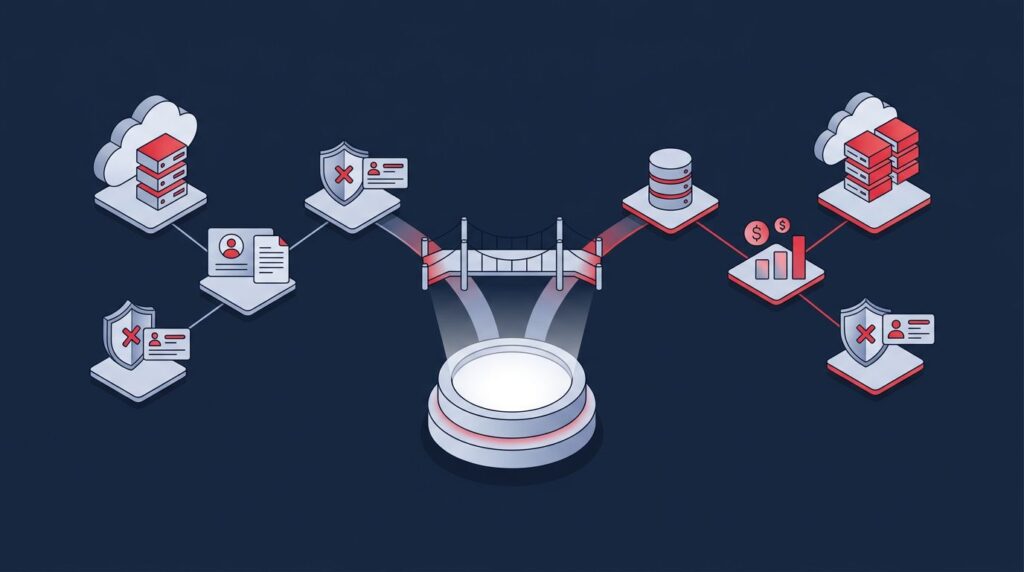
A business separation can look clean on an org chart and still fail in the systems your people depend on every day. Email, identity, finance, customer data, security tools, contracts, and vendor support are often more entangled than leadership realizes.
An IT carve-out is not a technical cleanup project. It is a business continuity effort with a deadline, legal obligations, and little room for wishful thinking. If you get it wrong, the new company may open its doors without reliable access to customers, cash, data, or the people needed to run the business.
The work starts by treating technology as part of the deal itself, not a task to hand off after closing.
Key Takeaways
- An IT separation needs a complete systems inventory, clear ownership, and a practical view of what is shared with the parent company.
- Day One stability matters more than a perfect target architecture. Keep the business operating first.
- Transition service agreements can buy time, but they are not a technology strategy or a substitute for accountable leadership.
- Shared identity, data, contracts, security controls, and vendor dependencies are common sources of hidden risk.
- Strong executive technology leadership keeps the carve-out tied to revenue, operations, risk, and the deal timeline.
Why an IT Carve-Out Is Harder Than It Looks
A corporate carve-out separates a business unit from its parent company, then asks it to operate as an independent company. That sounds straightforward until you ask a few basic questions.
Who owns the customer records? Who can reset employee access? Which systems support billing? Which cloud contracts are held by the parent? Where does the new company store regulated data? What happens if the parent turns off a shared service before the replacement is ready?
Those questions expose the real work.
Many businesses have grown inside a parent environment for years. They share Microsoft 365 tenants, ERP platforms, networks, HR systems, procurement teams, security operations, and vendor agreements. The carved-out business may have its own people and customers, but it often does not have independent control of the technology required to serve either.
That is why IT carve-out planning belongs in acquisition readiness and technology due diligence from the beginning. BCG’s analysis of technology challenges in carve-outs makes the same point: technology findings affect valuation, negotiations, and the ability to operate after close.
The biggest mistake is assuming the parent company’s systems can be copied, turned off, or replaced on a simple timeline. They rarely can.
A separation date does not create operational independence. Clear ownership, tested access, and working alternatives do.
You need an executive view of the situation. That means seeing the financial, operational, legal, customer, and cybersecurity consequences together. It also means refusing to confuse activity with progress. A long project plan is not proof that the business can run on Day One.
Build the IT Carve-Out Fact Base Before Choosing Solutions
Before you select a new ERP, move workloads, or announce a migration date, get the facts straight. You cannot separate what you cannot see.

Start with a systems inventory. List every material application, infrastructure component, data store, integration, contract, support process, and security control. For each item, establish:
- What business process it supports, such as order entry, payroll, customer service, product delivery, or financial close.
- Whether it is owned by the parent, the business being separated, or a third party.
- Who administers it, who pays for it, and who can approve changes.
- What data it contains, where that data flows, and what would break if access stopped.
- Whether the new company will retain, replace, duplicate, or retire it.
This is not paperwork for its own sake. It is the foundation of a credible technology assessment and a defensible separation plan.
A proper technology due diligence checklist begins with the same discipline. You need to know what is in use, who owns it, what it costs, and what fails when it disappears. Tool sprawl, shadow IT, undocumented integrations, and technical debt are not minor annoyances during a carve-out. They are schedule and cost risks.
Do not rely only on application owners. Finance may know about contracts that IT does not manage. Operations may use spreadsheets and local tools that never appear in the official architecture. Sales teams may depend on CRM exports, shared reporting, or parent-company data services. Legal may hold the agreements that decide whether a license can transfer at all.
A practical discovery process includes interviews with business leaders, finance, legal, HR, operations, security, internal IT, and key vendors. You are looking for the difference between the documented environment and the business people actually run.
Classify What Must Be Ready on Day One
Not every system needs a permanent replacement before closing. But every critical business capability needs a credible way to operate.
Use three categories:
| Category | What it means | Typical response |
|---|---|---|
| Day One critical | The business cannot operate safely without it | Build, migrate, or secure access before separation |
| Transition dependent | The business can rely on the parent temporarily | Cover it through a defined transition service agreement |
| Future-state item | It can wait without disrupting operations | Put it on the post-close technology roadmap |
This keeps leaders from spending months perfecting lower-priority systems while payroll, identity, billing, or customer operations remain exposed.
Your first goal is not a beautiful future-state diagram. Your goal is a business that can function without panic on the first day of independence.
Untangle Shared Systems, Data, and Vendor Contracts
The most difficult part of a carve-out is often not moving a system. It is separating the dependencies around it.
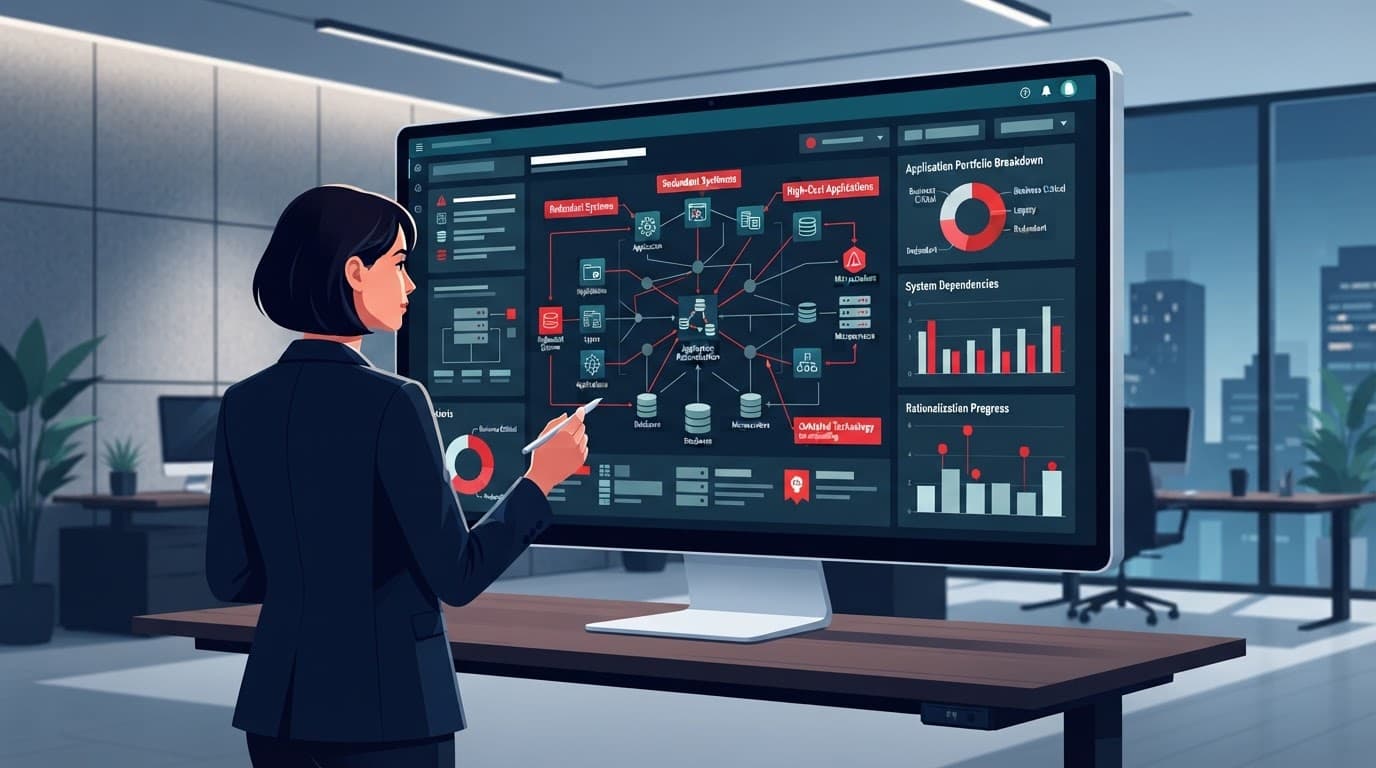
A parent company may run one ERP instance for multiple business units. It may hold enterprise agreements for cybersecurity software, cloud hosting, CRM licenses, telecom, insurance, and managed services. Its identity platform may control every employee’s access to email, files, applications, and privileged accounts.
You need a decision for each shared service. Will the new company stand up its own environment? Will it receive a copy of the relevant data? Can it stay on the parent’s platform under a transition service agreement? Does the contract allow assignment, novation, or a new tenant?
Do not assume a vendor will treat the new company as a continuation of the old one. Pricing, support, data residency, service levels, and contract terms may change. This is where vendor due diligence and vendor management become part of deal execution, not back-office administration.
Data separation needs the same level of care. Customer, employee, financial, product, and operational data may sit in shared databases or reporting environments. You must determine what the new company has a right to retain, what must remain with the parent, and how each party will protect information during extraction and transfer.
The issue is not only privacy. Data quality matters. If the business starts with incomplete customer histories, duplicate records, missing contracts, or broken integration logic, frontline teams will feel it immediately.
Carve-out and divestiture planning often calls out the need to establish the new company’s enterprise architecture and systems. That work should include a plain-language decision log. Each material dependency needs an owner, target date, budget, risk rating, and escalation path.
Identity and Access Need Their Own Workstream
Identity is usually the hidden backbone of the technology estate. Employees may use parent-company credentials for everything. Service accounts may be tied to parent domains. Administrators may have broad access that should not cross the separation boundary.
You need access control best practices built into the plan:
- Create independent identity and email domains early.
- Map privileged access, service accounts, shared administrator credentials, and emergency accounts.
- Remove inherited access after cutover, not months later.
- Test multi-factor authentication, password recovery, onboarding, and offboarding processes.
- Confirm that former parent-company personnel cannot access the new company’s data or systems.
Vendor offboarding matters here too. An outsourced IT provider that reports to the parent may still hold administrator access, backup credentials, network knowledge, and incident response contacts. Those relationships must be documented and reset.
Use Transition Services Agreements Without Becoming Dependent
A transition service agreement, often called a TSA, can keep the business operating while the new company builds independent capabilities. It may cover IT support, hosting, payroll systems, finance platforms, data services, security monitoring, or network access.
A TSA is useful. It is also temporary.
The risk begins when leadership treats the TSA as a solution rather than a clock. Every service should have a defined exit plan, named executive owner, cost, dependency map, and cutover criteria. If the TSA expires before the replacement is proven, you are not facing a technology inconvenience. You are facing a possible interruption to revenue, operations, or compliance.
Watch for terms that create false comfort. A parent may agree to provide a service, but not commit to specific service levels, response times, recovery obligations, or security responsibilities. If an outage occurs, who decides what gets restored first? If a cyber incident hits the shared environment, who leads the vendor incident response plan? If data is corrupted, which party owns the recovery decision?
These questions belong in technology risk management and legal review.
A useful TSA dashboard shows only what executives need to know:
- Services that have no credible exit plan
- Milestones at risk in the next 30, 60, and 90 days
- Costs that exceed the separation budget
- Security, privacy, or operational dependencies that remain shared
- Decisions blocked by vendors, contracts, or missing ownership
This is board-ready reporting. It gives leadership a real picture of where the business could be exposed, rather than a long technical status report full of green labels.
If a TSA covers core infrastructure or sensitive data, include it in cyber risk reporting to the board. The board should understand the remaining dependency, the date it ends, the contingency plan, and who is accountable.
Make Day One Boring, Then Build the Better Future State
The first day after separation should feel uneventful. Employees should sign in. Customers should receive service. Invoices should go out. Payments should process. Leaders should be able to see cash, operations, and material risk.
That requires rehearsal.

Create a Day One readiness plan that covers more than technology delivery. Test the operating model around the systems. Confirm who answers a customer escalation, who approves emergency spend, who talks to the vendor, who communicates to employees, and who has authority to accept temporary risk.
Your cutover plan should include:
- A clear sequence for migrations, access changes, data transfers, and communication.
- Go and no-go criteria that leadership understands.
- A business continuity plan for the services that cannot fail.
- Disaster recovery planning for critical systems, backups, and recovery objectives.
- Incident response readiness, including contacts, decision rights, and outside counsel where needed.
- A rollback plan for failed migrations or access disruptions.
Do not wait until close week to test backups, identity provisioning, integrations, payment workflows, or data extracts. A successful test is not proof that the business is ready. It is proof that one scenario worked under controlled conditions. Run through the failure cases too.
A 90-day technology plan should follow Day One. It should move the business from temporary dependencies to stable operations, then toward the business-aligned technology strategy needed for growth. That may involve application portfolio rationalization, technical debt management, data governance, or technology spend optimization.
Keep the roadmap short enough for executives to use. A one-page technology strategy and a 12-month technology roadmap are more useful than a large program deck that nobody can govern.
Put One Executive Owner Over the Whole Picture
IT separation fails when responsibility gets spread across too many capable people. Legal owns contracts. Finance owns the budget. IT owns systems. Operations owns business continuity. Security owns controls. The deal team owns the closing date.
Everyone owns a piece. Nobody owns the outcome.
You need an executive owner with authority to connect the pieces, challenge optimistic assumptions, and force decisions before the deadline becomes a crisis. This person needs to speak to the CEO, COO, CFO, board, internal teams, parent company, and vendors in plain business terms.
That is executive technology leadership.
Sometimes you have a full-time CTO or CIO who can take the role. In other cases, the business has a technology leadership gap at the worst possible time. You may need a fractional CTO, fractional CIO, or interim CTO to stabilize the work, establish a technology operating rhythm, and create stronger accountability.
A part-time CTO, virtual CTO, or outsourced CTO can fit when you need experienced leadership but do not need a permanent executive hire. Interim CTO services make more sense when the seat is open, trust has broken down, or the deal timeline leaves no room for a long search. If security is the central concern, a fractional CISO or interim CISO may need to own cybersecurity oversight alongside the separation.
The role is not to replace internal technical people. It is to make the decision rights map clear. Who recommends? Who approves? Who owns delivery? Who accepts risk when a deadline, budget, or control cannot all be met?
For a transaction, this level of discipline is part of acquisition technology due diligence. It helps you see whether systems, vendors, data, and teams can support the value expected from the deal.
If your separation plan still feels scattered across spreadsheets, vendors, and side conversations, Prepare Technology for Diligence or Transition before the closing date turns uncertainty into operational drag.
Questions Leaders Ask During an IT Carve-Out
How long does an IT carve-out take?
The timeline depends on the number of shared systems, data complexity, contract terms, regulatory obligations, and TSA length. Some essential capabilities can be established within months. Full separation of enterprise systems, data platforms, and infrastructure can take much longer. Start with the critical path, not a generic timeline.
What should the board see?
The board needs a board-ready risk summary. It should show Day One readiness, TSA exposure, material security and privacy risks, budget variance, critical vendor decisions, unresolved dependencies, and the executives accountable for each issue. It should not be a technical inventory.
Can you reduce technology costs during the separation?
Possibly, but do not promise savings you cannot trace to evidence. Separations often create duplicate costs before they create efficiencies. Track one-time implementation costs, TSA charges, new licenses, internal labor, and capitalized development separately. Technology ROI should connect to the financial story, not a hopeful estimate.
When should you bring in outside technology leadership?
Bring in support when no one has the time, authority, or cross-functional credibility to own the full picture. A focused review can clarify whether you need fractional CTO services, an interim CTO, stronger technology governance, or a narrower technical workstream. Get an Executive Technology Clarity Check when the critical issues are still unclear.
A Clean Separation Creates a Stronger Business
A successful IT carve-out does more than separate systems. It gives you clearer ownership, cleaner reporting, stronger control over vendors and data, and a technology roadmap that belongs to the new business.
The goal is not to recreate the parent company’s environment. It is to give your company what it needs to operate, protect customers, support growth, and make confident decisions.
When the work is led as a business separation with real technology accountability, Day One can be calm.