
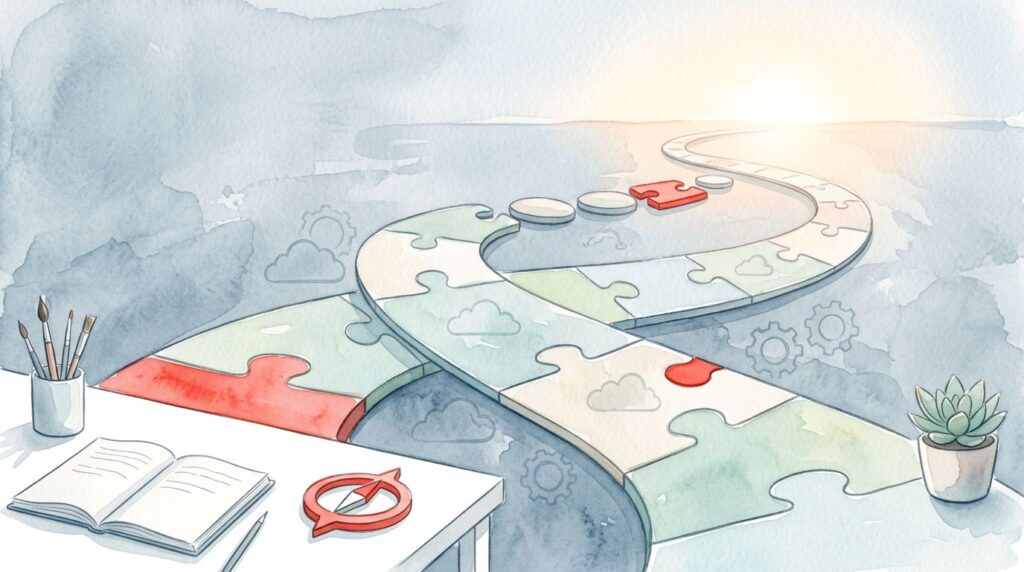
A big modernization plan looks tidy in a meeting. It falls apart fast once you ask who owns what, what changes first, and how much risk you can carry while the work is underway.
You do not need to swallow the whole thing at once. You need a smaller sequence of business decisions that your team can actually execute.
If your IT modernization plan feels too heavy to start, the fix is not more ambition. It is clearer cuts.
Key takeaways before you start
- Start with the business outcome, not the system list.
- Break the work into releases your team can defend.
- Put ownership, risk, and reporting in place before the plan starts drifting.
Start with the business outcome, not the platform list
Before you name a cloud move, an ERP replacement, or a security upgrade, name the business problem. Are you trying to reduce manual work, improve customer experience, lower risk, clean up reporting, or prepare for diligence?
If you cannot say that in one sentence, the plan is not ready yet.
This is where many CEO technology decisions go sideways. The team talks about tools before it agrees on what the business needs. That is how technology strategy turns into a pile of projects with no clear order. You get motion, but not progress.
A better move is to frame the work as business-aligned technology strategy. That means the plan is tied to growth, execution, resilience, and value. If you want a deeper starting point on that, a practical technology strategy helps you separate business priorities from technical noise.
You do not need a giant document either. A simple view of the outcome, the owners, and the constraint is enough to start. That is the first step in strategic technology planning, and it keeps you from solving the wrong problem very efficiently.
Break the work into releases, not one grand launch
A modernization program gets manageable when you stop treating it like one event. Think in releases. Think in business moves.
A simple way to do that is to sort the work into three buckets:
- Stabilize what can break the business now.
Fix the systems, access, and reporting issues that create immediate drag. That may mean a technology health check, a technology audit, or a plain technology assessment before you touch anything else. - Simplify what creates everyday friction.
Cut tool sprawl. Reduce shadow IT. Remove duplicate platforms. Work through technical debt management and application portfolio rationalization before you buy something new. - Modernize what still has room to grow.
Replace aging platforms, improve automation, and build the technology roadmap that supports the next stage of growth.
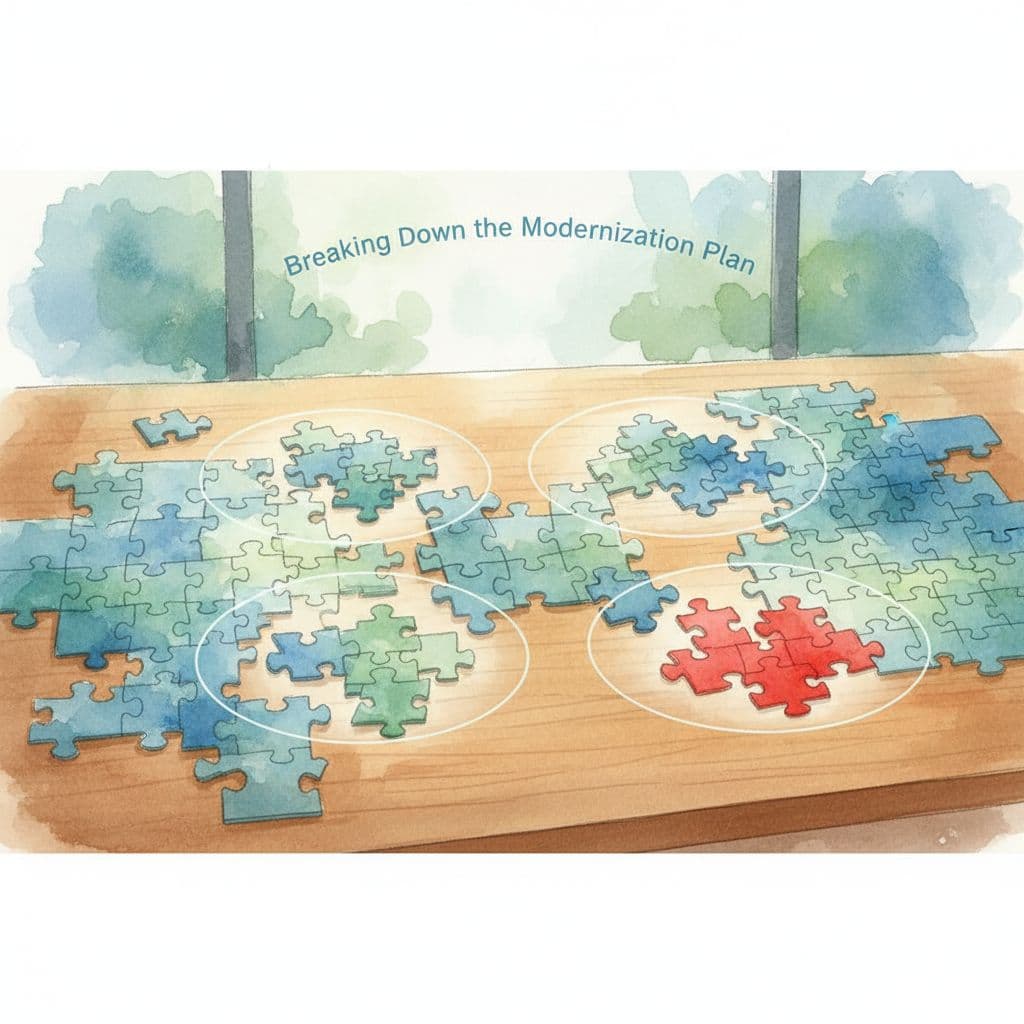
That kind of sequencing keeps the plan honest. It also helps you separate a software platform evaluation from a true business change. Not every bad system deserves a full replacement. Some need better configuration, stricter vendor management, or a shorter vendor due diligence process.
If a platform only exists because nobody has wanted to make the hard call, say that. Clarity beats optimism here.
Build a roadmap leaders can read in one sitting
Your first roadmap does not need to be fancy. It needs to be usable.
A one-page technology strategy is often enough to get started, especially if you are building a 12-month technology roadmap for a growing company. Keep the structure simple.
| Timeframe | What belongs there |
|---|---|
| Now | The few moves that reduce risk, remove bottlenecks, or stop waste |
| Next | The work that improves execution, data quality, or reporting |
| Later | Bigger replacements, integrations, and platform changes |
That is the difference between a roadmap and a wish list. A useful IT strategy and roadmap shows what happens first, what waits, and what is off the table for now.
It also gives you a better way to talk about technology spend optimization. Instead of defending every line item, you can explain cost-per-outcome reporting in plain language. What does each major move create? Faster turnaround, lower risk, cleaner reporting, or a better customer experience? If you cannot answer that, the work is probably too vague.
This is also where board-ready tech roadmap thinking starts. The board does not need a pile of technology dashboards. It needs a short view of priorities, tradeoffs, and timing. That is board-ready reporting, not decoration.
Put governance in place before the plan gets crowded out
A modernization plan without governance becomes a suggestion. Then the loudest issue wins.
You need a simple structure for technology governance, both for CEOs and for boards. That means clear decision rights, a visible owner for each workstream, and a steady technology operating rhythm. If nobody knows who decides, who advises, and who executes, the plan will drift.
Start with a decision rights map. Keep it short. Who owns priorities? Who owns spend? Who approves risk exceptions? Who signs off on changes that affect customers, operations, or compliance?
Then make the reporting fit the decision. Board technology reporting should not read like a status dump. It should answer what is on track, what is at risk, what changed, and what needs a decision. The same goes for board cybersecurity reporting and cyber risk reporting to the board. If the board cannot tell what the actual exposure is, the reporting is not working.
You should also name your cyber risk appetite instead of letting it hide in assumptions. If you want a better way to frame that discussion, business-aligned technology strategy is a useful lens because it forces the risk conversation back to the business.
Keep vendors, data, security, and AI in the same conversation
One reason modernization plans balloon is that leaders separate issues that should sit together.
Vendors, data, cyber, and AI all touch the same operating picture. If you treat them as separate workstreams, you miss the connections.
You need third-party risk management, vendor risk management, and vendor incident response planning before the plan leans on outside help. You also need a clean vendor offboarding process, because old contracts and forgotten tools can drain money and create risk long after they stop being useful.
Data deserves the same discipline. A real data strategy includes data quality, data privacy, and an information governance framework. Without that, your dashboards look polished while the underlying numbers stay untrustworthy.
Security work should travel with the modernization plan too. That means business continuity planning, disaster recovery planning, incident response readiness, ransomware readiness, and an executive incident response checklist. If you are heading into cyber insurance renewal, the plan should also reflect your cybersecurity risk assessment and IT security assessment.
And if AI is part of the future state, do not bolt it on later. Put AI governance, a basic AI acceptable use policy, and AI vendor due diligence into the same conversation now. If you are exploring where AI can create value, start with an AI opportunity assessment, not a pile of experiments.
If the modernization touches finance controls, data-heavy operations, or security, you may need a fractional CIO, a fractional CISO, a virtual CISO, or an interim CISO in the room as well. That is not overkill. It is a sign that the scope is real.
Know when the problem is leadership, not labor
Sometimes the plan is not failing because the team is weak. It is failing because the business has a technology leadership gap.
If no one is clearly owning technology priorities for growing companies, the work gets pushed into the cracks. That is when founder-led technology decisions stop working. It is also when a CEO or COO starts carrying more detail than they should.
This is where a fractional CTO, interim CTO, outsourced CTO, virtual CTO, or part-time CTO can make sense. The label matters less than the role. You need executive technology leadership that can sort priorities, align stakeholders, and keep the plan tied to business decisions.
That is where fractional CTO and interim CTO services fit best. They help when you need leadership before hiring the right full-time person, or when the work is too important to leave in a tactical lane.
The same logic applies if you are in transition, preparing for acquisition, or dealing with post-merger technology integration. You may need a CTO transition plan, technology due diligence, or cybersecurity due diligence before the next move becomes defensible.
FAQs
How small should the first modernization move be?
Small enough that you can finish it without disrupting the business. If the first step does not reduce risk, remove friction, or clarify ownership, it is probably too big or too vague.
Do you need a full-time CTO to run a modernization plan?
Not always. Many mid-market teams need technology leadership before hiring, then move later into a full-time role if the work justifies it. In a lot of cases, the real comparison is fractional CTO vs full-time CTO, or fractional CTO vs IT consultant.
What should you do first if you have no clear roadmap?
Start with a technology assessment, a systems inventory, and a decision rights map. Then turn that into a 90-day technology plan before you expand it into a longer roadmap.
Conclusion
You do not fix a large modernization effort by making it sound bigger. You fix it by making it smaller, clearer, and easier to govern.
When you start with the business outcome, break the work into releases, and give ownership a real structure, the plan stops feeling like fog. It becomes a set of moves you can explain, defend, and complete.
That is the point. Not more activity, but better control.