

The pace of technological change is accelerating, presenting leaders with unique challenges and powerful opportunities. Today, leadership in technology stands at the core of organizational success and resilience. As digital landscapes evolve, aligning people, processes, and technology becomes increasingly complex. Leaders must navigate this environment with clarity and purpose. This article serves as a practical guide for those seeking to future-proof their organizations through proven approaches. Discover nine essential leadership in technology strategies designed to help you thrive today.
The Evolving Role of Technology Leadership
The landscape of leadership in technology is undergoing a profound transformation. The demands on modern tech leaders have expanded, requiring a blend of strategic vision, adaptability, and a strong focus on inclusion. Organizations now expect technology leaders to drive business results while navigating complex digital environments.

The Shift from Technical Oversight to Strategic Vision
The traditional view of leadership in technology focused mainly on IT management and operational efficiency. Today, this role has evolved into a central driver of business growth and innovation. Modern technology leaders are expected to shape organizational strategy, not just support it.
To succeed, leaders must build strong relationships across departments, understanding both technical and business priorities. For example, companies like Netflix and Amazon have integrated their technology strategy deeply with business objectives, allowing for rapid innovation and market resilience.
Research shows that the number of technology executives joining boards has increased significantly, reflecting the growing influence of leadership in technology on overall corporate direction. For deeper insights into these evolving expectations, visit Technology Leadership Insights.
Navigating Uncertainty and Accelerating Change
The pace of technological advancement brings both opportunity and volatility. New tools, platforms, and digital disruptors emerge constantly, challenging organizations to stay ahead. Effective leadership in technology means fostering a culture of adaptability and continuous learning within tech teams.
Leaders should encourage experimentation and support upskilling to keep their teams agile. According to recent studies, over 70 percent of digital transformation projects face setbacks or fail, often due to resistance to change or lack of skills. By creating an environment that embraces learning and flexibility, technology leaders help their organizations thrive amid uncertainty.
Building a Culture of Innovation and Inclusion
A critical aspect of leadership in technology is building teams that value diversity and foster innovation. Inclusive leadership drives better decision-making and enhances creativity by bringing together varied perspectives.
Diverse technology teams are shown to outperform homogeneous groups, especially when tackling complex problems. Leaders can encourage experimentation by rewarding calculated risks and celebrating learning from failures. By prioritizing inclusivity, technology leaders unlock new ideas and create a more resilient, adaptable organization.
Aligning Technology with Business Outcomes
Aligning technology initiatives with clear business goals is essential for effective leadership in technology. Leaders must use frameworks to measure progress, track ROI, and communicate results to stakeholders in straightforward terms.
Popular approaches include balanced scorecards and value stream mapping, which help bridge the gap between technical investment and business impact. This alignment ensures technology drives measurable business success.
Visit https://www.ctoinput.com to learn more and connect with a member of the CTO Input team.
Spend a few minutes exploring more expert insights on the CTO Input blog at https://blog.ctoinput.com.
9 Essential Leadership in Technology Strategies
To thrive in the market we live in today, leaders must adopt a dynamic approach to leadership in technology. The following nine strategies provide a practical roadmap for aligning technology with business goals, fostering innovation, and driving measurable outcomes.

1. Prioritize Strategic Technology Alignment
Effective leadership in technology begins with aligning IT initiatives to core business objectives. Leaders must ensure every technology investment supports strategic priorities, not just operational needs.
Start by regularly engaging with stakeholders to understand shifting business targets. Map technology roadmaps to these goals. Use frameworks like OKRs (Objectives and Key Results) to create transparency and accountability.
Examples abound of organizations that improved performance by bridging gaps between executive vision and IT execution. For a deeper dive into proven methods, explore the Strategic Technology Leadership Guide.
2. Foster Agile and Adaptive Teams
The pace of change demands agility. Leadership in technology requires building teams that embrace iterative workflows and adapt quickly to disruption.
Adopt agile methodologies such as Scrum or Kanban. Encourage a growth mindset, where learning from failure is valued. According to industry data, agile adoption leads to faster delivery, higher quality, and improved employee morale.
Consider these best practices:
- Hold regular retrospectives to refine processes.
- Empower teams to make decisions quickly.
- Invest in cross-functional training.
Agile teams are more resilient, ready to pivot as business needs evolve.
3. Champion Cybersecurity and Risk Management
In 2025, leadership in technology will be defined by proactive cybersecurity. The threat landscape is expanding, with new regulations adding complexity.
Embed security into your organization’s culture. Regular training, robust access controls, and continuous monitoring are essential. Data breaches can cost millions and harm reputation, while compliance failures may bring legal consequences.
Best practices include:
- Conducting regular risk assessments.
- Implementing least-privilege access.
- Establishing clear incident response plans.
Leaders must set the tone, making cybersecurity a shared responsibility across all levels.
4. Leverage Data-Driven Decision Making
Leadership in technology requires harnessing data as a strategic asset. Data literacy should extend from the C-suite to every team.
Democratize data access with user-friendly analytics platforms. Encourage evidence-based decisions by integrating data into daily workflows. Organizations that excel in analytics consistently outperform their peers.
Key actions:
- Provide training on data interpretation.
- Set up dashboards for real-time insights.
- Reward teams for using data to solve problems.
Transformative results come from making data central to every decision.
5. Invest in Continuous Learning and Upskilling
The rapid evolution of technology makes continuous learning a cornerstone of leadership in technology. Leaders must create environments where ongoing education is the norm.
Offer access to online courses, certifications, and in-house workshops. Encourage mentorship and peer learning. Studies show that companies investing in upskilling report higher retention and stronger innovation.
Strategies for success:
- Allocate budget for professional development.
- Recognize and reward learning achievements.
- Track skill gaps and address them proactively.
A culture of learning ensures your organization stays ahead of the curve.
6. Drive Digital Transformation with Clear Roadmaps
Leadership in technology means steering digital transformation with purpose. Clear, phased roadmaps help manage complexity and ensure stakeholder buy-in.
Start by assessing current capabilities. Set realistic milestones and KPIs for each phase. Communicate progress transparently to build trust.
Consider this transformation journey:
| Phase | Key Actions | Success Metric |
|---|---|---|
| Assessment | Tech audit, stakeholder input | Clarity of gaps |
| Planning | Set priorities, allocate resources | Roadmap approval |
| Execution | Implement, monitor, adapt | KPI attainment |
A structured approach minimizes risk and maximizes business impact.
7. Promote Ethical Technology Use and Responsible AI
As technology evolves, leadership in technology includes a commitment to ethics. Responsible AI and transparent decision-making are critical.
Establish clear guidelines for data privacy, algorithmic transparency, and bias mitigation. Use frameworks like SCOR for responsible AI innovation. Leaders must anticipate unintended consequences and involve diverse voices in governance.
Key considerations:
- Regularly audit AI systems for fairness.
- Engage stakeholders in technology ethics discussions.
- Report on ethical performance metrics.
Ethical leadership builds trust with customers and regulators alike.
8. Enhance Collaboration Across Departments
Siloed teams hinder progress. Leadership in technology thrives on cross-departmental collaboration.
Break down barriers by promoting joint projects and shared goals. Use tools like digital workspaces and integrated project management platforms to connect IT with business units. Research shows collaborative teams achieve higher success rates on complex projects.
Practical steps:
- Schedule regular cross-functional meetings.
- Create shared KPIs that span departments.
- Foster a culture of open feedback.
Collaboration fuels innovation and accelerates results.
9. Measure and Communicate Technology ROI
Demonstrating value is a key aspect of leadership in technology. Leaders must track ROI on all technology investments and communicate outcomes in clear, actionable terms.
Use metrics such as cost savings, revenue growth, and productivity gains. Tailor reporting to stakeholders, highlighting how technology advances business goals.
Examples of effective metrics:
- Time to market for new products.
- Reduction in operational costs.
- Customer satisfaction improvements.
Transparent ROI reporting builds confidence and guides future investments.
Visit https://www.ctoinput.com to learn more and connect with a member of the CTO Input team.
Spend a few minutes exploring more expert insights on the CTO Input blog at https://blog.ctoinput.com
The Role of Fractional Technology Leadership in Strategic Transformation
Unlocking Executive Expertise Without Full-Time Commitment
Fractional CTO, CIO, and CISO roles are gaining traction as mid-sized organizations seek access to high-level leadership in technology without the costs of full-time executives. These fractional leaders bring decades of experience and a strategic mindset, offering targeted guidance for critical projects and ongoing initiatives.
This flexible approach enables companies to scale expertise as needed, whether for digital transformation, cybersecurity, or technology modernization. Recent McKinsey technology trends outlook 2025 reports highlight how evolving market demands are driving organizations to rethink traditional leadership in technology models. Fractional leaders provide immediate value, accelerating decision-making and ensuring technology investments align with business priorities.
By leveraging fractional roles, organizations benefit from specialized skill sets, industry insights, and leadership in technology that adapts to changing needs. This model is particularly effective for companies in growth phases or those facing complex digital challenges.
Bridging the Gap Between Technology and Business Strategy
Fractional leaders excel at translating business goals into actionable technology strategies. Their deep experience enables them to quickly assess an organization’s needs and design roadmaps that drive measurable results.
For example, a fractional CTO might lead a digital transformation initiative, ensuring all technology investments directly support growth objectives. This approach to leadership in technology fosters alignment between executive teams and IT, reducing miscommunication and streamlining project delivery.
Organizations often engage fractional executives during periods of rapid change or when specialized expertise is required. These experts help identify risks early, mitigate potential setbacks, and keep transformation efforts on track. The result is a faster, more agile response to market opportunities and challenges, supported by leadership in technology that bridges both strategic vision and operational execution.
Empower Your Business with CTO Input’s Strategic Technology Leadership
CTO Input specializes in helping organizations unlock the full potential of leadership in technology. Their fractional CTO, CIO, and CISO services provide tailored support for technology alignment, modernization, cybersecurity, and seamless business-technology integration.
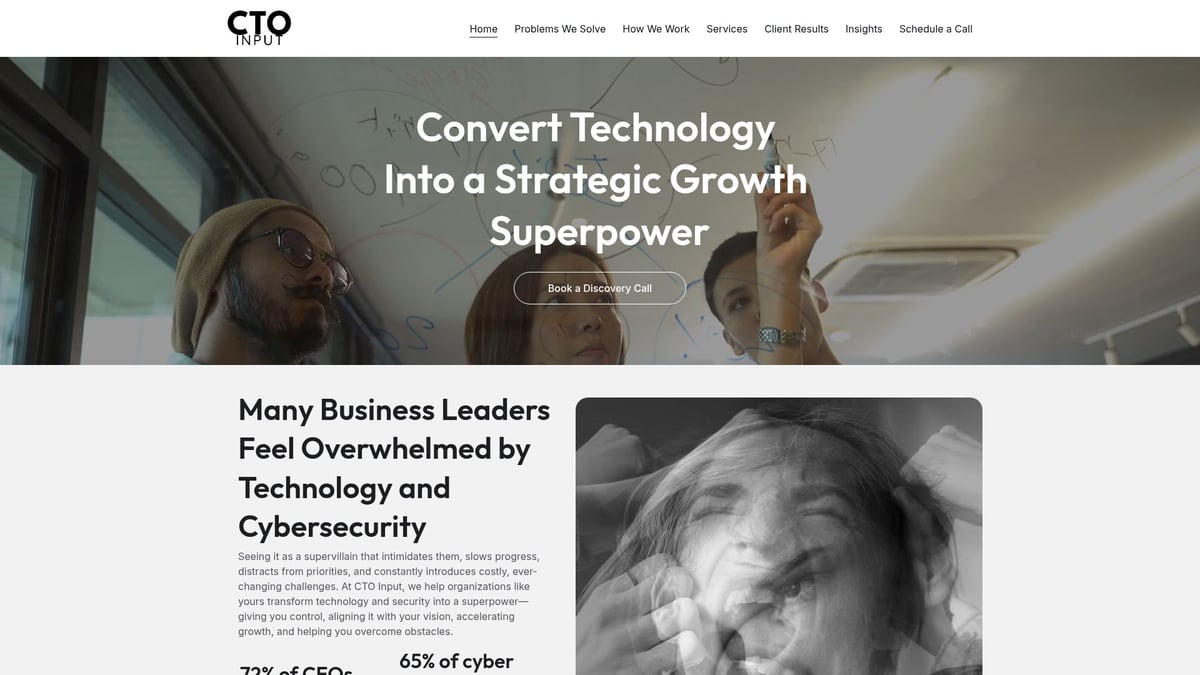
With CTO Input, companies gain clarity on technology priorities, achieve cost efficiency, and reduce operational risks. The team works closely with stakeholders to ensure every technology investment delivers measurable business outcomes and long-term value.
By partnering with CTO Input, organizations benefit from leadership in technology that is both flexible and results-driven. This enables businesses to stay ahead of the curve, adapt to emerging trends, and maintain a competitive edge in a rapidly evolving market.
Visit https://www.ctoinput.com to learn more and connect with a member of the CTO Input team.
Spend a few minutes exploring more expert insights on the CTO Input blog at https://blog.ctoinput.com.
Future Trends Shaping Technology Leadership
Technology is reshaping the way organizations operate, and the future of leadership in technology is defined by rapid transformation. Leaders must anticipate what’s next, adapt to new realities, and build organizations ready for tomorrow. Let us explore the trends that will shape the role of technology leaders in the years to come.

Embracing Emerging Technologies and Disruptive Innovation
The landscape for leadership in technology is shifting quickly as artificial intelligence, automation, and edge computing become central to business operations. Leaders must evaluate which emerging tools align with their strategic goals and decide when to adopt or experiment.
Successful organizations use pilot projects, cross-functional teams, and clear metrics to assess the value of innovations before scaling them. According to 3 Trends Driving Tech CEO Strategy in 2025, tech executives are prioritizing the integration of AI and automation into their core strategies. By fostering a culture of curiosity and calculated risk-taking, leaders ensure their teams stay ahead of disruption and drive value through innovation.
The Growing Importance of ESG (Environmental, Social, Governance) in Tech Leadership
Environmental, social, and governance (ESG) priorities are now central to leadership in technology. Stakeholders expect technology leaders to champion sustainability, ethical sourcing, and responsible data practices.
Forward-thinking organizations are embedding ESG goals into their technology roadmaps. This might include migrating to energy-efficient data centers, prioritizing accessibility in digital products, or supporting community initiatives. By integrating ESG into every decision, technology leaders not only meet regulatory and investor expectations but also inspire teams to innovate with purpose and responsibility.
Preparing for the Next Generation of Technology Talent
Attracting and developing future leaders is crucial for sustained success in leadership in technology. The next generation values flexibility, remote work, and continuous learning. Organizations must create pathways for advancement and invest in upskilling programs that foster both technical and leadership capabilities.
A strong succession plan ensures business continuity and resilience. For practical strategies, see Technology Leadership Succession Planning, which outlines how organizations can prepare emerging leaders for critical roles. By nurturing talent, leaders future-proof their teams and position their organizations to thrive in an ever-evolving digital world.
Visit https://www.ctoinput.com to learn more and connect with a member of the CTO Input team.
Spend a few minutes exploring more expert insights on the CTO Input blog at https://blog.ctoinput.com
As you think about how these nine strategies can shape your organization’s future, remember that technology leadership is not just about keeping up—it’s about setting the pace for growth and resilience. If you’re ready to move from frustration to confidence, let’s take the next step together. I invite you to Schedule A Strategy Call with our team. We’ll get to know your goals, help you untangle technology challenges, and work with you to create a clear, actionable roadmap for 2026 and beyond. Your technology should empower your business—let’s make it happen.