
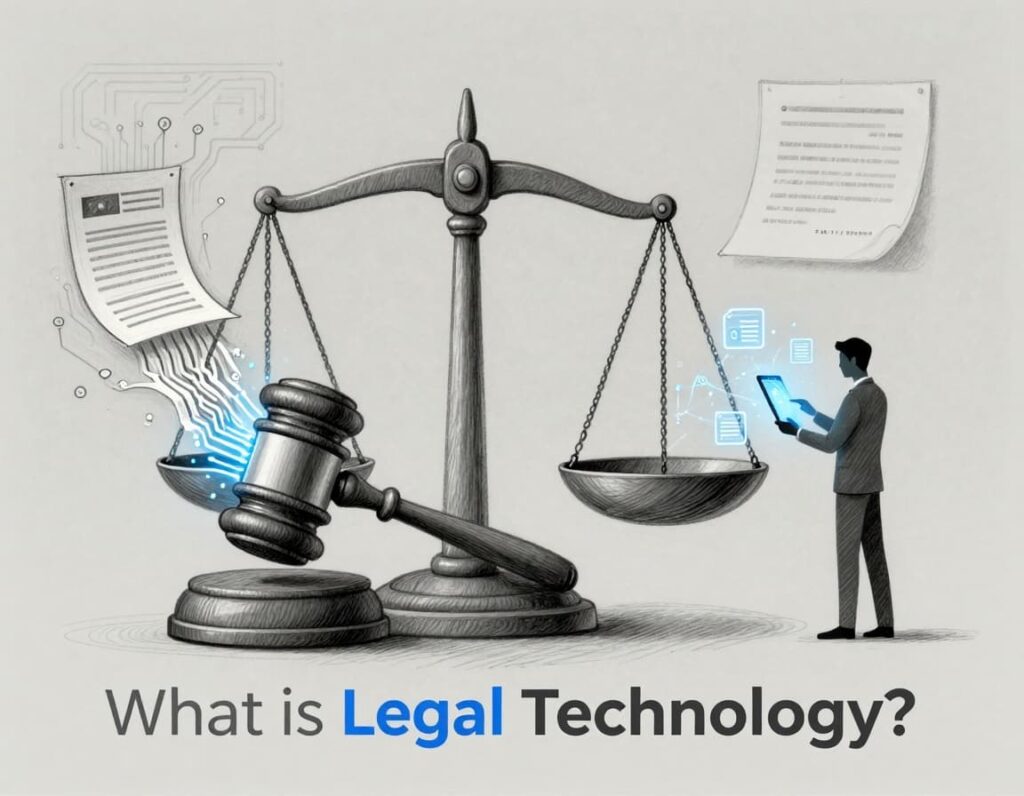

Legal technology, or legal tech, is the software and digital tools that support legal professionals. It helps them deliver, manage, and access legal services more easily, especially in high-stakes areas like immigration, incarceration, and youth justice. Think case management systems, document automation, client portals, and newer AI tools that support drafting and research.
For leaders of legal nonprofits and justice organizations, legal technology is not a nice-to-have gadget. It is one of the few practical levers you have for achieving greater efficiency, lower risk, better data, and stronger impact reporting. Used well, legal technology drives digital transformation, turning scattered spreadsheets and inboxes into a calmer, safer backbone for your work.
Quick key takeaways about legal technology
- Legal technology is any software or digital system that supports legal services or access to law.
- It now spans research, case management, document automation, client portals, analytics, and AI tools across the legal industry.
- Justice organizations use legal tech to cut busywork, reduce risk, and strengthen grant and board reporting with better data management and analytics.
- Thoughtful adoption matters more than chasing the newest tool or trend.
What Is Legal Technology and How Has It Evolved?
What is legal technology? At its core, it is the set of tools, systems, and software that support legal information, documents, workflows, and communication. That covers everything from early research databases to today’s AI-powered document review, and it serves both law firms and legal nonprofits in the broader legal industry.
You will see slightly different definitions in places like the Wikipedia entry on legal technology or in commercial guides such as this overview of legal technology from Clio. Across those sources, one theme repeats: legal technology now touches almost every part of legal practice and access to justice.
For legal aid groups, detention visitation programs, youth justice coalitions, and impact litigation shops, each wave of legal technology has changed daily work. Less paper to carry. Better search. Easier collaboration across cities and time zones. Today, cloud tools and AI features sit on top of that history and offer new ways to support overworked staff, if adopted with care.
A simple definition of legal technology
A simple way to answer “what is legal technology” is this: legal technology is a set of legal software systems, apps, or digital systems that helps people work with law. That includes tools that manage cases, store documents, track deadlines, or support client communication.
It also includes self-help tools that expand access to justice for community members directly, like guided interviews that fill forms or mobile apps that explain court dates. Legal tech is not only for lawyers. It is anything digital that helps people understand, use, or shape the law.
From paper files to AI: a brief history of legal tech
First, there were paper files, typewriters, and dictation machines. For legal aid, this meant full file rooms, hand-typed pleadings, and staff who spent hours finding one missing folder.
Next came word processors and early legal research databases. Staff in impact litigation teams could search case law in minutes instead of days in a library.
Then case management systems, e-filing, and e-discovery arrived. Legal nonprofits started tracking intakes, court dates, and outcomes in one place, and filing documents electronically instead of standing in court lines.
Today, cloud systems and artificial intelligence tools shape daily work. Research platforms summarize cases, AI tools draft first-pass letters, and staff log in from home or detention centers on secure devices. For justice organizations, this shift means more remote work, faster collaboration with partners, and new questions about data security and bias.
Core Types of Legal Technology Tools Nonprofits Actually Use
For justice-focused nonprofits, legal technology is only helpful if it fits real workflows and limited staff capacity. The tools below show up again and again in immigration work, post-conviction projects, youth defense, and movement lawyering.
Case management systems that keep every matter in one place
A case management system, also known as practice management software, is a single, secure place to store client data, notes, documents, deadlines, outcomes, billing, and time tracking (including through integrated document management systems). Instead of juggling spreadsheets, email folders, and personal notebooks, staff see the full story of a case in one shared record. These systems improve workflow by centralizing everything.
For example, detention deadlines in an immigration case can sit next to visit notes and filings. Benefits appeals can show every contact with an agency. Pro bono partners can add notes without seeing sensitive data from other matters. When data is central, grant and board reporting shifts from a last-minute scramble to a simple export, with time tracking helping nonprofits log grant hours accurately.
Document automation and e‑signature for forms, pleadings, and letters
Document automation turns standard forms into smart templates. Staff answer a short online questionnaire, then the system fills in the right fields in the right documents. This document automation is powerful in high-volume work like immigration forms, name change petitions, or housing pleadings. Instead of retyping client details dozens of times, staff check generated drafts and focus on judgment calls. E-signature and secure online forms cut down on mail delays, scanning, and lost paperwork. Clients who work hourly jobs or live far from the office can review and sign from a phone, on their own time.
Client portals, online intake, and self‑help tools that expand access to justice
Client portals are secure websites or apps where people can upload documents, message staff, and see basic case status. Online intake lets them start a request for help from a phone instead of waiting on hold or traveling across town.
These tools are especially helpful for people in detention, in rural areas, or in unstable housing, improving client service without extra travel or delays. Guided self-help tools can walk someone through a restraining order packet or a record-clearing request, even when your organization cannot take their case. When designed with language access, mobile use, and trauma-informed prompts in mind, these tools extend your reach without overloading staff.
Research, analytics, and AI tools that turn data into insight
Legal research databases remain core tools. Many now include artificial intelligence features that summarize cases, draft a first-pass argument, or suggest citations. There are also dashboards for data management and analytics that show trends in your own data, such as where eviction calls are spiking or which counties generate most youth referrals.
Used carefully, AI tools can save hours on document review or first drafts, especially in complex immigration or post-conviction cases, including contract review and analysis. They should support, not replace, legal judgment. Human review, clear policies, and strong training stay non-negotiable.
Security and compliance features that protect sensitive client data
Legal technology can also protect the people you serve. Modern systems, particularly strong cloud-based software, use encryption to guard data, role-based access so staff only see what they need, audit logs to track who did what, and retention rules to clean up old records.
For organizations handling immigration files, survivor information, or youth records, these are not abstract features. A breach could put families at risk or trigger audits from regulators and funders. Security is also about policy and training, but well-chosen tools make the safer choice the easier one.
How Legal Technology Supports Safer, Smarter Legal Nonprofits
When you step back from tools and screens, legal technology is really about calmer operations and improved efficiency. For executive directors, COOs, and operations leaders, it can turn constant fire drills into steady routines.
Key takeaways: what legal technology can do for your organization
- Clarifies what legal technology is and where it fits in your work.
- Saves staff time on intake, drafting, research, and reporting.
- Improves coordination across teams, partners, and regions for legal professionals using virtual collaboration tools.
- Strengthens security for sensitive immigration, youth, and criminal legal data.
- Produces cleaner data for boards, funders, and public reporting.
Reducing chaos in case work, reporting, and communication
Connected legal technology tools reduce chaos. Shared case systems replace scattered notes and one off spreadsheets. Dashboards replace late night manual counts before a funder deadline. Secure messaging channels replace text messages on personal phones.
For many organizations, this shift starts with a clear look at current systems and pain points. Where is work getting stuck? Where are staff most afraid of dropping a ball? Naming those problems honestly is the first step toward a calmer, more reliable stack.
Balancing innovation with risk, ethics, and staff capacity
Many leaders are wary of AI mistakes, data breaches, or staff burnout from “one more system.” That concern is healthy. Responsible legal technology adoption means setting clear goals, doing due diligence when picking tools that match staff skills, piloting on a small scale, and keeping human review for high stakes work.
A simple, realistic 1 to 3 year plan helps. You do not need to change everything at once. You do need to know what comes first, what waits, and why.
First steps: how to start improving your legal tech stack
For most justice organizations, helpful first steps look like this:
- Map the tools and spreadsheets you already use as part of your digital transformation.
- Pick one high impact workflow to improve, such as intake or case management.
- Set basic security standards, even if they are simple at first.
- Define what success in the next 6 to 12 months looks like for staff and clients.
Start small. Focus on visible wins that reduce staff pain quickly, while also building the habits and data you will need for larger changes later.
FAQs About Legal Technology for Justice-Focused Organizations
Is legal technology only for large law firms, or can small legal nonprofits use it too?
Legal technology is absolutely for small and mid-sized legal nonprofits, not just large law firms. Many legal software systems are now built with legal aid workflows and budgets in mind, using low-cost subscriptions and cloud access instead of heavy local servers. You can start small with core tools and expand as your team and funding grow.
How much does legal technology usually cost for a nonprofit?
Costs for legal technology range widely. Some intake or document tools are free or low-cost, while full case management or analytics platforms can be a more serious investment. The key is to look at total cost of ownership, including licenses, setup, training, and staff time to adopt the tool. Tie every purchase to clear outcomes, like hours saved or risks reduced.
Is it safe to store sensitive client data in cloud-based software?
Cloud-based legal technology can be very safe if it uses strong security like encryption, access controls, and audit logs, and if your team follows good policies. In many cases, reputable cloud vendors are safer than a server in a closet that your nonprofit cannot maintain well. The important steps are careful vendor vetting to maintain compliance, clear data governance, and ongoing staff training.
Conclusion: Using Legal Technology To Protect Both Mission And Risk
So, what is legal technology? For justice-focused organizations, it is the set of tools, including practice management software, that turn fragile, scattered systems into a steady backbone for safer, smarter legal services. Not hype. Not gadgets. Just a clearer foundation for case work, data, and security.
CTO Input works with justice organizations as a calm, senior technology partner. That includes assessing your current systems, designing a realistic technology roadmap, and walking alongside your team as changes roll out. There are real-world examples of this kind of shift in legal nonprofit technology case studies, including litigation technology, that mirror the pressures you face today.
If you are carrying both mission and risk on your shoulders, you do not have to do it alone. Define one small, concrete change you want to see in the next year, then schedule a short strategy call with CTO Input to test what is possible. The communities you serve need you focused on judgment and courage, not fighting with broken systems. Legal technology, used wisely, can secure the future of legal practice and help you do exactly that with advanced tools like artificial intelligence.