

A major technology decision is never just about software, platforms, or vendors. It changes how you grow, how your customers feel the difference, how much risk you carry, and how much time your team spends keeping the whole thing alive.
That is why price and urgency are poor places to start. The better question is simpler: does this decision help build the business you want, or does it add another layer of confusion?
If you ask the right questions early, you avoid the expensive kind of yes, the one that looks efficient in the moment and painful six months later. Here’s the practical checklist that helps you slow down in the right places.
Key takeaways for CEOs
- Start with the business outcome before you talk about tools, vendors, or features.
- Name the owner, the work, and the result so the decision does not drift into vendor control or vague accountability.
- Count the hidden costs because the invoice is rarely the full price.
- Make risk visible before the board, the customer, or the team finds it first.
- Check team readiness so you do not approve something your organization cannot actually carry.
Start with the business outcome, not the tool
Before you approve anything, ask what the decision is supposed to do for the business. Faster growth? Cleaner reporting? Less manual work? Better customer experience? Lower risk? If you cannot name the outcome, you are not ready to approve the project yet.
That sounds obvious. It isn’t how a lot of teams work. Many technology problems are really leadership problems because the business goal was never clear enough to guide the choice. A vendor can sell you a clean demo. Only you can decide whether the result is worth the tradeoff.
This is where a simple business conversation saves money. If your leadership team can’t agree on the outcome, technology will fill the gap with motion, not direction. That is how you end up with expensive tools that solve a problem nobody defined well enough.
A good place to anchor this thinking is a broader executive technology leadership view, not a tool list.
What problem are you really trying to solve?
A symptom is not the problem. Slow reporting might point to a bad system, or it might point to weak ownership and too many handoffs. Missed deadlines might be a software issue, or they might mean no one has the authority to make tradeoffs.
You need to ask what is underneath the complaint. If the team says the dashboard is late every month, the real issue may be that data is scattered across three owners and nobody is accountable for the final report. If the project keeps slipping, the issue may be that priorities change every time a louder voice enters the room.
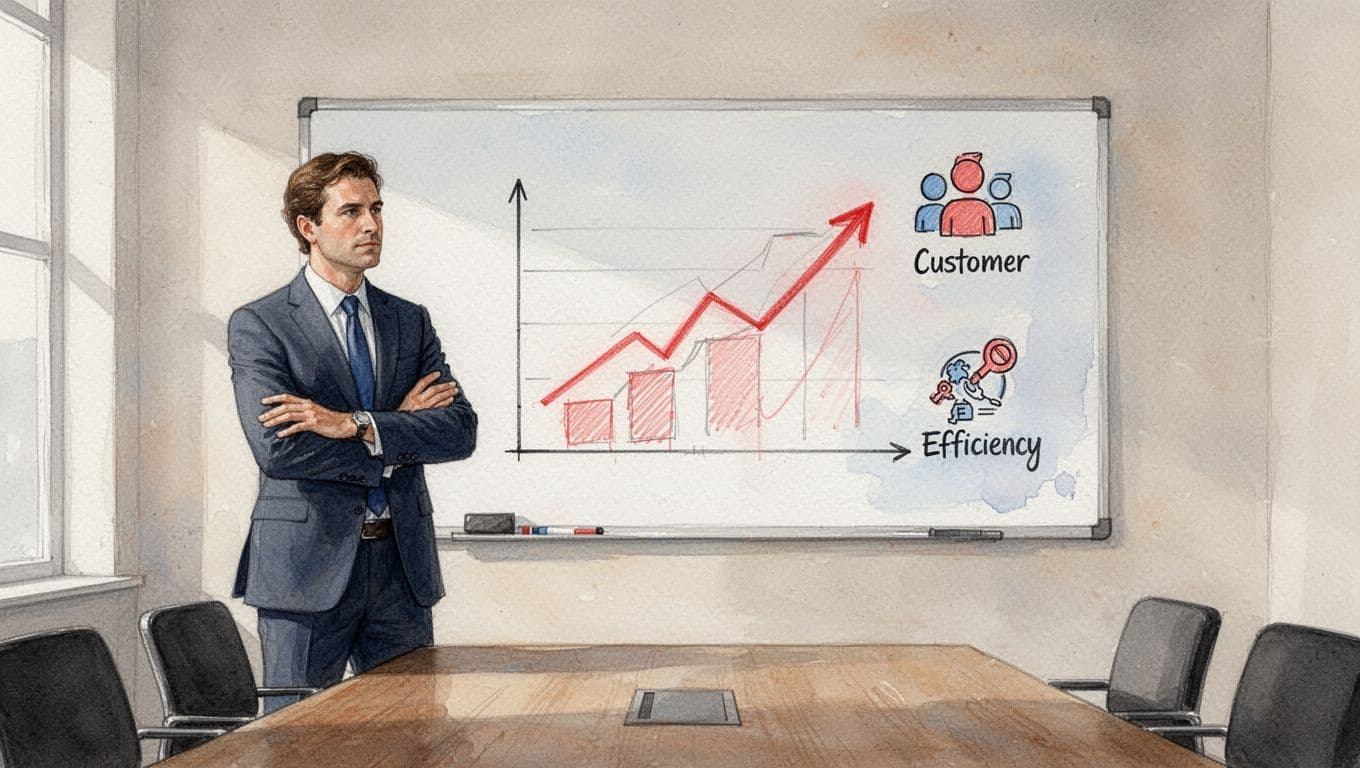
What would success look like in 6 to 12 months?
Write success in business terms, not IT terms. You want fewer manual steps, faster decisions, cleaner data, stronger customer response, or lower exposure. Those are the signs that matter.
If the project works, what gets easier? What gets faster? What becomes less fragile? If the answer is vague, the decision is probably vague too. Good tech spending should change how the business runs, not just what the team talks about in meetings.
Ask who will own the decision, the work, and the outcome
A technology decision needs more than a budget line. It needs clear ownership. Who owns the business result? Who owns the technical work? Who owns the final call when things get messy?
If those roles blur together, the project starts to drift. Vendors fill the vacuum. Internal teams wait on each other. Leadership gets updates, but not control. That is how good intentions turn into delays and workarounds.
This is also where a leadership gap shows up fast. If no one has the authority to connect the business need to the technical choice, the decision becomes a tug-of-war. That is one reason many growing companies eventually need fractional CTO services for CEOs, not more meetings.
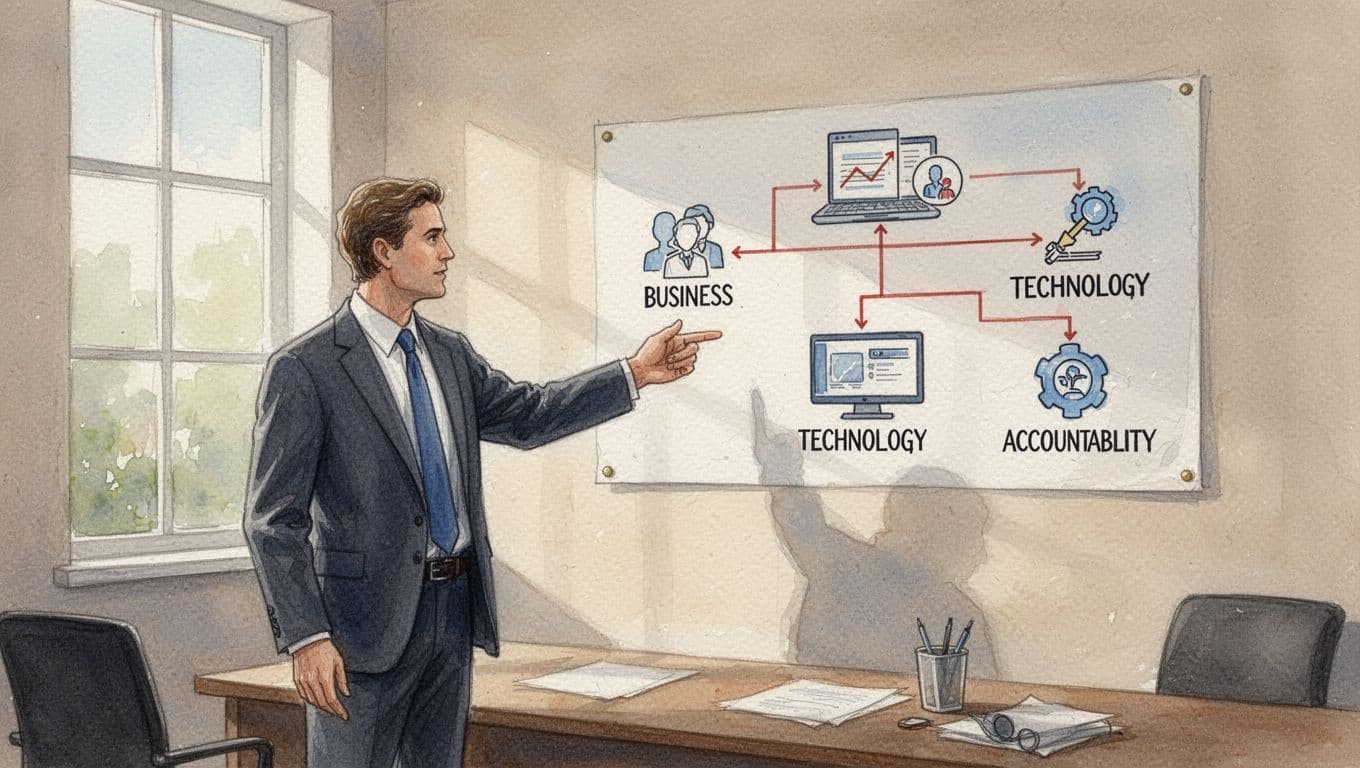
Who will be accountable when tradeoffs show up?
Tradeoffs are where weak decisions get exposed. The budget changes. The scope grows. A vendor promises more than the team can deliver. A department wants speed, while another wants control.
You need one person who can make the hard call, not three people trying to share the blame. Without that, the loudest voice wins. That is not leadership. That is noise with a spreadsheet.
Are you clear on who should say yes or no?
Not every decision belongs on your desk, but the important ones should not float around the organization either. If the choice affects growth, risk, major spend, or customer experience, you should know where the decision sits.
Some calls belong with operations or technology leaders. Others need executive review because they shape the next year, not the next sprint. If you are not sure where the line is, your team probably isn’t either. That is when when to hire a fractional CTO starts sounding less like a theory piece and more like a useful filter.
Check the hidden costs before you approve anything
The invoice is not the full cost. It never is. Implementation takes time. Training takes time. Integrations take time. Support takes time. Change management takes time. And all of that eats into the value you thought you were buying.
A cheap system can be the most expensive choice if it adds complexity. More tools often means more logins, more overlap, more reporting drift, and more vendor dependence. That is how tool sprawl grows. One team buys speed. Another buys coverage. Finance buys control. Nobody buys simplicity.
The question is not whether the new thing looks affordable. The question is what it does to the rest of your stack.
What will this replace, reduce, or simplify?
If the answer is “nothing,” be careful. A new platform that sits beside the old one may just create duplicate work. Two systems for one job can be worse than one imperfect system with clear ownership.
Ask what disappears if you approve this. What manual step goes away? What old report gets retired? What do people stop doing because the new choice is better? If nothing changes, you may be buying activity instead of value.
What does this decision cost beyond the invoice?
Count the quiet costs. Staff time. Retraining. Data cleanup. Reporting changes. Support. Ongoing maintenance. Those are the costs that decide whether the project helps or hurts.
You should also ask what it pulls away from. Every hour spent on a new system is an hour not spent on growth, service, or cleanup elsewhere. That tradeoff is real, even if it does not show up on the vendor quote.
Make risk visible before it becomes a surprise
Every major technology decision carries risk. Operational risk. Cyber risk. Data risk. Vendor risk. Business continuity risk. If you don’t ask about them now, you will ask about them after something breaks.
Boards do not need technical noise. They need a clear view of what matters, what is exposed, and what has to happen next. If you want that conversation to stay grounded in business terms, Build a Board-Ready Technology Risk View before the pressure shows up in a meeting you did not want.
If you cannot explain the downside in plain language, you do not understand the decision well enough yet.
What happens if the system fails, leaks data, or runs late?
Think through the first hour, not the ideal case. Who gets hit first? Customers? Staff? Finance? Operations? How fast does the damage spread?
A system outage is rarely just a technical issue. It can delay revenue, interrupt service, trigger customer complaints, or create compliance work you did not budget for. That is why the business impact matters more than the technical detail.
How much risk are you actually willing to carry?
Every company has a risk appetite, whether it has written one down or not. The real question is where your line sits on downtime, privacy, compliance, and operational disruption.
If your team is acting as if every risk matters equally, it probably means nobody has set the threshold. That is dangerous. Clear limits make better decisions. Fog makes expensive ones.
Decide whether your team can actually support it
A good decision can still fail if your team is too thin, your process is weak, or your vendor is steering too much of the roadmap. So ask a blunt question: do you have the people, time, and structure to make this work?
This is where leadership clarity matters. If no one clearly owns technology strategy, execution gets slower and risk gets harder to track. A business can have smart people and still lack the executive structure it needs. That’s a signal to pause, not a reason to push harder.
Do you have the right leadership in the room?
If the decision is high-stakes, you need the right mix of business, operations, and technology leadership in the room. Sometimes that means your internal team is enough. Sometimes it means you need outside help before you move.
When the gap is real, it helps to think in terms of decision support, not rescue. The goal is to create clearer judgment and better follow-through, not add another layer of noise.
Will this create more complexity than your team can manage?
Watch for hidden burden. Does this require new reporting? More support? More training? More vendor dependency? More manual oversight?
If the answer is yes to most of those, the decision may be too heavy for where the business is today. A smaller, cleaner move often beats a bigger one your team cannot absorb.
Questions to ask before you sign off
Before you say yes, ask these out loud:
- What business outcome does this support?
- What problem are we solving, not just what symptom are we seeing?
- Who owns the result if this goes sideways?
- What does this cost beyond the invoice?
- What risk does this reduce, and what risk does it create?
- What will this replace or simplify?
- Can our team support this without adding more confusion?
If the answers are fuzzy, that is your answer. Don’t force a yes just because the clock is moving. Get clarity first, then decide.
Conclusion
You do not need to become the technical expert in the room. You need to ask better questions than the vendor, better questions than the project sponsor, and better questions than your own urgency.
The best technology decisions are clear about the outcome, the owner, the hidden cost, the risk, and the follow-through. If those five things are not visible, the decision is not ready. Slow down long enough to see it clearly now, because confusion is far more expensive after you sign.