
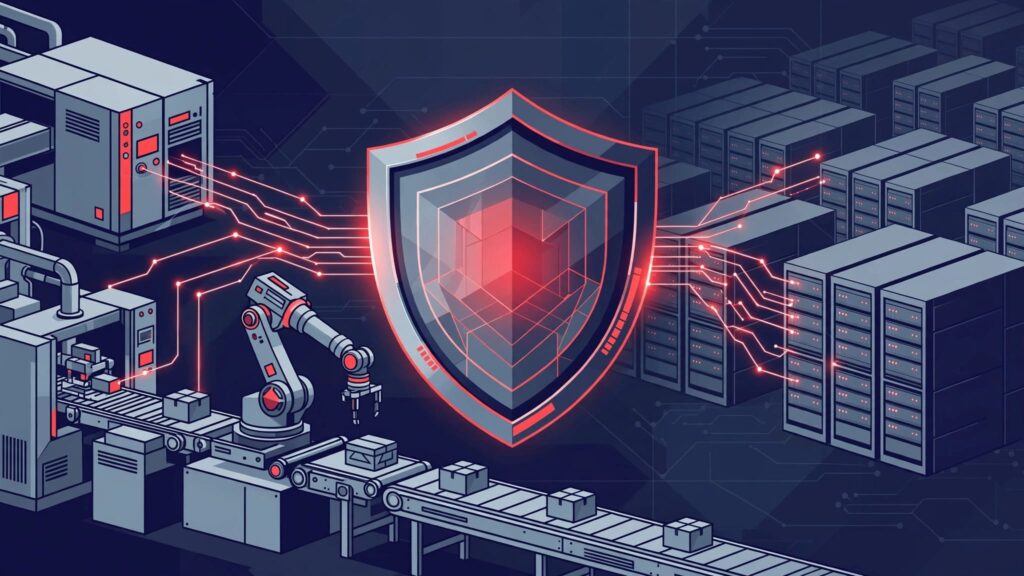
A ransomware incident at a manufacturer doesn’t stop at an inbox. It can stop a line, delay shipments, compromise product quality, and leave leadership explaining lost margin to customers and the board.
That is why cyber risk in the manufacturing sector matters beyond IT. Connected digital technologies turn cyber threats into a business continuity concern, linking business systems, remote vendors, plant networks, and production equipment.
The goal isn’t to turn your plant into an office network. A smart factory needs protection that supports production without creating new safety, uptime, or operational problems.
Key Takeaways for Manufacturing Cybersecurity
- IT and operational technology need shared ownership and basic security awareness, but they should not use identical security controls.
- Your first priority is a reliable inventory of the systems, connections, vendors, and accounts that could affect production.
- Network segmentation, controlled remote access, multi-factor authentication, and tested recovery plans reduce risk without requiring an enterprise-sized security budget.
- Legacy PLCs and industrial control systems often need compensating controls when patching is unsafe or impractical.
- Boards need a clear view of prioritized risk assessments, production exposure, recovery capability, ownership, and decisions. They do not need a list of unranked vulnerabilities.
Why Manufacturing Cybersecurity Changes When OT Meets IT
Modern operational technology keeps the physical business moving. It includes industrial control systems, SCADA systems, human-machine interfaces, industrial networks, sensors, historians, manufacturing execution systems, and industrial internet of things devices.
IT handles email, finance, planning, customer data, and business applications, while OT controls equipment, production processes, quality, and safety. That convergence supports a smart factory and the fourth industrial revolution through connected digital technologies, including the industrial internet of things and, where applicable, artificial intelligence for maintenance, quality, or production analytics. When those environments connect, the business gains better data and faster coordination, but those same connections create new paths for cyber threats.
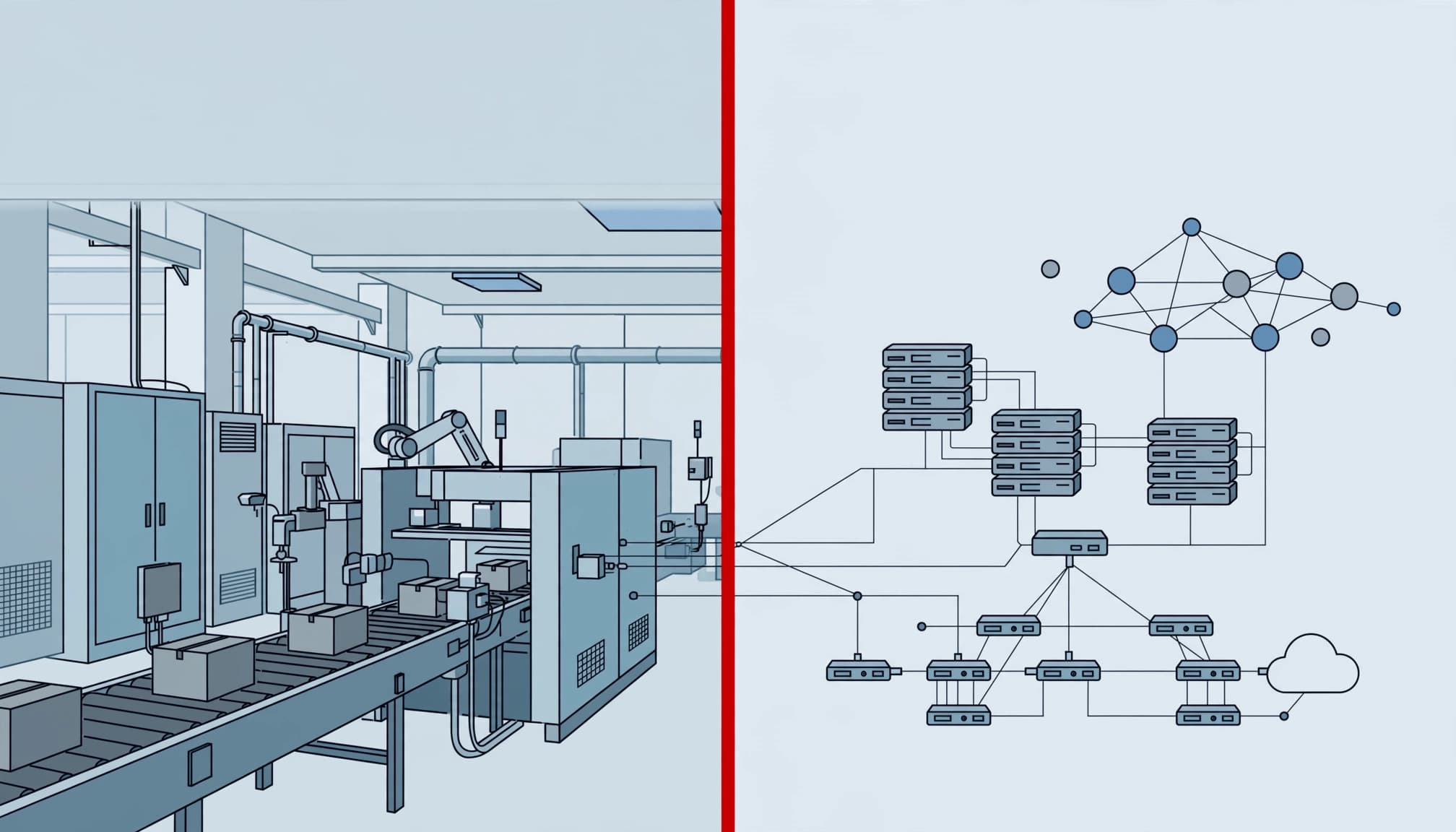
A compromised account can become a production issue
An attacker may begin with phishing, a stolen password, a remote-access tool, or a vendor credential. If the corporate network and plant environment are poorly separated, that initial foothold can move toward systems that were never designed for modern threats.
A flat network makes this worse. So does a shared administrator account, broad vendor access, or an old connection no one remembers approving.
The business question is simple: which connection could turn a laptop incident into a line outage?
OT systems have different constraints
A standard IT response can create harm in a plant, especially when a manufacturer supports critical infrastructure. You may not be able to restart a controller, run an aggressive scan, or patch a legacy device during production. A bad change can interrupt a batch, cause quality issues, or create a safety concern.
NIST’s Guide to Operational Technology Security recognizes those differences. OT security has to account for availability, integrity, safety, and the timing of maintenance work.
That is why plant leaders need a real voice in security decisions. IT and OT teams need shared objectives and clear decision rights.
The Threat Is Real, but Panic Is Not a Plan
The manufacturing sector is attractive to threat actors because ransomware attacks can create immediate downtime and pressure. A missed shipment, unavailable production schedule, or disrupted plant can quickly increase financial losses.
These cyber attacks can disrupt operations and create pressure to pay.
Dragos recorded 1,020 ransomware incidents affecting industrial organizations worldwide in the first quarter of 2026. Manufacturing accounted for 633 of them, or 62%, in its Q1 industrial ransomware analysis.
Ransomware attacks are only one way in
Ransomware gets attention because it can stop operations. But the entry point may be phishing attacks, exposed remote access, a poorly secured supply chain partner, reused credentials, or an unmanaged cloud application.
Business email compromise can create direct financial loss, while data breaches expose sensitive information. A compromised vendor can create a backdoor into critical systems. Weak access control can allow an ordinary user account to become an administrative problem.
Security controls should focus on the paths that matter most, not on a long list of theoretical issues.
Mid-market firms are not too small to target
You may have fewer systems and people than a global manufacturer. You may also have less security staff, less time for formal reviews, and more dependence on a small group of vendors.
Black Kite’s 2026 ransomware report identified 1,660 publicly disclosed manufacturing victims, or 22% of all reported victims across industries. Manufacturing ranked first for the fourth consecutive year.
This isn’t a reason to buy every new security tool. It is a reason to stop relying on assumptions about what is connected, protected, and recoverable.
Start With Visibility, Not a Tool Purchase
Many manufacturers begin with a technology vendor conversation. Start with risk assessments that identify what could interrupt manufacturing operations in a smart factory, including connected industrial internet of things assets.
A systems inventory should bring together IT knowledge, plant knowledge, and vendor documentation. It should include network security documentation and supply chain records, not just an old spreadsheet owned by one engineer.
Build a safe OT asset inventory
Start with existing diagrams, controller lists, maintenance records, firewall rules, remote-access logs, and vendor contracts. Use passive asset discovery where possible, then compare network observations with what plant teams know is actually running.
Capture the basics:
- The asset owner, production function, location, and vendor support arrangement.
- The systems and networks it communicates with.
- Whether it can be patched, backed up, restored, or replaced.
- The impact of a failure on safety, quality, delivery, revenue, intellectual property, and customer commitments.
Don’t run intrusive scans against fragile equipment until equipment owners, vendors, and maintenance teams agree on the method and timing.
Treat legacy equipment as a managed risk
A PLC that cannot be patched is not a reason to accept unlimited exposure. When patching is unsafe, compensating measures provide practical vulnerability management.
Segment it. Limit the systems that can communicate with it. Use named accounts for administrative access. Control vendor sessions. Record a known-good configuration. Keep tested backups. These measures reduce the attack surface while replacement planning continues.
This is the practical side of manufacturing OT security. You reduce the paths an attacker can use while respecting how the plant needs to operate.
Build a Cost-Conscious IT and OT Security Roadmap
A mid-market company in the manufacturing sector can improve its security posture without a massive transformation program. It needs a short list of risk-reduction decisions, a clear owner for each one, and a roadmap that reflects operational priorities.
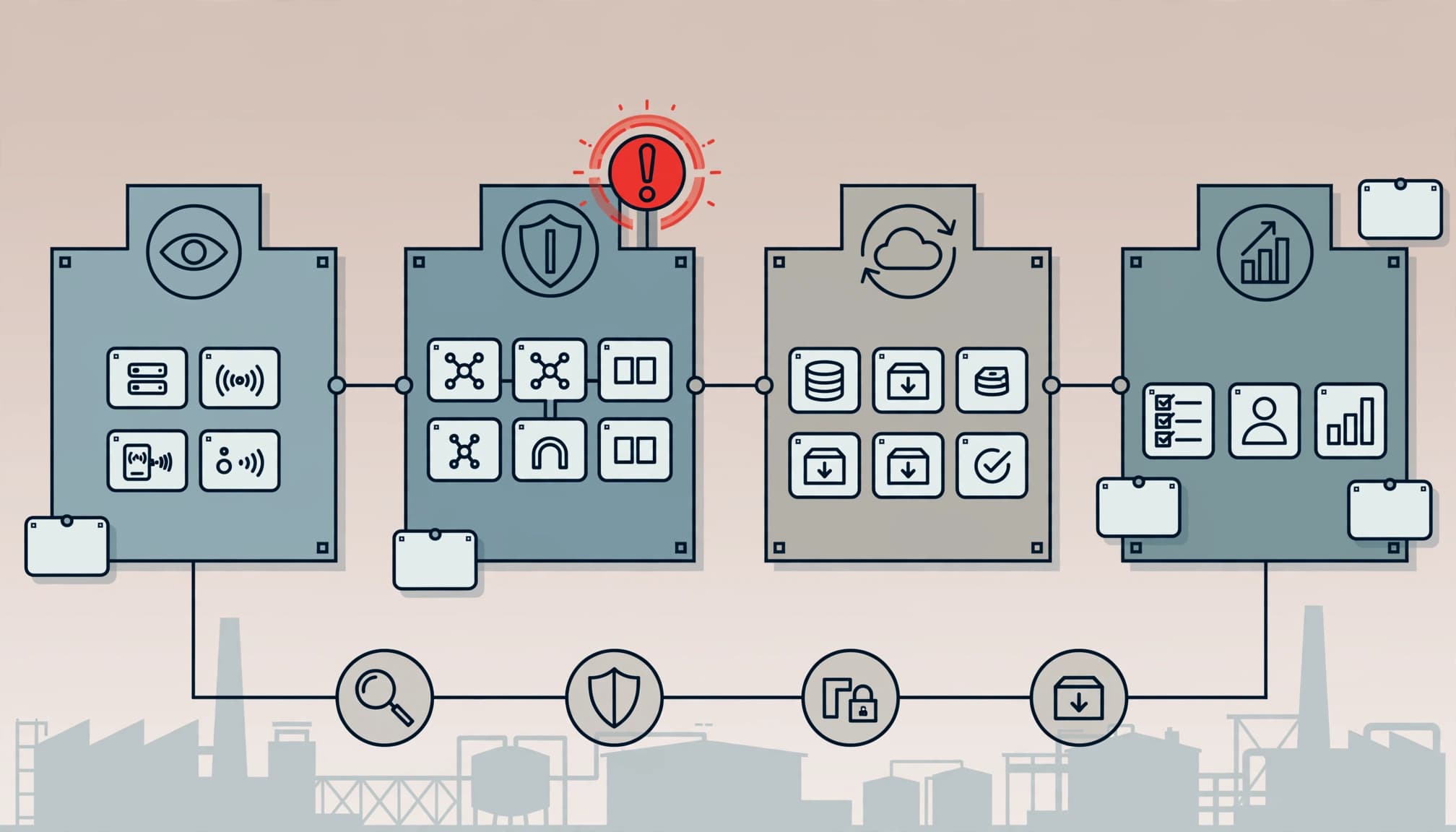
Separate networks and control remote access
Create meaningful boundaries between corporate IT, site operations, supervisory systems, and control equipment. An industrial demilitarized zone can manage necessary traffic between enterprise and plant networks without leaving both environments broadly open.
Strong network security also depends on practical vulnerability management. Coordinate patching decisions, monitoring, and maintenance windows with plant operations so critical systems remain protected without disrupting production.
Remote access deserves equal attention, especially for supply chain partners and vendors. Require multi-factor authentication where supported. Use named accounts, least privilege, time-limited sessions, and session logging. Route administrative access through a controlled jump host instead of allowing direct connections into the plant.
Systems connected to the industrial internet of things or artificial intelligence tools may support maintenance and quality workflows. Apply the same identity, logging, and segmentation requirements to these systems as other operational assets.
Use the NIST Cybersecurity Framework to organize this work across Govern, Identify, Protect, Detect, Respond, and Recover. NIST’s Manufacturing Profile gives leaders a useful way to apply that structure. It is a draft profile, not a substitute for judgment about your plant.
Make recovery a business capability
Backups are not enough. You need to know what can be restored, how long it takes, who has authority to start recovery, and whether backup administration is separate from production administration.
Test representative restores against ransomware attacks and other cyber attacks. Include critical production data, engineering configurations, ERP dependencies, and the systems needed to ship products and invoice customers.
CISA’s Cybersecurity Performance Goals 2.0 offer a practical baseline for organizations of different sizes. Start with the controls that reduce the most exposure: secure identities, protected backups, managed devices, logging, recovery testing, and an incident plan people can use.
Incident Response Must Include Plant Operations
An incident response plan written only by IT will fall short when manufacturing operations are involved. It must account for cyber threats while coordinating technology, safety, finance, legal, communications, insurance, and key vendors.
NIST’s incident-response lifecycle covers preparation, detection and analysis, containment, eradication, and recovery. That sequence matters, but the plant-specific decisions matter more.
Decide who can make the hard calls
Before an incident, define who can isolate a network segment or pause remote vendor access. Also assign authority to approve a shutdown, contact the insurer, engage forensic support, and brief customers when threat actors move quickly.
A decision rights map prevents a serious issue from becoming a long conference call. It also protects plant managers from making legal, financial, and safety decisions without support.
Your executive checklist should answer two questions early: can we still operate, and can we still recover?
Test a realistic scenario
Run a tabletop exercise around a credible sequence involving phishing attacks, business email compromise, a compromised vendor connection in the supply chain, and ransomware attacks on an engineering workstation.
Walk through the first hours. Preserve evidence before wiping systems. Confirm how you’ll communicate with customers. Verify that restore points predate the compromise. Identify which manual workarounds are safe and which create more risk.
One focused exercise will reveal more than a polished policy that has never been tested.
Give Leadership a Clear Risk View
Cybersecurity oversight works when leaders can see the business exposure and make a decision. It fails when the board receives a dense technical update with no ownership, no threshold, and no recommendation.
Report production impact, not vulnerability counts
Board-ready reporting should show the few issues that could materially affect operations. That may include production outages, business email compromise, data breaches, vendor exposure, or loss of intellectual property.
It may also include a shared production server with no tested recovery, unsupported equipment, or an unprotected administrative path. Cyber risk reporting for boards should create clearer choices, not more technical noise.
For each issue, show the potential production impact, the accountable executive, the planned action, the cost, and the decision needed.
Your cyber risk appetite should also be explicit. How much downtime can the business tolerate? Which systems must recover first? What risks are accepted temporarily, and who approved them?
Board oversight should ask how artificial intelligence initiatives affect plant data, identity, safety, and accountability.
Close the technology leadership gap
Many manufacturers have capable IT staff, experienced plant teams, and trusted vendors. They still lack executive ownership across these groups and their manufacturing operations.
A fractional CTO, interim CTO, or outsourced CTO can align the business technology strategy and 12-month technology roadmap. A fractional CISO, virtual CISO, or interim CISO can focus on cybersecurity oversight, incident response readiness, and risk reporting.
Security awareness is also an organizational responsibility, not a technology-only issue. The right leadership model should clarify who owns it across the business.
The right model depends on the gap. What matters is that someone owns the full picture.
If priorities are scattered or risk depends too heavily on a vendor, Get an Executive Technology Clarity Check to identify what needs executive ownership first.
Frequently Asked Questions
How can a manufacturer maintain an accurate OT asset inventory?
Use passive discovery, existing plant records, network documentation, vendor information, and plant-team validation. Update the inventory when equipment changes, a vendor connection is added, or a production process changes.
The inventory should show more than device names. It should identify ownership, criticality, connections, support status, and recovery capability.
What should you do if a PLC cannot be patched?
A PLC is one component of broader industrial control systems. Use compensating controls, including segmentation, restricted communications, named administrative access, change monitoring, documented configuration, and tested backups.
Keep known-good backups and configurations ready to support recovery after ransomware attacks. Then place the PLC on a technology roadmap for replacement or upgrade. An unpatched system may remain necessary, but it should not remain invisible.
What belongs in a manufacturing incident response plan?
Include technical containment, plant safety, production priorities, customer communication, legal support, insurance notice, evidence preservation, vendor coordination, and recovery authority. The plan should also address events such as business email compromise.
It must identify who makes decisions when IT and OT priorities conflict. That is where many otherwise capable organizations lose time.
Clear Ownership Is the Strongest Control
Manufacturing cybersecurity is not about making every plant system look like an office laptop. It is about protecting the systems that keep production, quality, delivery, and customer trust moving.
Start with visibility. Separate what should not be broadly connected. Test recovery before a crisis, because these actions strengthen the company’s security posture. Give IT, plant operations, and leadership clear ownership for the decisions that matter.
The outcome is not perfect security. It is calmer leadership under pressure, stronger production resilience, and more confident decisions when the business cannot afford guesswork.