
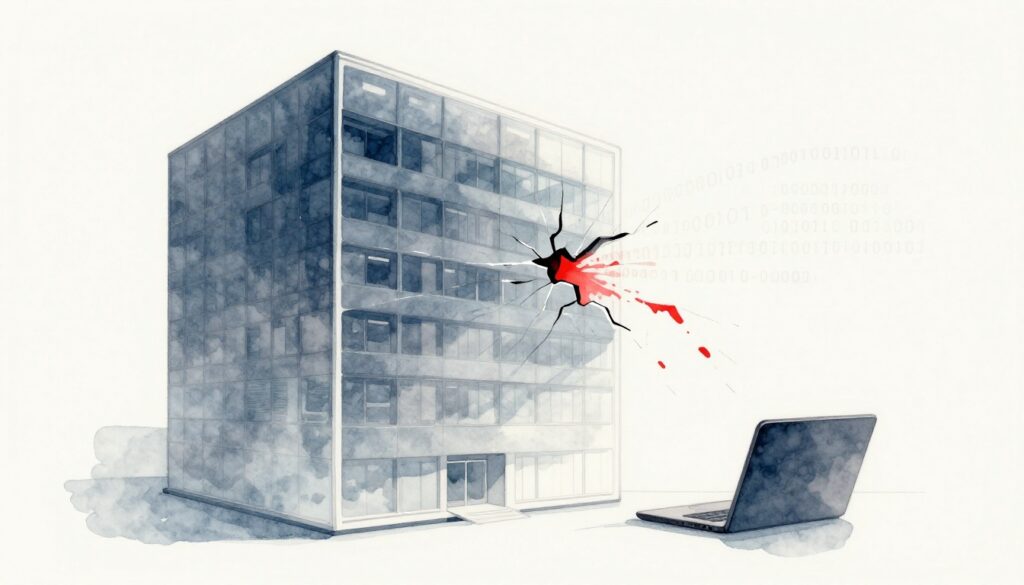
You can spend money on cybersecurity and still get hit. That’s the part nobody likes to say out loud, because it feels backward.
But it’s not backward. Security is not one tool, one policy, or one annual project. It’s people, process, tools, and leadership, all working at the same time. When one of those pieces is weak, attackers find the gap.
If your business still feels exposed, you probably do not have a total lack of defense. You have a gap in ownership, visibility, follow-through, or judgment. If you need a clean read on where that gap sits, start with a Get an Executive Technology Clarity Check.
Key takeaways
Before you chase another product or another policy update, check the basics first.
- Tools do not equal protection if they are poorly tuned or ignored.
- People are still the easiest path in, especially when shortcuts are rewarded.
- Old systems and vendor sprawl create cracks no one is watching closely.
- Blurry ownership turns cyber risk into a leadership problem.
- Reports must be usable, or leaders cannot act on what they see.
The businesses that stay safer usually do three things well. They know what matters most, they know who owns it, and they review risk in plain language.
The most common reasons businesses still get hacked
When you look at the most common cyber threats businesses face, the pattern is rarely mysterious. Attackers do not need magic. They need one weak link, then they keep going.
Most companies have some defenses in place. The problem is that defenses often look stronger on paper than they are in practice. A tool was bought. A policy was written. A training was sent. Then everyone moved on.
That is not protection. That is activity.
Your security tools are installed, but not tuned to the way your business really works
A lot of security failures start here. The company has tools, but nobody has made sure they fit the way the business actually operates.
Maybe the settings are too loose. Maybe alerts are going nowhere. Maybe policies were written two years ago and never updated. Maybe the vendor finished the setup, but no one inside the business owns the ongoing work.

The result is a familiar one. You think you have coverage, but the coverage is thin where it matters most. Tools need oversight. They need tuning. They need someone who checks whether they are catching the right things, not just generating noise.
A purchased control is not the same thing as a working control.
Employees are still the easiest way in
Most breaches still involve a person making a small mistake or a fast decision. That can mean a phishing email, a reused password, a rushed approval, or a shared login that should have been retired months ago.
People do not usually skip process because they want trouble. They skip it because they are busy.
That is why training matters, but training alone is not enough. You need smart defaults, strong access controls, and simple rules people can follow under pressure. If employees can approve payments, open attachments, or share data too easily, the system is inviting mistakes.
If the fastest path is also the riskiest path, people will use it.
The fix is not to shame your team. The fix is to build a setup that makes the safe choice the easy choice.
Old systems, shadow tools, and vendor sprawl keep creating gaps
This is where a lot of businesses get surprised. The breach does not start with one giant failure. It starts with a messy environment.
You have old systems no one wants to retire. You have cloud tools bought outside of IT. You have vendors connected to your data. You have a few apps that only one person knows how to manage. Each one adds a little more risk.
Tool sprawl is a governance problem. The more disconnected systems you allow, the more places security can fall through the cracks. If no one owns what is approved, what is connected, and what is monitored, the business keeps growing its exposure without meaning to.
That is why leaders need a clear view of every system that matters, not just the ones on the official list. Hidden tools create hidden doors.
Nobody is clearly owning the risk
This is the leadership problem under the security problem. When ownership is fuzzy, important work gets delayed, duplicated, or missed.
Maybe IT thinks the business owner is handling it. Maybe the business thinks security is already covered. Maybe a vendor says they are responsible for a layer of protection, but nobody checks what that really means. By the time the issue surfaces, no one can give a straight answer.
That is when cyber risk stops being a technical issue and becomes a management issue.
If you want more control, you need named owners, clear reporting, and a real answer to the question, “Who is responsible for this, today?”
Why a security budget does not always mean real protection
Spending more on cybersecurity does not automatically lower risk. Sometimes it does the opposite. More budget can create more tools, more alerts, and more work, without reducing the chance of an incident.
That is because buying security and governing security are two different things.
A company can spend a lot and still have weak protection if the money goes to the wrong places. It can also have strong controls and still be exposed if no one is making hard choices about what matters most.
You may be buying tools instead of reducing risk
A new breach scares leadership. A new tool gets approved. Then another scare happens, so another product gets added.
That cycle feels responsible. It is not. It often turns into a stack of disconnected products that generate more alerts than action.
Security should reduce risk, not just create the appearance of motion. If each tool is solving a different problem without a clear owner, your team spends more time managing the stack than managing the threat.
That’s where fractional CTO services can help. Not because you need another pile of software, but because you may need stronger executive oversight of what is already there.
Your reports may be too technical to help leaders act
Leadership does not need a flood of technical detail. It needs plain answers.
What is exposed? What is getting better? What still keeps you up at night? What will this cost if you do nothing? What gets fixed first?
If your reports cannot answer those questions, they are not helping you govern the risk. They are just documenting the noise.
Good security reporting translates technical detail into business language. It tells you where the biggest threats sit, what matters now, and what tradeoffs you are making. That is the kind of view leadership can use.
For a stronger example of that kind of leadership approach, look at executive technology leadership. The core idea is simple. If leaders cannot see the issue clearly, they cannot make a clean decision.
The business never agreed on its risk appetite
You cannot defend everything at the same level. No company can.
Yet many businesses act as if security should protect every system, every process, and every data set equally. That is how you end up with confusion. Teams are guessing because leadership never said what level of risk is acceptable.
Maybe some systems need the highest protection. Maybe others can tolerate more exposure. Maybe speed matters more in one area, while data sensitivity matters more in another. Those are leadership calls.
If your risk appetite is vague, security teams are left to guess. Guessing is expensive.
What a stronger cybersecurity setup should actually look like
Better security is not about drama. It is about control.
You should be able to see who owns each key area, how risk is measured, what is being done about it, and where the business is still exposed. That should be clear without a decoder ring.
Clear ownership, clear reporting, and clear decision rights
A stronger setup makes the work legible.
You know who owns access. You know who owns vendor review. You know who owns incident response. You know who makes the call when security competes with speed or cost.
That is what real control looks like. It is not more meetings. It is a system where the right people get the right information in time to act.
Security tied to the business, not just the IT team
Security should protect revenue, customer trust, operations, and continuity. If it only lives inside IT, it will miss the bigger picture.
The real questions are business questions. What happens if customer data leaks? What happens if a vendor fails? What happens if a key system is down for a day? What happens if the board asks for proof and nobody can produce it?
When security is tied to business goals, the priorities get sharper. When it is not, the business keeps treating risk like an IT line item.
Fast response when something goes wrong
No security program stops every incident. That’s the honest answer.
The difference is how fast you respond. Can you isolate the issue? Can you recover cleanly? Can you tell customers or regulators what happened? Can you keep operating while you fix it?
That takes tested backup plans, access controls, incident steps, and people who know what to do before the pressure hits.
If you are in a transition, a major change, or a diligence process, weak ownership shows up fast. In those moments, it helps to Prepare Technology for Diligence or Transition. The stakes get higher, and the gaps become easier to see.
What you should do next if your business still feels exposed
If you still feel uneasy, do not start by buying more tools. Start by finding the weak spots that matter most.
Look at people, process, systems, vendors, and reporting together. Ask where the biggest trust risks sit. Ask what is being missed. Ask who owns the answer. That will tell you more than a stack of dashboards.
Check where the real weak spots are
Start with the issues that could hurt the business fastest.
That might be privileged access. It might be vendor exposure. It might be weak reporting. It might be one old system that has become too important to ignore. The point is to focus on the areas where a mistake would cost real money, time, or trust.
Get leadership aligned before the next incident
You need agreement on what matters, who owns it, and what gets reported.
Without that, every incident becomes a scramble. With it, the team has a chance to act with less confusion. If you know ownership is part of the problem, this is the moment to Talk Through Your Technology Leadership Gap.
Know when to bring in outside executive help
Sometimes you do not need more staff. You need stronger executive-level technology leadership.
That can help you create a calmer operating rhythm, clearer reporting, and a practical plan that fits the business you actually run. If you are unsure whether the issue is security, leadership, or both, When to Hire a Fractional CTO is worth a look.
Conclusion
Businesses keep getting hacked because cybersecurity is often incomplete, scattered, or poorly owned. The tools may be there, but the follow-through is not. The reporting may exist, but it may not help you act. The risk may be known, but nobody has said who owns it.
That is the real lesson. Better security is not about stacking more products on top of the same weak process. It is about clearer visibility, stronger accountability, and decisions that match the actual risk in front of you.
If your business still feels exposed, that is a signal worth listening to. Don’t wait for the next incident to tell you what should have been visible already.