
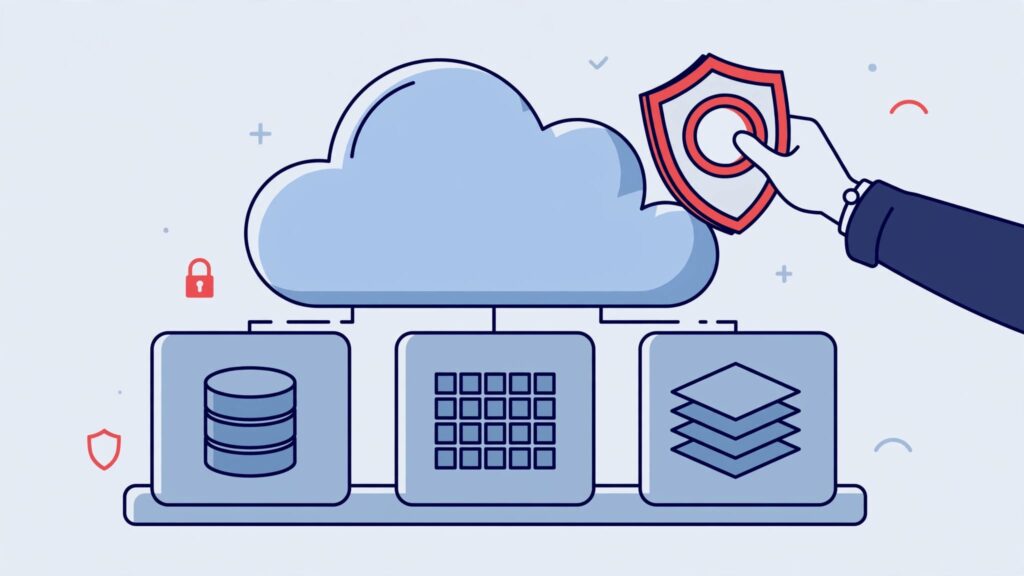
Assessing multi-tenant data isolation in a multi-tenant SaaS platform is a cloud security decision. Require evidence that its multi-tenant architecture protects customer boundaries across application access, infrastructure, support operations, and recovery. A security certification or dedicated hosting label doesn’t establish that boundary on its own.
Your decision affects customer commitments, enterprise sales, and the cost of an exposure. You need clear ownership and evidence that explains what your team can access, what remains shared, and how controls perform.
Start with the boundary your business needs, then assess whether the platform can demonstrate it.
Key takeaways for SaaS platform decisions
- Assess multi-tenant data isolation across the full operating environment, including support tools, backups, and logs.
- Distinguish logical separation, customer-controlled encryption keys, and dedicated physical hardware. Each addresses a different exposure.
- Require authorized boundary tests, named remediation owners, and current reporting. Keep contracts, recovery procedures, and vendor offboarding aligned with the controls you depend on.
Define the customer boundary before reviewing features
Identify what belongs to each tenant
A tenant is a customer organization or business unit with its own users, data, and configuration. Defining this boundary is the starting point for a multi-tenancy isolation review. Multi-tenant data isolation means securely separating and protecting those assets within a shared cloud environment.
Your assessment should follow the data beyond the main application. Include uploaded files, analytics, search indexes, exports, test environments, and backups. Record where each category lives and which systems process it.
AWS guidance on tenant isolation provides the architectural foundation. Your executive requirement is a boundary your team can explain and demonstrate.
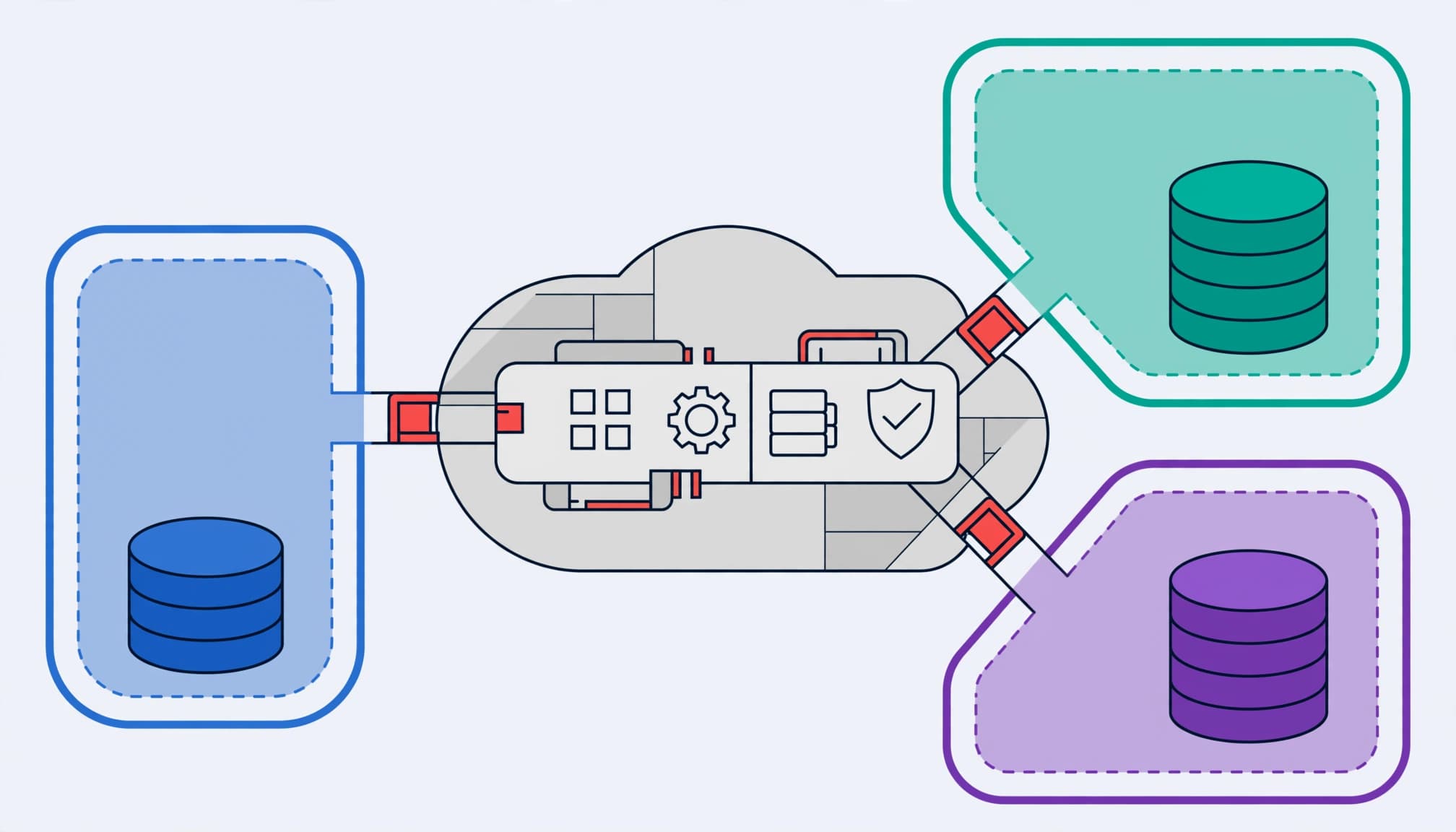
Include the people who operate the platform
Customer-facing permissions cover only part of the exposure. Support staff, deployment systems, service accounts, and recovery operators may also reach customer information.
Require named production access, approval records, least privilege, and time-limited emergency access. Include third-party support personnel in that review.
The useful deliverable is a short access map for identity and access management and access control. It should show who can reach each tenant’s information, through which systems, and under whose authority.
Assess multi-tenant data isolation across five layers
Assess boundaries across shared infrastructure together. Workload isolation across layers limits cross-tenant exposure and lateral movement. A database control can’t compensate for unrestricted exports or excessive administrator access.
Use this evidence map to organize the review.
| Layer | Evidence you should receive |
|---|---|
| Network | Allowed communication paths, network segmentation rules, and denied cross-boundary connection tests. |
| Compute | Workload placement, resource quotas, and documented shared dependencies. |
| Storage | Tenant authorization, encryption permissions, backup access, and deletion procedures. |
| Identity | User and service-account access control, production approvals, and privileged-access reviews. |
| Observability | Tenant-scoped log access, protected audit records, and tested monitoring permissions. |
The takeaway is logical separation across layers, not a long inventory of security products.
For Kubernetes, a namespace alone doesn’t block traffic. Require network policies that deny cross-namespace traffic by default, explicit permitted connections, and a network plugin that enforces those policies.
ResourceQuota limits aggregate resource consumption within a namespace and can reduce noisy neighbor contention. Quotas don’t establish authorization boundaries. Service accounts are namespaced, but role-based access control (RBAC) can grant access across namespaces.
AWS security guidance for multi-tenant EKS addresses these workload boundaries. Require separate tenant service identities and verify that permissions match their intended scope.
Centralized monitoring also needs separation. Operators may need platform-wide visibility, while customers should receive only their authorized records. Test both views, including log exports.
Separate dedicated hardware from encryption control
Know what a dedicated host actually isolates
Amazon EC2 Dedicated Hosts provide a physical server dedicated to a customer’s use. Azure Dedicated Host dedicates a physical server to one Azure subscription.
Those are hardware boundaries. They don’t establish every boundary inside your SaaS application. The silo model assigns dedicated resources to each customer, while the pool model shares resources under tenant-aware controls. Both require evidence that customer boundaries work.
Microsoft also states that Azure Dedicated Host shares underlying storage and networking with other hosts. Identify the shared services beyond the host and ask how Oracle Multitenant and Pluggable Databases are assigned and isolated for customers.
Our guidance on assessing single-tenant hosting helps distinguish deployment choices from the operational responsibilities your business retains.
Assess key permissions separately
Tenant-specific encryption keys can provide separate control over encrypted data, but their value depends on authorization. Require documented key ownership, permitted services, rotation procedures, and revocation behavior.
AWS’s multi-tenant KMS strategy describes tenant-key access through IAM role delegation and least privilege.
Customer-managed keys don’t imply dedicated hardware. AWS KMS uses a multi-tenant HSM fleet with logically isolated key access. Google Cloud also distinguishes customer-managed encryption keys from dedicated HSM protection options.
A separate key doesn’t protect a tenant if an overprivileged application identity can use every tenant’s key.
Require a key-permission test alongside the encryption configuration review.
Require an authorized boundary test
A diagram describes the intended design. A controlled test shows how the implementation behaves.
Have your security lead arrange authorized testing with synthetic data in a representative environment. A purchase decision can use an independent assessment or documented provider demonstration without exposing real customer records.

- Establish separate test tenants with distinct users, service identities, and recognizable synthetic records. Document the access each identity should have.
- Attempt unauthorized access through ordinary application functions, APIs, file retrieval, search, and exports. Record the request, expected denial, actual response, and audit event.
- Test operational access separately. Include support sessions, background jobs, administrator tools, and recovery workflows. Require approval and traceability for legitimate cross-tenant operations.
- Exercise lifecycle changes. Test role changes, account removal, tenant suspension, data export, and deletion. Confirm through recorded results that revoked identities and integrations lose access.
A passing result means unauthorized access fails and the relevant evidence exists. Missing test coverage remains an open gap, even when the controls tested elsewhere pass.
Your evidence package should identify the environment, release version, test date, exclusions, findings, and remediation owner. Repeat affected tests after material authorization or architecture changes.
Include SaaS data export and exit planning in the lifecycle review. A successful export needs usable records, protected transfer files, and a documented handoff.
Make ownership and compliance ongoing responsibilities
Assign decision rights and conditional obligations
Your CTO or engineering leader should own implementation. Security owns assurance; legal defines applicable obligations and contractual commitments. You approve material exceptions against your cyber risk appetite.
A fractional CTO or fractional CISO can add executive capacity, but your business still needs accountable internal owners.
Compliance requirements depend on your service, data, customers, and role. For example, PCI DSS Appendix A1 applies to certain multi-tenant service providers whose customers share resources and administer their own environments or segments. It doesn’t apply automatically to every SaaS product.
For payments, assign responsibilities contractually. A provider’s compliance status doesn’t transfer every obligation away from your company.
Keep evidence current after onboarding
Require continuous configuration and compliance scanning, an architecture review when onboarding introduces new requirements, and defined incident procedures for suspected isolation failures.
Keep each material provider’s business owner, data access, hosting location, subcontractors, renewal date, incident obligations, and exit plan in your systems inventory. Our guidance on third-party technology risk oversight connects these details to business decisions.
Use concise board-ready reporting: unresolved isolation defects, overdue remediation, privileged-access review completion, recovery-test results, and material exceptions. Each exception needs an owner, deadline, and approval decision.
Your vendor incident response plan should define escalation contacts and containment authority based on the potential blast radius of an isolation failure. During offboarding, revoke credentials and integrations, return or delete data under contract, and retain completion evidence.
Match platform evidence to your buying decision
Choose the platform discussion that matches your requirement. Compare its multi-tenant architecture with the boundary your business needs, and avoid buying a larger isolation package because product names sound reassuring.
For AWS, distinguish EC2 Dedicated Hosts, KMS authorization, and EKS workload controls. These address physical placement, key use, and container operations, respectively. Ask your team to connect each deployed service to an actual control requirement.
For Azure, Dedicated Host provides a subscription-level physical-host boundary. Your application permissions, storage access, and shared networking still need separate assessment.
For Google Cloud, customer-managed encryption keys provide customer control over encryption. Dedicated HSM options are a separate choice.
Across these platforms, compare cloud security requirements, evidence quality, operating effort, and cost. A feature deserves budget when it addresses an identified exposure or customer commitment.
Keep the resulting decision in your technology roadmap, including the owner, recurring expense, and evidence needed before expansion.
Frequently asked questions
Does a security certification prove tenant isolation?
No. A certification or assurance report can support your review, but its scope, period, exclusions, and findings matter. You still need evidence covering the customer boundaries and operational access paths your business depends on. Treat the report as one part of vendor due diligence.
Can centralized monitoring preserve customer separation?
Yes, when permissions separate platform-wide operational access from customer access. Assess who can search logs, export records, change retention, and alter audit settings. Separate pipelines may help, but your decision should rest on tested access restrictions and protected records, rather than pipeline count alone.
What should stop a launch or purchase?
Unresolved unauthorized cross-tenant access should block approval for the affected deployment. Other gaps need a documented business decision based on severity and exposure. An untested recovery path or unclear production access owner also deserves explicit treatment before you accept customer commitments.
Make approval depend on evidence and ownership
You don’t need to review every configuration yourself. You need a clear boundary, credible test results, and an executive who owns the remaining exposure.
Approve the platform when its controls support your customer commitments and your team can explain the exceptions. Keep ongoing accountability attached to that decision.
If the evidence is scattered or ownership is unclear, Build a Board-Ready Technology Risk View before expanding the commitment.