
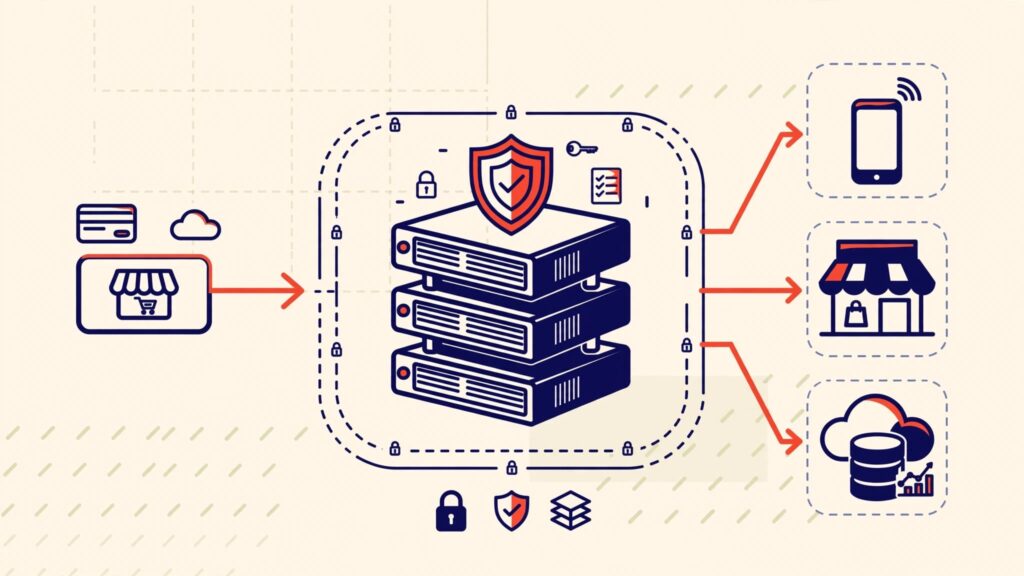
PCI DSS scope covers the systems, people, processes, and data flows that handle cardholder data or can affect its security. Before adding payments, you need an evidence-backed boundary around that environment, because your integration choice can expand compliance work across your SaaS business.
Your first decision is where card data will travel, not which payment provider offers the lowest transaction fee.
Start with that boundary before approving the architecture, launch date, or operating budget.
Key takeaways
- Hosted payments can reduce PCI DSS scope, but your payment role and implementation determine what remains in scope.
- Systems without card data can still qualify through connectivity, privileged access, or security influence.
- Tokenization and segmentation reduce scope only when evidence supports the exclusions.
- Your launch approval should name control owners, document provider responsibilities, and include ongoing scope reviews.
Define PCI DSS scope before selecting an architecture
Start with data and security influence
The Payment Card Industry Data Security Standard protects payment account data. Any system components that store, process, or transmit cardholder data (CHD) are directly in-scope.
Establishing the cardholder data environment (CDE) boundaries requires cataloging those components alongside connected-to systems and supporting personnel.
Scope also reaches connected-to systems with direct connections to the CDE or influence over its security.
Examples include jump servers, DNS servers serving the CDE, Active Directory, other identity services, and administrative workstations. Deployment pipelines and cloud management tools can also qualify because they can change payment systems.
Systems on the same or adjacent network remain in scope without effective segmentation, even when they never handle card data.
Require proof for every exclusion
The Payment Card Industry Security Standards Council’s scoping and segmentation guidance, released in December 2016, establishes a practical starting point for scoping and segmentation classification.
Out-of-scope systems must meet all applicable exclusion criteria. They must not handle cardholder data or sensitive authentication data, connect to the CDE through an uncontrolled path, or affect CDE security.
If any exclusion criterion fails, treat the component as in scope. An undocumented assumption doesn’t establish an exclusion.
A database containing only payment references can still be in scope if its administrators can modify the checkout environment.
Map the payment flow and your SaaS role
Separate subscription billing from customer payment services
Taking payment for your own software generally puts you in a merchant role. Providing payment capabilities to other merchants can create service-provider responsibilities.
You can hold both roles. Therefore, document whose transactions you support, who contracts with the acquiring bank, and which services you control. A processor relationship doesn’t settle those questions.
Begin scoping payment flows by building the systems inventory around actual payment journeys. Include refunds, recurring billing, customer support, failed payments, and recovery environments. Then add logs, analytics, session-replay tools, backups, and emergency access.
Trace a hosted-checkout flow
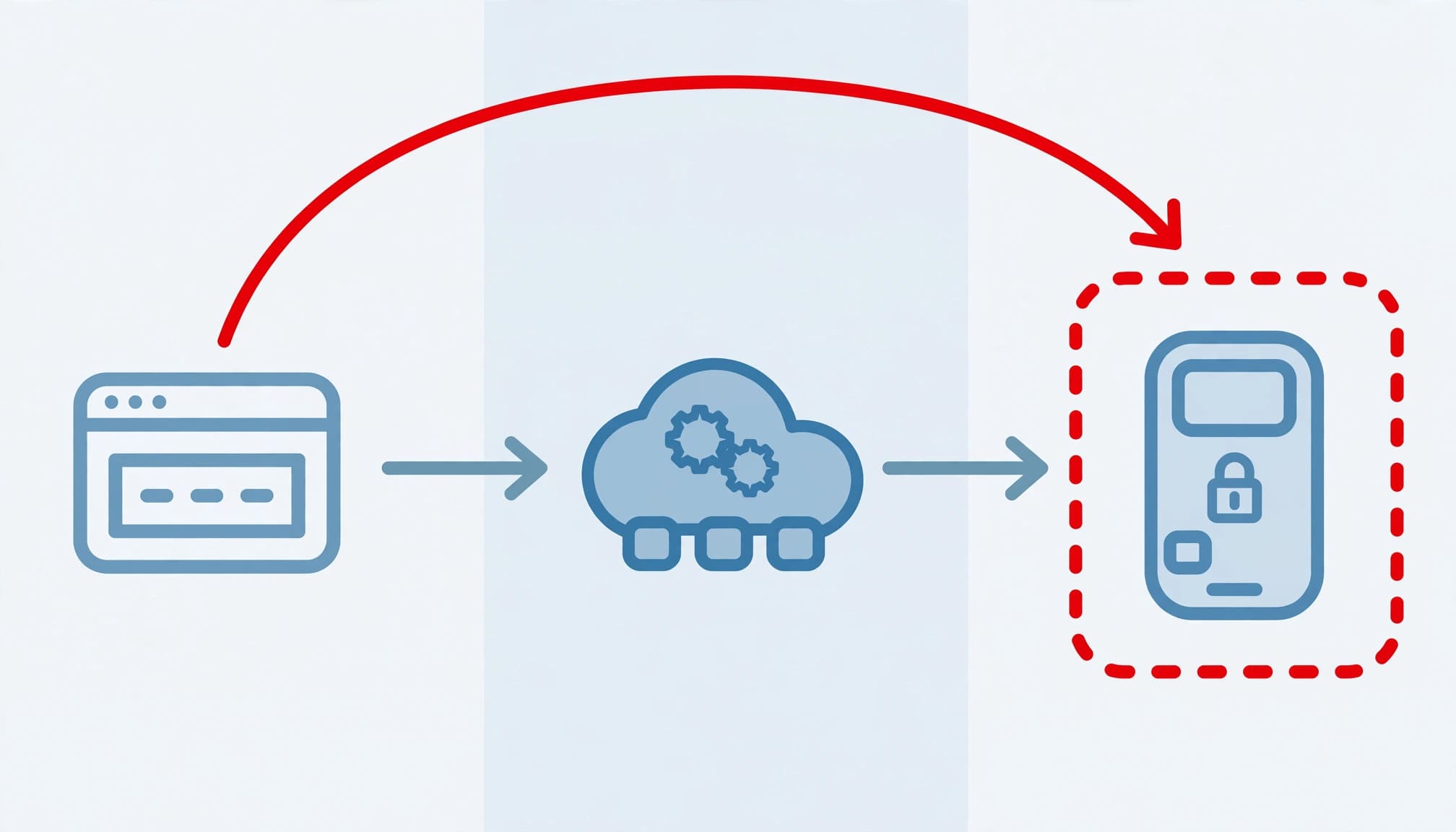
With Stripe’s hosted Checkout, your backend creates a Checkout Session and redirects the customer to Stripe’s payment page. Stripe collects payment details, and your application receives payment-status information through webhooks.
Map that flow through the browser, application backend, Stripe-hosted page, webhook endpoint, and billing records. Identify exactly which fields each component receives.
This design can keep primary account numbers and raw cardholder data away from your application servers, preventing CHD from touching backend databases. However, payment-page configuration, redirect logic, privileged access, and deployment permissions still need assessment.
Inspect actual request payloads and logging settings. A diagram won’t reveal card numbers accidentally captured in support attachments or telemetry.
Choose the integration before committing the budget
Your payment design changes both exposure and assessment effort.
| Integration | Card-data path | Main scoping concern |
|---|---|---|
| Hosted redirect | Customer enters details on the provider’s page | Remaining merchant controls and redirect security |
| Embedded provider fields | Provider-controlled elements collect details within your site | Page implementation and script-related risks |
| Direct card-data API | Your systems receive payment details | Wider application, infrastructure, and operational scope |
Hosted collection usually offers a narrower starting point. Direct handling gives you more responsibility without necessarily creating customer value.
The assessment route follows your role and eligibility. SAQ A, SAQ A-EP, and SAQ D aren’t interchangeable levels you select by preference.
The official PCI DSS document library contains the questionnaires and their eligibility criteria. SAQ A requires qualifying outsourced payment arrangements. SAQ A-EP addresses certain e-commerce designs where your website can affect payment security without receiving account data.
For service providers eligible for self-assessment, SAQ D is the available questionnaire. Other validation obligations can require a Report on Compliance.
Set the applicable validation route before estimating delivery effort. Ask your acquirer or Qualified Security Assessor (QSA) clear questions about your architecture. These steps help you forecast long-term PCI DSS compliance costs.
Reduce exposure without outsourcing accountability
Remove unnecessary data and limit token access
If you have no business need to retain cardholder data, don’t store it. Remove unnecessary copies in databases, exports, logs, backups, and support systems.
Sensitive authentication data, such as card verification codes, must not remain after authorization, even when encrypted.
Tokenization replaces sensitive cardholder data with a substitute value. A token-only system may qualify for exclusion when it cannot recover the account number and cannot otherwise affect CDE security.
However, token vaults, detokenization permissions, and systems that receive raw card details remain relevant. Follow the re-identification path before claiming scope reduction.
Define the provider’s responsibilities
Outsourcing shifts work, but you retain responsibility for monitoring your third-party service providers and verifying their applicable PCI DSS compliance.
For each material provider, retain its Attestation of Compliance covering the relevant service. Record shared responsibilities, contractual acknowledgments, incident obligations, and annual compliance-status reviews.
Your vendor risk management should also cover offboarding: remove credentials, disable integrations, and handle retained data according to contract.
For in-person payments, PCI SSC-listed P2PE solutions can reduce scope. PCI PTS-approved standalone terminals without electronic storage and paper imprint machines can also reduce electronic exposure. These options still leave operating duties, including physical security or paper-record protection, and don’t replace a SaaS checkout design.
Prove segmentation in cloud and hybrid environments

Examine access paths beyond the network diagram
Network segmentation isn’t a PCI DSS requirement. However, effective segmentation is strongly recommended because it can reduce assessment scope, cost, and operating effort.
A separate cloud account or virtual network doesn’t establish isolation by itself. Shared identity, management consoles, deployment roles, secrets stores, and administrative workstations can cross that boundary.
In hybrid environments, include VPNs, corporate identity federation, MSP access, and recovery connections. Also examine serverless functions and managed services. Your cloud provider’s compliance covers its responsibilities, not every configuration you control.
PCI SSC’s modern network architecture guidance addresses scoping beyond traditional network boundaries.
Test the boundary you claim
Segmentation testing should attempt access from claimed out-of-scope environments into the CDE. This validates the assessment boundary across network paths and administrative access control mechanisms.
Retain the test scope, source locations, attempted routes, results, and remediation evidence. A vulnerability scan alone doesn’t prove isolation.
Under PCI DSS v4.0.1 Requirement 11.4.5, segmentation penetration testing occurs at least annually and after changes to segmentation controls or methods. Service providers have additional six-month testing requirements.
Reassess scope after new integrations, cloud deployments, or privileged-access changes. Otherwise, yesterday’s evidence may describe a boundary that no longer exists.
Make scope a launch decision with named owners
Assemble evidence that matches daily operations
Use PCI DSS v4.0.1 as your latest PCI DSS requirements baseline. Your evidence pack should contain dated data-flow diagrams, system classifications, access reviews, provider agreements, test results, and remediation records.
Keep each out-of-scope claim beside its supporting evidence and accountable owner. Policies alone won’t demonstrate that controls operate.
Requirements 7 and 8 address access restrictions and identification and authentication. Requirement 11 addresses security testing. NIST SP 800-53 controls CM-8 and AC-3 can support your inventory and access-control discipline, but they don’t replace PCI DSS requirements.
This evidence also supports enterprise customer reviews and technology due diligence. When gaps remain, show the business impact, remediation cost, owner, deadline, and acceptance criteria.
Approve the operating commitment
Engineering should own architecture and implementation. Security should own scope validation and control evidence. Finance and legal should own acquiring arrangements and payment-provider contracts.
A fractional CTO can coordinate architecture tradeoffs when executive capacity is limited. Fractional CISO support can strengthen security governance and maintain continuous PCI DSS compliance without removing internal accountability.
Before launch, require a scope statement, the agreed validation route, an operating budget, and closure of launch-blocking findings. Executive risk acceptance cannot make an unmet PCI DSS requirement compliant.
For board cybersecurity reporting, summarize material exposure, overdue remediation, provider-review status, and decisions requiring approval.
Frequently asked questions
Does tokenization remove PCI DSS scope entirely?
No. Token-only components may qualify for exclusion, but the vault, recovery permissions, and security-impacting systems still need assessment. Your implementation determines the boundary.
Does SOC 2 replace PCI DSS?
No. SOC 2 and PCI DSS address different scopes and obligations. A SOC 2 report can support vendor due diligence, but it doesn’t establish that a payment service meets applicable PCI DSS requirements.
What should a vulnerability management program achieve?
A vulnerability management program should identify, prioritize, and remediate weaknesses before attackers exploit them. Scanning, patching, penetration testing, and retesting support that work. A completed test without remediation evidence leaves the exposure unresolved.
Approve payments with a defensible boundary
Your strongest pre-launch decision is a payment design with clear ownership and proven boundaries. Smaller scope helps only when real data flows and access controls support it.
Require evidence before committing to launch. Then maintain that boundary as integrations, privileges, and providers change.
If payment architecture and compliance ownership remain unclear, Get an Executive Technology Clarity Check to establish sharper priorities and a practical next step.