
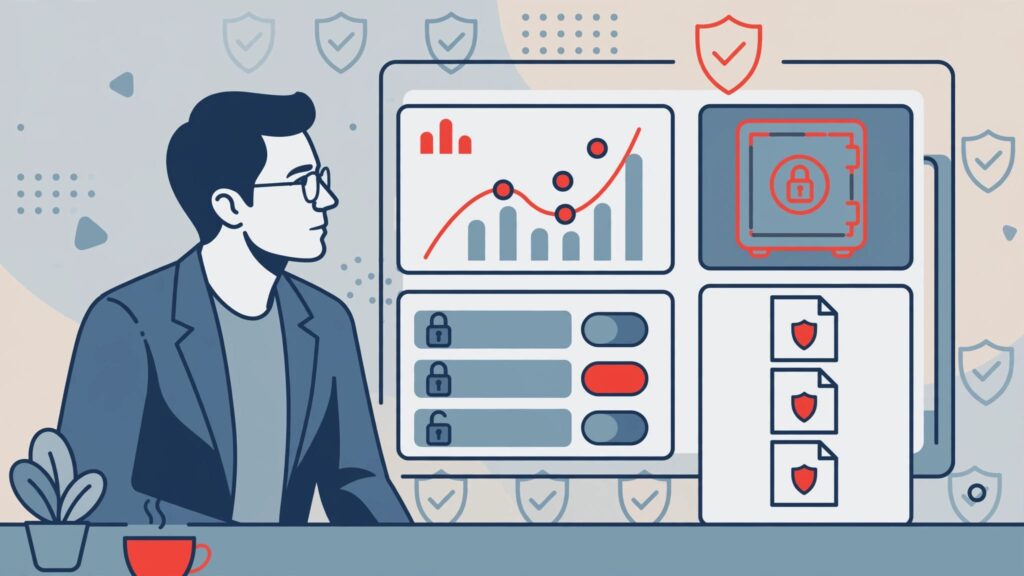
Before you sign an enterprise deal, evaluate SaaS audit logging against the evidence your customer and its security team need, not whether your product has a logging feature. You need to show which actions you capture, who can retrieve records, and how you protect their integrity.
A weak answer can delay security approval or create a contractual promise your team can’t keep. Your first priority is operating evidence from audit logging, backed by clear ownership and tested controls.
Start with what your customer must be able to reconstruct.
Key takeaways for enterprise deal readiness
- Require a demonstration covering customer activity and your own privileged access.
- Test tenant isolation, export completeness, and protection against tampering.
- Separate legal obligations from customer requirements when setting retention.
- Approve commitments against demonstrated capability, named owners, and documented gaps.
Define what SaaS audit logging must prove
A useful record explains the action
An audit log is a chronological record that answers who did what, where, and when. A useful event identifies the affected component, actor, execution time, and action type. These are the foundations of an audit trail used for investigations.
For your SaaS product, require audit logs to include tenant identifiers, stable user or service identities, affected resources, outcomes, and correlation identifiers. Record timestamps consistently, usually in UTC, and synchronize system clocks.
For permission changes, capture the previous and new state where appropriate. However, don’t put passwords, access tokens, or unnecessary personal information into records.
Different logs answer different questions
CrowdStrike’s taxonomy separates internal-user and service audit records from external-user application logs and software-level system logs. That distinction describes one classification, not a universal boundary.
Your enterprise buyer needs evidence of customer actions and your staff’s privileged actions. Meanwhile, debugging and system-health records explain failures and performance. They rarely provide a complete customer-facing audit trail.
Define coverage by event and investigative purpose rather than accepting a label.
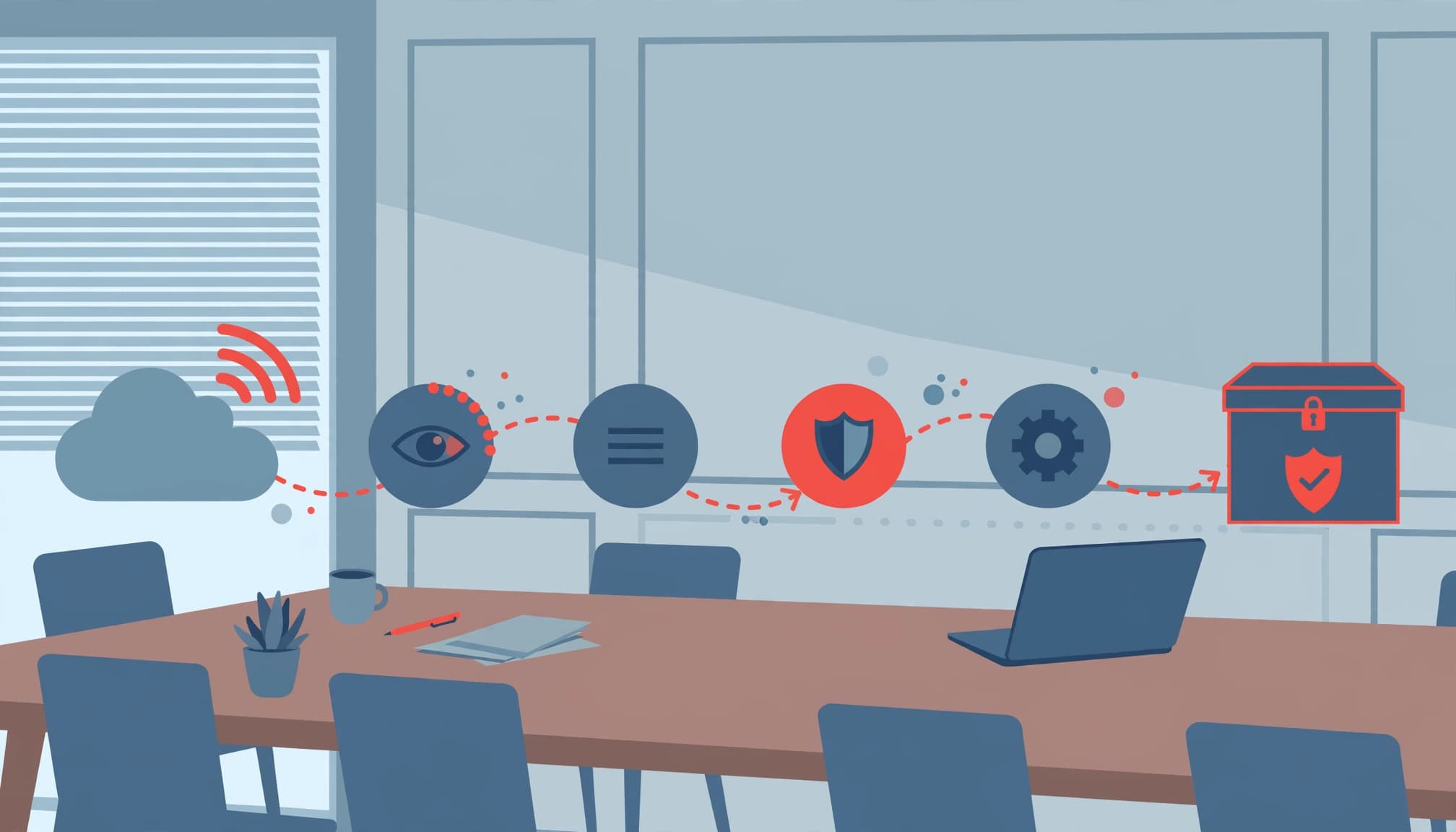
Require a demonstration of customer-ready evidence
Test tenant activity and provider access
Ask your team to demonstrate role changes, account termination, data exports, API credential creation, and changes to security settings. Include denied actions where they matter for investigation.
Then test your support and engineering access. Your records should distinguish the staff member, affected customer, reason for access, and any impersonation session. A shared administrator identity weakens accountability.
Test cross-tenant access directly. A customer administrator must never retrieve another tenant’s records, including through search, exports, or an API.
Make exports usable outside your product
Require your team to retrieve records through the customer’s actual subscription and permissions. Measure the delay between an action and its availability.
Export a representative dataset of audit logs as evidence for the customer’s security review. Inspect timestamps, identifiers, event descriptions, pagination, and missing fields. Timestamps and identifiers help investigators reconstruct events during forensic analysis. For API delivery, test rate limits, retries, and interruptions.
Your customer should be able to ingest the output into its security platform without undocumented engineering work. Also establish what remains available after termination.
A screenshot demonstrates a screen. A repeatable export demonstrates a capability.
Put formats, delivery obligations, retention, transition access, and charges into the agreement. Otherwise, sales may promise evidence that engineering can produce only through manual intervention.
Protect records and limit access
Give each role the access it needs
Use role-based access controls to limit access to sensitive audit data. Set access control by role: security staff need relevant investigation events; compliance staff need reporting evidence; support needs narrower access. Customer administrators may need tenant-specific records, while ordinary users generally don’t.
System administrators may operate the logging pipeline. That responsibility shouldn’t automatically grant unrestricted access to sensitive records or permission to erase evidence.
Separate access administration from monitoring where practical. Also record who reads or exports audit data, since the records themselves can expose customer information.
Protect confidentiality, integrity, and availability
Encrypt records in transit and at rest. Use append-only or write-once storage to make records tamper-evident, with retention controls that prevent unauthorized changes. Nobody should be able to silently edit retained events.
Cryptographic hashes or digital signatures can make alterations detectable. However, a hash stored beside a freely editable record provides weak assurance. Protect the verification material and access path separately.
If the same privileged account can change customer permissions and erase the corresponding event, your investigation depends on that account’s cooperation.
Finally, test retrieval and recovery. The CIA triad includes availability, so inaccessible records can fail an investigation even when encryption works.
Separate product events from infrastructure coverage
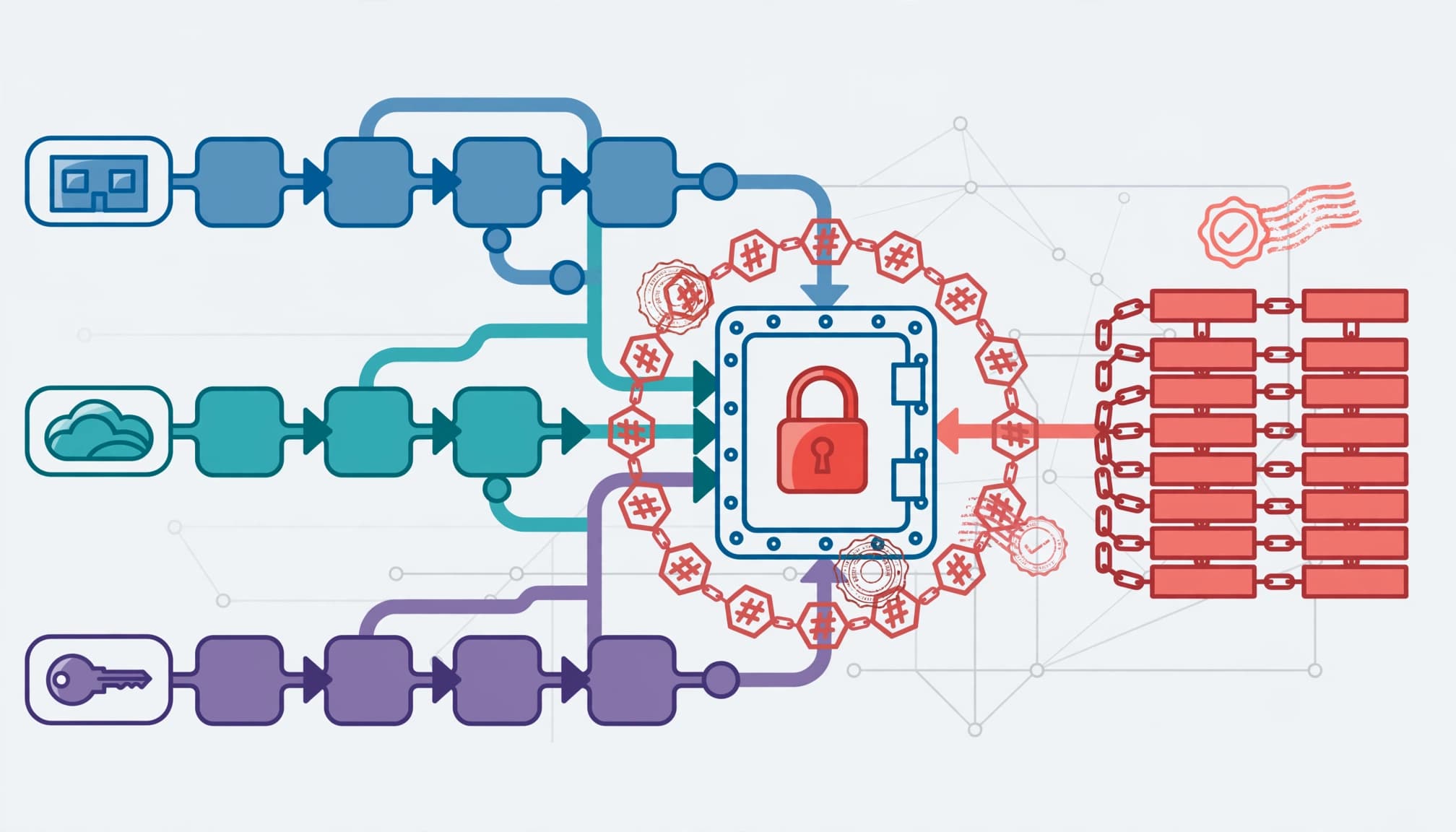
Cloud and database logs support your evidence chain, but they don’t automatically explain business actions inside your application.
AWS CloudTrail, Google Cloud Audit Logs, and Azure Monitor provide cloud infrastructure logging capabilities. Your engineering team must map the required sources and configuration to your environment. Correlate system logs and database audit logs with application events. Centralized logging brings these sources together.
Database options include pgAudit for PostgreSQL, MySQL Enterprise Audit, and MongoDB auditing. Depending on configuration, these can capture connections, disconnections, schema changes, and other database activity. However, a database identity may not identify the customer user who initiated an action.
Your operational vendors also have audit trails. For example, Datadog Audit Trail records activity within Datadog, including user actions, API requests, and resource changes. That supports vendor oversight but doesn’t replace your product’s customer-event records.
Require correlation identifiers across layers so log analysis can reconcile identities and timestamps. Otherwise, your team may spend incident hours resolving mismatched records.
Include logging providers in third-party risk management. Document data locations, subprocessors, access permissions, log management ownership, incident cooperation, and vendor offboarding. A separate logging service can create data privacy exposure even when your application hosting boundary is clear.
Set retention, review, and cost commitments
Base retention on applicable obligations
HIPAA, PCI DSS, GDPR, and ISO 27001 can influence logging requirements. ISO 27001 compliance and other obligations depend on your customers, data, processing role, systems, and contracts.
Avoid treating every framework as a fixed retention schedule. The HHS Security Rule summary describes a six-year requirement for required Security Rule documentation. That isn’t a blanket six-year rule for every raw event.
Set a documented log retention schedule for each record class. Define the retention period for searchable records and archives, along with deletion, legal holds, and customer access.
Because audit logs may become legal evidence, preserve relevant records after a subpoena or investigation trigger. Keep them available for cyber forensics after major incidents, unplanned downtime, or other internal investigations.
Budget for operation, not storage alone
Your log management cost model should include ingestion, indexing, searchable storage, archives, exports, and staff time. Data volume can rise sharply as customers, integrations, and automated activity grow.
Use quotas and alerts to control unexpected growth. However, don’t silently discard required security events when you reach a limit.
Choose review frequency by risk. High-risk alerts may need daily attention and real-time monitoring; broader reviews may run weekly, monthly, or quarterly. Also trigger reviews after incidents, significant releases, and changes in threats.
Measure collection failures and retrieval performance. Storing records without monitoring the pipeline can leave you with an undetected evidence gap.
Make the deal decision and assign ownership
Your approval should connect customer security requirements to demonstrated audit logging capability and the promises in the deal. A completed questionnaire or SOC 2 report doesn’t establish that every promised event exists.
Use a short decision record for the deal, including customer compliance requirements.
| Decision | Evidence required |
|---|---|
| Approve the commitment | Tested coverage, export, protection, and retention |
| Approve with an exception | Documented limitation and explicit customer agreement |
| Delay the commitment | Material gap with no acceptable workaround |
The decision should make clear what you can support today. Don’t describe roadmap work as an operating control.
Assign an executive owner, engineering delivery owner, and security reviewer. A fractional CTO or fractional CISO can help coordinate the review, but internal accountability remains with your business.
Keep a secure evidence folder with the coverage map, test results, access reviews, retention configuration, and unresolved exceptions. Preserve relevant records and documented exceptions in case of legal disputes.
Where gaps remain, name the business impact, remediation cost, deadline, and acceptance criteria.
For board-ready cybersecurity reporting, report material exposure, including security incidents, rather than total log volume. Useful measures include missing required events, failed deliveries, overdue remediation, and commitments at risk.
Your technology roadmap should separate work required before signature from improvements that can follow. That protects the deal without allowing one customer’s request to redirect every engineering priority.
Frequently asked questions
Does a SOC 2 report prove audit logging is ready?
No. It provides assurance about controls within its scope and reporting period. You still need event-level evidence, tenant-isolation tests, export results, and a clear mapping to your customer’s requirements.
Should enterprise customers see every internal event?
Usually not. Give customers relevant tenant-level evidence without exposing other customers, sensitive infrastructure details, or unnecessary personal information. Define how you will share provider-access evidence during investigations.
Can you launch with manual exports?
Yes, if the contract allows them and your team can meet the agreed scope and delivery time. Test the process, assign backup ownership, and include staff effort in the cost model. Manual delivery becomes risky when demand exceeds capacity.
Who should own remaining logging gaps?
Name one accountable executive and a delivery owner for each material gap. Security defines acceptance criteria; engineering demonstrates closure. Sales should use that evidence before changing a customer-facing commitment.
Approve promises your team can demonstrate
Enterprise-ready SaaS audit logging gives you a defensible account of customer and privileged activity. Your decision should rest on tested evidence, with explicit limits and accountable owners.
Before the next contract review, require one end-to-end demonstration and a short gap summary. If ownership or priorities remain unclear, Get an Executive Technology Clarity Check to identify what needs executive attention before you commit.