
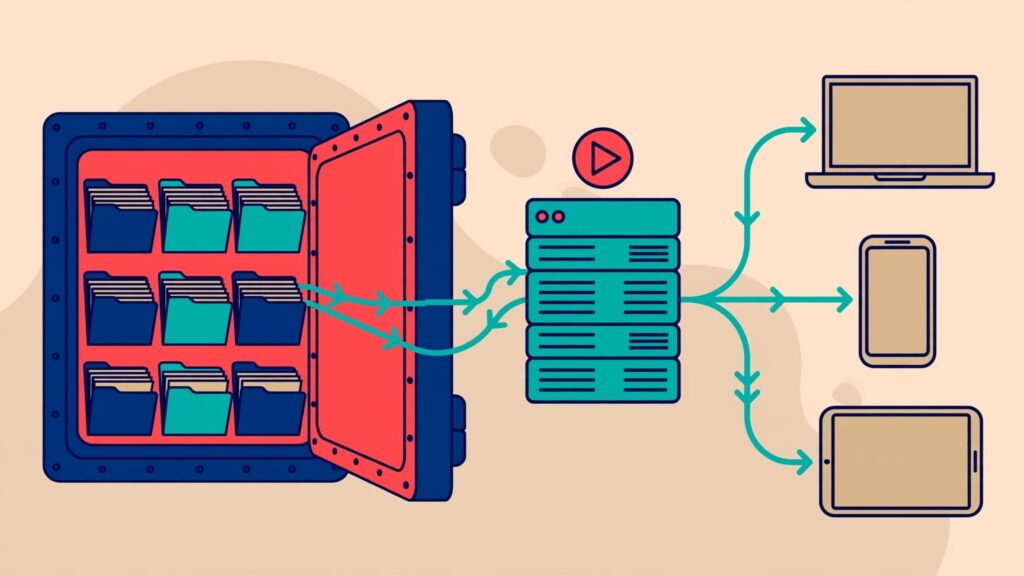
Your vendor can disappear while your business still depends on its software. Source code escrow can support business continuity, but only when the released materials provide a workable path to recovery.
A signed agreement doesn’t prove you can keep serving customers. You need usable evidence that someone can access, build, operate, and maintain the software without the original vendor.
Start with the dependency that could stop your business, then decide which protections would reduce it.
Key Takeaways for Source Code Escrow
- Escrow is useful when critical software is difficult to replace and you have a credible maintenance plan.
- Your agreement needs defined release events, usable license rights, current deposits, and a clear dispute process.
- Technical verification should prove an independent team can build and test the software.
- For SaaS, source code alone won’t restore customer data, cloud infrastructure, or service access.
What Source Code Escrow Actually Protects
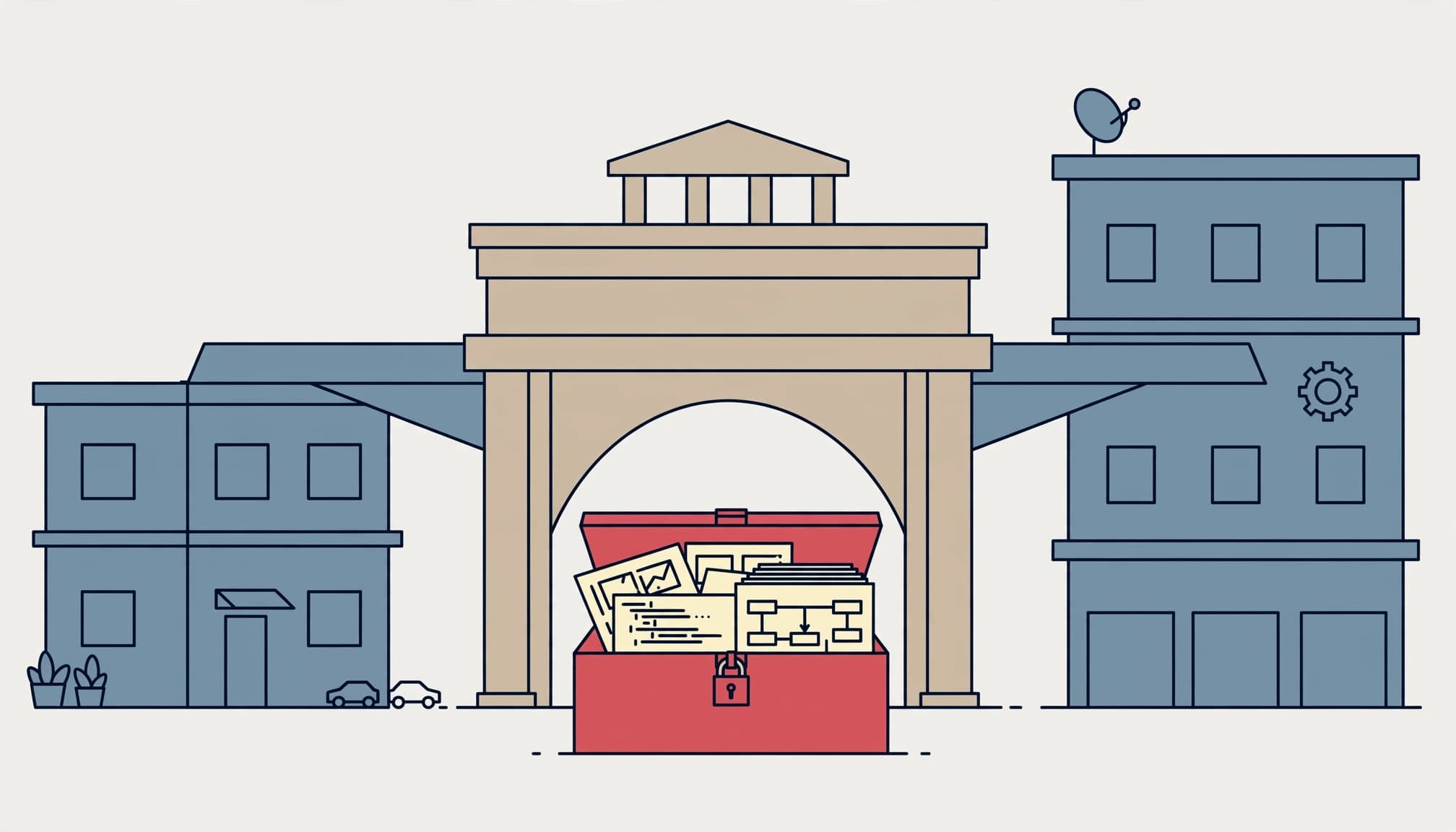
The parties and the deposit
A standard arrangement involves your software vendor, your business as the licensee or beneficiary, and a neutral escrow agent. In this third-party escrow arrangement, the escrow agent holds agreed deposit materials in an escrow account. The escrow agent manages release requests under the software escrow agreement.
Your deposit materials should include everything needed for the intended recovery. That usually means source code, build instructions, dependency versions, deployment configuration, tests, and technical documentation.
The vendor generally retains its intellectual property; an ip assignment would be needed to transfer ownership. Escrow gives you conditional access under the license agreement and software license terms. It doesn’t automatically transfer ownership.
The limits of the protection
Source code escrow often focuses on development materials. Broader software escrow may include additional operational assets. Those labels don’t establish a universal legal distinction. The deposit schedule determines what you receive.
Missing libraries, outdated instructions, or inaccessible commercial components can prevent recovery. Released files also don’t provide engineering capacity.
Check software ownership and licensing rights alongside the technical deposit. Possessing code and having permission to use it are separate questions.
When Vendor Failure Justifies Escrow
Escrow is a practical risk mitigation measure when your business depends on a software vendor that controls software supporting revenue, customer commitments, or essential operations. The case strengthens when replacing a consequential enterprise software system would take longer than your business can tolerate.
Start with your systems inventory. Identify the affected process, acceptable interruption, business continuity needs, available workarounds, and realistic recovery and replacement times.
Use the dependency to choose the protection.
| Your situation | The stronger starting point |
|---|---|
| Critical licensed software with an independent team capable of software maintenance and recovery | Verified escrow with usable release rights |
| Custom development funded by your company | Clear ownership, company-controlled repositories, and handover obligations |
| Hosted SaaS with difficult data migration | Tested exports, transition support, and a cloud continuity plan |
| Easily replaceable software with limited operational impact | A documented replacement and vendor offboarding plan |
Escrow is most credible when maintaining the existing system buys you time to migrate safely.
For company-owned custom software, GitHub or GitLab repositories under your control may reduce dependence earlier. You still need build documentation, deployment access, and clear contributor rights.
Make this choice during vendor due diligence and software platform evaluation. Waiting until the supplier is distressed leaves you with less negotiating power.
Make Release Rights Usable Under Pressure
Define events, evidence, and deadlines
Common negotiated trigger events include insolvency, cessation of business, discontinued maintenance, or an uncured material contract breach. These release events should be defined in the agreement, since negotiated trigger events aren’t automatic release instructions.
An acquisition alone may change ownership without interrupting service. If change of control matters, define the resulting risk and the condition that activates protection.
Your software escrow agreement should define release events, required evidence, notification duties, cure periods, objection rights, and dispute resolution. Also review how the escrow account is administered.
Compare the timeline for a contested release with your operational tolerance. A valid claim delivered too late may offer little practical protection.
Establish the license before the crisis
Ask counsel whether a present license grant, exercisable under defined conditions, would better support continuity than a promise to negotiate rights later.
The scope should address use, modification, hosting, and maintenance by an approved replacement provider. Review restrictions affecting affiliates, transfers, and commercial dependencies.
In the United States, Section 365 of the Bankruptcy Code provides protections for certain intellectual-property licensees when an executory contract is rejected. It doesn’t make every escrow release automatic or guarantee continued support, so legal protection has limits.
Have counsel review applicable law, bankruptcy exposure, and the relationship between the license agreement and escrow terms.
Test the Deposit Before You Need It

Require an independent build
A deposit receipt proves files arrived. Stronger technical verification proves an independent engineer can build the relevant source code in a clean environment.
Require a component inventory showing versions, sources, license records, restrictions, and owners. Include vendor-owned modules, open-source packages, and commercial dependencies in the deposit materials.
Test the deposit materials against the production version your business uses, and confirm they match the files covered by the escrow account arrangement. Agree on updates after relevant releases, plus a recurring verification schedule.
Record missing materials and require correction. An outdated deposit can leave you trying to recover a system your business no longer runs.
Prove someone can maintain it
Successful compilation is one checkpoint. Your designated team should also deploy the application, run representative tests, and understand essential integrations.
Identify a qualified software developer or team to perform emergency maintenance. Confirm availability, skills, access requirements, and funding. Your fractional CTO or interim CTO can own the decision, but you still need engineers capable of operating the system.
NIST’s contingency planning guidance supports evaluating recovery requirements and priorities. Apply that discipline to this dependency.
If recovery depends on the original vendor explaining undocumented steps, the deposit hasn’t removed that dependency.
SaaS Continuity Needs More Than Source Code
With hosted software, the vendor also controls an operating environment. Your released source code alone won’t restore customer data, infrastructure, or service access.
Require usable data exports, database schemas, integration documentation, and defined transition assistance. Test whether the export can be imported elsewhere. A downloadable file can still be an unusable exit path.
If continued hosting is the intended recovery, address infrastructure configuration, tenant separation, and third-party licenses. Define lawful access to operational assets in ways that protect privacy and regulatory compliance. Handle credentials through approved security controls.
The Object Management Group’s cloud service agreement guidance offers broader contract context. Your SaaS contract due diligence should connect service commitments with data portability and termination rights.
Also separate vendor failure from a security incident. A vendor incident response plan needs notification, containment, customer communication, and recovery ownership. Escrow doesn’t replace a tested incident response plan, legal protection, backups, or disaster recovery planning.
Budget for Recovery, Not Just the Escrow Account
Published provider prices show why you need to compare scope.
EscrowTech lists software escrow starting at $1,595 annually, plus a $995 setup fee. Praxis publishes annual fees starting at $4,500, with technical verification priced between $2,750 and $29,000. These are provider-specific examples, not market averages or equivalent packages.
Ask what each quote includes: deposit updates, verification depth, beneficiary coverage, release administration, and dispute-related charges. Budget legal protection and review separately from provider fees and recovery expenses, since complexity, negotiation, and jurisdiction affect legal costs.
Allocate fees explicitly. Michigan’s published procurement contract illustrates contractual allocation of escrow costs.
Then budget for replacement engineers, infrastructure, security review, and migration. The annual account fee is only one part of recovery cost.
Your technology ROI question is practical: does this arrangement reduce a material interruption risk more effectively than an alternative? Compare it with ownership improvements, earlier replacement, or stronger exit provisions.
Put Vendor Dependency in Your Leadership View
Give one executive ownership of the continuity decision. Legal manages contractual rights. Engineering validates recovery. Finance confirms funding. Security reviews access and data privacy.
Where you have a technology leadership gap, fractional CTO services can connect those responsibilities. The outcome should be clearer accountability, not another advisory report.
Your board-ready risk summary should show the business process exposed, last successful verification, release timeline, recovery owner, estimated cost, and unresolved decisions. Good third-party risk reporting makes the dependency visible without asking directors to inspect repositories.
During acquisition readiness, test whether licenses and escrow benefits transfer to the buyer or require consent. Include this in technology rights diligence, alongside contributor assignments, ip assignment, transfer restrictions, and component restrictions.
Put remediation into your technology roadmap with an owner and deadline. A scheduled review should track deposit freshness, confirm deposit materials remain current, and assess material vendor changes and recovery readiness. That turns vendor risk management into an ongoing leadership responsibility.
Frequently Asked Questions
Does source code escrow transfer ownership?
Usually, your vendor keeps ownership and you receive defined access or usage rights after qualifying release events. Your agreement controls the result. For commissioned software, review assignment provisions separately and distinguish company-owned deliverables from licensed components.
Can a smaller business use escrow effectively?
Yes, if your dependency warrants the cost and a qualified team can support recovery. You can commission an independent build test and arrange replacement engineering support. Match verification depth to business impact rather than buying an untested arrangement for reassurance.
Does vendor bankruptcy guarantee release?
No. Bankruptcy does not guarantee release, since it may not qualify under your agreement’s release events. Your agreement, applicable law, bankruptcy proceedings, and any objections affect claims based on the trigger events. Have counsel assess the trigger language and license rights before signing. Keep a fallback plan for a delayed or disputed release, because operations may need attention before the legal process finishes.
Make the Recovery Path Defensible
Source code escrow protects your business when source code rights, verified materials, technical capability, and recovery timing align. Your strongest evidence is a tested recovery path with clear ownership.
Start with the vendor whose failure would create the greatest operational interruption. Ask for the latest verification result and name the person accountable for closing the gaps.
If that ownership is unclear, Get an Executive Technology Clarity Check to establish sharper priorities and a practical next step.