
The pace of change in 2025 is faster than ever, and organizations must go beyond operational efficiency to achieve strategic alignment. Leaders today are confronted with misaligned teams, wasted resources, and missed opportunities when strategic alignment is lacking.
Research shows that organizations with strong strategic alignment consistently outperform their peers in growth, innovation, and resilience. By making strategic alignment a priority, you position your business to adapt and thrive in uncertain markets.
This comprehensive guide will help you master strategic alignment by aligning your vision, strategy, people, and technology to drive measurable success.
You will discover what strategic alignment truly means, the key steps to achieve it, how to connect technology and operations, how to track your progress, and how to avoid common pitfalls along the way.
Ready to unlock your organization’s full potential? Explore the path to strategic alignment for 2025 and set your business up for long-term success.
Understanding Strategic Alignment: The Foundation for Success
Strategic alignment is the backbone of high-performing organizations, especially in unpredictable times. In 2025, rapid market shifts and evolving customer needs make it essential for every part of your business to move in the same direction. Without strategic alignment, even the best strategies can fall short, leading to wasted resources and missed opportunities.
What is Strategic Alignment?
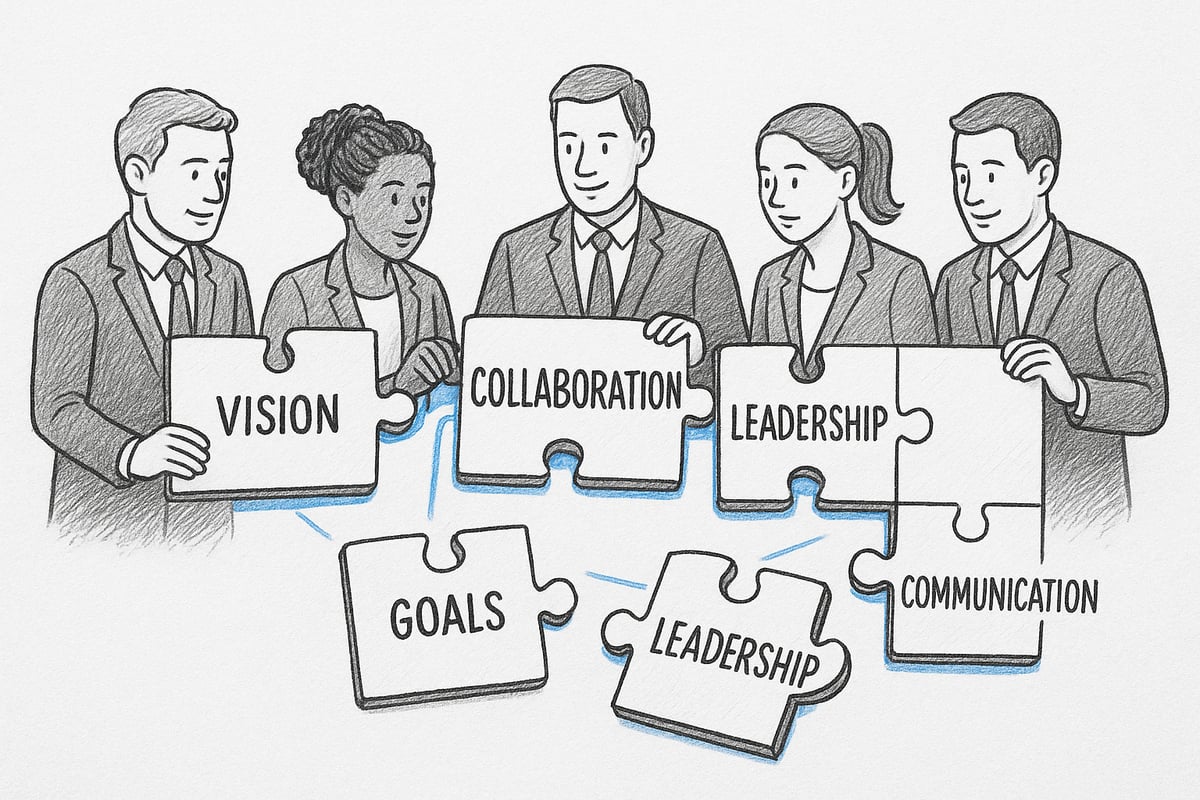
Strategic alignment is the process of ensuring that every aspect of an organization, from its vision down to daily operations, works toward shared goals. Unlike simple coordination, which focuses on short-term tasks, strategic alignment creates a unified direction that influences decisions and actions at every level.
In 2025’s volatile environment, this approach is more important than ever. According to Harvard Business Review, organizations with strong strategic alignment are twice as likely to achieve top-quartile financial performance. For example, one company’s misaligned product launch resulted in missed revenue targets when marketing and product teams followed different priorities. This highlights how critical it is to prioritize strategic alignment.
Key Pillars of Strategic Alignment
To achieve strategic alignment, organizations must focus on several key pillars:
- Vision and mission clarity: Clear purpose guides every decision.
- Cascading goals: Objectives flow from the top down, ensuring every team contributes.
- Cross-functional collaboration: Teams break out of silos and work together.
- Leadership commitment: Executives model and reinforce alignment.
- Transparent communication: Information flows freely, reducing confusion.
A retail chain recently implemented these pillars and saw 15 percent higher growth compared to competitors. Their success shows how strategic alignment can drive measurable business outcomes and resilience.
The Risks of Misalignment
When strategic alignment is lacking, organizations experience common symptoms such as siloed teams, duplicated efforts, and conflicting priorities. According to PMI, 67 percent of strategies fail due to poor execution and misalignment, leading to lost market share, decreased employee engagement, and customer churn.
One tech company, for instance, lost its competitive edge because fragmented strategies left teams working in isolation. For more insights on how misaligned goals create hurdles and actionable solutions for effective execution, see the 2025 State of Strategy Execution Report.
The 5-Step Roadmap to Achieving Strategic Alignment in 2025
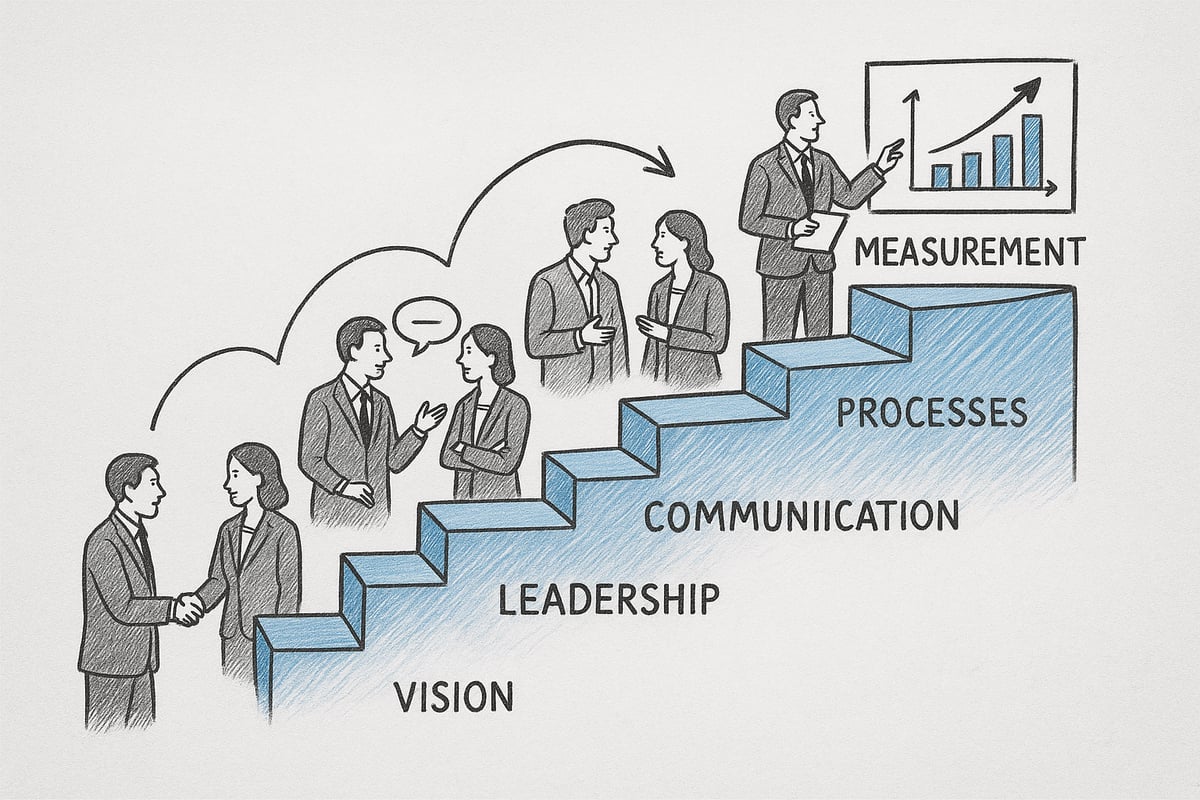
Achieving strategic alignment in 2025 requires a clear, actionable process. The following five-step roadmap will help your organization unite vision, leadership, communication, processes, and measurement for lasting success.
Step 1: Clarify Vision and Strategic Objectives
Begin by establishing a clear, inspiring vision. Strategic alignment starts when everyone understands what the organization aspires to achieve. Translate this vision into specific, measurable objectives that guide daily actions.
For example, a manufacturer pivoted to focus on sustainability. By making sustainability central to its vision and setting clear objectives, the organization unified teams across departments. This clarity ensures that every initiative aligns with the broader mission, minimizing wasted effort and confusion.
Step 2: Engage and Align Leadership
Leadership plays a pivotal role in strategic alignment. Both C-suite and middle managers must internalize and champion the vision. Cross-departmental workshops and alignment sessions foster shared understanding and break down barriers.
Research shows organizations with aligned leadership teams are nearly twice as likely to exceed performance targets. Open dialogue and regular check-ins help leaders stay on the same page, reinforcing alignment as a top priority.
Step 3: Communicate and Cascade Goals
Effective communication ensures that strategic alignment flows from the top down. Use frameworks like OKRs or SMART goals to set and share objectives at every level. This approach makes expectations transparent and actionable.
A SaaS company, for instance, used OKRs to align teams on product priorities, improving delivery speed and cohesion. For deeper guidance on cascading goals and aligning teams, see How to Get My Team Aligned Around Strategy.
Step 4: Align Processes, Systems, and Resources
Map business processes directly to strategic alignment objectives. Review systems and resource allocation to ensure they support your goals. When a retailer restructured its supply chain to better reflect its strategy, it improved efficiency and customer satisfaction.
Regular audits and process mapping help identify disconnects. Allocate resources to initiatives that drive alignment, preventing duplication and ensuring optimal use of talent and technology.
Step 5: Monitor, Measure, and Adapt
Establish clear KPIs and alignment metrics to track progress. Strategic alignment is not a set-it-and-forget-it effort. Use feedback loops, regular reviews, and adaptable plans to stay on course.
Organizations with continuous alignment reviews experience up to 30 percent faster growth. By measuring outcomes and making data-driven adjustments, your business remains agile and resilient in a changing market.
Technology as a Catalyst for Strategic Alignment
Technology plays a central role in driving strategic alignment, especially as organizations face increasing complexity in 2025. Digital tools now make it possible to connect people, processes, and data across departments, ensuring everyone is moving in the same direction. By integrating operations with real-time analytics and collaborative platforms, leaders gain visibility and control that supports unified decision-making.
Modern enterprise resource planning (ERP) systems are a prime example. When a company implements an ERP solution, finance and operations teams can access unified data, reducing confusion and aligning their activities with overarching business goals. This integration is essential for achieving true strategic alignment in a rapidly evolving business environment.
The Role of Technology in Alignment
Strategic alignment relies on technology to break down silos and foster collaboration. When organizations deploy digital tools, they create transparency that allows teams to see progress, identify bottlenecks, and adjust quickly. Integrating data systems further supports unified decision-making by providing a single source of truth.
For instance, an ERP implementation can bridge gaps between departments, ensuring everyone is working from the same data. This approach streamlines workflows and aligns daily operations with strategic objectives. As technology continues to evolve, it will become an even more powerful enabler of strategic alignment within modern organizations.
Overcoming Technology-Strategy Gaps
Despite advances, many companies struggle with technology-strategy gaps. Common challenges include legacy systems that limit flexibility, shadow IT that creates risk, and software investments that do not match business priorities. These disconnects can undermine strategic alignment and slow progress.
To bridge these gaps, leaders must assess their current technology landscape and prioritize solutions that support the organization’s vision. According to McKinsey, 70% of digital transformation projects fail due to lack of alignment between technology and strategy. By focusing on integration and strategic fit, companies can avoid costly setbacks and unlock the full potential of their digital investments.
Leveraging Fractional Technology Leadership for Alignment
Fractional technology leaders such as CTOs, CIOs, and CISOs offer organizations a flexible and cost-effective way to accelerate strategic alignment. These professionals bring unbiased, executive-level expertise without the commitment of a full-time hire. They can quickly assess gaps, recommend best practices, and guide the organization toward measurable outcomes.
A mid-sized business, for example, engaged a fractional CIO who reviewed their IT roadmap and realigned technology investments with business goals. This shift resulted in $1 million in cost savings and improved agility. The strategic alignment provided by fractional leaders often delivers rapid and tangible benefits.
| Leadership Option | Cost Effective | Speed of Alignment | Depth of Expertise |
|---|---|---|---|
| Fractional CTO/CIO | Yes | Fast | High |
| Full-Time Executive | No | Moderate | High |
| Internal Promotion | Varies | Slow | Moderate |
How CTO Input Drives Strategic Technology Alignment
CTO Input partners with organizations to assess their current strategic alignment, pinpoint technology gaps, and develop clear roadmaps for improvement. With proven frameworks and deep industry expertise, fractional executives help align technology with business objectives for maximum impact.
Clients benefit from cost reductions, risk mitigation, and accelerated revenue growth. By focusing on strategic alignment, CTO Input ensures technology investments deliver measurable business value.
Aligning People and Culture for Long-Term Success
An organization’s culture is the true engine that sustains strategic alignment over time. Without a shared mindset and engaged teams, even the best strategies stall. For 2025, aligning people and culture is critical to building resilience, driving innovation, and maintaining a competitive edge.
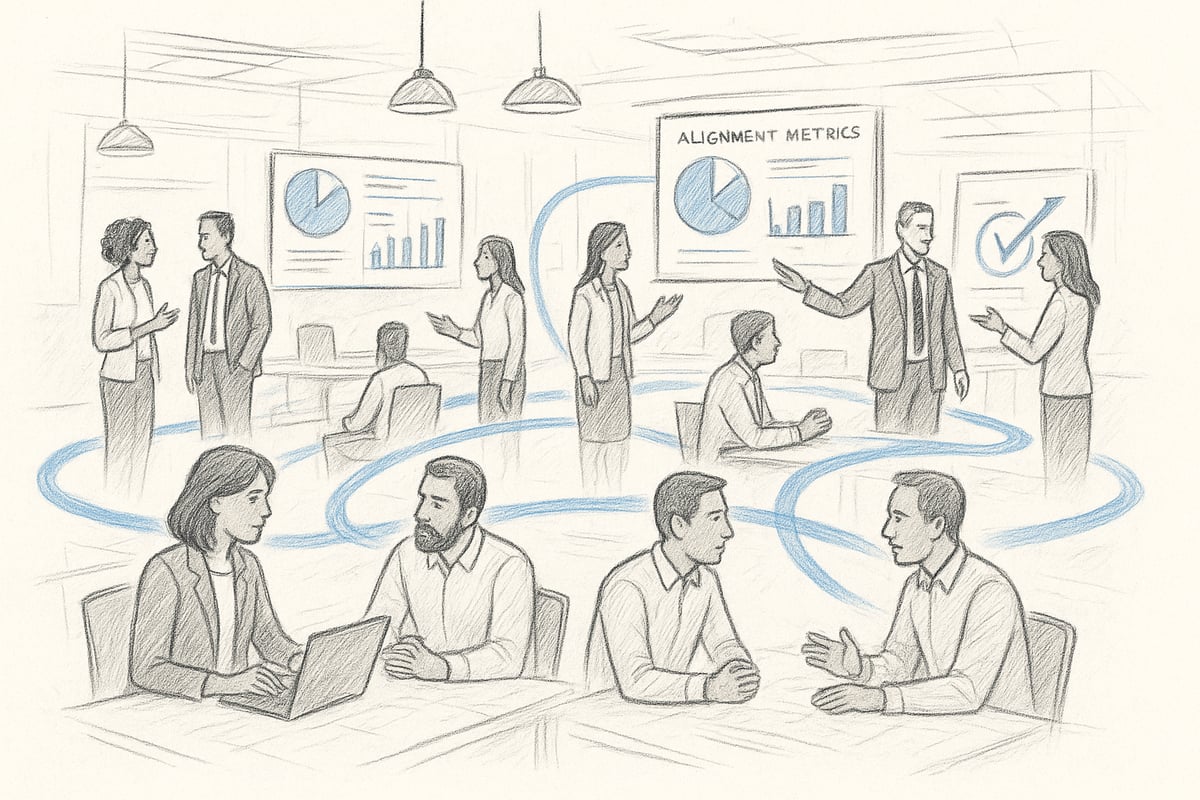
Building a Culture of Alignment
Culture starts at the top. Leaders who demonstrate aligned behaviors inspire teams to follow suit. Embedding strategic alignment into hiring, onboarding, and performance reviews ensures that everyone understands how their work supports broader goals.
For example, a leading hospitality brand revamped its onboarding and review process to focus on alignment with organizational vision. As a result, employee engagement rose by 25 percent. Research from the 2025 State of People Strategy Report underscores this, highlighting that clear communication and purpose-driven management are key to sustaining high-performing cultures. Aligning culture with strategy makes growth and innovation part of daily routines.
Empowering Teams and Breaking Down Silos
Strategic alignment thrives when teams work cross-functionally and silos are dismantled. Agile methodologies encourage rapid feedback and adaptability, while collaboration platforms make knowledge sharing seamless.
Consider companies that form cross-functional squads for major initiatives. These teams, equipped with collaboration tools, respond quickly to change and share insights across departments. According to Deloitte, organizations with strong collaboration are five times more likely to be high performing. Empowered teams are more agile, engaged, and aligned with the company’s mission.
Change Management and Employee Buy-In
Securing buy-in is essential for lasting strategic alignment. Resistance to change is natural, but it can be overcome through targeted training, ongoing support, and recognition programs.
A manufacturing firm introduced structured change management, including tailored training modules and regular feedback sessions. Turnover dropped by 18 percent as employees felt more invested in the company’s direction. Recent Skillsoft Research on Workforce Skills Alignment reveals that organizations bridging the gap between workforce skills and strategic goals see higher retention and engagement. Investment in people fuels alignment from the ground up.
Measuring Cultural Alignment
Measuring strategic alignment within culture requires both quantitative and qualitative approaches. Regular employee surveys, pulse checks, and open forums help leaders gauge engagement and sentiment.
Key performance indicators such as engagement scores, retention rates, and innovation metrics provide a data-driven view of alignment. By monitoring these signals, organizations can quickly address issues and reinforce a culture that supports long-term strategic alignment.
Building a culture of strategic alignment is an ongoing journey. To learn more and connect with a member of the CTO Input team, visit https://www.ctoinput.com.
Measuring, Monitoring, and Sustaining Alignment in 2025
Sustaining strategic alignment in 2025 requires ongoing measurement, transparent tracking, and a commitment to continuous improvement. Effective leaders know that what gets measured, gets managed, and this principle is central to ensuring your organization remains aligned and agile.
Defining Alignment Metrics and KPIs
To achieve lasting strategic alignment, organizations must identify the right metrics to track progress. Key indicators include goal achievement rates, project delivery timelines, and customer satisfaction scores. A balanced scorecard approach helps leaders evaluate performance from multiple perspectives, ensuring that no dimension is overlooked.
For example, a financial services firm successfully monitored its strategic alignment with digital transformation goals by tracking cross-functional collaboration, project milestones, and client feedback. Selecting the best KPIs is crucial—reviewing resources like Best KPIs for Retail Transformation can help guide your organization toward the most impactful metrics.
Tools and Technologies for Tracking Alignment
Modern tools are essential for tracking strategic alignment at every level. Project management platforms, interactive dashboards, and analytics solutions offer real-time visibility into progress and potential bottlenecks. These technologies make it easier to spot misalignment early and take corrective action.
Organizations leveraging such tools often experience faster time to market. By integrating project data, performance metrics, and feedback into a single platform, leaders can maintain strategic alignment across departments. This approach enables proactive decision-making and keeps everyone focused on shared objectives.
Continuous Improvement and Adaptation
Sustaining strategic alignment is an ongoing process. Regular reviews and strategy refreshes ensure your organization adapts quickly to new challenges. Learning from both setbacks and successes builds resilience and drives continuous improvement.
Consider a company that pivoted rapidly in response to market shifts, thanks to robust alignment processes and real-time data. External benchmarks, such as those highlighted in the Planview Global Benchmark Report 2025, show that leading companies excel by balancing speed, agility, and governance. By fostering a culture of review and adaptation, you can strengthen strategic alignment and sustain business success.
You’ve seen how strategic alignment can transform your organization’s vision into real, measurable results, especially as we head into 2025’s fast-changing landscape. If you’re ready to turn technology from a frustration into your competitive advantage, let’s take the next step together. We can help you clarify your goals, bridge the gap between strategy and execution, and build a roadmap that accelerates growth and resilience. Why wait to unlock your company’s full potential when expert guidance is just a conversation away Schedule A Strategy Call and let’s put your strategic alignment plan into action.
Curious about more leadership and strategic alignment insights? Keep exploring important leadership topics by continuing to browse https://blog.ctoinput.com.