nonprofit cybersecurity

A Data Security Strategy for Court Self Help Organizations

Protecting your clients’ data isn’t just a best practice; it’s a core part of your mission. For court self-help organizations, a solid data security strategy for court self help organizations is the bedrock of public trust. It’s about moving away from last-minute fixes and building a thoughtful, proactive system to guard the sensitive information you handle […]

A Data Security Strategy for Court Self Help Organizations Read More »

A Strategic Guide to Virtual CISO for Legal Partner Organizations

A virtual CISO for legal partner organizations is your on-demand, senior cybersecurity leader. They bring strategic guidance to the table on a fractional basis, helping your network, coalition, or advocacy hub manage digital risks and protect incredibly sensitive client data—all without the hefty price tag of a full-time executive. Key Takeaways Move from Chaos to

A Strategic Guide to Virtual CISO for Legal Partner Organizations Read More »

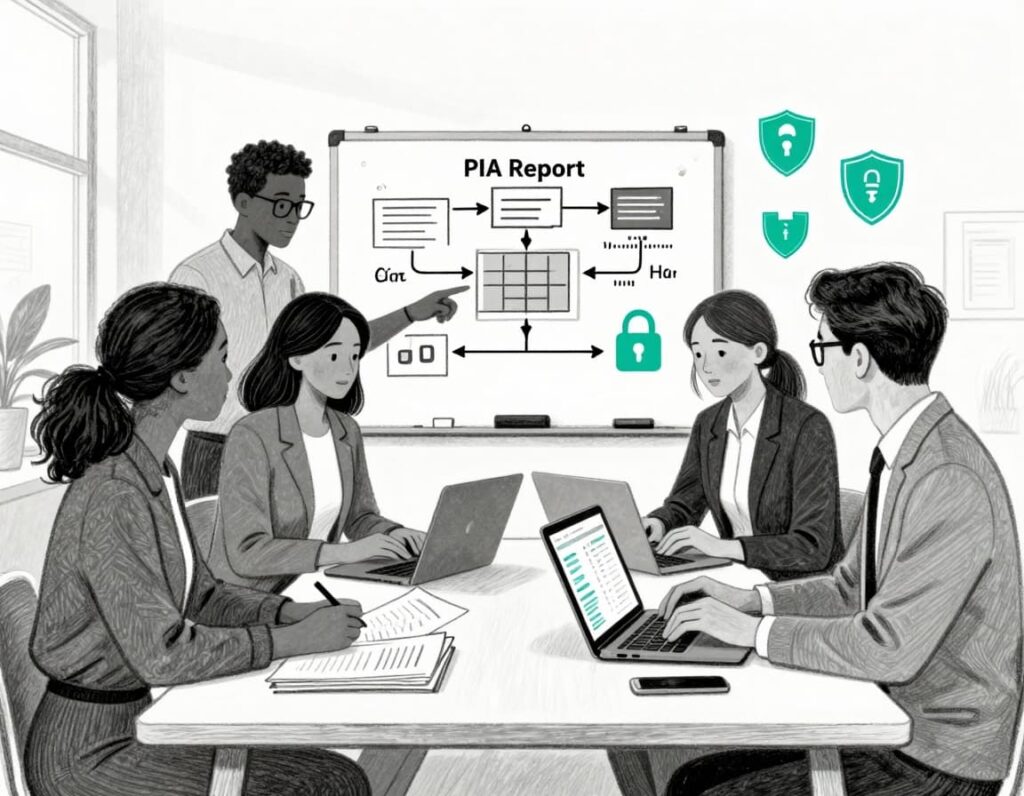
A team discussing a MFA rollout plan for justice nonprofits

A 14-day MFA rollout plan for justice nonprofits, cut account takeovers without locking out staff or partners

It’s 4:45 p.m. Intake is still climbing. A partner is waiting on a referral handoff. Tomorrow’s court deadline is already too close. Then someone can’t sign in, again, because a password was reset and the reset email went to an old inbox no one checks. This is how account takeovers become a justice problem, not

A 14-day MFA rollout plan for justice nonprofits, cut account takeovers without locking out staff or partners Read More »

A team discussing cybersecurity requirements for legal aid grantees

Cybersecurity Requirements for Legal Aid Grantees (What Funders Expect in Practice)

It’s 8:12 a.m. A program manager forwards a message that looks like it came from the ED. “Urgent, please review this invoice.” Someone clicked. Now intake is down, staff can’t reach case notes, and the board chair is asking the question nobody wants to answer out loud: Are we meeting our grant cybersecurity requirements? As

Cybersecurity Requirements for Legal Aid Grantees (What Funders Expect in Practice) Read More »

Remote Work Tools For Legal Services Teams That Protect Clients And Calm The Chaos

Remote work and hybrid arrangements are now standard for justice-focused organizations, much like in law firms. Legal professionals support advocates from home offices, co-working spaces, clinics, and sometimes from cars outside detention centers. In that mix, remote work tools for legal services teams are no longer nice-to-have. They are the backbone that keeps client stories,

Remote Work Tools For Legal Services Teams That Protect Clients And Calm The Chaos Read More »

Cross-Org Data Security Strategy for Justice Support Networks (Stopping Cascade Risk)

A justice support network is rarely one organization. It’s legal aid providers, court self-help centers, navigator programs, community partners, pro bono clinics, and the tech vendors that hold forms, files, and case notes. Under frameworks like Executive Order 14117, which underscores data protection amid national security concerns, work moves fast because people need help now.

Cross-Org Data Security Strategy for Justice Support Networks (Stopping Cascade Risk) Read More »

Featured data classification guide for justice nonprofits image of data being sorted into different categories.

A Practical Data Classification Guide for Justice Nonprofits (Public, Internal, Sensitive, Restricted)

If your organization supports legal advocates, you already know the feeling: information is everywhere. Case notes in shared drives. Training rosters in spreadsheets. Partner lists in email threads. A “final” report living in five versions. A data classification policy (which is a key part of our data classification guide for justice nonprofits) is the simple

A Practical Data Classification Guide for Justice Nonprofits (Public, Internal, Sensitive, Restricted) Read More »

A team reviewing a post incident public statement checklist.

Post Incident Public Statement Checklist: Truth Discipline for Credibility and Harm Reduction

After an incident, your first public statement, rather than a scripted public relations statement, is either a seatbelt or a spark. It can protect your security posture and reduce harm, or it can multiply it. Mission-driven orgs feel pressure from every direction at once following a cybersecurity incident. The board wants confidence. Funders want reassurance.

Post Incident Public Statement Checklist: Truth Discipline for Credibility and Harm Reduction Read More »

An image of Information Security Compliance for justice organizations

Information Security Compliance: A Practical Guide for Justice-Focused Leaders

Information security compliance, at its core, is about protecting your organization’s digital information by following established laws and industry standards. It's the set of controls and processes you build to stop data breaches, protect sensitive information, and prove to funders, regulators, and the communities you serve that you're a responsible steward of their data. For

Information Security Compliance: A Practical Guide for Justice-Focused Leaders Read More »