
A deal can close with a thorough report, a red-flag list, and strong conviction. Then the business goes back to work, and the report starts collecting dust.
That is why tech diligence findings often fail to change anything. The findings may be accurate, but nobody has made them part of the operating plan, the budget, or the leadership cadence.
You do not need another report after close. You need a way to keep the important findings alive when the pressure of the transaction is gone.
Key takeaways
- Tech diligence findings need an accountable owner, a business consequence, and a deadline. Risk without ownership becomes background noise.
- The first 90 days should turn diligence issues into a short, decision-ready plan. Do not bury leadership under a 50-item remediation register.
- Operating partners help when they keep the work tied to value creation, not technical activity.
- Your board needs a clear view of material risks, tradeoffs, spend, and progress. It does not need a long list of technical tasks.
- A fractional CTO or interim CTO can provide executive ownership when the portfolio company lacks the right leadership capacity after close.
Why Tech Diligence Findings Go Quiet After Close
The diligence phase creates urgency. Buyers ask hard questions. Management provides documents. Vendors respond to requests. Risks get named because someone is trying to understand what could affect value.
Close changes the room.
The deal team moves to the next transaction. The portfolio CEO has a business to run. Finance focuses on forecasts and cash. Technology teams are already busy with outages, projects, access requests, customer demands, and vendor calls.
The diligence report is still true. It is simply no longer urgent enough to compete.

Most findings die for predictable reasons:
- They are written as technical observations, not business decisions.
- Nobody has named an executive owner who can accept, fund, or reduce the risk.
- The remediation work has no place in the operating budget or technology roadmap.
- Management assumes internal IT or a vendor will handle it.
- The board gets updates on incidents, but not the conditions that make incidents more likely.
A finding like “single point of failure in infrastructure” may matter. But it still leaves too much unanswered. What breaks? How long could recovery take? Which customer commitments are exposed? What will it cost to reduce the risk? Who decides whether to fund it?
Until those questions have answers, the finding is information. It is not management action.
A diligence finding becomes real only when a leader can explain the consequence of doing nothing.
This is why post-close technology work often stalls even when the company has capable people. The problem is rarely effort. The problem is that ownership, priorities, and decision rights are unclear.
Turn Tech Diligence Findings Into a 90-Day Plan
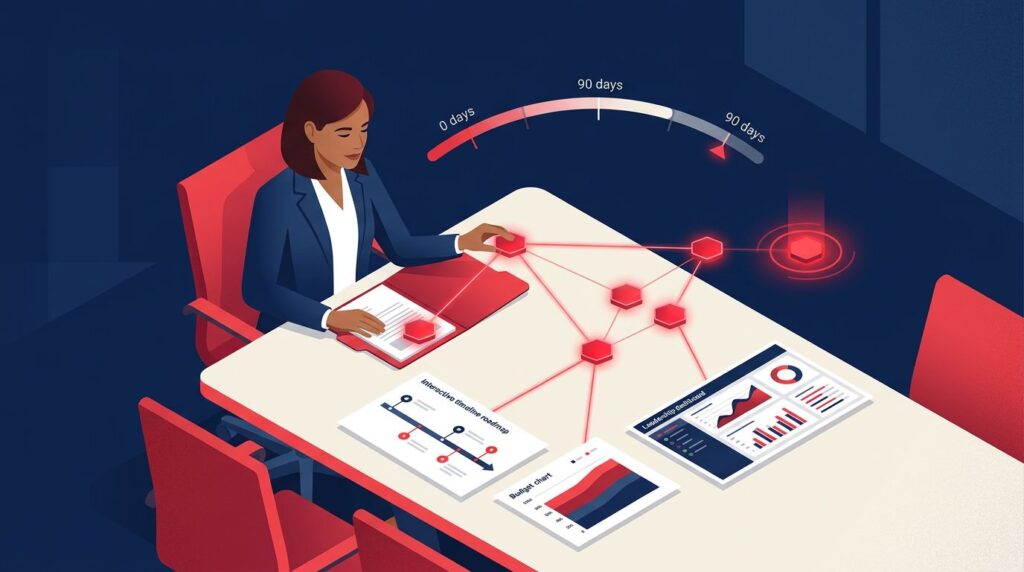
Your first move after close should not be a large modernization program. It should be a short technology assessment that confirms what is still true, what has changed, and what needs a decision now.
Diligence has limits. It is time-bound. It often relies on management representations, selected evidence, and incomplete access. The first weeks after close may reveal a contractor dependency, an untested backup, a weak vendor contract, or a project that is further behind than reported.
That does not mean the original work failed. It means the report now needs to become an operating document.
Start by sorting every material finding into four groups:
- Act now issues can affect revenue, operations, legal obligations, or cyber exposure in the next 90 days.
- Fund and schedule issues need a defined project, budget, and delivery owner.
- Accept deliberately issues may be tolerable for now, but an executive should document the decision and review date.
- Validate further issues need better evidence before you spend money or change direction.
This is where a 90-day technology plan earns its keep. It forces you to make the hidden choices visible. You cannot fix everything at once, and pretending otherwise creates a roadmap nobody believes.
Each priority should answer five plain questions:
- What business outcome or exposure does this affect?
- Who owns the decision?
- What work must happen first?
- What will it cost, including vendor and internal effort?
- What evidence will show that the issue is actually resolved?
For example, a finding about unsupported software should not become “upgrade servers.” The real decision may be whether you can accept insurance, customer, outage, or data-loss exposure for another year. It may require an application portfolio review, a vendor decision, a replacement plan, or a controlled retirement.
A credible post-merger integration approach connects diligence work to value creation after the deal. The same standard should apply to technology. Every material action needs a visible link to growth, margin, control, or risk.
Operating Partners Keep the Work Connected to Value
Operating partners are often the bridge between what the deal team learned and what the company must now do.
They should not become a second IT department. They should keep management focused on the few technology decisions that affect the investment case.

That starts with a blunt question: which findings could damage the value-creation plan?
A weak CRM may slow sales execution. Poor data quality may make margin reporting unreliable. Tool sprawl may raise costs and complicate integration. An overdependent vendor relationship may limit your ability to change pricing, improve customer experience, or complete a future exit.
Those are operating issues. They are not technology side notes.
A strong operating partner creates an operating rhythm around them. That rhythm is usually simple:
- A monthly review of the short list of material technology priorities.
- A named executive owner for each decision.
- A clear view of spend, delivery risk, and dependencies.
- Escalation when a decision is stuck, not after a project fails.
- Quarterly board-ready reporting that shows what changed and what still needs attention.
You should also separate oversight from execution. The portfolio company owns daily delivery. The operating partner tests whether delivery is still tied to the business case. The board oversees material tradeoffs and risk. It should not manage project plans.
This is where technology due diligence support can continue to matter after the transaction. The work does not end with risk identification. It continues until leadership has a practical technology strategy, a working roadmap, and reporting it can trust.
Give Every Finding an Owner, a Threshold, and a Decision Date
A list of findings creates the appearance of control. A decision structure creates actual control.
For each material issue, name one accountable owner. This is not always the head of IT. If a customer-facing system affects revenue retention, the commercial or operations leader may need to co-own the outcome. If a cyber finding creates material exposure, the CEO or COO may need to accept the risk or approve the investment.
The technology lead owns the “how.” The business executive owns the “why” and the tradeoff.
That distinction stops the familiar pattern where IT is expected to solve a problem without authority over budget, process changes, vendor behavior, or business priorities.
Your reporting should stay short. A useful board-ready risk summary can fit on one page if it names:
| What leaders need to see | What it should show |
|---|---|
| Material exposure | The business consequence if nothing changes |
| Current decision | Fund, accept, defer, or investigate |
| Accountable owner | The executive responsible for the outcome |
| Timing | The next decision date and delivery milestone |
| Evidence | What will prove the risk is reduced |
The detail can sit behind the summary. Directors do not need ticket counts or architecture diagrams. They need to see whether management understands the exposure and is making deliberate decisions.
For technology risks that could affect the investment case, use the same discipline as financial reporting. Do not promise savings you cannot trace. Do not call a risk closed because a vendor said the work is complete. Confirm the control works in the real environment.
A private equity diligence resource can help you see the range of specialists involved in a transaction. After close, though, somebody inside the operating model must hold the threads together. Otherwise, each specialist leaves behind another document and no one owns the full outcome.
When You Need Executive Technology Leadership After Close
Sometimes the report goes quiet because the company has no executive technology owner.
You may have a strong IT manager, engineers, an MSP, and several vendors. You may still lack someone who can connect systems, risk, spend, delivery, and business priorities into one clear operating picture.
That is a technology leadership gap.
A fractional CTO fits when you need ongoing executive judgment but do not yet need a full-time hire. A part-time CTO, virtual CTO, or outsourced CTO can help you establish a business-aligned technology strategy, a 12-month technology roadmap, and better technology governance.
An interim CTO is usually the better choice when the leadership seat is open, trust has been damaged, or the business needs stabilization fast. The work may include a systems inventory, vendor management reset, technical debt assessment, board technology reporting, and a CTO transition plan.
If cyber risk is the pressure point, a fractional CISO, virtual CISO, or interim CISO may be the right complement. Cybersecurity oversight needs clear risk appetite, tested incident response readiness, and reporting that frames exposure in business terms.
Do not hire a title before you understand the job. Start with the leadership problem. Is it weak reporting? Vendor dependence? A stalled integration? Unclear ownership? A roadmap no one can defend?
If the answers are scattered, Get an Executive Technology Clarity Check. You should leave with sharper priorities, clearer ownership, and a practical next step.
Frequently Asked Questions
Who should own tech diligence findings after close?
The portfolio CEO should own the overall outcome. Individual findings need named executive owners who can make decisions about budget, timing, risk acceptance, and business impact. Your technology leader should translate the work into an executable plan.
How long should post-close technology remediation take?
Some issues require immediate action. Others belong in a 12-month technology roadmap. The right timeline depends on business impact, cost, dependencies, and risk tolerance. The mistake is treating every finding as equally urgent.
What should operating partners report to the board?
Report material exposure, the decision management has made, the accountable owner, progress against the plan, and any tradeoff that needs board oversight. Keep technical detail behind the summary.
Keep the Findings in the Operating Room
A diligence report should not become a historical record of risks you once understood. It should become the first version of a practical post-close technology plan.
The work stays alive when you connect each finding to ownership, business consequence, funding, and a regular leadership review. That is how you replace technical noise with confident decisions.
When technology risk, vendor dependence, or weak reporting could slow the investment case, Prepare Technology for Diligence or Transition before the next issue forces the conversation.