
An executive departure can expose decisions nobody realized were sitting with one person. A vendor renewal stalls. A security exception goes unanswered. A critical project keeps moving, but nobody can say who has the authority to stop it.
Technology decision continuity protects the business when a CTO, CIO, CISO, founder, or other key leader leaves, becomes unavailable, or shifts roles. It keeps authority, access, risk decisions, and business priorities clear while the leadership structure changes.
This exposure is a business continuity issue, not just a leadership concern. Business continuity management preserves authority, access, risk decisions, and priorities during leadership change. The goal isn’t to preserve old habits, but decisions that keep customers served, cash moving, systems secure, and growth on track.
Key Takeaways
- A technology continuity plan is part of business continuity management, not just an IT exercise.
- Business continuity depends on clear ownership. Highest-risk decisions need a named primary owner, backup owner, and escalation path.
- A current systems inventory and vendor record reduce dependence on memory and informal relationships.
- Boards need data-driven business continuity reporting, using real-time data to prioritize material risks, open decisions, and accountable owners.
- A fractional or interim technology leader can protect control while you decide what permanent executive technology leadership should look like.
Why executive transitions put technology decisions at risk
Most transitions do not fail because the outgoing leader took the wrong files with them. They fail because the business depended on judgment, relationships, and authority that were never made visible.
That creates a technology leadership gap at the worst possible time. The team may know how to keep systems running. It may not know who can approve spend, accept cyber risk, challenge a vendor, or change the technology roadmap.
Unclear authority weakens business continuity, especially during operational downtime, urgent resource allocation choices, or an unresolved security exception. That gap also undermines business continuity management when leaders need timely answers.

The problem is unclear authority
A technology leader makes more than technical calls. They decide which projects wait, which vendors get renewed, when an outage becomes an executive issue, and which risks are acceptable.
When those decision rights are blurry, people often choose one of two bad responses. They wait for permission that will not come, or they make an unowned decision and hope it holds.
Leaders also need risk intelligence, not just status updates, to make timely decisions about cost, exposure, and priority.
ISACA’s guidance on managed continuity planning makes a useful point: continuity needs leadership direction across both operational and technical work. Your transition plan needs the same discipline.
Separate the leadership problem from the system problem
A stable system can still be a business risk if only one executive understands its cost, contract terms, data exposure, recovery limits, or ownership of decisions. This is also a business continuity management concern when cloud computing and real-time data support critical work.
Do not confuse a functioning help desk with executive technology leadership. Managed service providers, IT managers, or software vendors may handle daily operations well. That does not automatically give them authority over business technology strategy, cyber risk appetite, or major investment tradeoffs.
The business does not need a replacement who knows every detail on day one. It needs an operating picture that makes sound decisions possible in week one.
Map technology decision continuity before you need it
A decision rights map is the working core of technology decision continuity and business continuity management. It shows which decisions matter, who recommends the answer, who approves it, and when the issue goes to the CEO, COO, or board. This protects business continuity when delayed decisions create pressure.
Start with areas where delay, error, or vendor pressure can create real business damage.
List the decisions that cannot sit still
Your list should support business continuity management by including strategic technology planning, security exceptions, data privacy issues, incident escalation, major project changes, vendor renewals, new software approvals, and technology spend above an agreed threshold.
Also include decisions that often hide in plain sight:
- Priorities on the IT strategy and roadmap, including projects to pause or stop, the resource allocation behind them, and how the technology continuity plan guides escalation.
- Access control changes for privileged accounts and shared cloud environments.
- Customer-impacting incidents, ransomware readiness, and disaster recovery planning.
- Data quality, reporting ownership, real-time data, and the use of AI tools with sensitive information.
- Technology vendor selection, contract exits, and commitments that affect acquisition readiness.
Use repeatable decision paths where possible. Automation can reduce handoff delays, while scenario simulations help leaders test escalation points.
A technology decision rights framework gives leadership a cleaner way to separate recommendations from final authority.
Connect each decision to its dependencies
Then map what supports each decision. A billing platform may depend on cloud computing, an integration partner, finance-owned data, a technical administrator, remote work solutions, and a vendor account manager. Supply chain dependencies can add another link. If one link is missing, the business may not be able to act when pressure arrives.
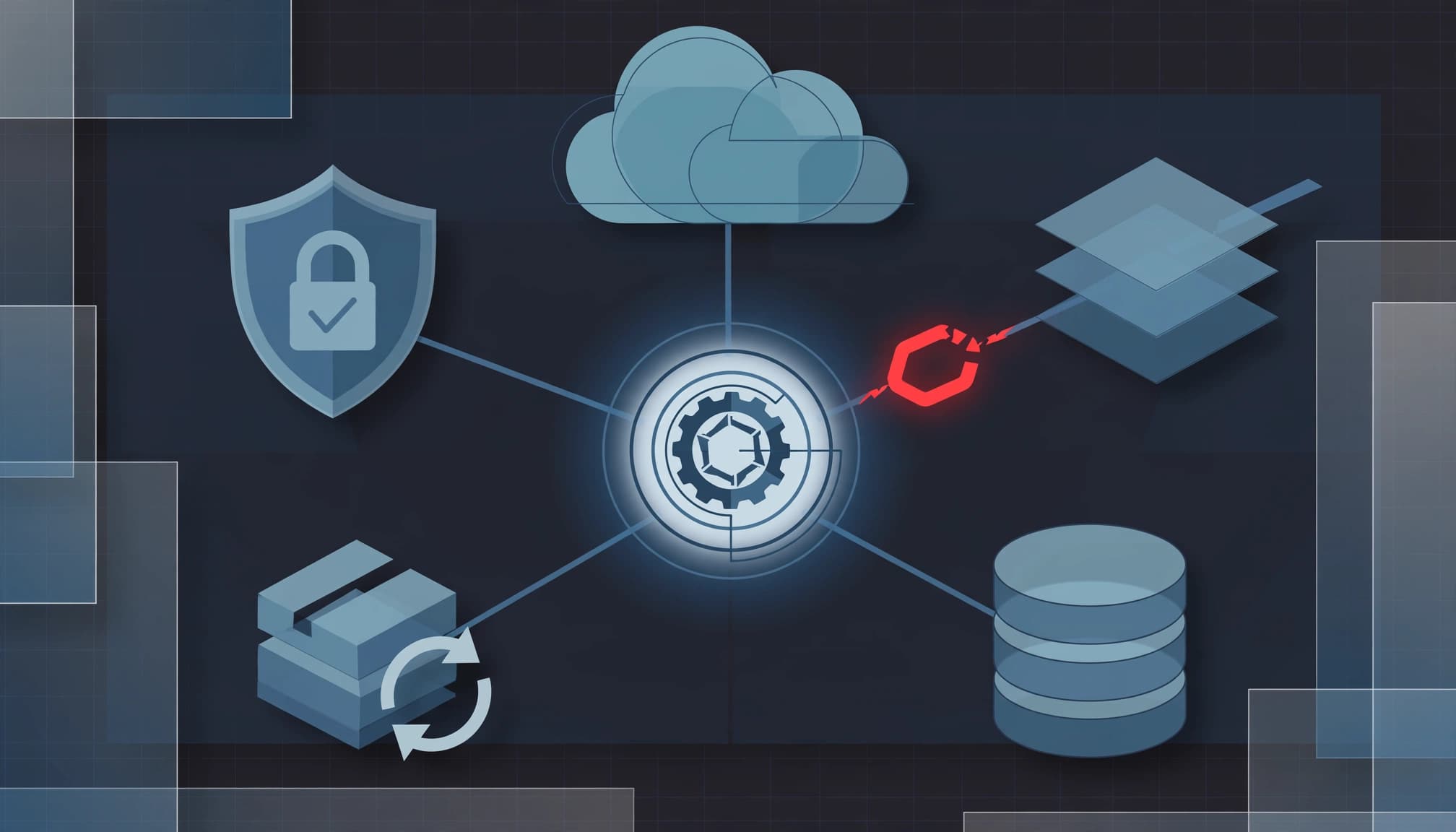
Your systems inventory should record the business owner, technical owner, vendor, renewal date, key data, recovery approach, and failure impact. It should also track data backup and recovery, data encryption, disaster recovery, and the systems that support operational access. Together, these records support data-driven business continuity and give leaders useful risk intelligence. This is also where you find shadow IT, tool sprawl, unsupported platforms, and technical debt that only one person understands.
A sound data governance framework connects technology facts to the business processes they support. It gives leaders business continuity management insight through data-driven business continuity, especially when real-time data improves operational visibility. Otherwise, a technical diagram can look complete while operations still depend on a spreadsheet nobody has documented.
Build a transition plan people can use
A CTO transition plan should be short enough to use under pressure. Business continuity management starts with a technology continuity plan people can use during the first 90 days. A large document that nobody updates is not continuity planning.
Build a one-page technology strategy for the next 90 days, then support it with a practical 12-month technology roadmap. The 90-day transition plan is a business continuity guide. The first page should name the business priorities, active risks, decisions due soon, owners, and escalation rules.
Review priorities with real-time data to support data-driven business continuity and disciplined resource allocation.
Protect access and institutional knowledge
Business continuity management also depends on clear control of critical systems. Confirm who controls identity administration, domain registration, cloud computing accounts, source code repositories, payment portals, and security tooling. Track data backup and recovery, data encryption keys, and remote work solutions alongside those controls. Remove single-person access without locking out the people who must keep the business running. Test disaster recovery access before it is needed.
Vendor offboarding matters here as much as employee offboarding. Review administrator accounts, support contacts, contract notices, service-level commitments, and the vendor incident response plan. Third-party risk management is not complete if your company cannot reach the right vendor contact during a material incident.
Federal continuity guidance points organizations toward coordinated planning and operational effort. The Federal Continuity Directive also references NIST contingency planning and CISA resources. The principle applies in any company: continuity planning must connect authority, people, and operations to preserve operational stability.
Set a temporary operating rhythm
The CEO or COO should appoint an executive sponsor. Their responsibility is to maintain business operations and protect business continuity. That person does not need to make every technology decision. They do need to keep decision-making moving and call in the right expertise.
Set a weekly technology operating rhythm during the transition. Review active projects, open incidents, vendor commitments, major spend, and overdue decisions with real-time data. Apply risk intelligence to separate material exposure from routine operational noise. Use a simple board-ready risk summary for anything that could affect revenue, customer trust, compliance requirements, or transaction timing.
That is business continuity management and technology governance for CEOs in plain terms. Leaders should see what needs a decision, who owns it, what can wait, and what happens if it does.
Keep vendors helpful, not in control
An executive departure often gives vendors more influence than they should have. From a business continuity management perspective, vendor access and renewal knowledge are dependencies, not substitutes for executive ownership.
That doesn’t mean the vendor should drive your roadmap.
Vendor management during a transition needs clear commercial and decision rules grounded in data-driven business continuity. Review real-time data on the renewal calendar, contract status, support contacts, and service-level performance. No renewal, platform change, or expanded scope should move forward because the vendor says time is running out. Confirm the business case, cost, security obligations, exit rights, and accountable executive owner.
A useful executive technology leadership guide frames this well: vendors can inform delivery, but they should not own business priorities.
Look for vendor concentration risk, weak documentation, informal approvals, and supply chain dependencies. These issues can become larger during cybersecurity due diligence, a cyber insurance renewal, or technical due diligence for an acquisition.
Test the plan with a real scenario
You don’t know whether business continuity management works until you test it. Pick a scenario that feels plausible, not dramatic.
For example, assume the technology executive becomes unavailable during a cloud outage, security event, or key vendor renewal. Ask who can access systems, contact the vendor, approve emergency spend, communicate with customers, and brief the board. That is the practical test of business continuity.
Run an executive-unavailability exercise
Keep the exercise to 60 minutes. Include the CEO or COO, finance, operations, technology, legal or privacy leadership where relevant, and your security lead. Use scenario simulations to test business continuity management without creating unnecessary disruption.
The workforce continuity guidance for cyber incidents focuses on maintaining a staffed, authorized, capable workforce. During a leadership transition, authority matters as much as staffing. It should connect with disaster recovery and incident response processes.
Ask who can access data backup and recovery systems, activate remote work solutions, follow the technology continuity plan, and meet compliance requirements. Also ask who can communicate with customers, approve emergency spend, and brief the board when a decision stalls. The cost of delay may be operational downtime.
Capture the decisions that stalled, the facts people couldn’t find, and the permissions that depended on one person. Use the findings to update a data-driven business continuity plan immediately after the exercise.
Measure whether control is improving
You don’t need a complicated dashboard. Track a few signals that show whether the business is less dependent on personal memory and whether resource allocation is improving.
Risk intelligence can help prioritize material gaps. Predictive analytics can support early-warning analysis, while real-time data can speed escalation. These tools inform judgment, but they don’t replace executive decisions or clear ownership.
Use automation for repeatable reporting and faster escalation. The resulting metrics support data-driven business continuity when leaders need a reliable view of current exposure.
| Measure | What good looks like |
|---|---|
| Critical decisions | Each has a primary and backup owner |
| Privileged access | More than one approved administrator exists |
| Vendor exposure | Contracts, contacts, renewals, and exit options are current |
| Open risks | Each material item has an owner, due date, and next decision |
| Technology spend | Leaders can connect material cost to a business outcome |
The point isn’t perfect reporting. It is reporting leaders can trust when the room gets tense.
Choose the right leadership coverage
Treat leadership coverage as a business continuity decision, not a reaction to an uncomfortable vacancy. First decide what the business needs the role to own, because clear authority supports continuity.
An interim CTO is often right when the business needs immediate authority, stabilization, and a clear handoff. Fractional CTO services can fit when you need ongoing technology strategy consulting, board-ready reporting, data-driven business continuity, vendor control, and a stronger operating rhythm without a full-time executive hire.
When a fractional model fits
A fractional CTO, part-time CTO, or virtual CTO can give growing companies executive judgment while the role is still taking shape. This model supports business continuity management when internal IT is capable but needs business-aligned technology strategy, clearer priorities, and better resource allocation.
A fractional leader can also turn real-time data into practical updates for executives and the board. That visibility helps clarify project priorities, vendor commitments, and investment tradeoffs.
If the pressure is cyber-specific, a fractional CISO, virtual CISO, or interim CISO may be the better bridge. The important question is not the title. It is whether someone has authority to make the decisions now.
When an interim leader is the better choice
Use interim CTO services when a leadership departure, major failure, acquisition, or stalled program needs daily senior attention and disciplined business continuity management. The work should include a technology assessment, technology audit, 90-day technology plan, and a decision on the long-term model.
For a closer look at role fit, review interim CTO leadership. The right structure gives you stronger ownership without forcing a permanent decision before the business is ready.
If technology decisions feel scattered, risky, or too dependent on the wrong people, Get an Executive Technology Clarity Check.
Frequently Asked Questions
Is technology succession planning only for large companies?
No. Smaller and mid-market companies often face greater exposure because one leader may hold most access, vendor knowledge, and decision authority. That exposure can threaten business continuity, so name owners and backups for critical systems, privileged accounts, vendors, backups, and recurring decisions. A practical business continuity management approach also documents who can act when the usual leader is unavailable.
Should the board manage the transition?
The board should oversee material technology risk, security oversight, operational stability, and leadership exposure. Management should run the handoff. Board-ready reporting should support data-driven business continuity by combining risk intelligence, compliance requirements, and real-time data on business impact, open risks, owners, and review dates.
Can advanced endpoint tools replace antivirus?
Endpoint detection and response gives security teams more visibility into suspicious activity and investigations than traditional antivirus alone. It supports cybersecurity and incident response readiness, but it isn’t a complete solution. You still need clear access controls, tested backups, assigned authority, and an escalation process people can follow.
Protect the decisions, not the old org chart
A leadership change does not have to slow the business. It becomes disruptive when knowledge, authority, access, and risk decisions are tied to one person.
Protect this continuity approach with clear owners, usable technology documentation, vendor control, and defined executive decision rights. This strengthens business continuity management, supports business continuity through leadership change, and helps resilient enterprises protect authority and institutional knowledge under pressure.