

Technology rarely kills growth in one clean moment. It slows it, bends it, and adds enough friction that you start blaming the wrong things.
You see more meetings, more tools, more reports, and less confidence. Ownership gets fuzzy. Vendors start steering decisions. The team works hard, but the business still feels harder to run than it should.
The real issue is often not effort. It’s clarity. When you can’t trust the reporting, the roadmap, or the decision rights, technology stops helping and starts dragging on the business.
Key takeaways
- Technology drag is usually a leadership problem, not a software problem.
- The costs show up across the business, in slower launches, manual work, weaker customer experience, and missed revenue.
- Budget line items only tell part of the story, because the bigger losses are delayed decisions, rework, and lost momentum.
- Better ownership and clearer reporting usually create more growth than more tools.
- If the picture is fuzzy, the next step is clarity, not another stack of software.
The real cost of technology drag on your business
Technology should create leverage. It should help you move faster with less confusion. When it doesn’t, the cost shows up in business terms first.
You feel it when launches slip because dependencies are unclear. You feel it when the customer experience gets clunky because systems do not connect. You feel it when your leaders spend more time fixing avoidable problems than driving the business forward.
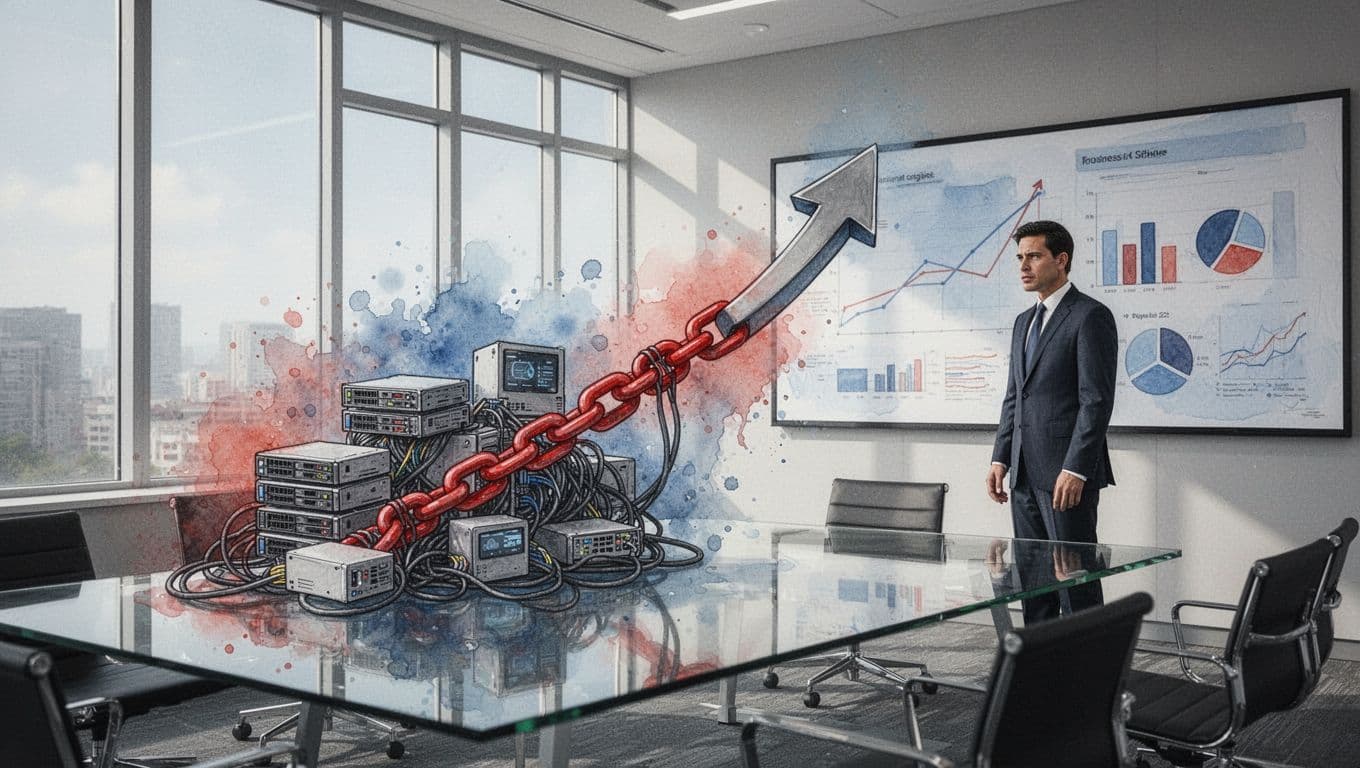
A lot of leaders call this “technology trouble.” That’s too small. It is usually a mix of reporting gaps, unclear ownership, and weak decision structure. If you want to see where that drag is coming from, start with Find What Technology Is Costing Your Growth.
Where the hidden costs show up first
The first losses are easy to miss because they spread across teams.
A sales team loses time waiting on a system fix. Operations builds a workaround. Finance adds another report. Then someone buys another tool to cover the gap. Nobody thinks they created a growth problem, but the business now moves slower than it did six months ago.
The cost usually lands in a few places:
- slower launches
- missed or delayed revenue
- more manual work
- clunky customer handoffs
- extra time spent chasing basic answers
That is the trap. Each issue looks small on its own. Together, they create drag that compounds.
Why the budget number is usually too small
The visible tech budget is not the full bill. It only shows what you spent, not what you lost.
A company can waste money on duplicate tools, contractors, and projects no one would reapprove today. But the larger loss is usually momentum. You miss the launch window. You delay a sales process improvement. You keep the wrong workaround alive for another quarter.
That hidden cost is why a budget cut alone rarely fixes the problem. If the operating picture is unclear, leaders just move the same waste around.
If you can’t explain why a technology expense still exists, you probably have a governance problem, not a spending problem.
The warning signs that technology is holding you back
You usually do not need a dashboard to tell you something is off. You already feel it.
The signs show up in daily work. They show up in the boardroom. They show up when people answer questions with half-truths because the full answer is hard to pin down.
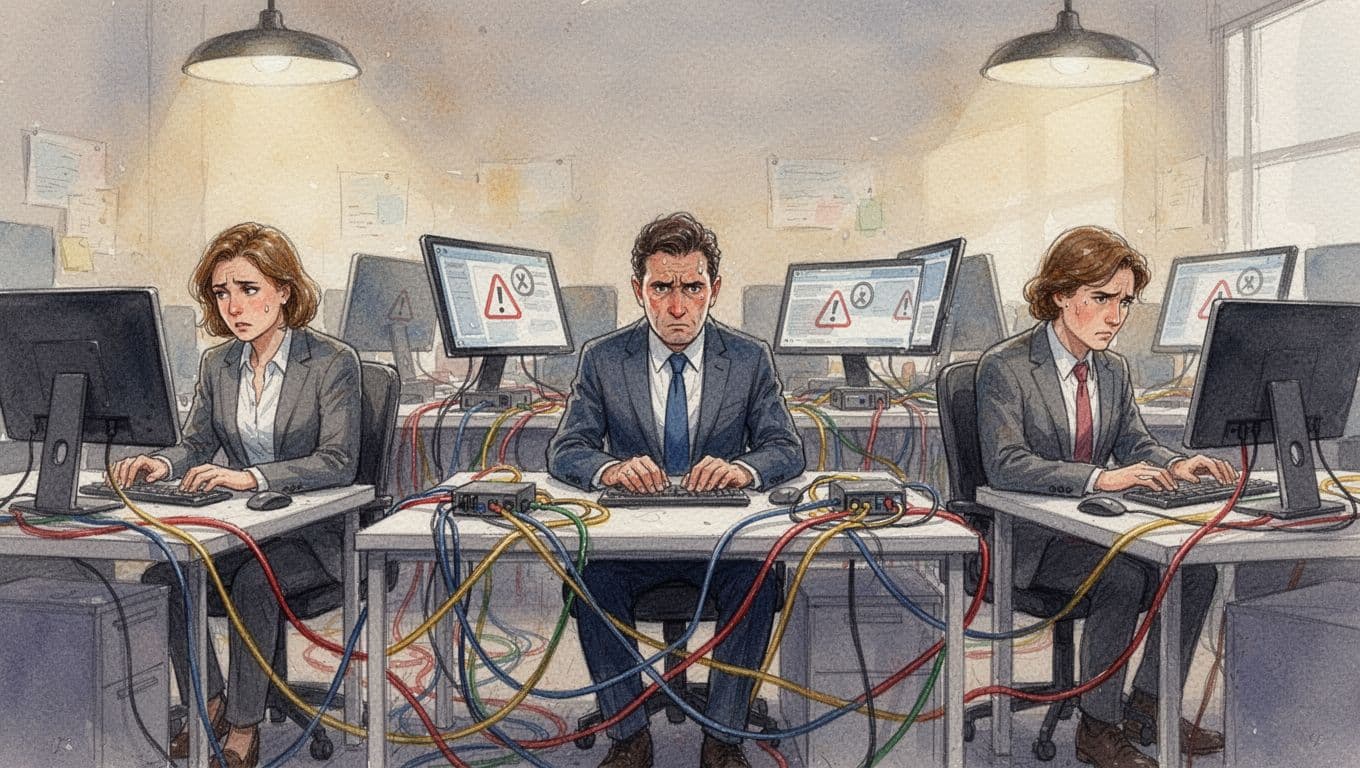
Your team keeps working harder, but nothing feels smoother
Busy does not mean healthy.
If your people are constantly in motion but the business still feels stuck, look at the structure around the work. You may have technical talent. You may even have good vendors. But if nobody is connecting business priorities to technology decisions, effort gets scattered.
That is when reporting gets messy, projects stall, and manual work piles up. People stop asking, “What should we build?” and start asking, “Who can patch this now?” That is a bad sign.
Vendors and tools are starting to steer decisions
Tool sprawl is not just messy. It is a governance problem.
When every department buys its own platform, you lose visibility. When vendors start shaping the roadmap, the business starts chasing what the vendor wants to sell, not what the company needs to grow.
This is how priorities drift. A tool becomes “too important to replace.” A contract gets renewed because nobody wants the disruption. Then your strategy bends around technology instead of the other way around. You can read more about technology leadership and calm execution, because this is where leadership either regains control or hands it away.
You cannot get a straight answer about risk, spend, or progress
This is the one boards notice first.
If you ask where the biggest risks are and get a long explanation instead of a clear answer, you have a visibility problem. If nobody can tell you who owns a system, a vendor, or a decision, you have an accountability problem. If the reporting changes every time the question changes, leadership is making decisions in the dark.
That gets expensive fast. It also gets awkward in front of investors, buyers, and board members who expect clear ownership and plain language. If that sounds familiar, Build a Board-Ready Technology Risk View is the right next conversation.
How much growth technology can really hold back
The honest answer is, more than most leaders want to admit.
The direct waste can be large. Duplicate software, unused licenses, and unnecessary contractors add up fast. But that’s only part of it. The bigger hit comes when growth slows because the business cannot execute cleanly.
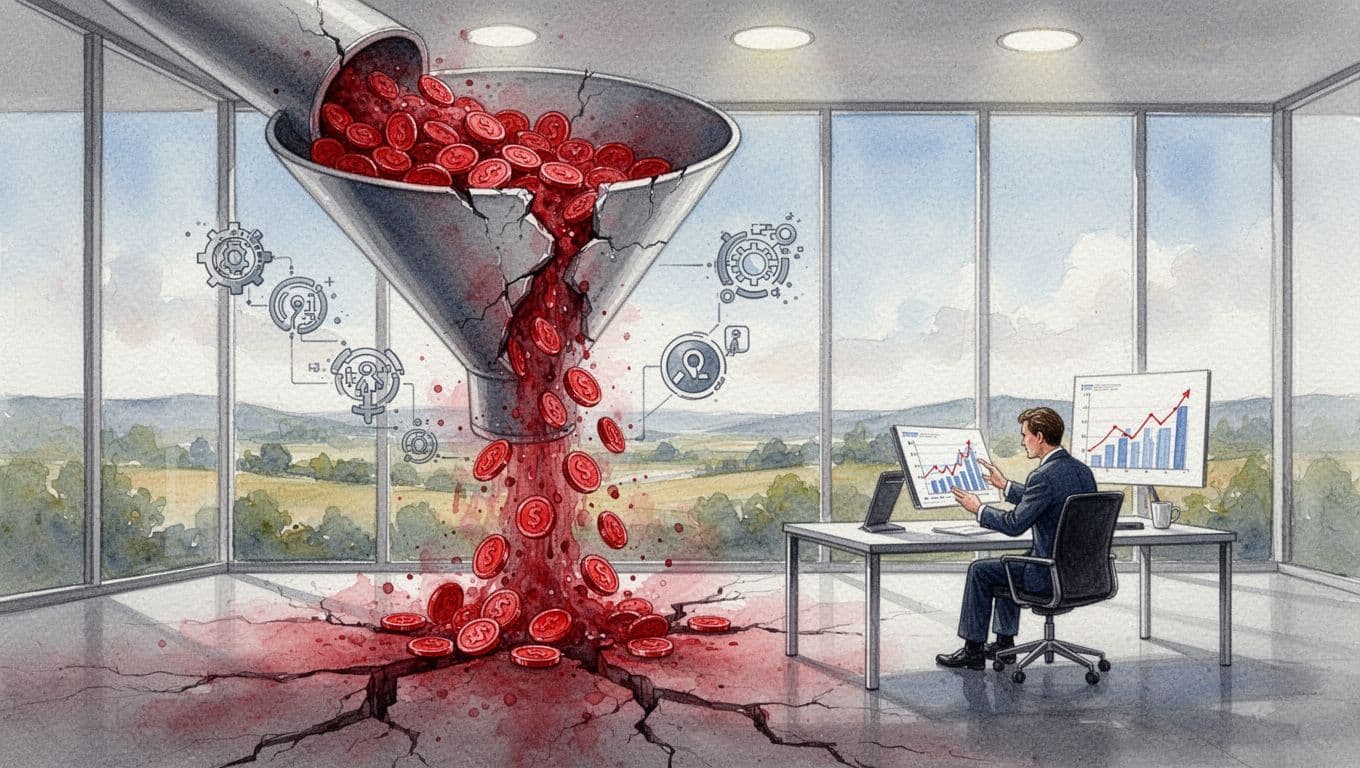
A company can spend money on technology and still lose more through delay. If a launch slips a quarter, if a customer onboarding fix takes too long, or if reporting lags behind reality, the revenue cost can dwarf the software line item.
That is why technology drag is so deceptive. It looks like an IT issue. It behaves like a growth issue.
The money leak you can see and the one you cannot
Some losses are obvious. You can point to duplicate tools, old systems, and projects that should have died months ago.
The invisible losses are tougher. They live in slower decisions, rework, and weak execution. They also live in the time your senior people spend explaining what should already be clear.
A business can survive visible waste for a while. It struggles more with invisible waste because nobody owns it cleanly.
The people cost when strong teams lose confidence
Good people do not like working in fog.
When strategy feels vague and decisions keep shifting, strong employees slow down. They stop bringing bold ideas. They stay busy, but they get less direct. Over time, the best people start looking for places where the rules are clearer.
That is part of the cost too. Weak technology leadership does not just waste money. It wears down the people you need most.
What kind of technology leadership actually unlocks growth
Growth gets easier when leadership gets clearer.
You do not need more noise. You need a better operating picture. You need someone who can connect business goals, delivery reality, risk, and spend without making it complicated. That is the work of fractional CTO services and similar executive-level support.
The right leadership structure helps you make faster decisions, assign ownership cleanly, and stop treating every problem like a surprise. That is the difference between a business that reacts and one that steers.
Why a clearer operating picture changes the outcome
A clear picture changes the pace of everything.
When decision rights are defined, people stop waiting around for approval that no one owns. When reporting is honest, leaders stop arguing over whose version of reality is right. When risk is described in business terms, the board can govern instead of guess.
That’s why strong executive technology leadership matters. It doesn’t add more motion. It gives the motion a direction you can defend.
When fractional, interim, or oversight support makes sense
Different problems need different levels of support.
If you need steady executive guidance without hiring a full-time leader, when to hire a fractional CTO is the right question. If you have a leadership gap, a transition, or a situation that needs immediate control, interim CTO leadership fits better. If you already have technical people but leadership still lacks clarity, oversight support is usually the cleaner move.
That’s the point. You are not buying more activity. You are buying clearer ownership, better decisions, and a calmer way to run the business.
Questions you may still be asking
How do you know if technology is the main problem or just part of it?
Look at the pattern.
If the same issues keep showing up in reporting, vendor control, decision speed, and business results, technology is probably part of the core problem. If the work is getting done but leaders still do not trust the answers, the issue is bigger than a tool or a ticket queue.
Ask a simple question, who owns this, and can they explain it in plain business language? If the answer is weak, you have found real friction.
What should you do first if your tech feels like a drag?
Start with the basics.
Map where growth is slowing. Name where risk is building. Identify who owns what. Then ask whether the issue is strategy, reporting, vendor control, or leadership structure. You do not need a full rework on day one. You need a clean read on the problem.
If you want a practical next step, Talk Through Your Technology Leadership Gap is a good place to start.
Clearer leadership is the real fix
Technology should help your business grow, not quietly hold it back. When visibility is weak and ownership is blurry, the cost shows up in speed, money, and confidence.
You do not need more tools to solve that. You need clearer leadership, sharper priorities, and a better operating picture. Once that changes, growth gets easier to trust.