

You do not need a full-time CTO to keep technology under control. CEOs often face a gap in technology leadership, however. You do need clear ownership, a steady decision rhythm, and a way to spot risk before it turns into a board problem.
Most CEOs feel the pressure long before they can name it. The budget starts drifting. Vendors start shaping the agenda. Reporting gets harder to trust as it strays from business strategy and overall firm goals. The issue is rarely one missing title. It is usually a gap in technology governance for CEOs.
Key takeaways
- Governance is about who decides, who owns the work, and how often leaders review the truth.
- You can run a lean model without a full-time CTO if the right people meet on a regular cadence.
- Good reporting, vendor control, and a practical roadmap ensuring strategic alignment with business goals matter more than another layer of tools.
Start with decision rights, not software
If no one can say who owns a technology decision, you do not have governance. You have activity.
Start by naming the few decisions that only leadership should make. That usually includes major spend, security risk, key vendors, system changes, and anything that can affect customer trust or board confidence. Everything else should sit lower in the organization.
For a single business, a centralized IT governance framework often works best. You keep the circle small, usually CEO, COO, CFO, and the person closest to technology execution. If you run multiple sites or operating units, a federated model makes more sense. Central sets the rules. Local teams handle the day-to-day needs. For larger organizations, a technology committee or specific board structures can help manage these rights.
Deloitte’s recent work on tech governance and leadership points to the same idea, emphasizing board oversight in corporate governance. Boards do not need to become technologists. They need enough technology literacy to ask better questions and hold the line.
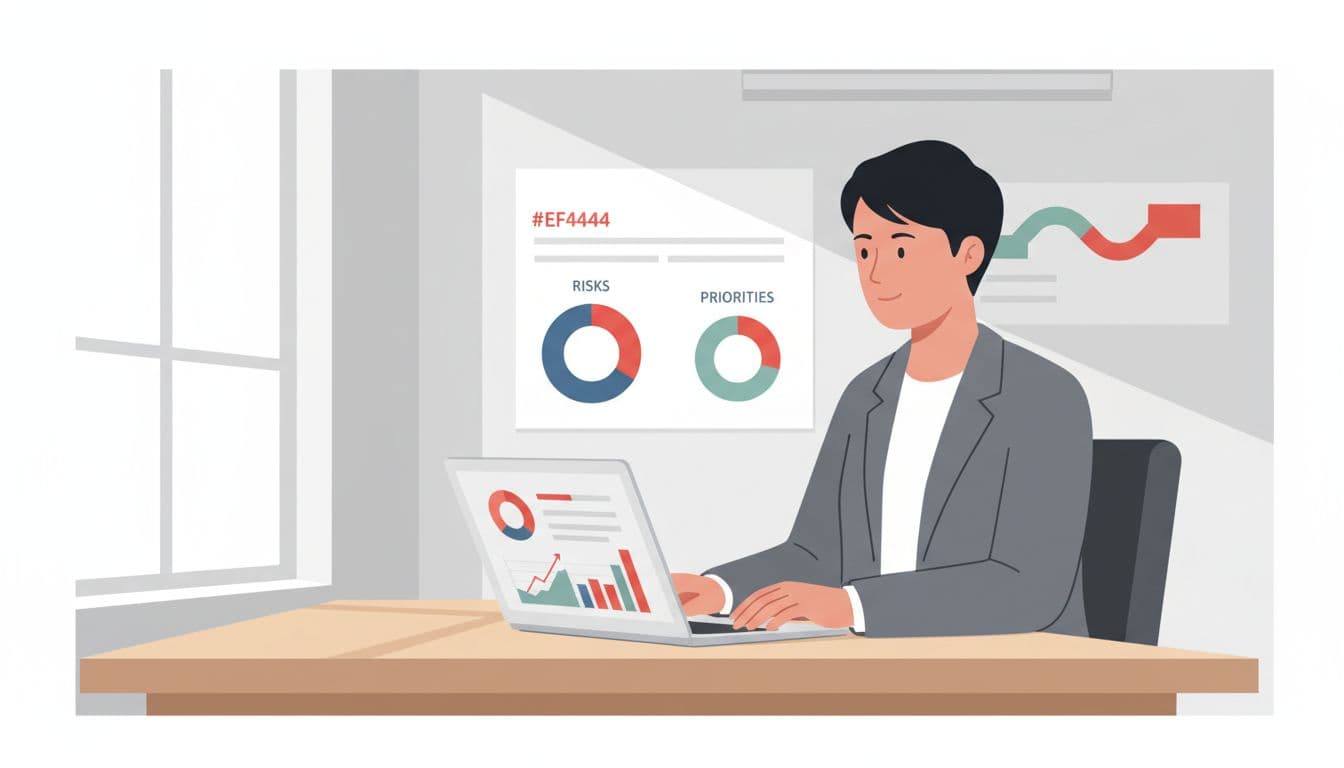
If no one owns the decision, the spreadsheet owns the business.
That is the trap. The company starts using meetings, side conversations, and workarounds in place of leadership.
If you want a practical reference for the leadership gap itself, this guide to senior tech leadership without a full-time hire is a useful companion.
Build a reporting rhythm you can trust
Good governance dies fast when reporting turns vague. You do not need twenty dashboards. You need a short view that tells the truth.
That means a small set of metrics that answer four questions: what changed, why it changed, what is at risk, and who owns the next step. A board does not want a data dump. It wants a clean story for effective data oversight it can act on.
A simple monthly executive view is usually enough. Keep it focused on spend and investment prioritization, delivery, incidents, vendor performance, and a few business outcomes. If you are in a mission-driven setting, pair that with a board-ready format. The metrics that matter one-page dashboard and the board and funder reporting readiness checklist are good starting points.

The point is not to impress people with volume. It is to make the next decision obvious.
When the report is honest, you can see where the business is carrying hidden cost. You can also see where a problem is growing before it becomes expensive. This rhythm strengthens board oversight overall.
Put vendors and cybersecurity on the same page
A lot of CEOs think vendor management is an operations issue. It is not. It is governance.
If vendors can access sensitive systems, make changes without clear approval, or disappear without a clean offboarding process, the business is exposed. Vendor access lists and offboarding processes are non-negotiable for regulatory compliance and data privacy. The same is true when nobody has a plan for notification after an incident. That gap is where small problems turn into trust problems.
At minimum, you want a clean list of who has access, who approved it, when it gets removed, and who gets called if something breaks. These efforts should be part of a broader GRC policy. The vendor access and offboarding checklist is a practical place to tighten that up. If you need a response path for vendor incidents and cyber risk, the vendor incident response plan maker helps you think through the basics.

Cybersecurity should sit in the same conversation as spend, vendor control, and risk management. Not because every issue is a breach. Because weak oversight usually shows up in more than one place, including regulatory compliance gaps.
If a vendor is carrying too much knowledge, too much access, or too much influence, you do not have resilience. You have dependence.
Keep the roadmap tied to business decisions
A roadmap is not a wish list. It is a set of choices for digital transformation.
Every project, whether implementing artificial intelligence or other emerging technologies, should answer three questions. What business outcome does this support? Who owns it? What breaks if it slips? If you cannot answer those questions in plain language, the work is not ready.
This is where CEOs save real money. You stop funding projects because they sound necessary. You start funding digital innovation because it moves the business. That shift matters when growth is uneven, pressure is rising, or the board wants a cleaner explanation of spend.
Your roadmap should also have an off-ramp. If the project stops serving the business, it should stop. That sounds simple, but a lot of technology debt comes from leaders refusing to kill work that no longer matters.
If you want a clear next-step mindset for your business strategy, use the same standard CTO Input uses with leadership teams: what is happening now, what is actually driving the drag, and what move creates traction without extra noise.
Conclusion
You can govern technology well without a full-time CTO or chief information officer. These governance steps provide the same value as a full-time officer. The trick is not adding more process. It is making ownership visible, reporting honest, and vendor control boring in the best possible way.
When you do that, technology stops acting like a fog machine. It starts behaving like a business function you can see, question, and steer with essential technology expertise.
Embracing a simplified IT governance framework delivers that clarity. If you want a clearer operating picture, a short decision-clarity call is a sensible next step.
Frequently asked questions
What if I already have IT or an MSP?
That helps, but it does not solve governance by itself. IT can run systems well and still leave ownership unclear at the executive level. You still need the CEO to define priorities, risk appetite, board proficiency, and spending.
How much governance is enough?
Enough governance is the amount you can actually use. If it creates more meetings but no clearer decisions, it is too much. A small cadence, a short dashboard, and named owners are usually enough to start.
When should I consider fractional CTO support?
If technology has become important to growth, risk management, cybersecurity, or reporting, especially in complex areas like artificial intelligence and AI governance, but you do not need a full-time executive yet, fractional support is often the cleanest move. It gives you senior judgment without forcing a hire before the business is ready.
How do Blue Ribbon Commission standards fit into tech governance?
Standards from the Blue Ribbon Commission offer valuable guidance on ethical standards and workforce readiness, helping CEOs align technology decisions with broader responsibility and future-proofing needs.