

If your business depends on technology for growth, customer trust, reporting, and risk control, technology is no longer a background task. It sits in the middle of the business, right next to margin, speed, and your ability to defend decisions.
That means you should not be carrying those calls by yourself. The stakes are too high, and the inputs are too messy. When you try to do it solo, the cost shows up in slow decisions, fuzzy ownership, and risk you only notice after it bites you.
Key takeaways
- Technology decisions are business decisions, not side work for IT.
- Solo decision-making usually breaks down because no one is translating complexity into plain language.
- Dashboards, vendors, and internal teams can help, but they cannot replace executive ownership.
- The right support gives you better judgment, clearer tradeoffs, and a calmer path forward.
The real problem is not effort, it is too much complexity in one seat
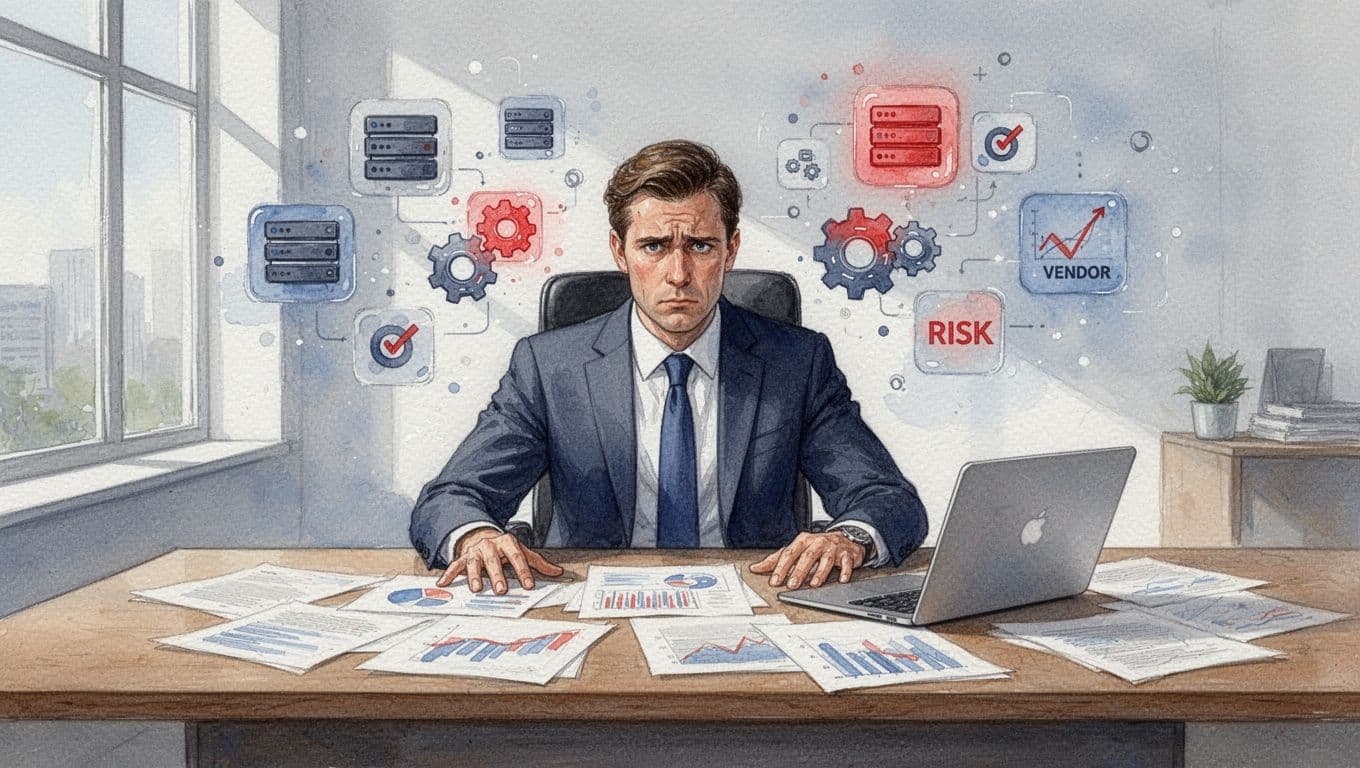
Most CEOs are not failing because they lack drive. They are being asked to make decisions across spend, systems, vendors, people, and risk, all at once.
That is too much for one seat if there is no real executive technology support around it. You end up with blurred ownership. You get weak visibility. You hear three different stories about the same problem, and none of them line up cleanly.
That is why technology decisions are never just technology decisions. They affect growth, customer experience, board confidence, and how much chaos you can absorb without slipping.
Why good CEOs still end up making bad technology calls alone
You can be a sharp CEO and still make a weak call when no one is translating technical detail into business terms. That is how solo decision-making gets you.
Maybe you do not have a senior technology leader in the seat. Maybe your internal team is solid, but too tactical. Maybe the vendor is shaping the roadmap because they are the loudest voice in the room.
In that setup, you are still the final signer, but you are not getting a full picture. You see the invoice. You see the timeline. You do not always see the tradeoff.
That is where bad calls sneak in. A tool gets approved because it solves one pain point. A system stays in place because nobody wants the cleanup. A project drifts because the business goal was never pinned down in the first place.
What happens when technology decisions stay informal
Informal decisions look easy at first. They are not.
You start relying on memory, side conversations, and whatever the loudest person thinks is true. Then the budget drifts. Tool sprawl creeps in. Priorities shift without a clear reason.
Soon, you are paying for overlap you never meant to create. Teams waste time rechecking work. Leaders cannot tell which projects matter most. The business feels busy, but not more certain.
That kind of drift is expensive. It also teaches the organization a bad habit: unclear decisions are normal.
How the wrong kind of support creates more noise, not more clarity
A lot of CEOs try to fix the leadership gap by adding motion. More tools. More dashboards. More meetings. More reports.
That rarely helps. It often makes the room noisier.
Data is not the same thing as judgment. A board packet can list every project and still leave you guessing what matters. Vendor updates can be full of detail and still dodge the real question. Project tracking can show activity while hiding the fact that nobody owns the outcome.
More information does not equal more confidence. Without ownership and a decision path, it just gives you more to stare at.
The same thing happens when internal teams are asked to carry an executive problem. They may know the systems well. They may even be doing strong work. But they usually do not have the authority or the wider business view to make the hard tradeoffs.
That is why the support has to match the problem. If the issue is scattered decisions and unclear ownership, tactical help will not fix it. If you need a cleaner view of what is slowing growth or where risk is building, Talk Through Your Technology Leadership Gap is the kind of first step that gives you a useful answer instead of more noise.
Why dashboards and reports often fail to help
A report only works when someone turns it into a choice.
If nobody owns the action, the report becomes decoration. It can tell you what happened last month. It cannot tell you what you should do next. That is why board reporting, vendor updates, and project tracking often miss the point.
You need thresholds. You need decision rights. You need someone who can say, “This is fine for now,” or “This needs an executive call this week.”
Without that, reporting becomes a mirror with no steering wheel.
Why vendors and internal teams cannot be the whole answer
Vendors are useful, but they are not built to own your whole business problem. They optimize for scope, contract, and their own lane.
Internal teams know your environment, but they are often too close to the work to set the strategy. They may know what is broken. They may not be able to tell you what should be fixed first, or what should wait.
That is why fractional CTO leadership makes sense for so many growing companies. It gives you senior judgment without forcing a full-time hire too early.
What shared decision-making should look like instead
The better model is simple. You lead the business direction. An experienced technology executive helps translate that direction into priorities, tradeoffs, and next steps.
That does not remove accountability from you. It gives you better inputs, clearer timing, and less guesswork. You are still the CEO. You are just not forced to make technical calls in a vacuum.
This is where executive technology leadership matters. You need someone who can connect business goals, systems, vendors, and risk without turning it into theater.
The decisions that should stay at the executive level
Some choices belong in the boardroom, not in a project thread.
You should own decisions about where to invest, what risk to accept, which systems to retire, what to fix first, and how fast to change. Those choices affect margin, speed, customer experience, and resilience.
If you hand those calls off without oversight, you do not get rid of the risk. You just hide it.
The kind of help that actually makes the CEO stronger
You do not need more technical jargon. You need structure.
That can mean interim CTO leadership when a leader leaves or a major issue hits. It can mean fractional support when the business has outgrown informal oversight. It can mean a tighter executive technology rhythm when reporting exists but nobody trusts it enough to act on it.
If your team has a leadership gap and you can feel the drag, when to hire a fractional CTO is worth reading. The point is not to fill a seat for appearances. It is to get the right level of executive help for the moment you are in.
Signs you should not be carrying technology decisions by yourself
A few signals usually show up first.
You may notice that ownership is unclear. Spend keeps rising, but confidence does not. A board member starts asking harder questions. A leader leaves. A major project slips. Vendors start shaping the roadmap. The business grows, but the technology structure does not keep up.
When those signs stack up, the problem is no longer just operational. It is executive-level.
The warning signs that show up first in the business
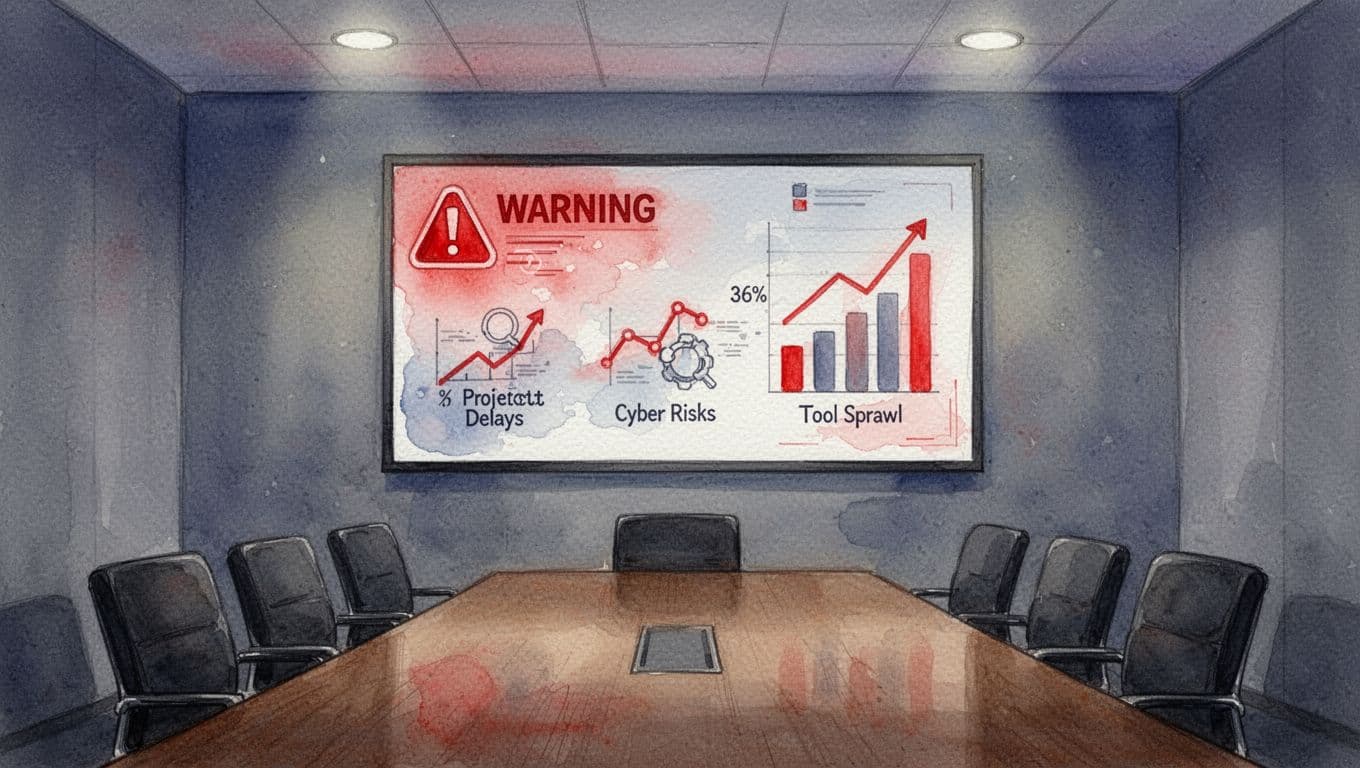
The early symptoms are easy to dismiss because they look separate.
You see delays. You see confusion over who owns what. You see rework. You see reporting that sounds fine until you try to make a decision with it. You see tools that overlap. You see teams spending too much time explaining the same issue in different ways.
That pattern usually points to one thing: the leadership structure around technology is weak.
The moments when the risk gets too high to ignore
Some moments expose the gap fast.
Cyber pressure does it. Acquisition prep does it. A major outage does it. A leadership change does it. These are the moments when you need calm, speed, and someone who can sort signal from noise without making the situation bigger than it already is.
If you are in that spot, Get an Executive Technology Clarity Check gives you a clean way to sort the issue before it turns into a bigger mess.
Conclusion
You should not have to make technology decisions alone because the work touches growth, risk, people, and performance all at once. Once technology starts shaping the business that much, solo decision-making becomes a liability.
The answer is not more tech activity. It is clearer leadership. Better ownership. Better judgment. Better timing.
When you get the right support in the room, you get more control and less stress. You also get a business that is easier to defend when the pressure shows up.