

You do not need a bigger technology plan. You need one your leadership team can read, trust, and act on.
Most roadmaps fail because they start with systems, features, or vendors. That feels organized on paper. In the room where decisions get made, it turns into noise. A technology roadmap only works when it helps you make better business calls.
Key takeaways
- Start with the business decisions that matter most, not the tool list.
- Keep the roadmap short enough to use in a leadership meeting.
- Name owners, decision rules, and timing for every initiative.
- Build for clarity, not for volume.
Start with the decisions that matter
Before you list a single project, name the business outcomes you want technology to support. Growth. Margin. Speed. Risk control. Customer experience. Those are the real drivers.
If you skip this step, the roadmap turns into a wish list. If you get it right, the plan becomes a filter. Every project has to earn its place.
That is why a good roadmap starts with a few hard choices. What are you trying to grow? What experience are you promising? What level of risk will you carry? If those answers are fuzzy, the roadmap will be too. For a mission-driven version of this work, the technology roadmap for legal nonprofits shows how to keep the plan practical and plainspoken.
Map the current state in plain English
You cannot build a usable roadmap if you do not know what you already have. That means systems, vendors, data flows, manual work, and the places where people keep patching gaps with spreadsheets and side conversations.
This does not need to be a huge audit. It needs to be honest. What is working? What is duplicated? What is fragile? What creates delay every week? Once you can see that clearly, you can stop guessing where the drag comes from.

A simple current-state map also helps you talk about risk without drama. If the board or funders need a clearer view, a board-ready dashboard can help you surface the few things that matter most. You do not need every detail. You need the right details.
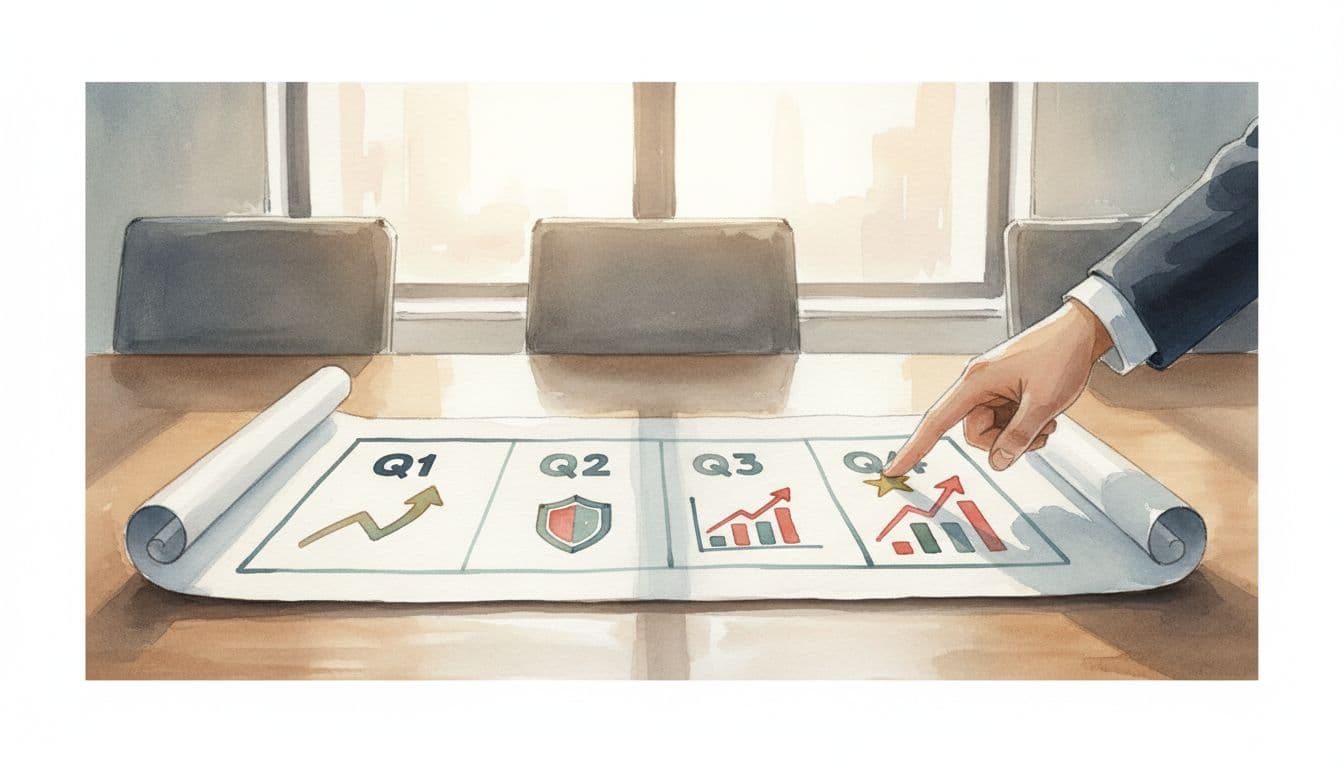
Sequence the work into phases
A roadmap leadership can use is not a pile of ideas. It is a sequence. That sequence should be readable in one sitting.
A simple structure works well:
- Stabilize what is breaking now.
- Simplify what creates avoidable drag.
- Build the next layer only after the first two are under control.
That order matters. If you try to modernize everything at once, you create more confusion, not less. If you sequence the work, you give leadership a way to see tradeoffs. You also make it easier to explain why one project comes first and another waits.
If you cannot explain the order in plain language, the roadmap is not ready yet.
For a leadership-friendly planning example, executive-facing roadmap guidance is a useful reference. And if you want a more formal planning lens, strategic technology roadmapping methods show how to think about current capability, future options, and tradeoffs without turning the conversation into jargon.
If your roadmap needs to support a transition, diligence process, or ownership change, the next step is tighter. You may want to Prepare Technology for Diligence or Transition before the pressure goes up.
Give every initiative an owner and a rule
This is where most roadmaps fall apart. They list work, but not accountability. They name projects, but not decision rights.
Every line item needs three things. One owner. One reason it matters. One rule for how you will know it is ready to move, pause, or stop. Without that, you do not have a roadmap. You have a backlog.
If a project has no named owner, it is not real yet.
That is also where reporting gets stronger. A roadmap should connect to the numbers leadership already cares about. Fewer stuck projects. Better vendor performance. Less rework. Clearer risk. If you need help showing those signals in a way the board can use, metrics that matter in one page keeps the focus on decisions, not decoration.
Keep the roadmap short enough to use
A roadmap is only useful if it fits the way your team actually operates. That means plain language. It means a 12 to 24 month view, not a giant master plan. It means enough detail to guide decisions, but not so much that nobody reads it twice.
If the roadmap takes 40 minutes to explain, it is too dense. If it can survive a board meeting, a budget conversation, and a vendor review without changing shape, you are close.
When the work feels scattered or too dependent on the wrong people, start with Get an Executive Technology Clarity Check. You will leave with sharper priorities and a cleaner next step.
FAQs
How long should a technology roadmap be?
Long enough to show sequence, short enough to use. For most leadership teams, 12 to 24 months is the sweet spot.
What belongs on the roadmap?
Only work tied to a real business outcome, a real owner, and a clear timing decision. If it does not change a leadership decision, it may not belong there.
How often should you update it?
At least quarterly, and sooner if the business changes. A roadmap that never moves is a sign it stopped leading anything.
Conclusion
The best roadmaps do not impress people. They help them decide.
If you want leadership to use the plan, start with business outcomes, map the current mess honestly, then sequence the work with clear ownership. That is how you turn a technology roadmap into something leaders can trust under pressure.
When the roadmap is clear, the room gets calmer. And calmer rooms make better decisions.