

You can add developers fast and still move slowly. That happens when your team’s efforts are not directly aligned with your primary business goals.
When your company grows, informal technology habits stop being enough. You need a technology roadmap, clearer ownership, and a commitment to strategic planning to define what the next year should look like before you add more people to the mix.
Key takeaways for growing companies
- Simply adding more developers does not fix a technology leadership gap or replace the need for a structured IT roadmap.
- A clear roadmap provides your team with an order of operations and defined milestones to track progress.
- The right plan ties strategic resource allocation to business outcomes rather than just responding to backlog pressure.
Growth outpaces instinct fast
Founder-led technology decisions can work for a while. Eventually, however, the stack becomes a complex piece of infrastructure, vendors become more demanding, and reporting stops telling the full story. As your organization undergoes a necessary digital transformation, relying on intuition alone becomes a liability rather than an asset.
That is usually when companies start looking for fractional CTO services, interim CTO services, or a part-time CTO. Whether you call it an outsourced CTO or a virtual CTO, the label matters less than the job. You need executive technology leadership to build a clear technology roadmap, ensuring that your efforts drive genuine innovation rather than just adding to the technical noise.
More developers do not fix fuzzy ownership. They make it more expensive.
If you want a plain-language example of what that looks like in practice, see a technology roadmap that actually works.
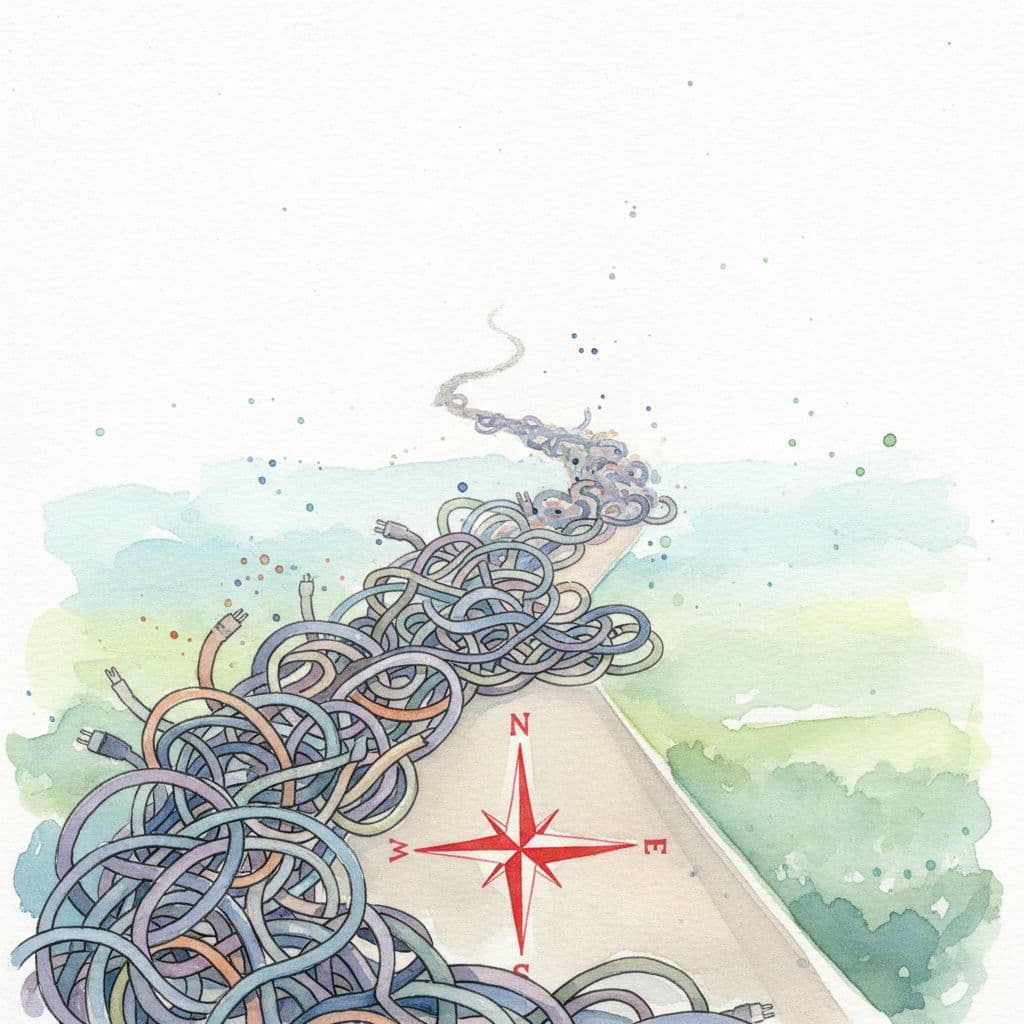
What the roadmap needs to answer before headcount grows
Your roadmap should start with a business-aligned technology strategy, not with tickets, tools, or a hiring plan. If you cannot connect the next developer to growth, customer experience, risk reduction, or cost control, the hire is likely premature.
A high-quality technology roadmap functions as strategic planning with a spine. It serves as a strategic blueprint that clarifies what gets built, what gets repaired, what gets retired, and what gets left alone. By defining your system requirements and overall architecture roadmap early, you provide leadership with a clear vision they can actually read, challenge, and approve. That is where a simple 12-month technology roadmap template helps.
That same logic is behind how a technology roadmap helps growing businesses stay aligned. The point is not to add more process, but to prevent drift.
You also want the roadmap to force a decision on priorities. Which customer problems matter most? Which systems are blocking scale? Which dependencies must be addressed to enable future innovation? By answering these questions, you clarify which technical debt items are worth paying down now and which can wait. If your answer is that you will figure it out after you hire, then your plan is missing.
Hiring developers is not the same as solving leadership
A growing company often confuses capacity with direction. Simply increasing your software development output does not solve the underlying issue if you lack a clear strategy. Those are not the same thing.
If the issue is a technology leadership gap, more developers will not close it. You may need a fractional CTO, a full-time CTO later, or an interim CTO if the seat is empty right now. In some companies, the better move is fractional technology leadership first, then a permanent hire once the implementation phase is clear.
That is why the question is not only how to hire a CTO. It is when to hire a fractional CTO, and what problem that person is supposed to solve. If the real gap is judgment, ownership, and decision rights, then a short list of tasks or basic project management will not help. True leadership enables cross-functional collaboration and ensures the team stays aligned on business outcomes.
Sometimes the need is adjacent. A company may need a fractional CIO, a fractional CISO, a virtual CISO, or an interim CISO because a well-defined technology roadmap has exposed a bigger control problem. That is still leadership work. It just sits in a different chair.
If the decision still feels muddy, Get an Executive Technology Clarity Check. You will get a clearer read on what is blocking progress, and what kind of leadership support makes sense next.
A roadmap gives the board something real to govern
Good technology governance for CEOs and good technology governance for boards start with visibility. Without that, reporting turns into slideware.
A board-ready technology reporting pack should show the real state of delivery, spend, and risk. It should include board cybersecurity reporting, cyber risk reporting to the board, and enough context to explain tradeoffs and relevant performance metrics without drowning people in technical detail. By utilizing clear KPIs, leadership can demonstrate the real state of delivery, which is the difference between board-ready reporting and a stack of dashboards no one trusts.
It also keeps the ugly stuff from piling up. Tool sprawl, shadow IT, and technical debt all get harder to ignore when they sit inside one plan. So do third-party risk management, vendor management, vendor due diligence, and vendor offboarding. When you apply sound project management to these areas, you ensure that vendors support your goals rather than dictate them. If a vendor can drive your roadmap, you do not have a roadmap. You have dependency.
The same applies to technology spend optimization and tech spending ROI. A roadmap makes cost-per-outcome reporting possible. It shows what you are paying for, what value it creates, and what should stop. That is how you support IT cost optimization without random cuts.
If you are preparing for acquisition readiness, technology due diligence, cybersecurity due diligence, or a CTO transition plan, a well-defined technology roadmap becomes even more valuable. It gives you a cleaner story for post-merger technology integration, business continuity planning, disaster recovery planning, incident response readiness, and ransomware readiness.
And if AI is entering the picture, the roadmap should include AI governance, AI adoption strategy, and responsible AI implementation before the team improvises them for you. This approach ensures that your risk management strategy remains robust as your organization scales.
Conclusion
Hiring more developers before you set direction usually buys speed in the wrong direction. The work gets more expensive, not more focused.
A strong technology roadmap gives you the structure to make better calls. By defining clear time horizons, this visual plan ensures your technology adoption remains purposeful rather than reactive. It effectively ties your technology strategy to your core business goals, makes ownership visible, and prevents rapid growth from turning into organizational chaos.
If you want your next hiring decision to support the business instead of feeding confusion, start with a technology roadmap first. That is where sustainable growth and effective technology leadership begin.
FAQs
Do you need a technology roadmap before hiring more developers?
Yes, if you want those hires to create useful output. Without a technology roadmap, you risk adding capacity to the wrong problems and making technical debt harder to unwind. Integrating your planning process early ensures that you are hiring for the right initiatives rather than just filling seats.
Is a fractional CTO enough, or do you need a full-time hire?
A fractional CTO is often the right move when you need executive judgment, clearer priorities, and stronger ownership before you commit to a permanent hire. They can lead your planning process to ensure alignment between technical enablers and business objectives. If the role is empty and the situation is urgent, interim CTO services may fit better.
What should be on a 12-month roadmap?
Keep it simple. A roadmap is not just a glorified Gantt chart. It should capture your top business goals, the major initiatives tied to them, the owners, the timing, and the risks. Include a space for potential emerging technologies that could provide a competitive advantage. Most importantly, ensure the roadmap is clear enough to communicate with internal stakeholders. By keeping the document concise, you make it easier for all stakeholders to agree on priorities and track progress throughout the year.