

You know the feeling. That critical project—the new system migration, the security overhaul—is stuck. Your team is burning out in endless meetings. Leadership is getting frustrated with vague updates. And the game-changing results you were promised feel further away than ever.
The problem is not a lack of effort. It is the absence of a clear, agreed-upon path for managing the change itself. When ownership is fuzzy and communication is weak, even the best teams get bogged down.
Your Major Project Is Stuck and Everyone Knows It

The tension in the room is obvious. The initiative sold as a solution to a core business problem is now creating new ones.
Progress updates are fuzzy. Deadlines are treated like suggestions. The initial excitement has faded into a quiet, draining sense of resignation. Everyone feels it, but no one can pinpoint exactly why everything is so stuck. It is the project no one wants to talk about.
Why Even the Best Teams Get Bogged Down
I have seen this happen dozens of times. The issue is almost never a bad idea or a lack of technical skill. Capable teams fail on major transformations for a much simpler reason: they do not have a shared game plan.
When you lack clear ownership, a deliberate communication rhythm, or a concrete definition of "done," even promising projects get swallowed by confusion.
This creates an operational drag that quietly drains momentum. Instead of executing, your best people are burning valuable time on:
- Chasing status updates to figure out who owns what.
- Redoing work because key decisions did not stick or were not communicated.
- Fielding constant questions from confused stakeholders.
Hope is not a strategy. Without a clear system for managing the work, talented people are set up to fail, leading to slower growth and eroding board confidence.
Moving From Chaos to Control
The answer is not more pressure or another all-hands meeting. The answer is clarity. What you need is a practical template for change management—not as a bureaucratic checkbox, but as a leadership tool to get back in control.
A good template does not add red tape; it cuts through the noise. It forces the right, difficult conversations to happen at the beginning. It makes accountability explicit, ensures communication is intentional, and anchors every task to a measurable business outcome.
This is how you turn a chaotic, personality-driven firefight into a calm, predictable system. It is how you get your project unstuck and start delivering the value you promised.
Why Capable Teams Fumble Major Transformations
It is a frustratingly common story. You have a brilliant, dedicated team and a game-changing idea, but the project goes off the rails. Why? Big transformations stumble when you throw a great team into a chaotic process.
Hope is not a strategy, and a vendor's logo on a slide deck is not a plan. Without a clear system for managing the change, even the most promising initiatives get bogged down in confusion, draining momentum and budget.
The Coordination Tax of Unclear Ownership
When you do not have a clear template for change management, you start paying a "coordination tax." This is the wasted time and energy your team spends trying to figure out who is supposed to do what. It is the invisible friction that slows everything down.
This tax shows up in painful ways:
- Constant fire drills: You pull people into last-minute meetings to clarify roles that should have been locked down weeks ago.
- Endless rework: Teams redo work because a key decision was not communicated clearly or was not made by the right person.
- Misaligned priorities: Different departments push in opposite directions because there is no single, shared vision of success.
This is not a people problem; it is a system problem. When roles and decision rights are fuzzy, your best people are forced to navigate internal politics instead of executing. You burn them out and get nowhere. If this sounds familiar, use our guide on how to perform a root cause analysis to pinpoint where your system is breaking down.
The Gap Between Knowing and Doing
Most leaders know structured change is important. The real breakdown happens in the execution. There is a wide gap between knowing what needs to be done and having the tools and discipline to do it.
A recent study found a jarring disconnect. While 78% of firms say structured change management is critical, only 37% feel they have strong capabilities to pull it off. This is a massive failure to invest in the systems that turn ambition into reality.
This is how you end up with "zombie projects"—initiatives launched with a bang that now just drift along, never quite finishing. Board confidence cracks when progress is vague and the promised ROI never appears.
A solid template for change management closes that gap. It gives your team the clarity and structure they need to stop managing chaos and start delivering results.
The Executive Template for Change Management
When a big project hits a wall, the solution is not more meetings. It is getting back to basics. You need a simple system to restore clarity, define ownership, and make progress visible. This is a playbook for getting unstuck, not more theory.
I developed this template for change management because I saw too many good teams get bogged down in operational chaos. This is not about adding red tape—it is about cutting through it. Think of it as a leadership tool for taking back control.
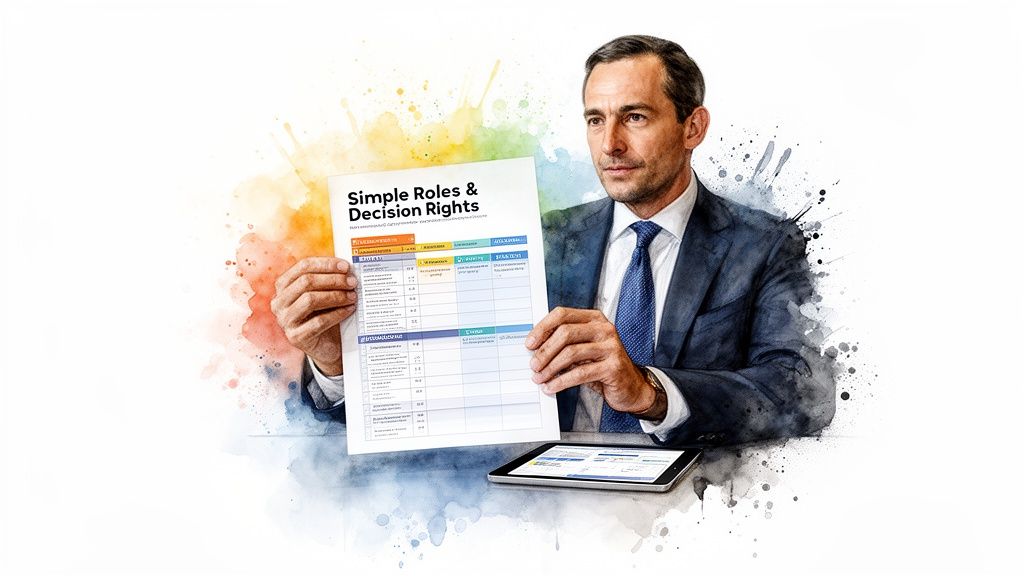
Each part of the template is designed to answer the tough questions every senior leader faces during a critical initiative. Let's look at the core components.
This table provides a high-level overview of the template's structure, showing how each piece connects to a critical leadership question.
Core Components of the Change Management Template
| Template Component | Purpose | Leadership Question Answered |
|---|---|---|
| Roles & Decision Rights | Eliminates ambiguity by defining who has authority for key decisions, approvals, and sign-offs. | Who really owns this and has the final say? |
| Communication Plan | Ensures consistent, targeted messaging to all stakeholders, from the board to individual teams. | Why are we doing this, and who needs to know what? |
| Milestones & Metrics Log | Tracks objective progress and business impact with clear, data-driven points of reference. | Is this actually working and delivering value? |
Each of these components works together to create a system that drives clarity and accountability.
Defining Roles and Decision Rights
The first place projects fall apart is fuzzy ownership. This template tackles that head-on by forcing you to answer the question, "Who actually owns this?" When no one knows who can make the final call, you get endless meetings and paralysis.
A clear roles and decision rights chart kills that ambiguity. For a new tech program, this means getting specific about who can:
- Approve a major change to the system architecture.
- Decide which vendor gets the contract.
- Accept a security risk or insist on a fix.
- Declare a project milestone officially complete.
This is more than a list of names; it is a map that empowers your team to move fast. When people know their swim lanes, they do not have to ask for permission at every turn. Our article on building a decision making framework is a great resource for this.
The Communication Plan
Next, you need to answer, "Why are we doing this, and who needs to know what?" A communication vacuum is quickly filled with rumors, confusion, and resistance. A simple, documented plan ensures the why behind the change is clear and consistent.
For a security program rollout, the plan specifies:
- Who gets updates (the board, department VPs, front-line managers).
- What information they get (high-level progress for the board, specific process changes for teams).
- When they get it (weekly progress emails, monthly steering committee briefings).
This is not about blasting everyone with constant emails. It is about being strategic—delivering the right message to the right people at the right time to keep everyone aligned and prevent the dreaded, "I had no idea this was happening."
Milestones and Metrics Log
This part of the template gives you a concrete answer to the board's favorite question: "Is this working?" "We're making good progress" is not a metric. This log is where you move from gut feelings to hard, inspectable proof.
It tracks a few vital signs for your initiative:
- Key Milestones: What are the 3-5 big accomplishments that prove we are on the right path? Think "Vendor Contract Signed" or "User Acceptance Testing Complete."
- Adoption Metrics: Are people using the new system? This could be the "Number of logins to the new platform" or "Percentage of reports filed with the new tool."
- Business Outcome KPIs: Is the change delivering the promised value? Track things like "Reduction in manual data entry hours" or "Decrease in security incidents reported."
With a well-maintained metrics log, you have crisp, defensible answers for any stakeholder. You can walk into any meeting with data to prove your investment is paying off, turning vague status updates into sharp conversations about real results.
Putting Your Template Into Action: A 90-Day Playbook
A great template is just a starting point. The real value comes from putting it into action. To get this system working for your team, you need a focused, time-bound plan. This is where a 90-day playbook comes in.
This is a focused sprint designed to install a new operating rhythm, prove its worth quickly, and lay a foundation for predictable execution. The goal is to move from chaos to calm by making ownership, progress, and risk visible to everyone.
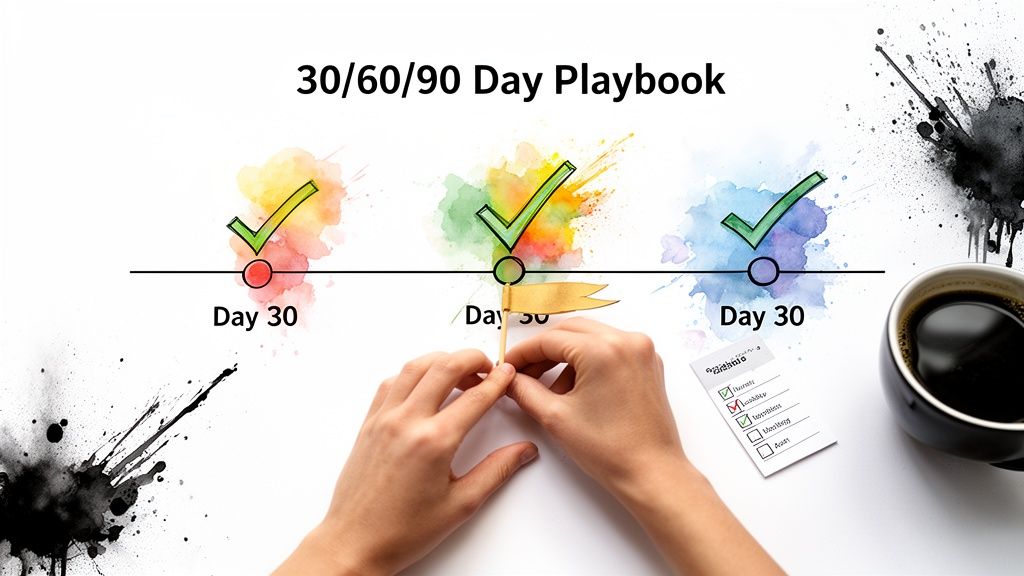
Days 1-30: Establish the Baseline
Your first month is about creating an honest picture of reality. You cannot fix what you cannot see. This phase is dedicated to mapping the current state and resetting expectations.
Here are your priorities for the first 30 days:
- Find the Bottlenecks: Use the Roles & Decision Rights part of the template for change management to map out who really makes key decisions today. This exercise will instantly highlight where work grinds to a halt.
- Send the First Signal: Draft and send the initial announcement using the Communication Plan. This is your first move to replace rumors with a single source of truth. Clearly state the initiative's purpose, why it's happening now, and who is leading it.
- Confirm Your Sponsor: Get formal confirmation of your primary project sponsor. Ensure they understand their job is to actively remove roadblocks and champion the program’s business goals.
The point of this phase is not to solve everything. It is to stop the bleeding. By making ownership explicit and communication deliberate, you immediately start to reduce the "coordination tax" burning out your team.
Days 31-60: Build the Rhythm
Now that you have a baseline, the next month is about building a consistent operating rhythm. This is where you move from one-off actions to a repeatable process that drives accountability.
During this period, your focus should be on:
- Lock in a Weekly Cadence: Start a non-negotiable weekly check-in. The only purpose of this meeting is to address project milestones and risks. It is a forum for unblocking work, not for vague status reports.
- Score a Small, Visible Win: Find one high-impact, low-effort task you can complete. It could be fixing a single nagging tech issue or clarifying a confusing process. A small win proves the new system works and builds buy-in.
- Start the Risk Log: Begin documenting the top 3-5 risks to the program. This turns risk management into a calm, deliberate practice you can confidently defend to the board.
Days 61-90: Build Momentum
The final 30 days are about proving it works. You will shift from establishing the process to using it to drive and report on tangible business outcomes. To succeed here, it helps to understand and implement a modern playbook for culture and transformation.
Your focus now shifts to:
- Show Measurable Progress: Update the Milestones & Metrics Log with hard data. Show progress against the KPIs you defined, whether that is adoption rates, ticket closures, or efficiency gains.
- Tune Your Communications: Check in with people. Are they clear on the "why" behind this effort? Get feedback and adjust the plan to address any confusion.
- Deliver the First Board-Ready Report: Create a clean, one-page summary for leadership. It should concisely show progress against milestones, key metrics, and the current risk log. This replaces rambling narratives with inspectable proof that you have things under control.
What Better Looks Like: Calm, Fast, and Inspectable
We have all been in project meetings that feel like spinning wheels, with vague updates and a creeping sense of dread. Decisions are made, only to be unmade in a hallway conversation an hour later. It is exhausting.
What if your major projects felt different? A structured approach can end the wishful thinking and last-minute heroics.

When you install a clear template for change management, the dynamic shifts. Leaders can walk into board meetings with crisp answers because progress is no longer a matter of opinion—it is right there for everyone to see.
An Execution Engine, Not a Source of Surprises
Suddenly, technology stops being a source of constant fire drills and becomes a reliable engine for getting work done. Your security program goes from being the "department of no" to a trusted partner providing sensible guardrails. This gives teams the confidence to move faster without taking foolish risks.
When pressure mounts, the organization does not scramble to find a hero. It leans on a proven system that everyone understands and trusts.
This is what it feels like to operate in a calmer, faster, more controlled environment. It is a state where your investments in change do not just get launched; they deliver real, measurable value.
Smarter Workflows, Not More Work
This structured approach is getting a boost from new technology. AI-augmented tools are being built into change management workflows. Some organizations are already automating up to 40% of the administrative work, like analyzing employee sentiment or predicting adoption risks.
This is a big shift, and it means new skills are required. By mid-2026, around 65% of change professionals will need to get comfortable managing these smarter systems. You can read the full report on OCM trends to see where this is headed.
With a solid system in place, you create an environment where:
- Decisions stick: With clear ownership defined upfront, the team can move forward without second-guessing.
- Progress is visible: Simple, shared metrics mean everyone from the project team to the C-suite is looking at the same version of reality.
- Risk is managed proactively: Instead of being ignored, risks are tracked, discussed, and dealt with as part of the normal routine.
This is the direct result of implementing a simple system for managing change. It is how you turn project chaos into predictable execution and give your teams the clarity they have been asking for.
Frequently Asked Questions About Change Management Templates
Adopting a new framework brings up practical questions. The goal is to install a system that makes work calmer and more predictable, not to add process for the sake of process.
Let’s tackle the common concerns I hear from leaders.
Isn't This Just More Bureaucracy for My Team?
It is the opposite. This template is designed to cut through the chaos that is already bogging your team down—the undefined roles, the endless follow-up, and the constant rework. That friction is the real bureaucracy.
A clear framework gives your team back their time. It makes roles, decisions, and goals explicit so they can focus on their work instead of getting stuck in coordination hell. This is about removing friction, not adding an administrative layer.
How Do I Get Buy-In from a Team Already Burned Out on Change?
You earn it by proving that this time will be different. Do not roll this out with a big presentation about a new process. That is a recipe for eye-rolls.
Instead, start small. Find one visible, nagging problem the template can help you solve in the first 30 days.
Frame it as a tool to protect their time and make their work less frustrating. When your team sees this framework lead to clear decisions, fewer interruptions, and actual progress, they will become its biggest champions. Success is the most persuasive argument.
Looking over some real-world change management plan templates can give you a concrete feel for how this structure gets applied.
My Organization Is Unique. How Can a Standard Template Work for Us?
Think of this less as a rigid blueprint and more as a flexible scaffold. It is built on principles universal to any successful change program, but it is designed to be adapted, not blindly copied.
Every successful initiative needs:
- Clear ownership so decisions stick.
- Defined goals so everyone agrees on what "done" looks like.
- A communication rhythm to keep people aligned without meeting overload.
- Proactive risk tracking to prevent surprises down the road.
The real value is in the framework. It provides guardrails you can then customize—like roles, metrics, and communication channels—to fit your company's culture and the project's unique demands.
This structure gives you a massive head start compared to beginning from a blank slate. If you are looking for tools to help power this process, you might find our guide on the best change management software useful.
A template for change management is not about forcing your organization into a box. It is about giving your team a proven system to manage complexity, reduce friction, and turn your big investments into measurable results.
If you're tired of paying the coordination tax on critical projects, CTO Input can help. We restore clear ownership and reliable execution so your business can move faster without taking on unnecessary risk. Book a Clarity Call to see how we can help you regain control.