
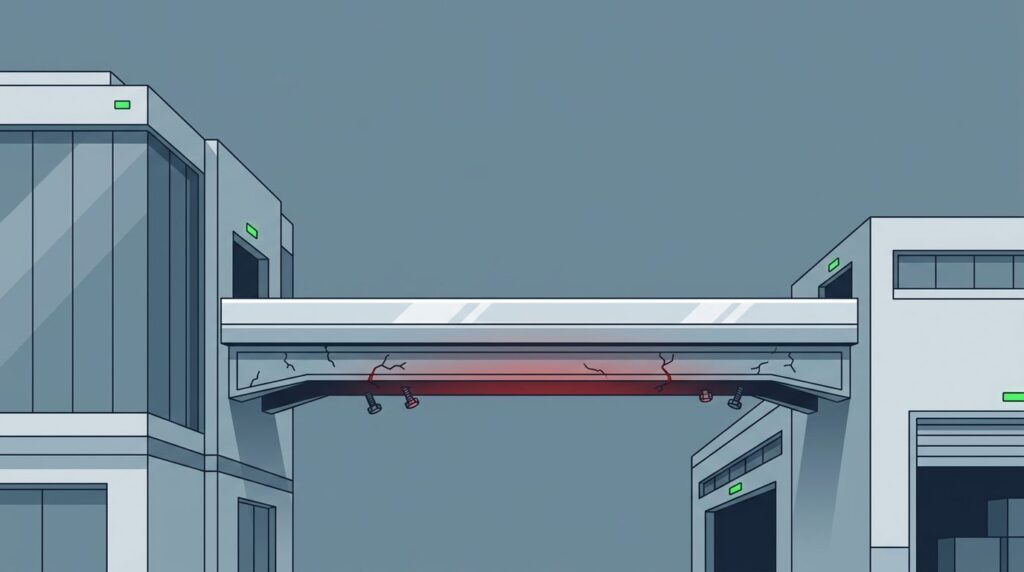
Your riskiest supplier may be the one nobody is discussing. Its quarterly report is green. The account manager is responsive. The contract renewed without argument. Yet important work keeps slowing down around it.
Vendor relationship risk grows when what you are told no longer matches what your teams experience. Third-party vendors can look stable on paper while missed commitments, weak ownership, hidden dependencies, and unclear recovery plans create supply chain risk.
You don’t need more vendor meetings. You need active vendor relationship management and a clearer view of where trust has started to thin.
Key takeaways
- A supplier can meet formal service level agreements and still create serious operational risk, financial risk, or cybersecurity risk.
- Trust debt builds through repeated small misses, vague answers, and promises that don’t hold up under pressure.
- Vendor risk management needs to cover delivery, access, data, cost, concentration, and your ability to exit.
- Your board needs a short, honest view of material vendor exposure through effective third-party risk management, not a stack of scorecards.
- Clear ownership, evidence, consequences, and due diligence turn vendor management into a leadership discipline.
Vendor relationship risk is rarely visible in a scorecard
Most vendor reporting is built to reassure. It tracks uptime, ticket closure, project milestones, and contract status through a narrow set of key performance indicators. Those measures matter, but they can miss the issue that affects your business most.
A platform can show 99.9% uptime while your sales team still works around slow integrations. A managed provider can close tickets on time while recurring access problems create risk. A software vendor can deliver every release while its roadmap pulls you further from your business priorities, making vendor performance look healthy even as the relationship weakens.
That is vendor relationship risk. It is not only the chance that a supplier fails. It is the growing distance between the service you believe you have and the control you actually hold across your vendor ecosystem.

Third-party risk management covers the risk created when you depend on third-party vendors for work, systems, data, or operations. Effective third-party risk management also considers fourth-party risk, including the subcontractors and service providers your vendors rely on. That definition is broad for a reason. External providers can affect your finances, customer experience, security posture, delivery capacity, and ability to operate.
The most concerning signals are often ordinary:
- Your leaders hear a different story from finance, operations, and IT.
- Workarounds have become normal, but no one owns the root cause.
- The supplier’s team controls key knowledge, credentials, or configuration decisions across multiple third-party vendors.
- Renewal discussions happen before anyone can explain the supplier’s business value.
- Nobody can state how long it would take to replace the vendor or recover if it failed.
A green dashboard does not prove control. It may only prove that the dashboard measures what the vendor finds easiest to report, not the dependencies that shape your third-party risk management program.
The real exposure is often not a missed service level. It is your dependence on a supplier you cannot effectively challenge, replace, or recover from.
How trust debt builds before a vendor fails
Trust debt is the accumulated cost of expectations that were not met. It is not technical debt, and it is not a line on your balance sheet. It lives in the relationship between your leadership team, your internal operators, and your supplier, including the third-party vendors that support critical business functions.
It starts small. A delivery date slips, but the explanation seems reasonable. A recurring problem is called an isolated incident. A promised integration remains “in progress” for another quarter. A security questionnaire is completed, but nobody tests whether the answers match your environment or the controls used by your third-party vendors.
Over time, your teams stop expecting clean answers. They keep extra spreadsheets. They build manual checks. They call a familiar person instead of using the documented process. Those workarounds keep the business moving, but they also hide the supplier’s true cost and create reputational risk if a failure eventually becomes visible to customers or regulators.
The supplier may still look fine because each issue is reviewed alone. Your leaders need to see the pattern across delivery, risk, spend, and business impact through regular risk assessments and continuous monitoring, rather than relying on a static audit or scorecard.
A useful vendor risk management process is continuous, not a one-time review during vendor onboarding. As Bitsight’s overview of third-party risk management explains, the work includes identifying, assessing, and managing risks to your data, operations, and finances throughout the relationship. Effective vendor risk management combines initial due diligence with continuous monitoring, so teams can identify changes before they become failures.
That means due diligence should not end when vendor onboarding is complete or the contract is signed. Reassess a critical supplier through updated risk assessments when its role expands, your business changes, an incident occurs, or a renewal approaches. Ongoing vendor risk management should reflect those changes, especially when your vendor now processes more customer data, controls a core workflow, or becomes harder to replace. In each case, the risk profile has changed.
Ask for evidence, not reassurance
You don’t need to turn every vendor review into a legal investigation. You do need a consistent risk evaluation process that separates good news from evidence and supports effective third-party risk management.
Start with the business dependency. What process stops if this supplier fails? What customers, revenue, data, or regulatory compliance obligations are exposed? Who makes the call if service quality drops below an acceptable level? This risk evaluation should also identify where compliance risk could increase if the vendor changes its practices or fails to meet its commitments.
Then examine the operating reality. A meaningful review should cover:
- The business outcome the vendor supports and the executive owner accountable for it.
- Access control, data handling, subcontractors, regulatory compliance requirements, and material changes to the service.
- Delivery performance, including recurring incidents and overdue commitments.
- Contractual rights, renewal dates, pricing changes, and unresolved commercial disputes, with contract management practices that make obligations and escalation paths clear.
- Exit options, data portability, transition support, and a workable vendor offboarding plan supported by disciplined contract management.
- The role this supplier plays in your vendor incident response plan, incident response procedures, and business continuity planning.
This is where technology governance for boards becomes practical. Directors do not need every service ticket or security control. They need board-ready reporting that names the suppliers that could materially affect revenue, operations, customer trust, or cyber exposure, while connecting those findings to third-party risk management.

A board-ready risk summary should answer four questions: What could go wrong? How exposed are you? Who owns the response? What decision is needed now?
Your cyber risk appetite also matters. If a supplier’s failure would exceed the outage, data loss, or financial exposure your leadership accepts, the relationship needs more than routine monitoring. It needs risk mitigation, a tested recovery approach, or a decision to reduce dependence. A second risk mitigation measure may include stronger contractual protections, additional monitoring, or a structured vendor offboarding plan.
Tools can help gather evidence and track assessments. Vendor management software can automate supplier questionnaires, document collection, and review reminders, while a second vendor management software workflow can help monitor changes over time. HITRUST’s guidance on vendor compliance describes the value of structured workflows for collecting supplier information and monitoring risk. But a workflow cannot decide whether your business is comfortable with the exposure. That remains an executive decision.
Reset the relationship before the next renewal
A renewal is often your best chance to deal with trust debt. Too many companies treat it as a procurement event instead of a core vendor relationship management decision. The business case should come first, supported by contract management and broader supply chain management priorities.
Ask whether the vendor still supports your technology strategy. Does it reduce operational drag? Does it improve customer experience, margin, reporting, or risk control? Or has it become an expensive workaround you are afraid to disturb? Effective vendor relationship management connects those answers to the workflows that depend on the supplier, not just the terms of the agreement.
Bring the supplier into a direct conversation about expectations, much as you would during vendor onboarding. Name the business outcome, missed commitments, evidence required, escalation path, and consequence of continued underperformance. Vague dissatisfaction changes nothing. Clear terms give the relationship a chance to improve.
You also need decision rights inside your business. Procurement may own commercial terms and contract management. IT may manage technical performance. Security may review controls. Operations may feel the daily impact across supply chain management. Without one executive owner, each group sees part of the problem and nobody owns the whole relationship.
That ownership gap is common when a company has technical managers and capable vendors but lacks executive technology leadership. A fractional CTO and technology oversight engagement can help you establish a clear operating picture without rushing into a full-time hire. The goal is not to take over vendor calls. It is to connect vendor decisions to growth, spend, risk, and accountable action through practical vendor relationship management.
A practical reset includes a short list of material third-party vendors, a systems inventory, named owners, renewal dates, current exposure, and a 90-day plan for the relationships that need attention first. Prioritize risk mitigation for the most critical third-party vendors, then define a second risk mitigation step for unresolved control gaps and missed commitments. That is enough to move the conversation out of fog.
Make trust visible before pressure does
Trust debt does not disappear because a vendor has a polished account team or a clean quarterly report. It shrinks when you test assumptions, name ownership, use continuous monitoring, and make the cost of weak performance visible.
The supplier that looks fine on paper may still be carrying your largest vendor relationship risk and hidden exposure. Clearer visibility gives you time to address cybersecurity risk before a cyber incident, failed renewal, customer loss, or diligence process forces the issue.
If vendor decisions feel scattered or too dependent on the wrong people, Get an Executive Technology Clarity Check to identify the real ownership, reporting, and third-party risk management questions that need answers.
Frequently Asked Questions
Is trust debt the same as reputational risk?
No. Reputational damage can result from trust debt, but the problem begins earlier. It affects internal confidence, decision speed, vendor performance, customer experience, and your readiness for diligence or an incident.
What should you include in vendor risk reporting to the board?
Focus on material suppliers, business dependency, top risks, recent incidents, contract or renewal exposure, mitigation progress, executive owners, and decisions that require board input. Effective vendor risk management turns these details into a clear, decision-ready view, supported by current risk assessments. Keep technical detail behind the summary so vendor risk management discussions stay focused on business impact and accountability.
When should you replace a vendor?
Replacement makes sense when third-party vendors cannot meet critical expectations defined in your service level agreements, your business has outgrown the service, the supplier creates unacceptable risk, or the cost of dependence exceeds the cost of transition. Don’t wait for a dramatic failure if the evidence already shows a sustained pattern of weak control.