

If you are a mid-market CEO, your calendar probably tells the story.
AI tools, cybersecurity roadmaps, vendor pitches, product backlogs, renewal calls, and yet you still get surprised in board meetings. The questions are sharper, the stakes are higher, and the decisions keep multiplying.
You are not short on data. You are short on focus.
Trey Taylor’s book, “A CEO Only Does Three Things”, makes a simple claim: a CEO should truly own only three types of decisions, culture, people, and numbers. Everything else should sit with leaders closer to the work.
This post applies that idea to your reality with tech and cyber. You will see what belongs on your plate, what you should stop touching, and how that shift cuts risk, speeds up projects, and makes technology serve your growth plan instead of running it.
Why Most CEOs Are Drowning in Decisions (Especially Around Technology)

Over the last few years, the number of “critical” topics on a CEO’s desk has exploded. AI, ransomware, cloud costs, privacy rules, vendor risk, data strategy, incident response, talent shortages.
Each topic spawns another ten decisions.
The result is decision overload. Recent research shows CEOs now juggle more than eight high-stakes priorities at once, and more than 70 percent report higher stress than even a few years ago. Quality drops when quantity spikes.
Technology is a major driver. Tool sprawl, data silos, and non-stop security alerts mean every issue seems to have a tech or cyber angle. Every problem gets framed as “we need a new system” or “we must lock this down.”
You get pulled into:
- Debates about which platform to buy
- Arguments between IT and operations about scope
- Security “emergencies” that sound scary but are not strategic
Meetings drag. Projects slip. Ownership gets fuzzy. The business stalls, not because you lack effort, but because you are acting as chief product manager, chief security architect, and chief integration officer.
You are the CEO. You should act like one.
How decision overload quietly slows growth and raises risk
Decision overload has a quiet cost.
When you weigh in on every software feature, every vendor shortlist, and every security tool, three things happen.
First, meetings slow. Your team waits for your view instead of bringing a clear recommendation. Second, projects drift. No one is quite sure who can make the final call, so decisions bounce back to you. Third, real risk hides. Board relationships, key customers, and investors get less of your time, and you miss early signals.
Picture a typical week:
- Approving IT ticket priorities after a minor outage
- Debating which logging tool to buy with your head of IT
- Reading three different AI vendor proposals in detail
None of these are “CEO-grade” decisions. They pull you into the weeds and away from the few choices only you can make.
The simple idea: a CEO really owns only three types of decisions
Trey Taylor’s core idea is simple and sharp. A CEO should only own three decision types: culture, people, and numbers. Everything else should slot under those, delegated to leaders who are closer to the action.
You still influence many topics, including technology and cybersecurity, but you do it through these three lenses. You do not personally choose tools, design architecture, or write security controls.
Those are the “47” decisions you should not touch. Not because they are unimportant, but because you are not the right person to own them.
This article uses that three-part lens to help you redraw lines and reset expectations, especially in tech, AI, and cyber.
The Three Decisions You Must Own as CEO: Culture, People, and Numbers

Think of these three decision areas as pillars. If you give them away, the structure wobbles.
Culture decisions: what you will always say yes and no to
Culture is simple at its core. It is how people behave when no one is watching.
Your culture decisions answer questions like:
- How much risk-taking is acceptable in new products or AI experiments
- How you respond when systems fail and customers are in pain
- What ethical lines you will never cross with data and automation
If you say, “Customer trust beats short-term revenue,” that single choice shapes hundreds of daily actions. It tells your product and data teams how to handle gray areas.
For example, a CEO might make a clear call: “We will not sell identifiable customer data and we will always explain when AI is making an offer or decision.” That one statement guides marketing, product, and engineering, and reduces debates in every feature meeting.
Sources like this executive summary of Taylor’s book reinforce how culture choices frame everything else. Once you set the line, your tech leaders can operate faster inside it.
People decisions: who gets power, trust, and budget
You do not run the hiring pipeline. You do own who sits at the leadership table and what “great” looks like for each key role.
In technology and cybersecurity, that includes decisions like:
- Choosing a seasoned head of engineering over a cheap but untested manager
- Bringing in a fractional CTO, CIO, or CISO when current leaders lack experience
- Making it clear that product, operations, and IT must solve problems together
Poor people decisions create endless noise. If your tech leader is not trusted, every decision about tools, security, and data comes back to you. You become the referee.
Good people decisions do the opposite. You pick leaders who understand the business, set clear outcomes, and protect your time. Delegation then feels safe, not scary. Articles on smart delegation, such as this Forbes piece on the benefits of delegating, remind us that better delegation also grows your next generation of leaders.
Number decisions: what you will fund, protect, and measure
Number decisions are not about spreadsheets. They are about priorities.
You own choices like:
- Target tech spend as a percent of revenue
- How much cyber risk you will accept relative to growth
- Which metrics matter most for digital projects and AI efforts
For example, you might decide that tech operating spend will sit under 6 percent of revenue, that key systems must reach 99.9 percent uptime, and that no single security incident can put more than 10 percent of EBITDA at risk.
Those are CEO calls. Once you draw those lines, your leaders can pick tools, design workflows, and plan projects that fit those constraints. If you avoid these decisions, vendors start driving the agenda and budgets drift. You end up either overspending on shiny tech or underinvesting in basic resilience.
The 47 Decisions You Should Stop Touching (And How to Delegate Them With Confidence)
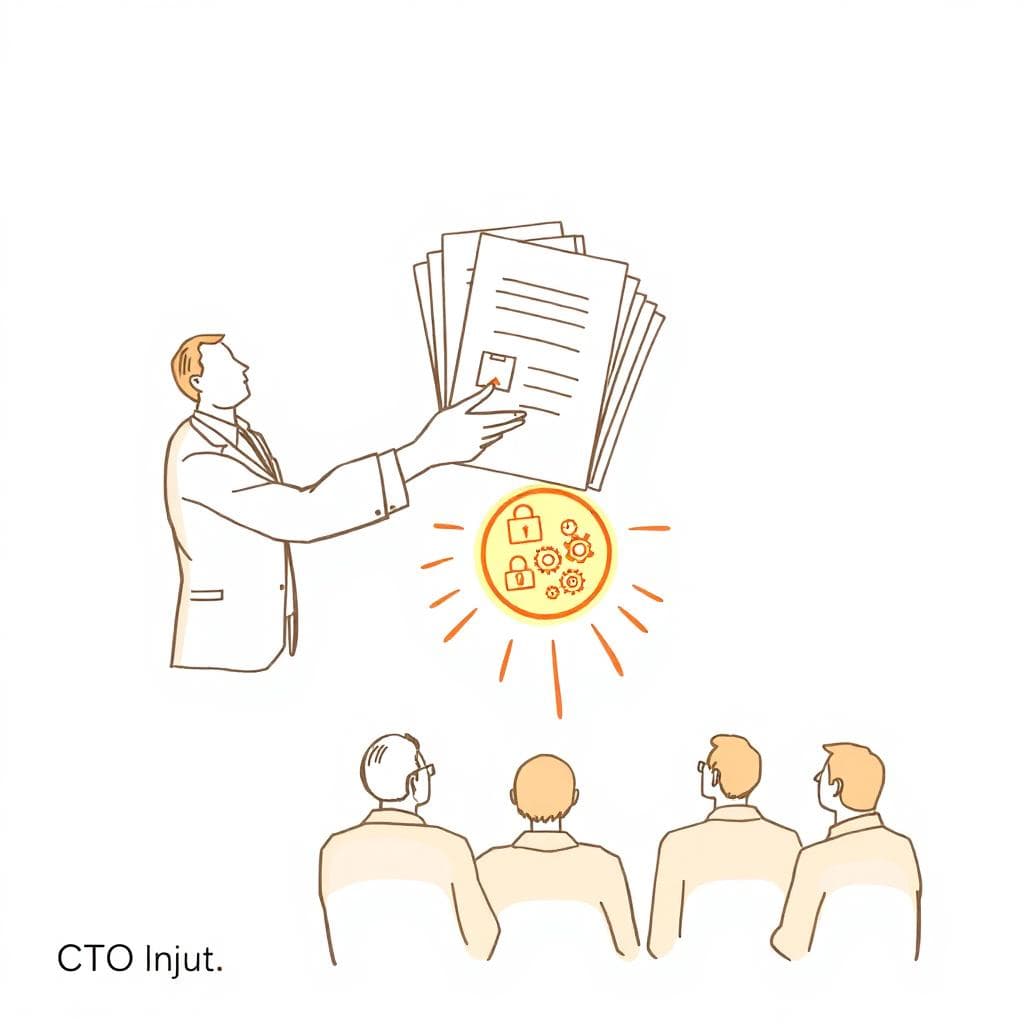
Once you claim culture, people, and numbers, the rest of your decision list looks different. Many choices that feel urgent are actually operational. They should live with your tech and operations leaders.
You do not need a list of 47 line items. You need a few clear buckets and simple guardrails.
Operational decisions that belong with your tech and operations leaders
Your leaders should own:
- Which project management tool to use
- How to structure sprints or release cycles
- Which integration pattern to use between systems
- How to organize the help desk and ticket flow
- Which monitoring or logging platforms to pick
Your role is to say, “We need new features live every two weeks, we must keep response time under X, and we want unit cost per transaction to fall by Y.”
Their role is to decide how.
A useful rule of thumb: if the decision does not change culture, key people, or core numbers, you probably should not be the decider.
Guides like this article on delegating without losing control show that strong leaders set outcomes and boundaries, then step back.
Technology and cybersecurity choices you should influence, not own
Some decisions are technical but still strategic. You should influence them, not control them.
Examples include:
- Which specific cyber tools your team uses
- Detailed access controls or backup configurations
- Cloud provider features or architecture diagrams
- Secure development practices inside the software lifecycle
Your job is to set risk appetite, approve major budget levels, and demand clear reporting on exposure and incidents. Their job is to tune the controls.
Instead of saying, “Buy this firewall,” you can ask, “What is our single point of failure, how are we reducing it, and what budget do you need to close the gap?”
Mid-market CEOs are under real attack pressure, and pieces like this guide for mid-market CEOs on cyber protection reinforce your role in setting tone and priority, not picking tools.
When internal trust or skill is thin, outside fractional technology leaders can be the translator. They sit on your side of the table, keep vendors honest, and turn your growth targets and risk appetite into technical plans.
How to reset your role: three practical steps to get out of the weeds
You do not fix this with a slogan. You fix it with new habits.
Here is a simple 90-day playbook:
- For two weeks, write down every decision you make. Tag each as culture, people, numbers, or “other.”
- Pick three recurring “other” decisions that drain you. Agree on who will own them going forward, set clear guardrails and success measures, and stick to it.
- Sit with your executive team and make the lines explicit. Tell them which decisions you will own and which you now expect them to own. Put it in writing.
Start small. Choose the most painful decision loops first. Review progress in 90 days and expand the list.
Conclusion: Lead the Three, Let Go of the Rest
When you, as CEO, truly own culture, people, and numbers, everything else gets easier. Projects move faster, tech leaders stop waiting for your blessing on tool choices, and cyber risk becomes a shared discipline instead of a recurring scare.
Letting go of those 47 other decisions is not abdication. It is leadership. You are trading control of small choices for control of the few choices that shape the company you leave behind.
Pick one decision type you will stop touching this quarter. Maybe it is tool selection, maybe ticket priorities, maybe low-level security configuration. Hand it off with clear outcomes and see what happens.
If you want outside, neutral technology leadership to help reset roles across tech, cyber, and data, take a next step with CTO Input at https://www.ctoinput.com. Then keep exploring practical stories and frameworks on the CTO Input blog at https://blog.ctoinput.com to keep your focus where it belongs: on the three decisions only you can make.