

You can feel it before you can explain it. Technology feels expensive, risky, and a bit out of sync with the organizational vision. Projects creep, bills surprise you, and the board keeps asking questions you cannot answer in plain language.
At that point, one hard question sits in the back of your mind: how founders evaluate if current IT leader is enough for the next stage of growth, especially when assessing IT leaders.
This is not about blame or drama. It is about whether your current IT or engineering leader has the capacity, experience, and support to match where the business is heading. Sometimes the answer is to back them, give them clearer expectations, and level them up. Sometimes you need to add fractional CTO, CIO, or CISO leadership, like CTO Input provides, to raise the bar without blowing up the team.
This article gives you a simple, practical way to assess that choice.
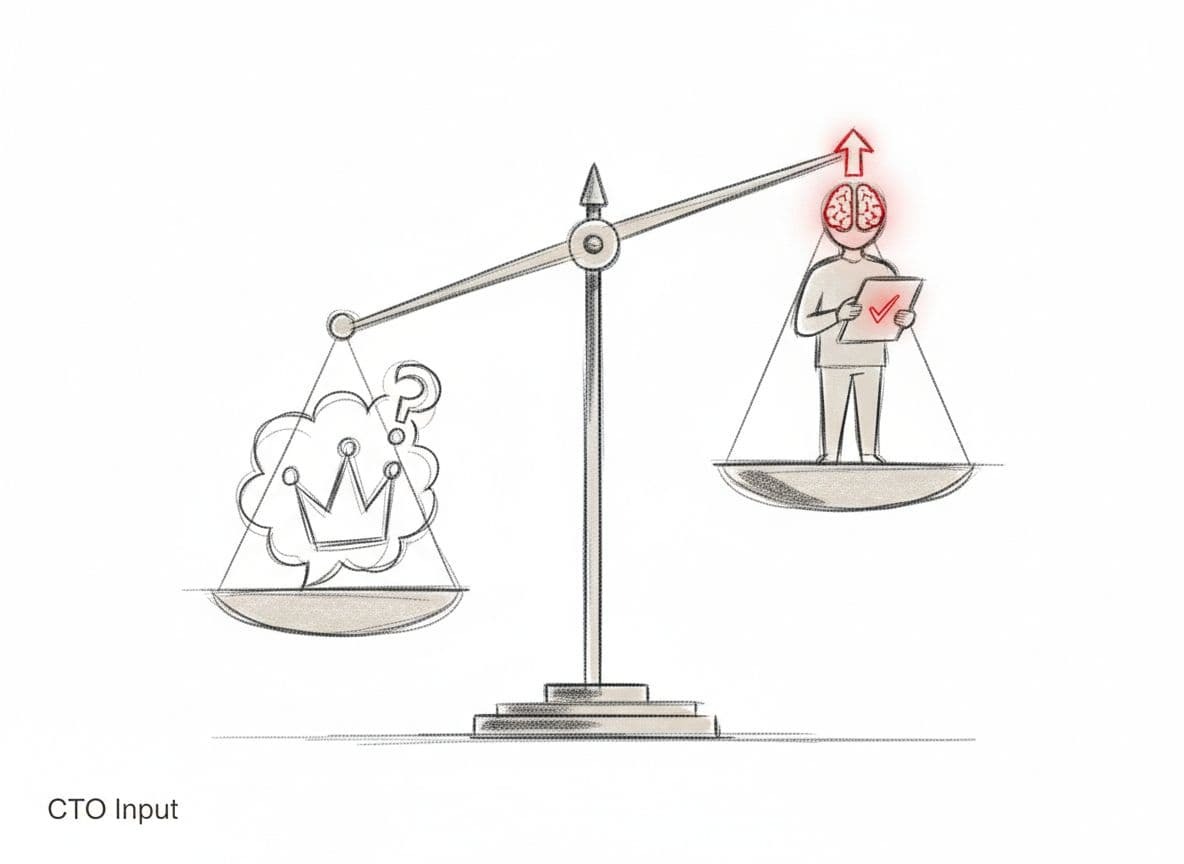 Start With the Hard Question: Is Technology Helping or Hurting the Business?
Before judging a person, look at the business outcomes. Technology is either a multiplier on your strategy, or it is a drag on it. There is not much in between.
To evaluate IT leadership effectiveness, consider how IT leadership aligns with broader needs. In 2025, mid-market leaders are juggling AI, cybersecurity, data privacy, and talent shortages. Many report that tech change feels harder than it should, and that they lack the right IT leadership to align IT with growth. External research on when and why technology leadership enters the C-suite shows that once complexity and risk cross a threshold, strong IT leadership becomes non-optional.
So, step back and ask yourself:
- Is technology giving you speed, clarity, and confidence?
- Or is it creating friction, delay, and risk?
If the honest answer lands closer to drag than multiplier, you are not just dealing with a few bad projects. You are seeing a leadership question.
Use simple business tests, not technical buzzwords
You do not need to understand Kubernetes or zero trust. You need to understand if technology supports your goals.
Start with a few plain questions:
- Are growth goals blocked by tech? For example, can you enter a new region, add a product, or integrate an acquisition without months of rework that stalls business objectives?
- Are major projects late or stuck? Think ERP upgrades, ecommerce rebuilds, or AI pilots that never leave “pilot” mode.
- Are outages or security issues putting trust at risk? Even small recurring incidents erode confidence with customers, lenders, and the board, signaling gaps in risk management.
- Are you clear if you are overspending or under investing? Most founders are not. They just know the bills feel high and the value feels fuzzy, complicating financial management.
If your honest answers point to chaos, firefighting, and finger pointing, that is a strong signal. It does not automatically mean your IT leader is the wrong person, but it does mean they are not enough on their own for where the company is heading.
Look at the last 12 months of outcomes, not last week’s fire
Last week’s outage or vendor mishap will always feel larger than it should. The fairer test is a 12 month window.
Review four things related to IT department operations:
- Major tech decisions. Cloud moves, big platform choices for IT infrastructure, AI tools, core system replacements.
- Key projects. What was promised, what went live, what results you saw.
- Incidents. Outages, cyber scares, compliance issues, data mistakes.
- Spend. Total IT and security spend, large one-off bills, and unplanned surprises.
You are not looking for perfection. Growth comes with bumps. What matters is pattern.
Patterns to pay attention to:
- The same outage or incident happens more than once.
- Projects slip quarter after quarter, with new reasons every time.
- Big spending decisions are driven by vendors, not by your own strategy, revealing flaws in the decision making process.
- You still cannot get a clear answer on “what are we spending and why”.
If these patterns repeat, your question is not “why did this one project fail”. Your question is “do we have the right level of leadership for what comes next”.
Five Clear Signals Your Current IT Leader May Not Be Enough for the Next Stage
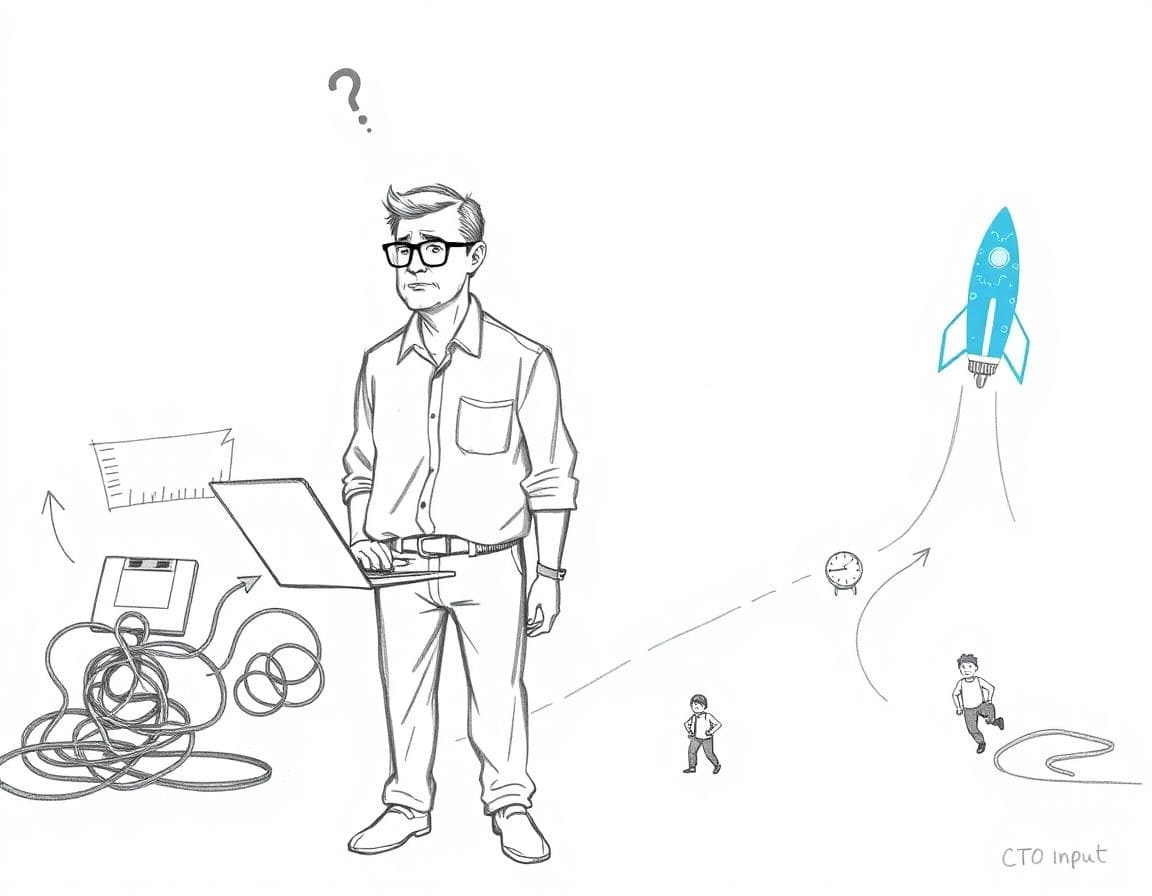 Think of this as a checklist. You may see one of these signals without a problem. When you see three or more, the risk compounds fast.
Signal 1: Tech strategy is missing, fuzzy, or disconnected from your growth plan
A healthy tech strategy in a mid-market company is simple:
- A 12 to 24 month roadmap.
- A short list of big bets and must-do fixes.
- A clear line from each item to revenue, margin, or risk reduction.
You and your leadership team should be able to see, in one slide, how technology supports your growth plan through strong strategic thinking. Research on high performing, customer focused IT teams shows that this kind of clarity, driven by strategic thinking and business acumen, is a hallmark of strong IT leadership.
Warning signs:
- Every initiative feels one-off and reactive.
- Vendors set the agenda with their product roadmaps.
- Your exec team cannot explain how IT supports the plan without drifting into jargon.
This is one of the first ways how founders evaluate if current IT leader is enough or if IT leadership is missing something key.
Signal 2: Projects are always late, over budget, or fail to deliver business value
Some delay is normal. Chronic delay is not.
Classic examples:
- An ERP upgrade that runs for two years, burns cash, and still needs manual workarounds.
- CRM changes that go live, but sales refuses to use, so reports stay broken.
- AI or automation pilots that get press inside the company, but never reach production.
These patterns often mean your IT leader has technical skills and technical proficiency, but lacks strength in scope control, soft skills for stakeholder alignment, change management, and a solid decision making process. Articles on signs of weak IT leadership echo the same theme: projects that finish on paper, but not in business impact.
Signal 3: Cyber, compliance, and resilience questions are hard to answer in the boardroom
Investors, banks, and partners now ask hard questions about:
- Cyber incidents and response, including cybersecurity protocols.
- Backups and recovery time.
- Use of AI tools and customer data.
- Compliance steps for SOC 2 or similar frameworks.
A strong technology leader turns this into simple dashboards, a short risk summary, and a clear “here is what we are doing next quarter”. If every answer starts with “it depends” and ends with dense jargon, your IT leader may not be ready for this level of scrutiny.
You should feel confident briefing the board without translating every answer yourself. If you do not, that is a signal.
Signal 4: The tech team is busy but not focused, and the business does not fully trust them
Your calendar tells a story here. So do hallway conversations.
Common signals:
- Constant priority changes and “urgent” tickets.
- Long queues where nothing seems to move.
- Strong engineers leaving for more structured environments.
- Business leaders buying their own tools to avoid working with IT.
This mix of high busyness, poor team performance, and low trust usually means your IT leadership is stuck inside the day to day. They are reacting to noise instead of setting clear priorities, service levels, and standards, which hurts overall team performance. Over time, this erodes collaboration and trust and makes every future project harder to land.
Signal 5: Your company is changing faster than your IT leader’s experience
Many IT leaders grow up with the company. They are smart, loyal, trusted, and bring solid technical skills. Then the business hits a new chapter:
- On premises systems shift to cloud platforms.
- The company prepares for SOC 2 or similar audits.
- You expand into new countries with different rules.
- AI and automation start to touch core processes.
The person who did a great job at 5 million revenue may never have lived through the jump to 50 or 200 million, revealing gaps in business acumen and continuous learning. That is not a character issue. It is an experience gap.
Sometimes the most respectful move is to add fractional CTO, CIO, or CISO support that can mentor your current leader and bring “next stage” experience into the room.
What To Do If Your IT Leader Is Not Enough Yet (Without Blowing Up the Team)
Once you see the signals, the temptation is to make a fast heroic hire among IT leaders. A full time CIO. A big name from a bigger company. That kind of move can help, but it can also create culture shock and waste.
There is a calmer path built on collaboration and trust.
Have a direct, respectful conversation about expectations and gaps
Start with emotional intelligence: honesty, not accusation.
Share three things with your IT leader using effective communication:
- Business objectives. Growth targets, margin expectations, expansion plans, board pressure for stakeholder satisfaction.
- Signals you are seeing. Use the simple tests and 12 month review, not emotion from last week.
- Where you feel exposed. Cyber, AI, outages, project delivery, or cost clarity.
Then ask where they feel stretched or stuck. Many will admit they need help with strategy, vendor management, or security depth.
From there, create a simple 90 day plan that demonstrates adaptability and boosts team performance, focused on:
- Stability (improved problem solving: fewer fires, fewer repeats).
- Cost clarity (a clean view of spend and contracts).
- Risk visibility (a short list of top risks and actions).
You are separating effort and loyalty, which you may value highly, from experience and exposure, which you may need to upgrade.
Add fractional CTO, CIO, or CISO support to raise the bar without a full reset
A fractional technology leader sits on your side of the table. They can:
- Assess your current IT department operations and past 12 months of results.
- Build a practical roadmap of innovation and solutions that links technology, cost, and risk to your growth plan.
- Mentor and upgrade your existing IT leader through talent development, continuous learning, and emotional intelligence rather than replace them on day one.
- Help you interview future senior hires for talent development, using guides like how to interview CIO candidates as a CEO.
This outside, neutral view is often the cleanest way for leadership assessment of how founders evaluate if current IT leader is enough, or if you need a new structure. Firms like CTO Input are designed for exactly this situation in the mid-market.
Conclusion
Evaluating whether your current IT leadership is enough (a way to evaluate IT leadership effectiveness) is not a character judgment. It is a business decision that starts with outcomes, patterns, and a few clear signals. When you step back and review the last 12 months, you can see if technology is acting as a multiplier or a drag, and whether your leader has the experience and support to match your next stage of digital transformation.
Pick one simple step this week. Review your key tech outcomes from the past year, or schedule a candid, respectful meeting with your IT leader to compare expectations and gaps. From there, decide what support they need.
If you want a seasoned, neutral partner to help, visit https://www.ctoinput.com to explore how fractional CTO, CIO, or CISO leadership can support your current team. You can also keep learning through the CTO Input blog at https://blog.ctoinput.com, where growth-minded high performers (founders and CEOs) find practical guidance on turning technology into innovation and solutions for a real business advantage.