

The pace of change in today’s business world is relentless, making strategic planning more critical than ever. Many leaders struggle to navigate uncertainty and set a clear direction, often finding it difficult to execute and adapt their strategy business plans effectively.
A well-crafted strategy business approach provides a foundation for sustained growth, helping organizations outperform competitors and seize new opportunities. With a clear, actionable roadmap, success becomes not just possible but repeatable.
This guide will walk you through the essential steps for building a winning business strategy. We will cover foundational principles, strategic analysis, goal setting, execution, measurement, and how to adapt your approach as the market evolves.
Ready to elevate your organization’s performance? Let’s begin.
Understanding the Foundations of Business Strategy
A strong foundation is essential for building an effective strategy business. To succeed, leaders must understand what strategy business truly means, embrace core guiding principles, and leverage technology as a catalyst for growth.
Defining Business Strategy and Its Importance
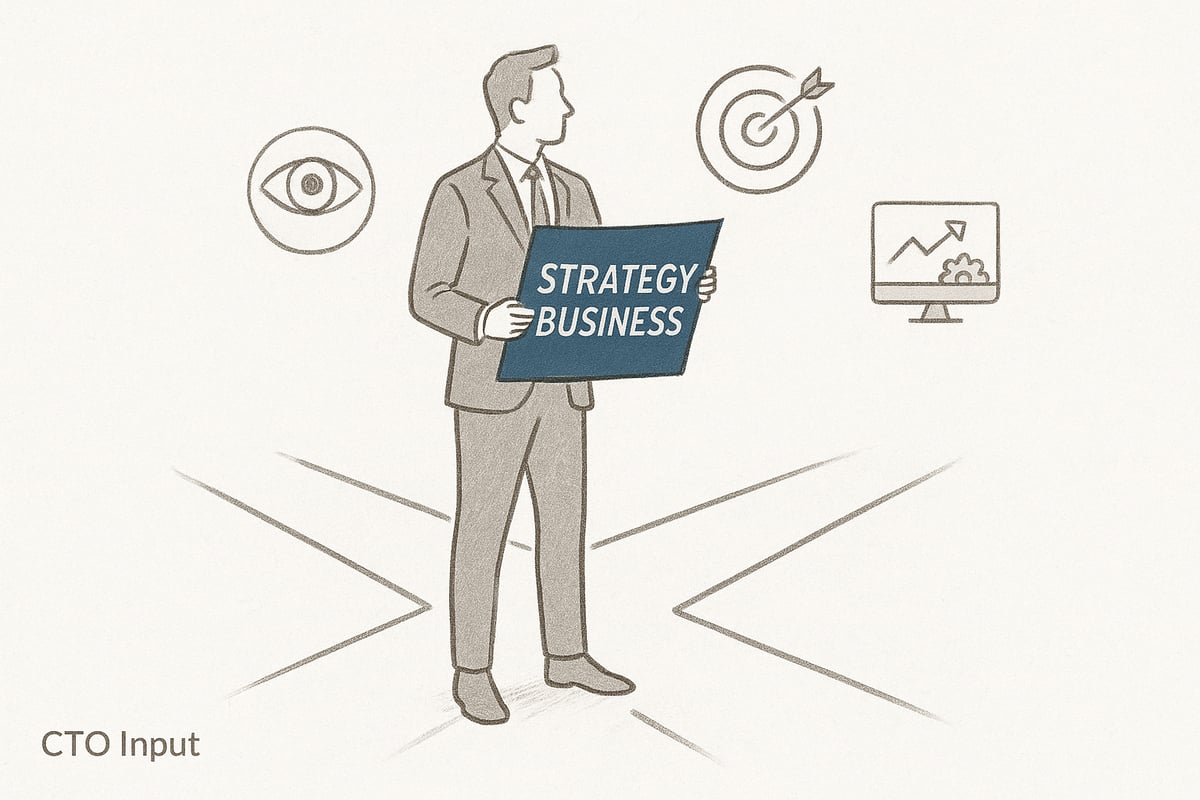
A strategy business is a plan that defines how an organization will achieve its goals and gain an edge over competitors. It is not just a set of ideas, but a practical roadmap that aligns resources, people, and processes toward clear objectives.
Research shows that companies with a defined strategy business are 70 percent more likely to outperform their peers in both revenue and profit. For example, Apple’s focus on design and innovation has helped it maintain market leadership for years. On the other hand, businesses without a clear strategy business often drift and struggle to adapt.
A common misconception is that strategy business planning is only for large corporations. In reality, organizations of any size benefit from a focused approach.
Core Principles of Effective Strategy
Every successful strategy business is built on four pillars: vision, mission, values, and differentiation. The vision describes where the business aims to go, while the mission explains its purpose. Values set the ethical tone, and differentiation answers why customers should choose you.
These principles guide every decision and keep the strategy business on track. Companies like Patagonia, with a mission rooted in environmental responsibility, or Tesla, with a vision for sustainable transport, show how strong principles drive results.
Leadership is critical for embedding these principles. When leaders champion the strategy business, teams are more engaged and aligned with organizational goals.
The Role of Technology in Modern Strategy
Digital transformation has become a core driver in shaping strategy business today. Technology enables organizations to adapt quickly, streamline operations, and reach new markets. In fact, businesses that align their technology initiatives with their overall strategy business see up to 30 percent higher growth rates.
An example is Netflix, which leveraged streaming technology to disrupt the entertainment industry. For leaders looking to integrate tech into their strategy business, business-driven technology planning offers a practical approach to ensure technology supports business goals.
To build a resilient strategy business, it is crucial to keep technology initiatives in sync with long-term objectives.
Step 1: Strategic Analysis—Assessing Your Starting Point
Understanding where you stand is the first critical move in any strategy business journey. A robust strategic analysis uncovers your strengths, pinpoints weaknesses, and sets a clear direction for growth. This section walks you through the essential steps to assess your internal landscape, scan the external environment, and align your efforts for maximum impact.
Conducting a Thorough Internal Assessment
Begin every strategy business effort with a deep dive into your organization’s core. A structured SWOT analysis helps you identify your strengths, weaknesses, opportunities, and threats. This process reveals the true capabilities and resources you can leverage.
Tools such as resource mapping and capability assessments provide actionable insights. For example, a mid-sized firm discovered untapped talent pools and optimized their workflows, improving output by 15%. Data from recent surveys show that companies conducting regular internal assessments are 30% more likely to exceed strategic targets. Remember, an honest appraisal is the foundation of lasting strategy business success.
Analyzing the External Environment
A successful strategy business approach also demands vigilant observation of the external world. PESTEL analysis helps you evaluate Political, Economic, Social, Technological, Environmental, and Legal factors that can influence your path.
Market trends, competitor shifts, and regulatory changes require ongoing research. For instance, businesses that quickly adapted to new data privacy laws stayed ahead of the curve. Organizations that prioritize strategic alignment for business growth often outperform peers by responding swiftly to market disruptions. Continually scanning the horizon ensures your strategy business remains resilient and relevant.
Identifying Key Stakeholders and Their Needs
Every strategy business plan must account for the voices that matter most. Stakeholders include customers, employees, investors, and partners. Gathering their feedback through surveys, interviews, and direct engagement is essential.
A leading company reshaped its service delivery after employee feedback revealed process bottlenecks. This change led to increased satisfaction and retention. Research highlights that organizations with strong stakeholder alignment achieve 20% higher performance outcomes. By understanding stakeholder priorities, your strategy business can gain crucial support and minimize resistance.
CTO Input: Strategic Technology Alignment
Strategic technology alignment is a cornerstone of modern strategy business execution. CTO Input helps organizations bridge the gap between business goals and technology initiatives, offering fractional executive leadership tailored for mid-sized companies.
For example, a client partnered with CTO Input to overhaul their digital infrastructure, resulting in a 25% increase in operational efficiency. With experienced leadership and precise alignment, your strategy business can realize measurable improvements and stay ahead in a dynamic market.
Visit https://www.ctoinput.com to learn more and connect with a member of the CTO Input team.
Spend a few minutes exploring the rest of the articles on the CTO Input blog at https://blog.ctoinput.com
Step 2: Setting Clear, Measurable Goals and Objectives
Setting meaningful goals is the cornerstone of any strategy business. Without a clear direction, even the best plans can fall short. Effective objectives transform vision into concrete results and keep teams focused on what matters most.
Translating Vision into Actionable Goals
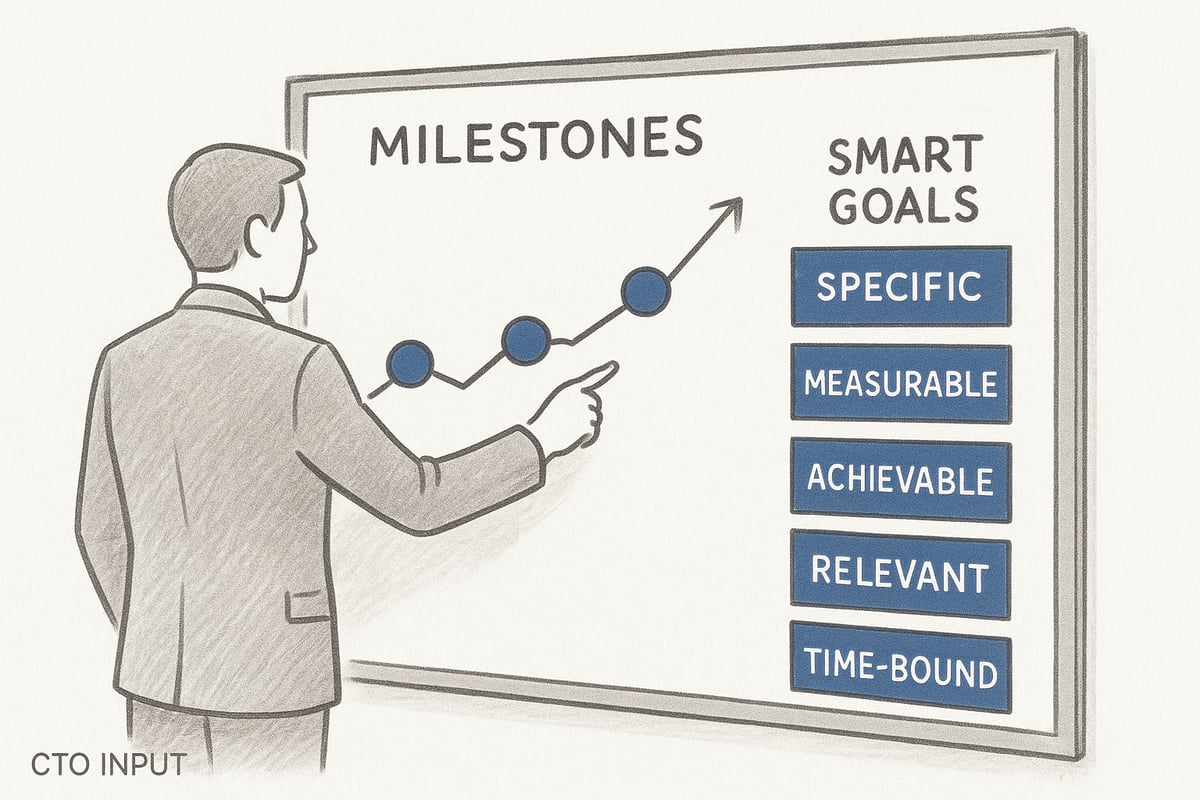
A strategy business thrives when its vision is translated into clear, measurable goals. The SMART framework—Specific, Measurable, Achievable, Relevant, Time-bound—ensures objectives are actionable and trackable. For instance, instead of aiming to “increase sales,” a SMART goal would be “grow Q3 revenue by 15 percent in the technology segment.”
According to research, organizations using SMART criteria see up to 30 percent higher achievement rates. Setting precise targets not only clarifies expectations but also motivates teams to deliver. Companies like Google and Microsoft attribute much of their growth to disciplined, measurable goal-setting practices.
By embedding SMART goals across all levels, a strategy business gains direction and accountability.
Prioritizing Initiatives for Maximum Impact
A successful strategy business does not pursue every opportunity at once. Leaders must evaluate and rank initiatives based on impact, feasibility, and alignment with long-term vision. Methods like weighted scoring or the Eisenhower Matrix can help distinguish urgent priorities from less critical tasks.
Resource allocation plays a key role. Balancing short-term wins with investments in future growth prevents burnout and supports sustained performance. For example, Amazon famously prioritized long-term innovation over immediate profit, contributing to its market dominance.
Common pitfalls include spreading resources too thin and failing to revisit priorities as conditions change. A disciplined approach to initiative selection sets the stage for lasting success in any strategy business.
Communicating Goals Across the Organization
Transparent communication is vital for aligning teams behind a strategy business. Leadership must cascade goals from the top down, ensuring every team understands their role in achieving shared objectives. Regular updates and open forums foster engagement and accountability.
Best practices include using visual dashboards, team meetings, and digital platforms to track progress. Leveraging resources like Technology strategy for CEOs can help leaders integrate technology-driven goal tracking with overall business strategy.
Effective communication not only keeps everyone informed but also builds a culture of trust and shared purpose, empowering the entire organization to deliver on its strategy business vision.
To learn more and connect with a member of the CTO Input team, visit https://www.ctoinput.com.
Spend a few minutes exploring the rest of the articles on the CTO Input blog at https://blog.ctoinput.com
Step 3: Designing and Executing Your Strategic Roadmap
A well-crafted roadmap is the engine that turns your strategy business vision into reality. This phase transforms planning into actionable steps, ensures resources are in place, fosters collaboration, and helps you manage inevitable change. Each element is essential for bridging the gap between aspirations and measurable outcomes.

Building a Step-by-Step Action Plan
An effective strategy business roadmap starts with a clear sequence of steps. First, define your objectives and break them into manageable phases. Assign timelines to each phase, set tangible milestones, and clarify who is accountable for every deliverable.
Consider using a table or visual timeline to display the journey. For example:
| Phase | Key Milestone | Owner | Deadline |
|---|---|---|---|
| Market Entry | Launch MVP | Product Lead | Q1 |
| Growth | Reach 10K users | Marketing Team | Q2 |
Organizations with detailed action plans see higher project completion rates. Regularly review and update your plan to keep your strategy business on track and responsive to new insights.
Resource Planning and Allocation
Success depends on aligning resources with your strategy business priorities. Start by mapping out your budget, staffing needs, and technology requirements. Identify any constraints early to avoid bottlenecks.
Optimize resource allocation by prioritizing projects with the highest impact. Many mid-market firms leverage digital transformation to maximize efficiency. For further insights, see Digital transformation for mid-market companies.
Track ROI closely and adjust allocations as needed. Effective planning ensures every dollar and hour spent moves your strategy business closer to its goals.
Fostering Collaboration and Cross-Functional Alignment
Teamwork is the backbone of strategy business execution. Break down organizational silos by encouraging regular communication across departments. Use collaboration platforms, shared dashboards, and joint workshops to align efforts.
Successful organizations establish cross-functional teams for major initiatives. This approach harnesses diverse expertise and speeds up problem-solving. For example, a joint task force can address customer feedback more rapidly than a single department.
Celebrate shared wins and keep communication channels open. Consistent alignment keeps everyone moving in the same direction, maximizing the impact of your strategy business.
Managing Change and Overcoming Resistance
Change is inevitable when executing a new strategy business direction. Common sources of resistance include uncertainty, fear of new processes, or loss of control. Address these concerns proactively with transparent communication and clear rationale for change.
Adopt proven change management frameworks such as Kotter’s 8 Steps. Involve leaders at every level to model commitment and support. Share quick wins to build momentum and reinforce positive behavior.
Remember, leadership plays a vital role in successful change adoption. Organizations with strong change management practices are more likely to realize their strategy business objectives.
To learn more and connect with a member of the CTO Input team, visit https://www.ctoinput.com.
Spend a few minutes exploring the rest of the articles on the CTO Input blog at https://blog.ctoinput.com
Step 4: Measuring Progress and Adapting Your Strategy
Tracking and adapting your approach is essential for any strategy business aiming to achieve long-term success. Measurement provides clarity, reveals gaps, and empowers leaders to make informed decisions. In this step, we focus on practical tools and habits that ensure your strategy business remains on track and ready to pivot as needed.
Establishing Key Performance Indicators (KPIs)
KPIs are measurable values that help a strategy business track progress against strategic goals. They act as a compass, showing whether the organization is heading in the right direction. Selecting the right KPIs is crucial. For example, sales growth, customer retention, and operational efficiency are common choices.
A good KPI is specific, relevant, and easy to measure. When KPIs align with the overall strategy business objectives, teams can focus their efforts on what matters most. Recent studies show that organizations using well-defined KPIs are 70% more likely to achieve their targets compared to those without structured measurement.
| KPI Type | Example Metric | Business Area |
|---|---|---|
| Financial Performance | Revenue Growth | Finance |
| Customer Engagement | Net Promoter Score | Customer Experience |
| Process Efficiency | Cycle Time Reduction | Operations |
By regularly reviewing these metrics, a strategy business can maintain a clear line of sight on its objectives.
Conducting Regular Reviews and Course Corrections
Consistent performance reviews are vital for a strategy business to identify strengths and address weaknesses. These reviews can be monthly, quarterly, or as needed, depending on the pace of change in your industry. During each review, compare actual outcomes with your KPIs to spot deviations early.
Effective reviews involve data analysis and open discussion. Teams should celebrate wins, diagnose shortfalls, and agree on corrective actions. Organizations that conduct regular strategic reviews are 30% more likely to adapt successfully to new challenges.
Best practices for review sessions include:
- Setting a clear agenda
- Sharing data in advance
- Encouraging honest feedback
With this disciplined approach, a strategy business remains proactive and responsive in a dynamic market.
Leveraging Data and Technology for Continuous Improvement
Modern strategy business practices rely on analytics and technology to drive ongoing improvement. Business intelligence tools, dashboards, and real-time reporting give leaders instant access to critical data. This enables faster, smarter decisions and uncovers new opportunities for growth.
According to Digital transformation’s impact on business strategy, companies that embrace digital transformation see measurable gains in agility and performance. Data-driven decision making uncovers patterns that manual reviews might miss. For instance, predictive analytics can forecast customer trends, allowing a strategy business to adjust its course before issues arise.
Continuous improvement is not just about fixing problems, but also about seizing new possibilities. By embedding technology into your review cycle, your strategy business can stay ahead of the curve.
Staying Agile in a Dynamic Business Environment
Agility is a defining trait of a successful strategy business. The ability to pivot quickly when circumstances change separates industry leaders from the rest. Agile organizations build flexibility into their processes, empower teams to make decisions, and foster a culture of learning.
Consider companies that successfully shifted business models in response to market disruptions. Their willingness to experiment, learn from feedback, and implement rapid changes gave them a competitive edge. For a strategy business, agility is not just an operational tactic—it is a mindset.
Encourage your teams to embrace change, test new ideas, and adapt strategies based on real-world results. This approach keeps your organization resilient and prepared for whatever comes next.
To learn more and connect with a member of the CTO Input team, visit https://www.ctoinput.com.
Spend a few minutes exploring the rest of the articles on the CTO Input blog at https://blog.ctoinput.com
Future-Proofing Your Business Strategy
Anticipating Market Shifts and Disruptions
In a rapidly evolving world, anticipating change is essential for any strategy business aiming to thrive. Trends such as artificial intelligence, sustainability, and digital transformation are reshaping industries. Scenario planning helps organizations prepare for various futures, ensuring they are not caught off guard by disruptions.
Risk management practices, like stress testing and contingency planning, are vital for resilience. According to research on business architecture’s role in digital transformation, aligning business structures with digital initiatives significantly improves strategic outcomes. Proactive companies regularly scan the horizon, adapt their strategy business plans, and outperform those that react too late.
Investing in Leadership and Talent Development
Strong leadership is the backbone of an effective strategy business. Developing leaders who can navigate change, inspire teams, and drive innovation is crucial. Upskilling and continuous learning programs help organizations retain top talent and maintain a competitive edge.
Consider setting up structured leadership pipelines and mentorship opportunities. Data consistently shows that businesses investing in employee growth achieve higher engagement and better strategic results. A robust strategy business approach includes fostering a culture where every team member sees themselves as a contributor to long-term success.
Embedding Innovation and Continuous Learning
Innovation is at the heart of a future-ready strategy business. Encouraging experimentation, celebrating calculated risks, and embedding learning into daily routines are key. Methods such as hackathons, cross-functional projects, and feedback loops drive ongoing improvement.
Recent studies, such as digital transformation’s effect on firm innovation, highlight how digital strategies bolster organizational effectiveness. Companies that prioritize innovation and learning not only adapt faster but also sustain growth over time. Embedding innovation in your strategy business ensures your organization remains agile and resilient.
To learn more and connect with a member of the CTO Input team, visit https://www.ctoinput.com.
Spend a few minutes exploring the rest of the articles on the CTO Input blog at https://blog.ctoinput.com
As you think about building a resilient, future-ready strategy, remember that turning technology into a true business advantage doesn’t have to be overwhelming. You’ve seen how aligning vision, goals, and execution can unlock growth—and how having the right expertise makes all the difference. If you want practical guidance tailored to your organization’s unique challenges, we’re here to help. Let’s talk through where you are, where you want to go, and how technology can bridge the gap. Ready to take the next step on your roadmap to success? Schedule A Strategy Call