

The best technology leader in the room is rarely the most technical person. You want the person who helps you make better decisions, cut through confusion, and connect technology to business results.
That matters most when the business is growing, under pressure, or in transition. When risk rises and the stakes get real, weak leadership shows up fast. The wrong priorities linger. Reporting gets fuzzy. Teams work hard, but the business still feels harder to run.
The difference between an average manager and an effective technology leader is not about titles. It’s about judgment, clarity, and whether the work moves the business forward.
Key takeaways if you’re sizing up a technology leader
- They think about growth, customers, risk, and execution, not just tools.
- They make hard problems easier to understand and act on.
- They build trust by staying calm, telling the truth, and following through.
- They create ownership so work stops slipping between teams.
- They help you see risk early, before it turns into a board problem or an outage.
If you’re asking, “Do I select a fractional CISO or a full-time ciso,” the real question is simpler. What kind of leadership does your business need right now, and who can provide it with enough steadiness to matter?
The best technology leaders think like business leaders first

Strong tech leaders do not start with software. They start with the business problem.
They care about growth, customer experience, cost, execution, and risk. They know a tool is not useful if it slows the company down or creates more confusion than it solves. The first question is not, “What should we buy?” It’s, “How does this help the business?”
They connect technology choices to business goals
A good leader turns business goals into clear technology priorities. If the company needs faster onboarding, better reporting, or cleaner operations, the technology plan should point there. Not into a pile of disconnected projects.
That means saying no to busy work. It means naming the work that matters and setting aside the work that only looks productive. If a project does not move margin, speed, customer trust, or control, it needs a harder look.
That kind of discipline is why many leaders benefit from a sharper view of how to align technology with business goals. You do not need more activity. You need a clearer line between the business outcome and the tech work underneath it.
They know when to slow down and when to move fast
Good leaders do not rush every decision, and they do not stall when action is needed. They know the difference.
When a system is down, a deal is at risk, a vendor is pushing too hard, or leadership has changed, delay gets expensive. On the other hand, some decisions need a pause so you can see the real tradeoffs. That judgment matters. It keeps you from paying twice, once for the rush and again for the fix.
The best leaders move with pace, but not panic.
Good tech leaders bring clarity when things feel messy

Messy situations are where leadership gets tested. A stalled initiative. A weak report. Too many vendors. A board asking sharper questions. A cyber concern that nobody can explain in plain English.
The right leader does not add noise. They reduce it.
They make complex problems easier to understand
You should be able to explain the issue to a CEO, COO, board member, or operator without translating every sentence. A strong leader can do that. They can name the problem, describe the business impact, and show the next step.
That matters because complexity creates delay. Plain language creates movement.
If the answer sounds impressive but nobody can use it, you do not have clarity yet.
They define ownership so work stops slipping through the cracks
When no one owns the problem, nothing changes. That sounds obvious, but it is one of the most common failures in technology leadership.
A good leader makes decision rights clear. Who owns the fix? Who approves the spend? Who needs to know? What gets escalated, and when? If those answers are fuzzy, the business pays for it in rework, delays, and quiet frustration.
This is where a real technology leadership problem shows up. It is not always a skills problem. Often, it’s an ownership problem.
They help you see risk before it becomes a crisis
Good leaders notice weak spots early. That includes cyber risk, third-party dependence, tool sprawl, and projects that are drifting out of control. They do not wait for the crisis to prove the point.
They also know how to report risk in business terms. That is a big deal. If the board cannot see the exposure clearly, it cannot govern it well. For a more disciplined view, technology risk oversight is one of the most useful habits you can build.
If you need an outside view, a board-ready technology risk view can help you sort signal from noise before the next hard conversation.
The strongest technology leaders build trust across the organization

Trust is not soft. It is operational.
When people trust the technology leader, they bring bad news sooner. They raise concerns earlier. They stop hiding weak spots. That gives you more time, and time is often the difference between a fix and a mess.
They communicate clearly without hiding behind jargon
Good leaders do not use technical language to sound smart. They use clear language so others can act.
That means fewer long explanations and more direct answers. What is broken? What does it cost? What happens if we do nothing? What does the business need to decide now?
If your team needs a translator to understand the update, the leader is not leading well enough.
They stay calm when the stakes are high
Outages, deadlines, scrutiny, and change can pull everyone toward panic. A strong leader doesn’t do that. They steady the room.
Calm leadership does not mean pretending the issue is small. It means keeping people focused on the next best move. That keeps the team from wasting energy on drama, blame, or guesswork.
They make it safe to tell the truth
You want people to bring up a problem before it spreads. That only happens when the leader has made honesty safe.
When teams know they will be heard instead of punished, they report sooner. That gives you a chance to fix the issue before it becomes expensive. It also tells you whether the business really understands what is happening on the ground.
How to tell whether you need a better technology leader, not just more activity
Sometimes the business does not need more tools or more meetings. It needs stronger leadership.
If the roadmap keeps changing and nothing gets easier, that is a warning sign. If your team is busy but you still don’t feel in control, the problem is probably not effort. If reporting creates more questions than answers, the structure is weak.
That’s the moment to ask whether you need a different level of leadership, not another round of motion. It may be the point where fractional CTO and interim CTO services make more sense than trying to patch things with more labor.
The same logic applies when leaders ask, “Do I select a fractional CISO or a full-time ciso?” That is not just a hiring question. It is a leadership question. You are choosing the level of ownership, visibility, and judgment your business needs right now.
What a great technology leader looks like in real life
A great technology leader is easy to spot once you know what to look for.
They make solid decisions with incomplete information. They do not wait for perfect data, because perfect data is usually late. They gather enough truth to move wisely, then adjust as the picture clears.
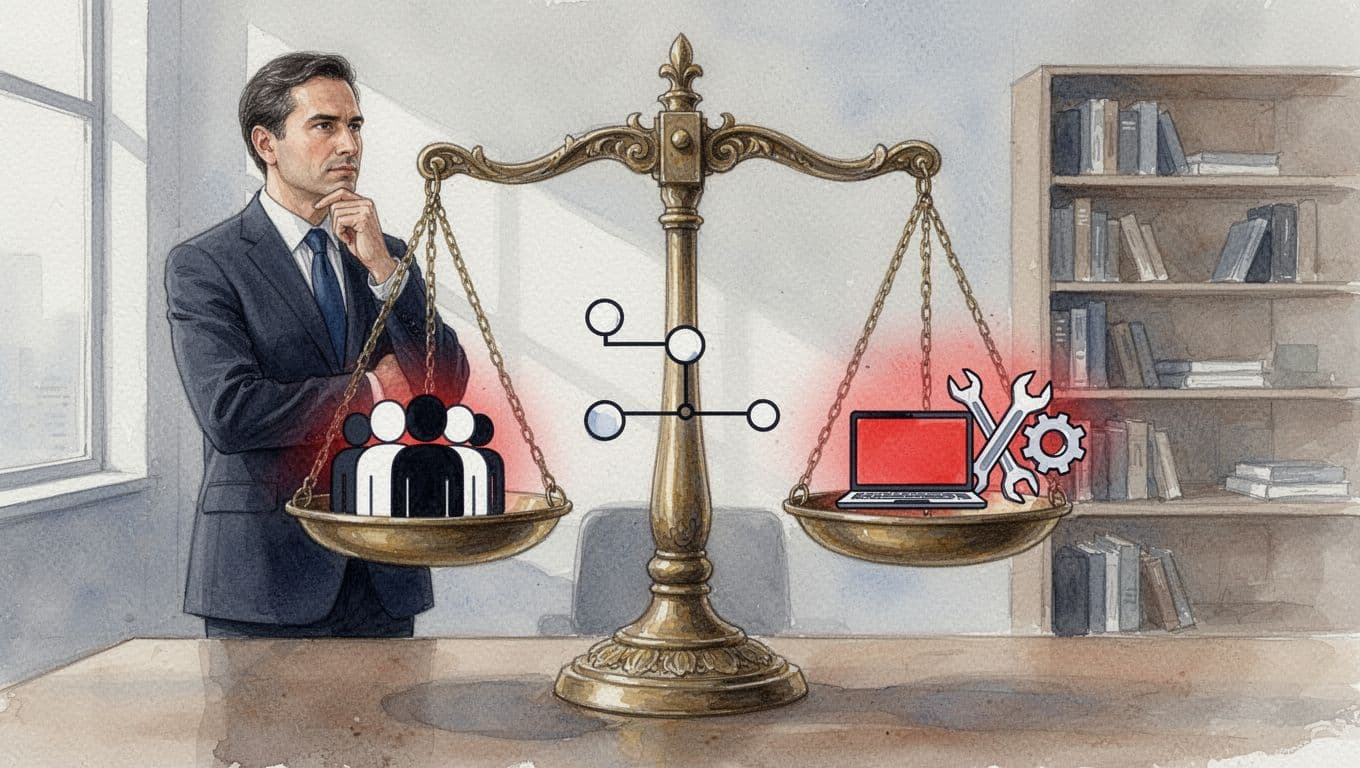
They balance people, process, and tools. Not one of those pieces gets ignored for long. People need direction. Process needs discipline. Tools need to serve the work, not run it.
Most of all, they leave the business better than they found it. That means clearer ownership, better reporting, cleaner priorities, and less dependence on heroics. The company should feel easier to lead after they have been there.
Conclusion
A good technology leader helps you move from confusion to clarity. They turn reactive decisions into better judgment. They take hidden risk and make it visible enough to manage.
That is what separates strong leadership from loud activity. The best tech leaders connect technology to business results, build trust, and help the organization move forward with confidence.
If technology feels harder to lead than it should, start with clarity. The right conversation can show you what matters most and what should happen next.