
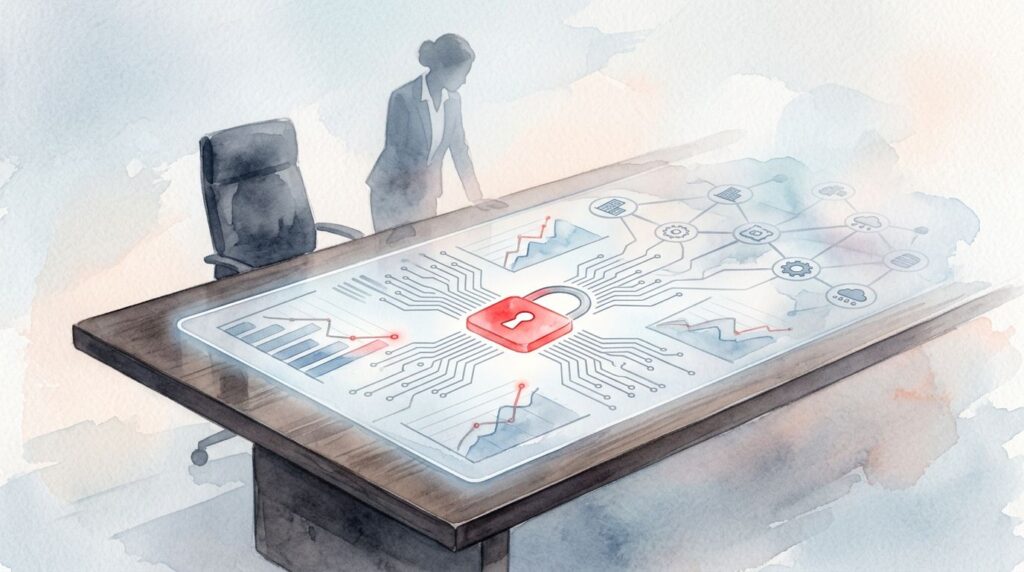
You can get a clean dashboard and still miss the real problem. That happens more often than most boards want to admit. Spend is rising, projects slip, vendors multiply, and cyber risk gets harder to pin down. The issue usually isn’t a lack of reports. It’s a lack of the right questions.
If you sit on a board, you do not need a technical lecture. You need to know whether leadership sees the risk, owns it, and can explain it in plain language. That is where good oversight starts.
Key takeaways for board oversight
Keep the discussion anchored on a few things that matter most:
- Ownership beats volume. A long report means little if no one can name the owner of the risk.
- Cyber, vendor, and AI risk move together. One weak vendor or unmanaged tool can open more than one door.
- Reporting should change decisions. If nothing changes after the report, the report is decoration.
- Board language matters. If leadership cannot explain the issue without jargon, the board does not yet have clear visibility.
If the board cannot name the owner, it does not have oversight yet.
If you need a cleaner way to present the issue, Build a Board-Ready Technology Risk View gives you a practical starting point.
Start with ownership, not just reporting
A board can be shown plenty of data and still have weak visibility. The first question is simple: who owns each major technology risk?
If the answer is fuzzy, the board is already behind. You should be able to trace each important risk to one accountable leader, one current status, and one next step. If the answer changes depending on who is in the room, that is a governance problem, not a reporting problem.
A useful place to test this is the board and funder reporting readiness checklist. It helps you see whether the reporting is truly decision-ready, or just busy.
Try asking these three questions in the next board meeting:
- Who owns this risk today?
- What changed since the last update?
- What decision did we make because of this report?
If no one can answer those cleanly, the board is seeing activity, not control. That is where organizations waste time. They add more dashboards, more meetings, and more noise. None of that fixes the gap.
Ask where cyber risk leaves the business exposed
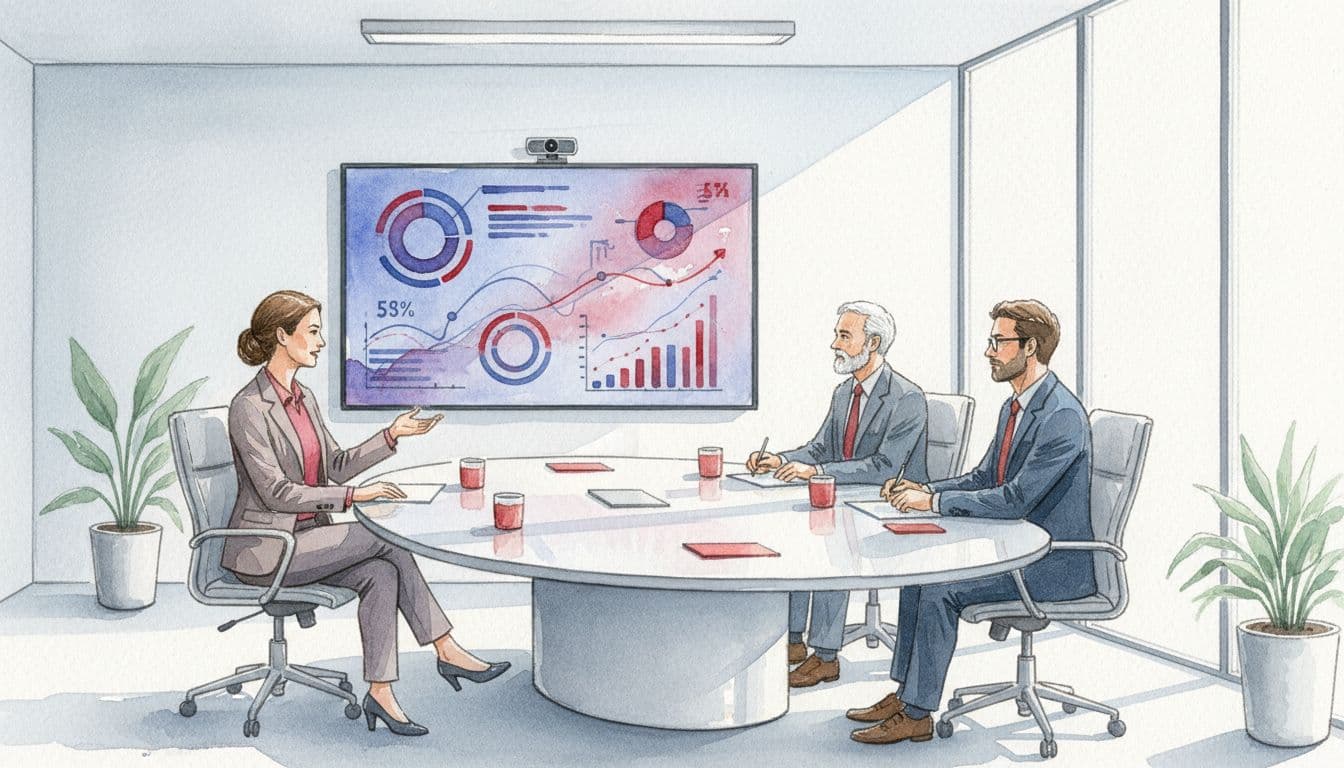
Cyber risk is not a side issue anymore. It sits inside operations, vendor management, data privacy, and now AI use. In May 2026, the pressure points are clear, especially around AI governance gaps, third-party weaknesses, and privacy exposure. Board members should expect management to show where the business is exposed and what is being done about it.
NACD’s director guidance on cybersecurity oversight questions for boards and Deloitte’s technology risk landscape for boards point in the same direction. Boards need standing questions on cyber, AI, and third-party risk, not a once-a-year presentation.
Use this section of the agenda to get concrete:
- Which vendors can touch sensitive data?
- Which systems would hurt us most if they went down tomorrow?
- What AI tools are already in use, approved or not?
- How fast can access be cut off when a contract ends or a role changes?
If you want a tighter view of where sensitive information moves, the client data risk map starter kit is a useful way to start. And if vendor control is the weak point, the vendor access and offboarding checklist helps you pressure-test whether access is really being cleaned up.
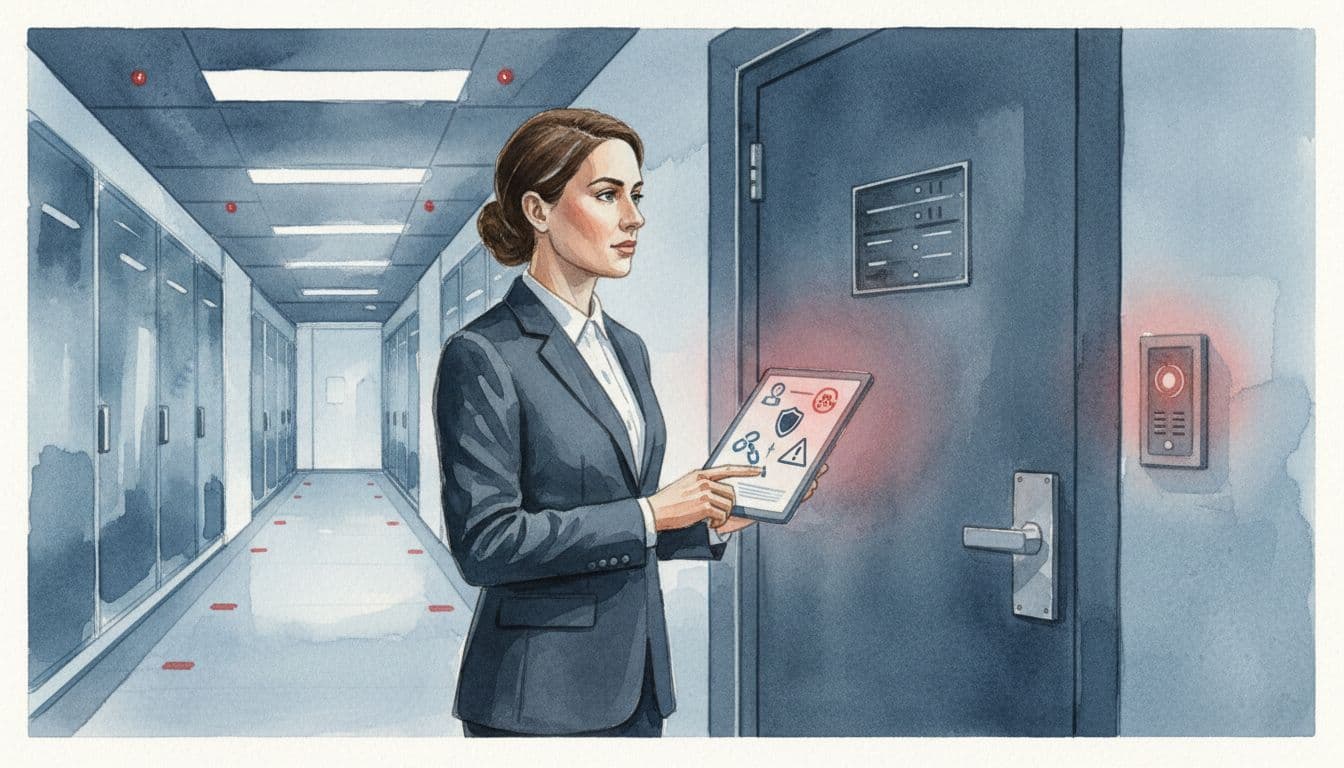
A board does not need to become technical. It does need to know where the business is exposed, and whether management can respond before an incident makes the question public.
Ask how technology risk affects growth and board confidence
Technology risk is not only about breaches. It also shows up in stalled growth, wasted spend, and decisions that take too long. A board should ask whether the current technology setup helps the business move faster, or quietly slows it down.
Look at the backlog. Look at duplicate tools. Look at projects that keep getting reworked. Those are not just operational annoyances. They are signs that the company may be spending money without getting enough control or value in return.
This is where a simple dashboard matters. The metrics that matter one-page dashboard helps you focus on the numbers that tell the truth, not the numbers that look busy.
Ask management to answer these questions in plain English:
- What technology spend is producing real business value?
- Which projects are stuck because ownership is unclear?
- What breaks if we delay this system upgrade for six months?
- Can we explain the tradeoffs to the board without a slide deck full of jargon?
That last question matters more than it sounds. If leadership can’t explain the tradeoffs clearly, the board cannot govern them well. The same is true during acquisition prep, leadership change, or any other transition where weak ownership gets exposed fast.
Conclusion
Your job is not to ask for more technology detail. Your job is to ask for the right kind of clarity. Who owns the risk, where the exposure sits, and what decision the board needs to make now.
That is how you turn technology risk from a foggy topic into a board-level issue you can actually govern. The board does not need more noise. It needs better questions and cleaner answers.
FAQ
How often should the board review technology risk?
At least quarterly, and more often if the company is in growth, transition, or heavy vendor change. If the business relies on technology to move money, serve clients, or protect data, waiting a full year is too long.
What is the difference between IT reporting and board oversight?
IT reporting tells you what happened. Board oversight tells you whether the business is protected, whether the right people own the risk, and whether leadership is making sensible tradeoffs. One is operational. The other is governance.
What if management says the risk is under control?
Ask what evidence supports that view. You want to see ownership, testing, vendor discipline, access control, and a clear response plan. Confidence is useful. Evidence is better.