

You can feel it before you can name it. Decisions take longer, projects slip, handoffs get messy, and meetings leave you with more doubt than clarity.
That usually doesn’t mean your team is lazy or under-resourced. It usually means ownership is fuzzy, reporting is weak, and too many moving parts are pulling in different directions.
The short version: technology slowing down your company is usually a leadership and visibility problem before it becomes a technical one. Once you can name the real issue, you can stop guessing and start fixing the right thing.
The hidden signs that technology is slowing your company down
The slowdown rarely shows up as one dramatic failure. It shows up as drag. You see it in the weekly rhythm of the business.
Your team keeps working hard, but progress still feels slow
Busy teams can hide a lot. People are moving, Slack is active, and meetings are full. Still, the work doesn’t seem to move.
That’s a real warning sign. Projects stall because too many decisions need permission. People redo work because the first version wasn’t clear. Leaders spend time approving details that should have been settled once.
When the calendar is full but the business is stuck, you’re not looking at an effort problem. You’re looking at a structure problem.

Reporting exists, but you still cannot trust the answers
A dashboard can look polished and still be useless. If different leaders use different numbers, or the same metric changes depending on who pulled it, you have a trust problem.
That trust gap gets expensive fast. Leadership meetings turn into debates about whose version is right. People spend more time reconciling numbers than making decisions. The board gets reports, but not confidence.
If your reporting creates more questions than answers, it is not helping you govern the business. It is helping you document confusion.
Vendors and tools are making more decisions than your team is
When no one owns the full picture, outside providers and software tools start shaping the business by default. One team buys a tool to move faster. Another adds a workaround. A vendor says their way is the easiest path, so the company follows it.
Before long, priorities drift. Systems overlap. No one can explain why certain tools are still in place, or who approved the latest change.
That is how control slips without anyone meaning for it to happen. If this feels familiar, executive technology leadership is often the missing layer.
The most common technology problems that create drag
The symptoms are easy to see. The root causes take a little more honesty. Usually, it’s not one giant failure. It’s a stack of smaller issues that keep reinforcing each other.
No one clearly owns the decisions
This is one of the most common problems behind a slow company. Different leaders assume someone else owns the call. IT thinks the business owns it. The business thinks IT owns it. Finance thinks it needs to approve it. Vendors wait for direction that never comes.
That blurs decision rights, and blurred decision rights slow everything down.
You end up with half-decisions. Plans move forward with no real owner. When something breaks, no one can explain who signed off, who is accountable, or what happens next. The work still gets done, but it gets done later, with more friction and less confidence.
Your systems do not talk to each other
Disconnected systems look harmless on paper. One tool handles one part of the job. Another tool handles the next step. Then someone copies data from one place to another, hoping nothing breaks.
That is where the drag starts. Manual entry creates delays. Duplicate data creates errors. Broken handoffs create customer pain. Staff spend time fixing the gap between systems instead of doing the work those systems were supposed to support.
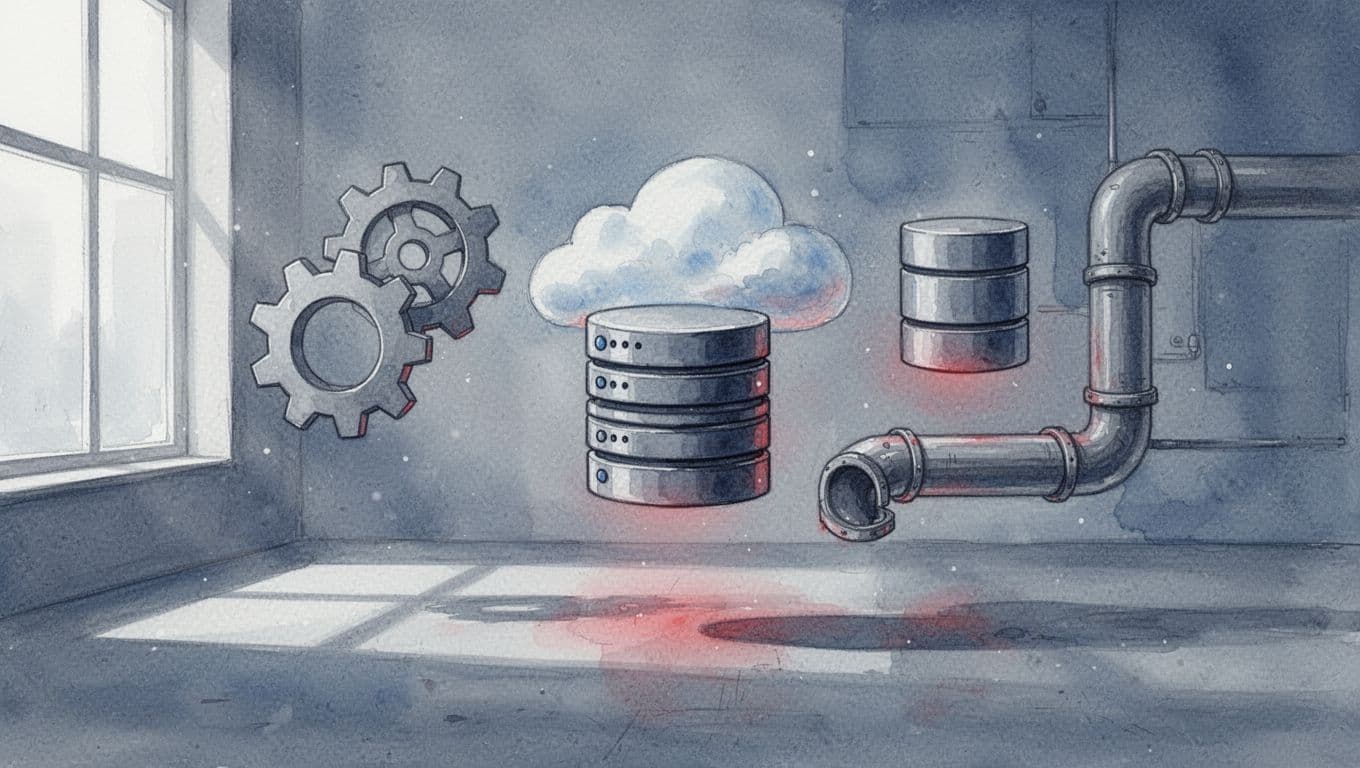
If you’re carrying too many systems that don’t fit together, tool sprawl is a governance problem is probably closer to the truth than you want it to be.
You are spending more, but getting less value
Rising spend is one of the clearest signs that the tech stack has drifted away from the business. It doesn’t always come from one bad purchase. More often, it comes from dozens of small choices that no longer line up with current priorities.
New licenses get added. Old tools stay in place. Contractors fill gaps that should have been closed months ago. The budget goes up, but the business doesn’t feel better served.
That is why tech spend can become a silent tax. You pay for complexity, then pay again to work around it. If you want a tighter read on the money side, technology spend and ROI is the place to start.
Your roadmap is missing, outdated, or built around the wrong priorities
A company without a clear roadmap is usually just reacting. Teams chase urgent fixes. Leaders approve whatever feels most painful this month. Strategic work gets pushed aside because there’s no stable plan to compare it against.
That kind of reactive posture wears people down. It also lowers confidence. When the next step is always unclear, every decision feels bigger than it should.
A good roadmap doesn’t need to be fancy. It needs to connect technology work to business priorities, and it needs to tell you what comes first. If yours doesn’t do that, it’s not much of a roadmap.
How technology problems turn into business problems
A slow tech environment doesn’t stay in the IT lane. It spills into growth, morale, customer experience, and board trust.
Growth slows because decisions take too long
When systems are slow, approvals are slow, and dependencies are unclear, the business moves late. That means slower launches, slower responses to customers, and slower reactions to the market.
You may still be “working on growth.” The problem is that the company can’t move fast enough to capture it. Opportunity shows up, and then drifts away while the organization debates process, ownership, or system fit.

Your best people spend too much time fixing avoidable issues
Strong people hate waste. They’ll tolerate it for a while, then they start to notice that half their week is spent on cleanup.
That’s when morale drops. Good operators stop bringing bold ideas because they know the systems will slow them down. Technical people become support centers for avoidable problems. Managers get stuck in triage mode.
The business pays twice. First in lost time. Then in turnover or burnout.
Risk becomes harder to see and harder to explain
Weak visibility doesn’t just hide delays. It hides cyber risk, vendor risk, and compliance gaps too.
That matters when a board asks hard questions, a buyer starts diligence, or an incident forces the issue. If your reporting can’t show what matters, who owns it, and what has changed, you’re left defending weak ground under pressure.
board technology reports should tell a clear story. If they don’t, the risk is already bigger than the report suggests.
What to check first before you try to fix everything
Don’t start with more tools. Don’t start with a bigger project list. Start with the point where the work gets stuck.
Ask where the work is getting stuck
Look at intake, approvals, handoffs, and vendor dependencies. Where do requests sit too long? Where do teams wait for answers? Where do the same issues keep coming back?
Those bottlenecks tell you a lot. They usually show whether the problem is process, ownership, or leadership structure. Fix the right one first, or you’ll just move the bottleneck somewhere else.
Ask which decisions feel hardest to trust
Think about the calls leaders keep revisiting. Which ones generate debate every time? Which facts are unclear? Which numbers keep changing?
Slow companies often have too many decisions made with incomplete or conflicting information. That doesn’t just slow execution. It creates hesitation, and hesitation spreads.
Ask whether your technology still matches your business goals
This is the real test. Does your current stack help you grow, report, control risk, and serve customers better? Or has it become a collection of tools, contracts, and habits that no longer fit the business?
If the answer is not clear, you may need clearer leadership more than more activity. If that’s where you are, Get an Executive Technology Clarity Check.
When outside technology leadership can help you move faster
Sometimes the problem is bigger than your current team can solve on its own. That doesn’t always mean you need a full-time hire. It means you need the right level of outside leadership.
You may need fractional leadership, not another project fix
Fractional leadership fits when the business needs steady executive guidance, better priorities, and stronger ownership without adding a full-time seat too early. It’s useful when the company is growing, but the technology operating model hasn’t caught up.
That kind of support should bring order. It should make decisions cleaner, not noisier.
You may need interim leadership if the situation cannot wait
If a leader has left, a major initiative is slipping, or the board needs answers now, interim leadership is the better fit. You need someone who can step in, assess the situation, steady the environment, and restore control quickly.
This is the right move when delay is more expensive than action.
You may only need better oversight and reporting
Some companies already have capable technical people. What they lack is executive structure. They need clearer reporting, better decision rights, and a more honest view of spend and risk.
That is often enough to change the operating picture. If you need help sorting that out, Talk Through Your Technology Leadership Gap.
If the issue feels tied to a transition, acquisition, or leadership change, you may also need to Prepare Technology for Diligence or Transition.
Conclusion
When technology is slowing your company down, the problem is usually bigger than a broken system or one late project. It’s usually a mix of weak ownership, poor visibility, disconnected tools, and spending that no longer matches the business.
The warning signs are plain once you know where to look. Slow decisions. Untrusted reporting. Vendor drift. Manual work. Rising cost with less value.
The next step is simple. Name the bottleneck, identify who really owns the decision, and check whether your technology still fits your business goals. Get that clear before you add more tools, more meetings, or more people.