
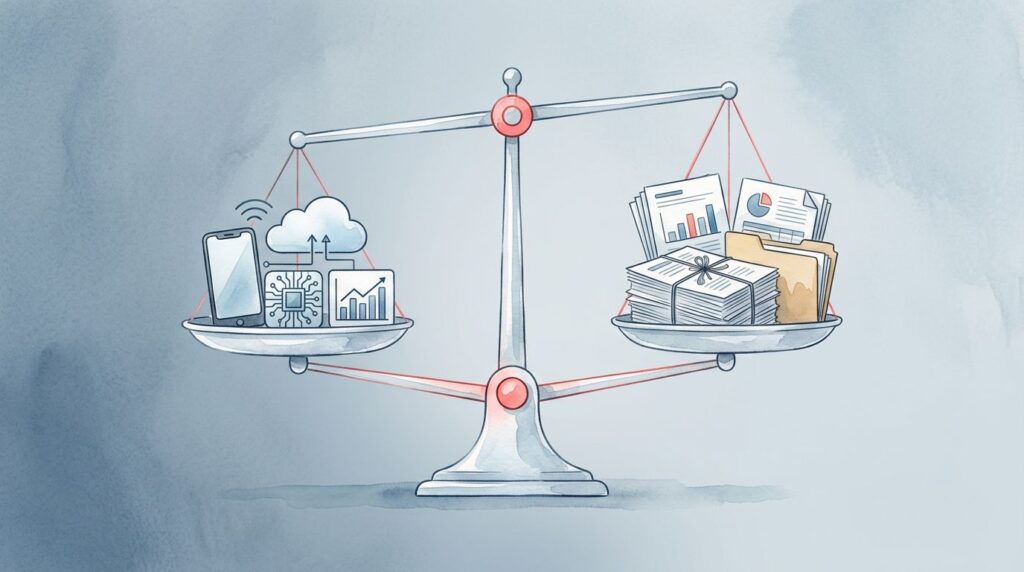
The vendor with the flashiest demo usually wins the first meeting. That does not mean it is the right choice.
You can compare technology options and still end up buying the one that tells the best story. That happens when the business problem is fuzzy, the scorecard is loose, and no one has clear decision rights. You need a process that keeps the business in charge, not the vendor.
Key takeaways before you compare
- Start with the business outcome, not the product list.
- Use weighted criteria, not gut feel and sales pressure.
- Check risk, data, and exit options before you get attached.
- If ownership is blurry, bring in executive help before you buy.
The wrong comparison usually starts with the demo, then works backward.
Why vendor bias shows up so fast
Bias does not always look like bias. Sometimes it looks like urgency. Sometimes it looks like relief. Your team is tired of workarounds, the current tool is clunky, and the new platform feels like a clean escape.
That is where trouble starts.
A polished vendor can make a weak option feel safe. A strong salesperson can make a bad fit feel inevitable. If you already have tool sprawl, shadow IT, or technical debt, the first platform that sounds organized can win before you have even compared the real tradeoffs.
That is why the buying process needs structure. Not more enthusiasm. Not more demos. Structure.
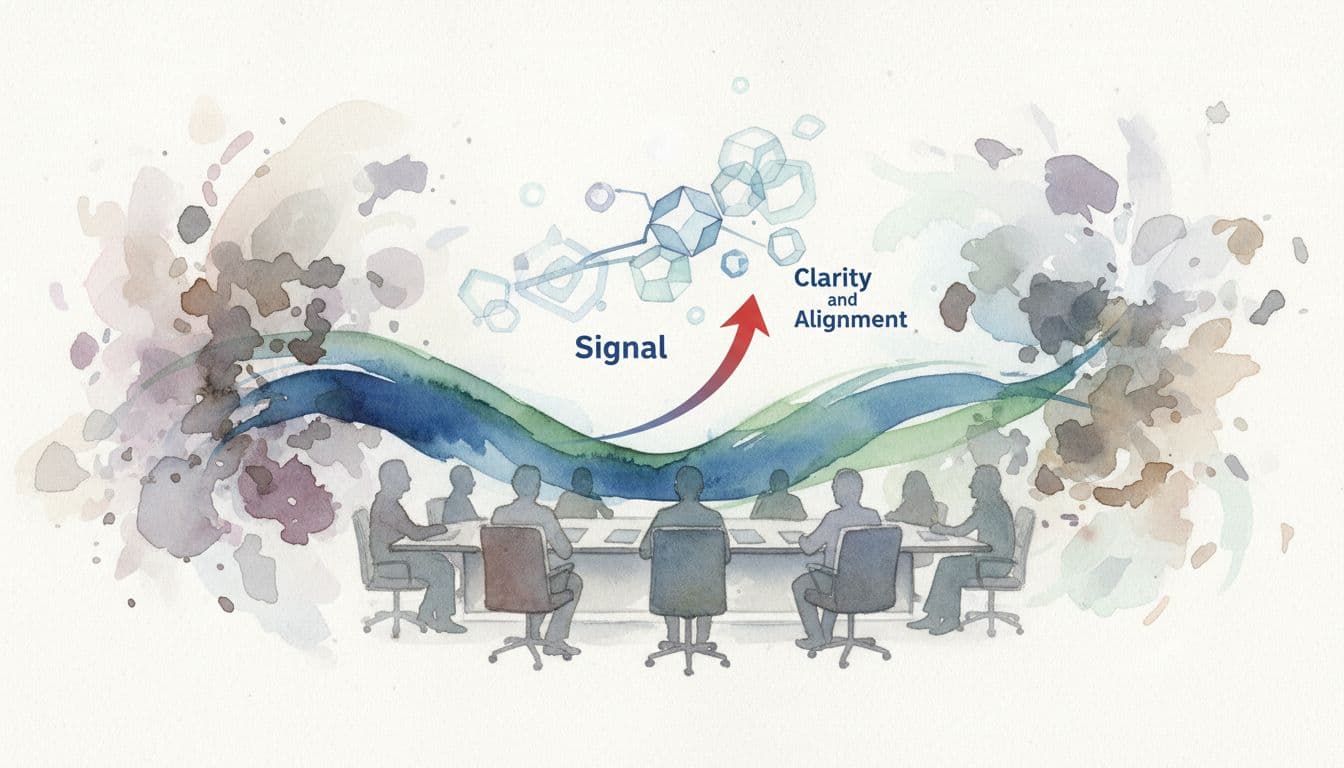
Start with the decision, not the shortlist
If you do not have a practical technology strategy, vendor comparisons will drift. If you want a clean starting point, build a practical IT strategy and roadmap first, then shape the shortlist around it. A business-aligned technology strategy gives you the guardrails.
That strategy does not need to be fancy. A one-page technology strategy and a simple technology roadmap template are often enough. What matters is that you can answer three questions in plain language:
- What business outcome are you trying to improve?
- What are you willing to trade off?
- Who has the decision rights?
That last one matters more than most teams admit. Without a decision rights map and a clear technology operating rhythm, the loudest voice starts steering the process. That is how founder-led technology decisions, CEO technology decisions, and COO technology strategy all end up with the same problem. The business thinks it is choosing a tool. The vendor is actually choosing the frame.
If you are a growing company, compare the options against the next 12 months, not the next ten years. A 12-month technology roadmap is usually the right horizon. It keeps the conversation honest without pretending you can predict everything.
Build a comparison scorecard you can defend
A scorecard is where vendor bias gets exposed. It forces you to compare outcomes, not theater.
Use a simple, weighted model. Ask for evidence, not claims. The point is to compare technology options on the same terms, with the same standards, and the same business lens.
| What you compare | Weak approach | Better approach |
|---|---|---|
| Business outcome | “It has more features” | “It improves this result for the business” |
| Cost | License price only | Total cost, implementation, support, and technology ROI |
| Risk | Security later | Technology risk management, third-party risk management, and cyber risk appetite up front |
| Fit | Vendor says it fits | Software platform evaluation with evidence, references, and use cases |
| Exit | No one asks | Vendor offboarding, data portability, and contract rights |
The table is simple on purpose. That is the point.
You can also compare by cost-per-outcome reporting, not just sticker price. That is where technology spend optimization, IT cost optimization, and tech spending ROI become real. A cheap tool that creates rework is not cheap. A pricey tool that removes manual work may pay for itself fast.
If you need a useful model for the scoring side, a weighted vendor proposal comparison keeps the process grounded. It is harder for a slick demo to win when the rubric is fixed before the demo starts.
Your board-ready tech roadmap should show why the choice matters, not just what gets installed. That is what board-ready reporting is for. Not noise. Not a prettier deck. Clear business judgment.
Compare the whole operating picture, not just the software
A platform does not live alone. It lands inside your vendor management, your data model, your security posture, and your team’s capacity to run it.
So compare the whole operating picture.
If the tool touches critical workflows, ask about vendor due diligence, third-party risk management, and vendor management. If you need to replace it later, ask about vendor offboarding. If the vendor goes sideways, ask for a vendor incident response plan. That is not paranoia. That is basic governance.
The same is true for resilience. A strong comparison includes business continuity planning, disaster recovery planning, incident response readiness, and ransomware readiness. If the product touches customer data or internal systems, it should also fit your data governance framework, data strategy, data privacy, and information governance needs.
If AI is part of the decision, slow down and compare more than the promise. Ask about AI governance, AI adoption strategy, AI transformation strategy, responsible AI, AI acceptable use policy, AI vendor due diligence, and AI opportunity assessment. A tool that creates new risk is not an upgrade.
This is where technology governance for CEOs and technology governance for boards comes into focus. The board does not need a product pitch. It needs board technology reporting, board-ready technology reporting, and, when risk is material, board cybersecurity reporting and cyber risk reporting to the board. That should lead to a clear board-ready risk summary, not a pile of jargon.
When the choice is really about leadership
Sometimes you are not comparing tools at all. You are comparing the leadership around the tools.
If you have a technology leadership gap, the question may be whether you need a fractional CTO, interim CTO, outsourced CTO, virtual CTO, or part-time CTO before you buy anything else. The same logic applies if you are weighing a fractional CIO, fractional CISO, virtual CISO, or interim CISO. The label matters less than the decisions they can actually own.
That is where fractional CTO services and interim CTO services can help. They create the executive structure that keeps vendors from driving your roadmap. They also help when you need a technology leader for growing companies, not another tactical manager.
If the situation is urgent, compare the leadership model before you compare the software. A strong technology strategy consulting engagement can set the right filters. That may include strategic technology planning, a technology roadmap, a 90-day technology plan, or a technology health check before any purchase lands.
If you are still stuck, start with Get an Executive Technology Clarity Check. It helps you sort out whether the problem is the vendor, the roadmap, or the leadership structure around the decision.
FAQs on comparing technology options
How do you keep vendors from steering the process?
Lock the criteria before the demos. Score the options with multiple evaluators, not just the loudest sponsor. Keep the vendor out of the scoring discussion. If they push for a quick close, slow down. Good vendors can handle a disciplined process.
Should you compare software before hiring leadership?
Only if the decision is simple and the ownership is clear. If you are dealing with a technology leadership before hiring problem, or you are not sure when to hire a fractional CTO, get the leadership structure right first. A strong fractional CTO vs full-time CTO decision is often more important than the software itself. The same goes for fractional CTO vs IT consultant. One gives you executive judgment. The other may give you advice without ownership.
What matters most after price?
Three things. Risk, fit, and exit. If the product creates more technical debt, adds to application portfolio rationalization problems, or makes cybersecurity oversight harder, it is not a clean win. Compare the option against your technology risk management framework, your technology dashboards, and your operating capacity. If it increases drag, it is the wrong choice.
Conclusion
The cleanest way to compare technology options is to stop treating the vendor like the decision-maker. You need a business problem, a weighted scorecard, and a clear view of the risk that follows the purchase.
When you do that, the process gets calmer. You see which options support growth, which ones add drag, and which ones are only attractive because they are easy to sell.
That is the real test. Not which demo looked best, but which choice your business can defend six months from now.