

Artificial intelligence is moving fast. Your board of directors doesn’t need a tour of models, prompts, or vendor claims. It needs a clear view of what AI could change in the business, where it could create risk, who owns the work, and what decision is needed now.
That is how to brief the board on ai without losing the room, transforming the conversation into a practical executive briefing rather than a technology demonstration.
Key Takeaways for How to Brief the Board on AI
When you brief directors on AI, keep the conversation tied to decisions they can govern through effective board oversight.
- Lead with the business value, such as lower service cost, faster proposal work, fewer errors, or improved customer response.
- Separate pilot programs from uses that could affect customers, employees, financial outcomes, or sensitive data.
- Name one accountable executive for the AI portfolio, even when several teams contribute.
- Set an ai governance framework for data, vendor use, testing, monitoring, and escalation.
- Ask the board to approve a clear next step, not a vague plan to keep exploring AI.
How to Brief the Board on AI Without Losing the Room
The wrong opening is, “We are testing several generative AI tools.”
The better opening is, “We are testing whether generative AI and advanced machine learning models can reduce proposal preparation time without exposing client information or lowering quality.”
That shift matters. The first statement describes activity. The second describes a business question, a control issue, and a result you can measure.
A useful board narrative has five parts: the opportunity, the current use cases, the material risks, management’s actions, and the decision requested. Good board technology reports work the same way. They show consequences, ownership, tradeoffs, and the next decision.

### Start With the Business Question, Not the AI Tool
Start with the problem that is costing you time, margin, or customer trust. You might need to reduce service cost, speed up proposal work, improve forecasting, or identify revenue leakage as part of a broader artificial intelligence strategy.
Before you name Microsoft Copilot, ChatGPT Enterprise, Salesforce Einstein, or any other product, state four things: the expected outcome, the baseline, the time frame, and the accountable owner.
If proposal teams spend ten hours assembling a standard response, say that. If you expect to reduce it to six hours within one quarter, say that too. Then explain what evidence will prove the gain in operational efficiency is real.
Don’t promise savings you can’t trace to changed work, reduced spend, or stronger revenue. AI licenses, implementation work, vendor fees, and internal effort all affect the financial story.
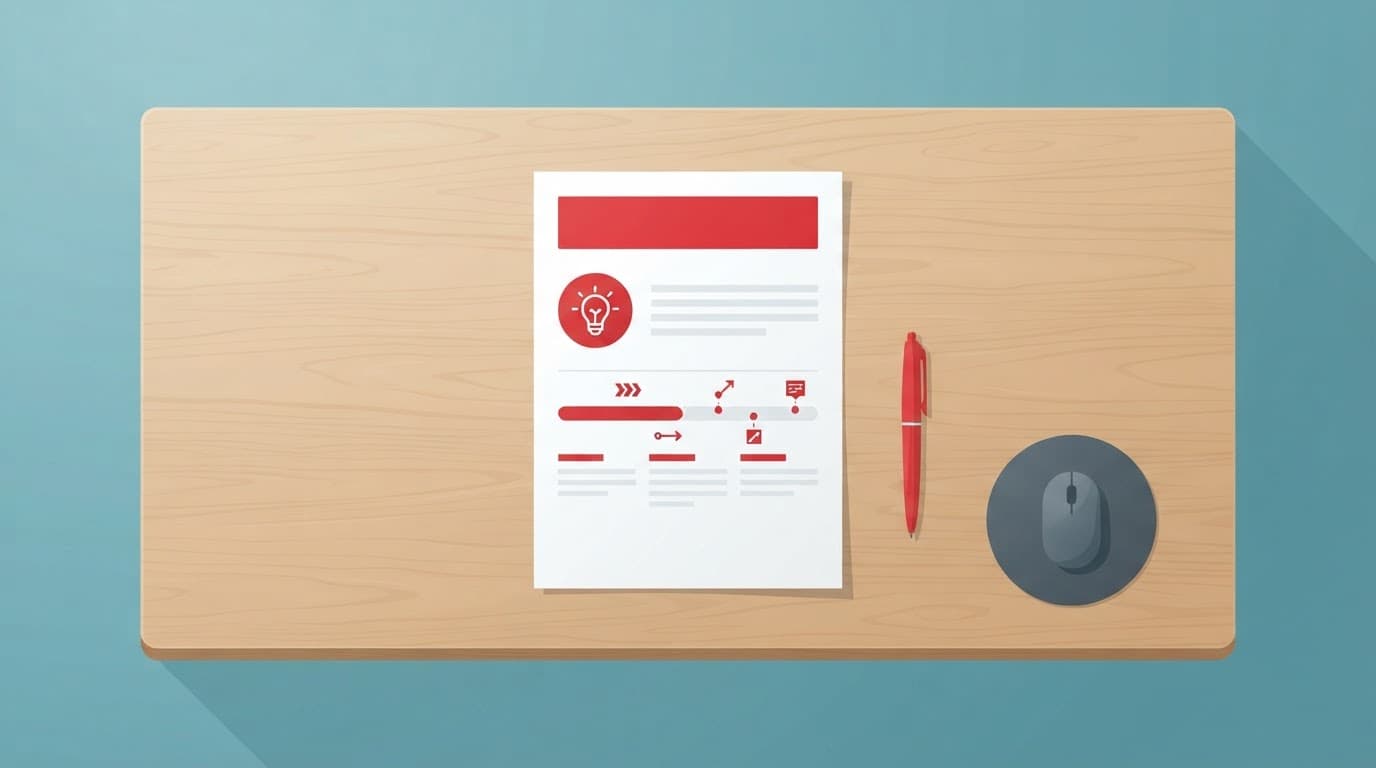
Use a One-Page AI Brief the Board Can Scan
A board member should understand an AI proposal in a few minutes. Use one page with five fields:
- The use case and business problem
- The expected value and measure of success
- The data involved
- The risk level and controls
- The next decision needed
That structure gives directors enough context to ask useful questions. It also keeps management from hiding uncertainty behind a dense slide deck.
## Give the Board a Clear View of AI Opportunity, Risk, and Readiness
Not every AI use case belongs at the board level. A limited internal writing assistant with approved data is different from a system that recommends pricing, screens job candidates, handles health information, or guides customer decisions using large language models.
The board owns oversight and risk appetite. Management owns selection, rollout, testing, and day-to-day execution. Those lines need to stay clear.
Cybersecurity review alone is not AI governance. A secure tool can still produce unreliable outputs, create unfair outcomes, or make decisions nobody can explain.
If you can’t explain the AI risk, ownership, and escalation thresholds in plain language, Build a Board-Ready Technology Risk View before asking directors for broad approval.
Separate AI Experiments From Material Business Decisions
A simple three-tier model keeps the discussion proportionate.
- Tier one includes approved internal productivity tools using limited, non-sensitive data. Management can monitor these within existing controls.
- Tier two includes customer-facing tools or workflow automation. These need documented review, testing, ownership, and regular reporting.
- Tier three includes uses that affect rights, safety, financial outcomes, sensitive information, regulated activity, or core operations. These require formal approval, stronger testing, monitoring, and a defined rollback plan.
This is how to brief the board on ai without turning every small experiment into a board debate. You show what is contained, what is material, and what crosses a threshold.
Ask Whether Your Data, Controls, and Team Are Ready
Expect directors to ask plain questions. What data does the system use, and how are data privacy protections enforced? Who can access it? How do you test accuracy, model bias, and human in the loop workflows? What happens when output is wrong, and how does risk management handle it? Can you stop the tool quickly? Who owns the vendor review, contract terms, and compliance with the EU AI Act and other regulatory requirements?
You also need an answer for accountability. The AI tool doesn’t own the result. The vendor doesn’t own the result. An executive in your company does.
Turn the AI Discussion Into Decisions the Board Can Govern
End the agenda item with choices that align with effective corporate governance. Ask the board to approve an AI policy, risk thresholds, a limited pilot, spending boundaries, reporting cadence, or executive ownership.
Don’t ask directors to pick tools or run the roadmap. Ask them to challenge assumptions and confirm that management can control the risk.
Your broader technology plan should keep AI tied to business priorities, not novelty. That is the standard behind a business-aligned technology strategy.
Use Five Board Questions to Keep the Conversation Grounded
These five questions cut through most AI noise by creating a reliable decision making framework:
- What business result will this improve?
- What could go wrong if the system fails or is misused?
- What information could it expose?
- Who is accountable for the result?
- What evidence will tell us to continue, change, or stop?
Those questions push management toward value and control. They also expose weak ownership early, while the cost of changing course is still manageable.
Report Progress With Measures the Board Can Trust
Report a short list of performance metrics that match the use case to maintain proper strategic oversight. That could include hours saved, error rates, adoption, customer impact, incidents, blocked use cases, vendor spend, and realized margin or revenue impact.
Don’t report only the number of pilots, licenses, or employees using a tool. Activity is not proof of value. Your board needs the same discipline you would apply to any other technology spending ROI decision, especially when evaluating ai implementation progress.
Avoid the AI Board Mistakes That Create Confusion and Risk
Hype weakens trust. So does a long list of disconnected use cases, vendor claims presented as evidence, or unexplained uncertainty.
Keep the board informed about what isn’t known yet. Explain how management will test it. That is more credible than pretending a pilot has already proved a result.
Uncontrolled experimentation also creates duplicate subscriptions, data exposure, and spend nobody owns. AI can become another version of tool sprawl as a governance problem if every department buys its own answer, which also undermines internal change management and erodes baseline security standards.
Do Not Confuse Activity With an AI Strategy
A growing list of pilots is not a strategy. A proper artificial intelligence strategy should name the business goals AI supports, the use cases you will prioritize, the risks you will accept, the risks you will avoid, and the capabilities you need.
Put that into a short roadmap with owners, deadlines, funding, and stop criteria. A roadmap without an owner is only a list of hopes, and an artificial intelligence strategy without governance is just a collection of expensive experiments.
Do Not Leave AI Ownership Between the CEO, CIO, and Vendors
The CEO owns the business outcome. The board of directors oversees material risk. One executive still needs to own the AI portfolio, operating rhythm, reporting, and follow-through.
Legal, security, finance, HR, data, and business leaders all have roles. Vendors can advise, but they cannot set your risk appetite, manage vendor risk, or own your decision rights, making effective corporate governance essential for the board of directors.
If that ownership is missing, Talk Through Your Technology Leadership Gap. Fractional CTO or executive technology oversight support can bring structure without forcing a rushed full-time hire.
A Practical Board AI Agenda You Can Use This Quarter
Use 30 to 45 minutes. Keep the discussion focused.
- Business context and the goals AI may support
- Current AI use and proposed priorities
- Risk, data, and readiness
- Policy, ownership, and financial boundaries
- Decisions requested and next-quarter milestones
Prepare a one-page brief, use-case inventory, data map, vendor review, risk tiers, pilot evidence, and clear milestones. Tailor the discussion to your industry, size, and risk profile.
What to Send Before the Meeting
Send a short pre-read, not a dense slide deck, that doubles as a comprehensive board pack for directors. Include the decision requested, expected business value, key assumptions, top risks, proposed controls, accountable executive, budget, and measures of success. This executive briefing should use plain language and remain direct about what you don’t know yet.
What to Do After the Board Meeting
Record decisions. Assign owners. Update the roadmap and set review dates. Track benefits and risks against the measures you agreed while monitoring overall ai implementation progress. Stop pilot programs that fail their tests. Consistent reporting prevents AI from becoming another disconnected technology project.
If AI activity is scattered across teams and vendors, Get an Executive Technology Clarity Check to establish sharper priorities and stronger ownership.
Frequently Asked Questions About Putting AI on the Board Agenda
Does every board need an AI agenda item?
No. You need a board discussion when generative ai or other core artificial intelligence initiatives could materially affect strategy, spending, customer outcomes, workforce decisions, data exposure, or risk. Small internal experiments may stay within management reporting, while major capabilities require proper board oversight.
What should a board approve about AI?
Your board should approve the boundaries, risk thresholds, material investments, policies, and reporting expectations. Management should own the tools, pilots, and operating work, especially when rolling out generative ai applications that touch customer data.
How technical should the presentation be?
Keep technical detail behind the summary. Directors need business impact, risk, ownership, controls, and choices. They can request deeper detail when artificial intelligence projects affect a major decision or call for heightened board oversight.
Who should own AI governance?
One executive should own the operating picture and establish a clear ai governance framework. That may be your CTO, CIO, COO, or a qualified fractional leader. The title matters less than clear authority and accountable follow-through.
Put the Right AI Decision in Front of the Board
Your board of directors doesn’t need to understand every model or tool. It needs a clear view of where AI may improve the business, what could harm the business, who owns the work, and what decision is needed now to maintain proper strategic oversight.
Use the one-page brief and agenda structure to replace technical theater with confident decisions. When you need expert guidance on how to brief the board on ai, along with clearer ownership and a board-ready risk view, Book a board AI briefing.