

A large cyber insurance policy limit doesn’t guarantee complete protection. Sublimits, exclusions, waiting periods, and narrow definitions can still leave a protection gap.
The surprises often involve ransom, fraud, downtime, vendor failure, or regulatory costs. A focused policy review should examine the declarations, endorsements, definitions, exclusions, and claims procedures. This guide offers cyber insurance coverage gaps explained in business terms, so you can answer the question that matters: what doesn’t your policy cover? Policy wording controls, and this is general information, not legal or insurance advice.
Key Takeaways: Read the Limits, Triggers, and Conditions First
Cyber insurance coverage gaps explained starts with one simple point: a headline limit can hide a protection gap. Read the policy as separate promises, each with its own trigger, retention, cap, conditions, and exclusions.
- A $5 million aggregate limit may not apply to every type of loss.
- Ransomware, business interruption, and regulatory costs often have separate sublimits.
- Coverage may require a defined cyber event and a direct link between that event and your loss.
- Waiting periods, late notice, unapproved vendors, or incomplete records can put an otherwise valid claim at risk.
- Insurance reduces financial shock. It doesn’t replace tested backups, incident response readiness, business continuity planning, or disaster recovery planning.
Your cyber risk appetite should shape the policy decision. If leadership hasn’t agreed on acceptable downtime, uninsured loss, and vendor exposure, the coverage limit is only a number.
Coverage Gaps Explained: What Your Policy May Limit or Exclude
Cyber liability insurance is divided into separate insuring agreements. Each may have its own covered event, retention, limit, sublimit, waiting period, exclusion, and claims condition.
That is why a policy can look broad in a sales summary but feel narrow during an incident. Compare the declarations page, endorsements, definitions, and coverage exclusions. Don’t rely on the quote or a broker’s overview alone.
A protection gap can appear when different loss categories use separate limits or conditions.

A policy might show a $5 million aggregate limit, then cap cyber extortion at $1 million and business interruption at a lower amount. Market examples show that structure exists, but your wording decides the result. A cyber insurance coverage example illustrates how smaller buckets can sit inside a larger headline limit.
A sublimit is often part of the total policy aggregate, not extra coverage on top of it.
Ask your broker or coverage counsel to show you, in writing, which limit applies to each major loss scenario. That includes ransomware, funds-transfer fraud, cloud outages, privacy claims, regulatory investigations, and restoration costs.
Ransomware, Extortion, and Social Engineering May Share Smaller Buckets
Ransomware attacks can create several costs at once, including negotiation, legal review, forensic investigations, restoration, crisis communication, and a possible ransom payment. Those costs may fall under different coverage parts, or they may draw from one shared sublimit.
Cyber extortion limits can be a percentage of the main policy limit and may vary by industry or carrier. Ransom payment also commonly requires insurer approval before you act. Legal restrictions, sanctions screening, and carrier-directed negotiation can affect the decision.
Social engineering, business email compromise, and funds-transfer fraud often sit on separate endorsements with much smaller caps. Phishing attacks may support an impersonation or payment-fraud claim, subject to the endorsement wording. Check whether the policy requires specific authentication controls. Also ask whether employee fraud is treated differently from an outside impersonation attack.
Business Interruption and Vendor Outages Need a Clear Trigger
Business interruption coverage usually requires a covered cyber event and a direct connection between that event and lost income. First-party coverage may respond to direct restoration costs, downtime, and extra expense, but slow systems or partial degradation may not qualify.
Read the waiting period, period of restoration, maximum indemnity period, extra-expense rules, and proof-of-loss deadline. Some policies begin coverage only after a stated period of downtime. Ordinary operating costs, loss of market, pre-existing sales declines, and consequential loss may be excluded.
Contingent business interruption may apply only when a named or qualifying provider suffers a covered disruption. That could include a cloud platform, SaaS provider, hosting company, payroll provider, payment processor, managed service provider, or customer-support vendor. Your third-party risk reporting should identify which third-party vendors could stop revenue or operations.
Third-party liability addresses claims by customers, regulators, or other affected parties. Data breaches may create notification, privacy, defense, and settlement costs, while coverage can depend on how the policy treats affected data and the required response.
Regulatory, Contractual, War, and Betterment Exclusions Can Change the Result
Regulatory defense costs may be more likely to receive coverage than fines or penalties. Regulatory fines may be covered only where they are legally insurable. A regulator inquiry, customer notification, and privacy lawsuit can each raise different coverage questions, including exposure involving personally identifiable information.
Contractual liability also deserves attention. Losses you accepted under a customer contract, royalties, licensing fees, or certain indemnification obligations may be carved out. Ask how the policy coordinates with crime, general liability insurance, D&O, and relevant contractual risk allocation.
War language can extend beyond traditional armed conflict. Some exclusions address hostile or state-sponsored cyber operations, where attribution can be difficult. Betterment is another common issue. The carrier may pay for data restoration and damaged systems, but not for the long-term security upgrade you wanted to make anyway.
A protection gap can also affect a transaction. A policy is risk transfer, not a substitute for transaction protections. During diligence, buyers should test representations and warranties about prior incidents, data privacy, cybersecurity, technology ownership and intellectual property, open-source software, AI systems and training data, IT infrastructure, and regulatory compliance.
Representations and warranties address facts and condition at signing or closing. Covenants govern conduct, remediation, and cooperation between signing and closing or afterward. Closing conditions are prerequisites to closing. Use disclosure schedules for exceptions, and evaluate materiality qualifiers, indemnification scope, survival periods, escrow, and RWI separately from the policy. Requirements vary by transaction and jurisdiction.
The Claims Process Can Create a Coverage Gap Before You Need the Money
A claim can weaken before the carrier evaluates the loss. Notice may be required promptly, as soon as practicable, or within a stated period. The safest operating position is to notify the carrier when you have a reasonable basis to suspect a covered incident, without waiting for final scope or materiality.
That does not replace careful containment or legal guidance. It gives you access to the policy process while facts are still developing. The Federal Trade Commission’s cyber insurance overview is a useful reminder that coverage categories vary, while your actual policy wording decides what applies.
Consent rules matter. Breach counsel, forensic investigations, negotiators, restoration firms, public statements, and major expenses may require hotline reporting, panel-vendor use, or written approval. Keep those approvals.
Your Application Answers Can Affect a Future Claim
Your renewal application is part of the underwriting record used by insurance underwriters. Inaccurate answers about multi-factor authentication, endpoint detection and response, backups, patch management, privileged access, monitoring, incidents, or vendor controls can create a dispute later.
An application answer represents the controls that exist at the time of submission. It may also create an operational expectation that those controls will remain in place. Compare last year’s application with the business you run now. Look at remote users, administrators, cloud tenants, acquisitions, new data types, and outsourced services. “Most users have MFA” is not the same as “all users have MFA.”
If a control has an exception, document its scope, reason, compensating control, accountable owner, and remediation date. Disclose partial deployment rather than describing it as universal coverage. A written policy or vendor promise does not prove the security controls work in practice. This is where an incident response plan and readiness become an executive ownership issue, not an IT paperwork exercise. See incident response readiness as part of that responsibility.
Records and Causation Decide How Much Business Loss You Can Prove
The insurer generally pays covered loss caused by the insured event, not every weak sales period after an incident. You need to separate cyber-caused loss from normal seasonality, earlier revenue declines, customer departures, production problems, and unrelated outages.
Preserve daily sales, orders, shipments, payroll, staffing, system performance, data restoration records, vendor invoices, and extra-expense records as the event unfolds. Finance and operations should maintain the proof-of-loss file. Technology and legal teams should document the timeline, containment steps, system impact, and recovery decisions, including any phishing attacks.
Failure to preserve evidence can create an evidentiary protection gap even when the policy potentially responds. Some wordings require a detailed proof of business interruption or extra expense within a defined period, sometimes 90 days unless extended in writing. Check your deadline before it matters.
How to Turn Policy Fine Print Into Executive Technology Risk Oversight
Treat the policy as one financial control within your broader cyber risk management program. It cannot replace access control, tested backups, vendor management, or a practical recovery plan.
Build a coverage map with these fields: business risk, coverage part, trigger, limit, sublimit, retention, waiting period, exclusion, consent rule, evidence needed, cybersecurity measures, and accountable owner. Then compare it with your systems inventory, vendor dependencies, incident plan, backup tests, contracts, and business technology strategy. This helps identify a protection gap between stated coverage and actual operating dependencies, so owners can close it.
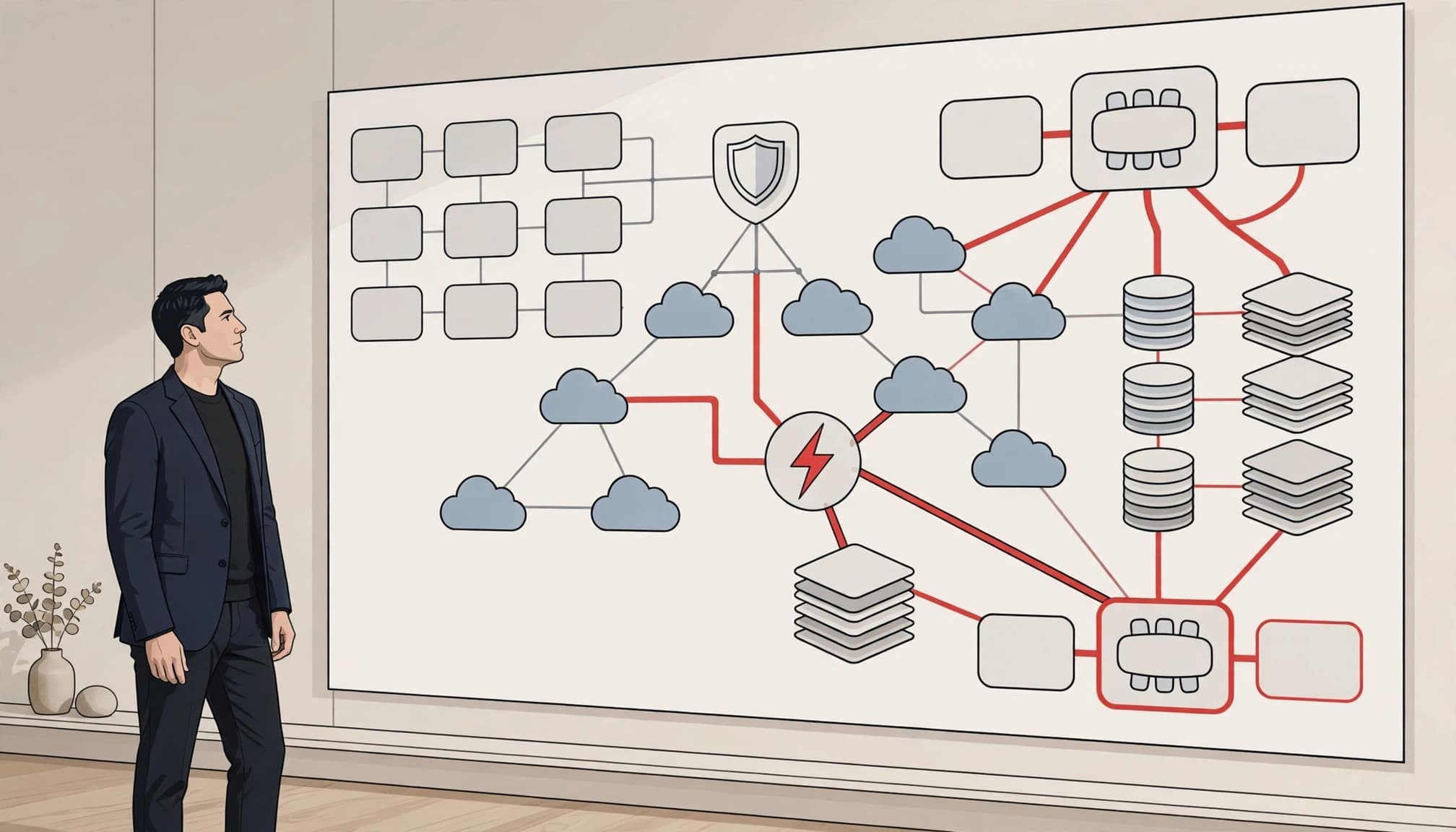
Coverage should match how the business operates and its current security posture, not how an old application describes it. A useful cyber insurance strategy guide can help frame the financial tradeoffs, but only your policy and operating evidence answer the coverage question.
For an acquisition, map diligence findings about technology, data privacy, and cybersecurity. Include intellectual property, open-source software, AI, IT infrastructure, and regulatory compliance. Connect those findings to the target’s representations and warranties, covenants, closing conditions, and disclosure schedules.
Indemnification, materiality qualifiers, survival periods, escrow, and RWI are transaction-allocation tools. Evaluate them alongside the cyber policy, not as substitutes for it. Transaction and jurisdiction-specific requirements vary.
Build a Simple Coverage Map Before Renewal or an Incident
Start 90 to 120 days before renewal, and schedule a policy review early. Collect the policy, endorsements, declarations, application, claims history, and renewal correspondence. Identify each major coverage part, then mark limits, sublimits, exclusions, conditions, and approved contacts.
Map critical systems and third-party vendors, including cloud, SaaS, hosting, payroll, and payment dependencies. Confirm panel firms, hotline procedures, insurer contacts, and who can authorize expenses. Keep evidence of multi-factor authentication, deployed security controls, data restoration tests, patching, tabletop exercises, and a tested incident response plan.
Insurance underwriters typically find evidence of implemented controls more persuasive than policy statements alone. Keep records current and easy to verify before renewal discussions begin.
If policy ownership, vendor dependencies, and board reporting feel scattered, Get an Executive Technology Clarity Check. You need a clear view before an insurer, customer, or board member asks a hard question.
Put Remaining Uninsured Risk in Front of the Board
A board does not need a policy recital. It needs a plain view of material exposure, accountable owners, open gaps, and decisions that require leadership approval.
Use board cybersecurity reporting to show the top scenarios, likely business effects, recovery assumptions, insurance response, uninsured exposure, and next actions. This is technology governance for CEOs and boards. Make the remaining protection gap visible, assign an owner, and set a decision date.
A fractional CTO, fractional CISO, or interim technology leader can help connect the policy to operational reality when nobody owns the full picture. The goal is stronger ownership and calmer decisions under pressure.
What You Should Ask Before You Sign the Renewal
Ask direct questions before you sign the cyber insurance renewal:
- What exact event triggers each coverage part?
- Which losses have separate sublimits, and are they inside the total aggregate?
- Does business interruption include partial degradation and extra expense?
- How does the policy address customer, regulator, and contractual claims involving third-party liability?
- What happens if a cloud, payroll, payment, hosting, or customer-support vendor fails?
- How long is the waiting period, and how is income loss measured?
- What social-engineering and fraud controls must be in place for phishing attacks to qualify?
- Which counsel, forensic firms, negotiators, and restoration vendors need prior approval?
- How soon must you notify the insurer, and what proof must you provide?
- Are regulatory fines legally insurable in the jurisdictions where you operate?
- How broad is the state-sponsored cyber or hostile-operations exclusion?
- How will loss history, control changes, sublimits, and market conditions affect premium increases?
- For a buyer, does the policy respond to known incidents, prior acts, acquisitions, and a change in control?
- Do the transaction representations and warranties, covenants, and closing conditions address risks the policy doesn’t cover? Also confirm that disclosure schedules, indemnification, materiality qualifiers, survival periods, escrow, and RWI address those risks.
The goal isn’t to buy the broadest policy at any price. It’s to understand the protection gap between retained uninsured exposure and transferred risk, along with the controls required to make coverage defensible.
The right allocation varies by transaction and jurisdiction. Assign an executive owner, record unresolved gaps, and bring material tradeoffs to the board before renewal, not after an incident.
Frequently Asked Questions
Does a large cyber insurance limit mean the business is fully protected?
No. The headline limit may include separate sublimits, retentions, waiting periods, exclusions, and coverage conditions. Review each major loss scenario separately to identify the actual protection gap.
What cyber insurance losses are commonly subject to sublimits?
Ransomware, cyber extortion, social engineering, funds-transfer fraud, business interruption, regulatory costs, and contingent business interruption may have smaller limits. These sublimits are often part of the policy aggregate rather than additional coverage.
Can a vendor outage trigger business interruption coverage?
It may, but contingent business interruption usually requires a qualifying vendor, a covered cyber event, and a direct connection to your loss. Check whether the policy covers the specific cloud, SaaS, hosting, payroll, payment, or managed service provider you depend on.
What can put an otherwise valid cyber insurance claim at risk?
Late notice, unapproved vendors, missing records, inaccurate application answers, failure to meet required security controls, and weak proof of causation can all create problems. Follow the policy’s notice, consent, cooperation, and proof-of-loss requirements as soon as an incident is suspected.
How should executives review cyber insurance before renewal?
Build a coverage map showing each coverage part’s trigger, limit, sublimit, retention, waiting period, exclusion, consent rule, and evidence requirements. Compare it with critical systems, vendor dependencies, recovery capabilities, and board-approved tolerance for uninsured loss.
The Coverage You Don’t See Can Cost the Most
The most dangerous coverage gap is often not a total exclusion. It is a narrow trigger, small sublimit, waiting period, late-notice problem, unapproved vendor, inaccurate application answer, or loss you cannot prove.
Read the policy before an incident. Align it with your technology strategy, vendor dependence, recovery capability, and the controls described in your application. Test those controls instead of assuming they work.
Cyber insurance can reduce financial shock. It cannot replace clear ownership, access control, tested backups, recovery planning, or sound cybersecurity oversight. Use a coverage map and ask the hard questions before renewal, so you can make confident decisions when pressure arrives.