
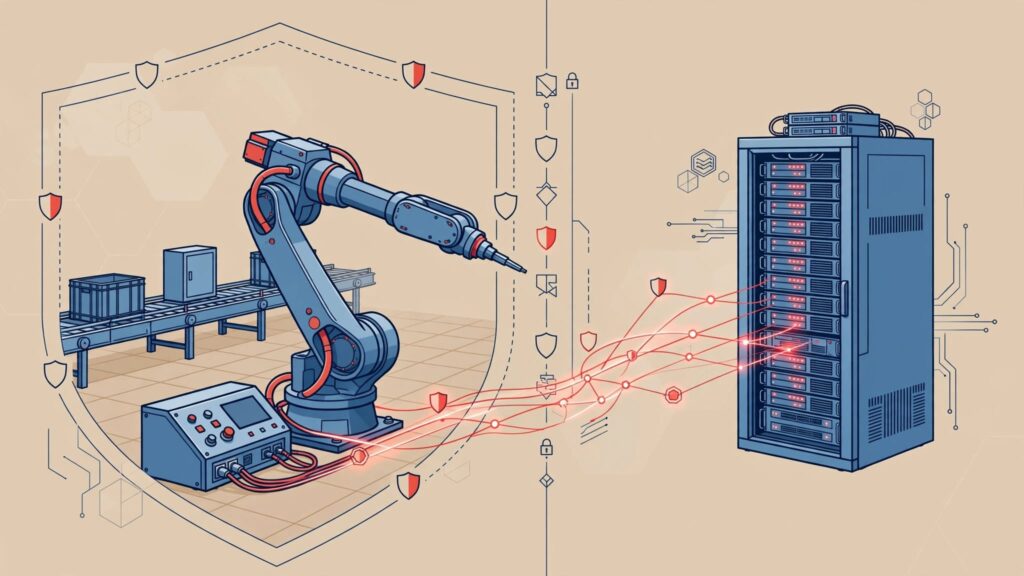
Office systems are information technology, while plant systems are operational technology that control physical processes. A cyberattack can move from office systems into plant systems, affecting authentication, engineering workstations, MES platforms, controllers, and production.
That connected risk surface turns cyber threats and security risks into production downtime, unsafe conditions, quality issues, and missed shipments. It can also disrupt the people and systems needed to keep orders moving.
ot it convergence security for manufacturers treats those risks as one connected business problem, not two separate technology projects. IT/OT convergence doesn’t mean turning the plant into an office network; it means clearer visibility and stronger boundaries. You don’t need to change how production works, but you do need access management, recovery planning, cyber security, and operational resilience. This practical approach supports a modern smart factory and broader manufacturing environment.
Key Takeaways for Securing Manufacturing IT and OT
- Build one inventory covering IT, OT, vendors, cloud services, and the systems that keep production moving.
- Remove PLCs and other controllers from direct internet exposure. Put controlled gateways and industrial DMZs between office and plant networks.
- Apply least privilege, named accounts, multi-factor authentication, and regular privileged-access reviews where they are safe and supported.
- Test recovery for business systems and production processes. Restoring a server is not the same as safely restarting a line.
- Use the NIST Cybersecurity Framework 2.0 to organize leadership action around Govern, Identify, Protect, Detect, Respond, and Recover. Use NIST SP 800-82 Rev. 3 for OT-specific guidance.
OT IT Convergence Security for Manufacturers Starts With One Risk Picture
IT/OT convergence means cyber threats can cross organizational boundaries. A compromised office account can reach a shared file service. That service can affect an engineering workstation. An engineering workstation can become a path toward plant systems.
The connection between operational technology and information technology creates business exposure. You could lose production output, disrupt quality records, miss customer commitments, strain cash flow, and face hard questions from the board.
NIST’s voluntary, risk-based CSF 2.0 Manufacturing Profile connects the six CSF functions to manufacturing conditions. It includes supply chain risk, platform security, and infrastructure resilience. It is useful guidance, not a compliance finish line.
Your goal is to keep operating under attack. That takes a business-aligned technology strategy that connects security decisions to production, growth, and financial exposure.
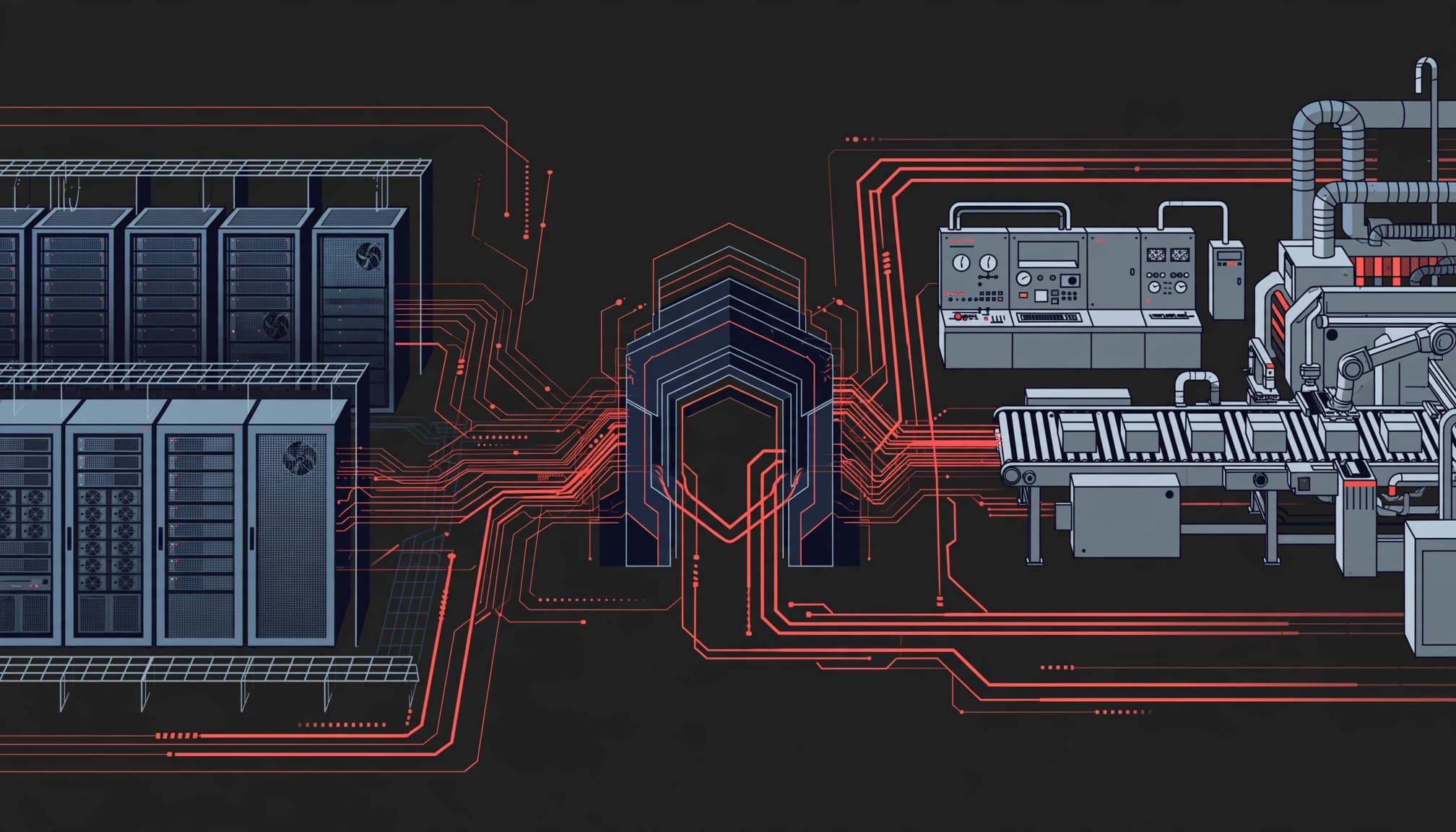
Map the systems that keep production moving
Your asset inventory should include industrial control systems, SCADA systems, PLCs, HMIs, engineering workstations, historians, MES interfaces, sensors, servers, switches, firewalls, cloud services, office endpoints, backup systems, and vendor-maintained equipment.
The industrial internet of things and edge computing may generate or process production data. In a smart factory, these connections support predictive maintenance, real time data, and operational efficiency. They also increase dependency and exposure across the environment.
For each asset, record its owner, business process, dependencies, criticality, internet exposure, vendor connection path, and recovery needs. Include retention requirements in your data management practices. Passive discovery and existing plant documentation are safer starting points than aggressive scans.
A device list is not enough. You need asset visibility into which systems control production, affect safety or quality, and could provide a path into them.
Give plant, IT, and security teams shared decision rights
Plant leaders will rightly protect uptime and safety. IT teams may focus on patching, identity controls, and standardization. Security teams may see an unacceptable exposure. All three views matter.
Use a simple decision rights map for identity governance and access management. Name who approves accounts, vendor connections, network changes, emergency shutdowns, privileged access, and risk exceptions. Include operations, engineering, IT, security, safety, quality, legal, and executive leadership.
Technology governance doesn’t mean adding meetings. It means an accountable owner resolves conflicts over cost, timing, and accepted risk before a problem forces the decision.
Build a Secure Boundary Between the Factory and the Office
Network segmentation matters, but it fails when users, vendors, and compromised endpoints can move freely across it. A practical design for an operational technology environment uses distinct layers: enterprise IT, an industrial DMZ, secure gateways or jump hosts, and segmented plant zones.
PLCs, SCADA systems, HMIs, engineering workstations, and other plant assets should not be directly exposed to the public internet. CISA’s 2026 PLC advisory calls for controlled inbound access, secure gateways, strict firewall or access-control-list rules, and manufacturer-specific security instructions.
These are not isolated technical choices. They are part of the executive’s technology risk oversight responsibility because they determine how far an intrusion can travel.
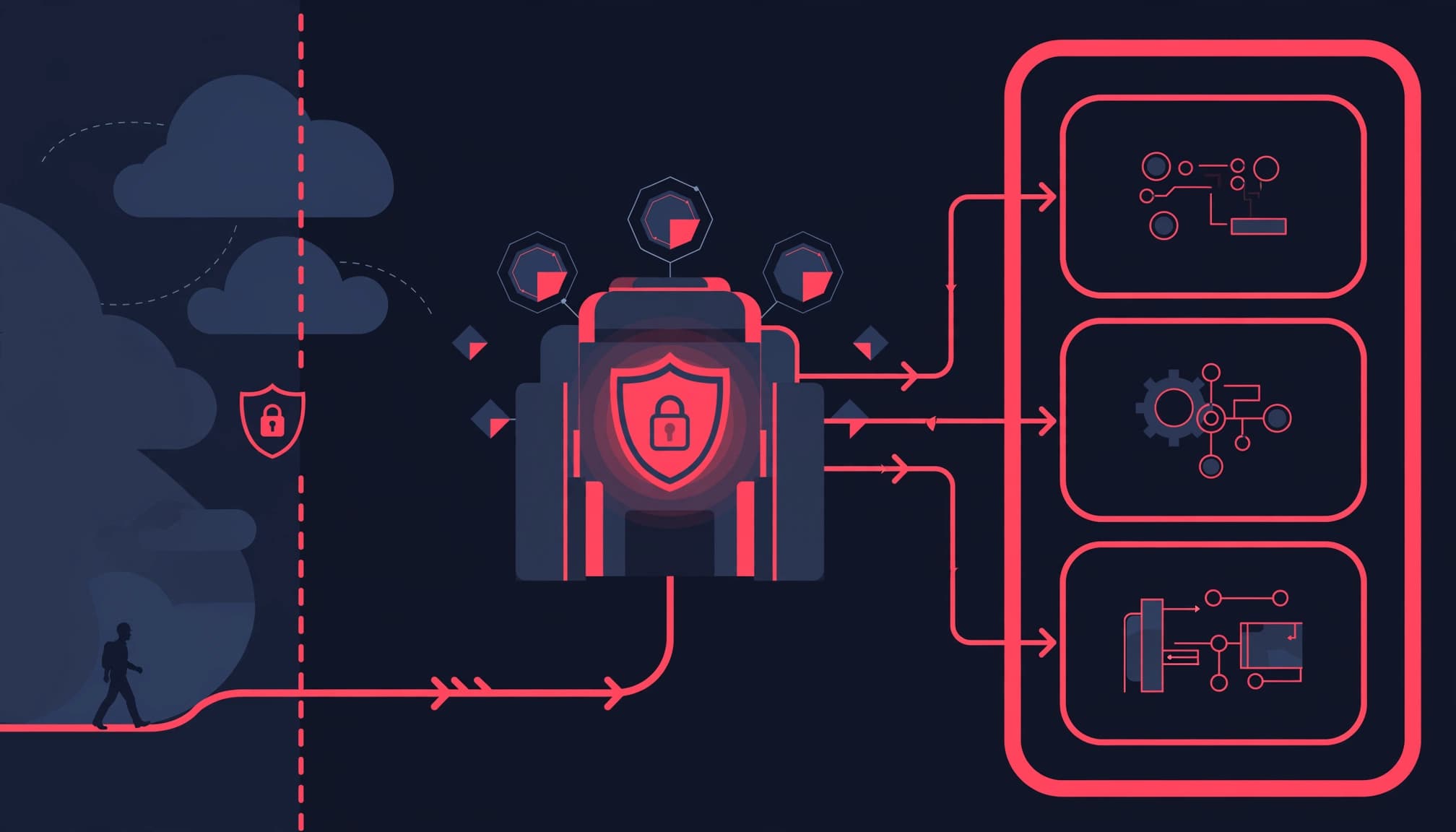
Control remote access before it reaches a controller
OEMs, integrators, maintenance firms, and internal engineers may need remote access. That access should pass through a secure gateway or jump host, not an always-on vendor tunnel.
Strong access management uses named accounts, multi-factor authentication where supported, time-limited access, pre-approved connections, and session logging. Remove access as soon as work ends. Shared administrator accounts make investigation harder. Permanent vendor connections make containment harder.
Vendor due diligence should cover remote-access methods, notification requirements, and incident responsibilities. Vendor offboarding should confirm that accounts, tokens, tunnels, and credentials are gone.
Limit movement inside the plant network
East-west segmentation limits what a compromised device can reach inside the plant. A compromised engineering workstation should not have open access to every PLC, HMI, historian, safety-related system, and production line.
Set separate zones for production lines and restrict the conduits between them. Allowlist communications that have a known business need. Limit administrative paths through firewalls and ACLs.
The Purdue model can help you see where trust changes between enterprise systems, site operations, supervisory systems, and cell controls. It is a planning aid, not a finished design.
Monitor OT-related ports such as 44818, 2222, 102, and 502, but treat port activity as one signal, not proof that a system is safe.
Apply access control best practices to both IT and OT
Least privilege, role-based access, strong passwords, prompt offboarding, and regular privileged-account reviews are core access management practices across both environments. Multi-factor authentication should protect external connections and key systems where technology supports it.
OT constraints may prevent you from using the same controls used in office IT. In a manufacturing environment, legacy OT systems and older industrial equipment may not support an agent, patching, or modern authentication.
Use compensating controls instead: jump hosts, application allowlisting, network restrictions, baseline configurations, and closer monitoring. Vulnerability management should prioritize risk, use passive discovery, and align changes with maintenance windows.
Safety and uptime come first. Changes need plant-owner approval, vendor input when needed, and a maintenance window that does not create a new operational risk.
Detect, Respond, and Recover Before a Cyberattack Stops Production
Prevention matters, but it is only one part of ot it convergence security for manufacturers. IT/OT convergence makes detection, response, and recovery shared business capabilities. NIST CSF 2.0’s Detect, Respond, and Recover functions push the right question: can your business identify a problem, contain it safely, and restore operations in the order they need to return?
Use centralized logging where practical. Alert on unusual remote connections, new privileged accounts, unexpected OT traffic, and changes to engineering systems. Include operational technology telemetry where practical, but don’t force unsupported tools into a safety-sensitive environment.
Prepare for ransomware, remote access abuse, and PLC tampering
Build separate playbooks for ransomware in office IT, a compromised vendor connection, the loss of an engineering workstation, and unauthorized PLC logic changes. These incidents carry different security risks and can cause different levels of production downtime.
Protect people and safety first. Then isolate affected systems, preserve evidence, contact the right internal and external experts, and avoid rushed changes that could create an unsafe state.
CISA advises reviewing logs for suspicious OT traffic and working with the PLC manufacturer if a controller may have been targeted. For Rockwell Automation systems, that can include comparing project files and AOIs for unexpected modifications.
Test recovery in the order your business needs it
Set recovery time and recovery point goals for authentication, file services, MES, historians, engineering workstations, controllers, and production lines. Your priorities may not match a generic IT recovery plan.
Test backup restoration. Keep protected offline or immutable copies where appropriate. Maintain configuration and logic backups, spare-equipment plans, and manual workarounds for critical operations.
Safely restarting physical processes may require safety checks, quality verification, supplier coordination, customer communication, and payroll continuity. Your disaster recovery planning needs all of those dependencies.
Give leaders a clear view of cyber and operational risk
A short monthly or quarterly dashboard can show critical assets inventoried, internet-exposed OT assets, MFA coverage for privileged accounts, access management reviews, unresolved high-risk findings, vendor access reviews, backup test results, recovery times, and systems without a tested recovery path.
The dashboard should show whether your security posture is improving across exposure, recovery readiness, and control coverage.
That is board-ready cybersecurity reporting for cyber security leaders when it answers four questions: What could hurt the business? Who owns it? What changed? What decision is needed?
If technology decisions feel scattered, risky, or too dependent on the wrong people, Get an Executive Technology Clarity Check.
Make IT and OT Security a Repeatable Operating Rhythm
Start with a technology health check that treats IT/OT convergence as one operating picture. Build a complete inventory of information technology, operational technology, systems, owners, and dependencies. Then remove direct internet exposure, tighten vendor pathways, segment high-value systems, improve identity controls, test backups, and run an incident exercise.
In the first month, document asset visibility, vulnerability management, and identity governance evidence. Review accounts, exposed services, vendor connections, recovery priorities, and data management responsibilities. Confirm where one failed system could stop a line or disrupt quality records.
In the second month, protect the highest-risk paths with account cleanup, MFA, access management, secure gateways, firewall rules, network segmentation, safe patching, and tested backups. Apply compensating controls where legacy OT systems or industrial equipment cannot support modern tools.
In the third month, document evidence, run a tabletop exercise, close urgent gaps, and produce a board-ready risk summary. Every action needs an owner, deadline, success measure, and escalation path.
Connected production initiatives, digital transformation, and a smart factory roadmap can improve operational efficiency. They can also introduce security debt through new vendors, cloud services, and supply chain dependencies. Include these dependencies in planning before modernization expands.
For transaction readiness, technology and cybersecurity diligence should cover IT infrastructure, OT and industrial equipment, data privacy, cybersecurity incidents, vendor and supply chain dependencies, intellectual property, software and open-source licenses, AI tools and training data, cloud services, regulatory obligations, and recovery evidence.
Representations and warranties state factual assurances as of specified dates. Covenants impose actions or restrictions between signing and closing. Closing conditions require specified deliverables, consents, or remediation before the buyer must close.
Diligence findings should be reflected accurately in disclosure schedules. They shouldn’t be hidden behind broad materiality qualifiers or knowledge qualifiers. Clear disclosure helps buyers and sellers allocate known issues intentionally.
Key negotiation points include whether a known vulnerability is remediated before closing or handled through a covenant. The parties may also consider a special indemnity and how indemnification caps, baskets, exclusions, and notice procedures apply.
Survival periods can differ by claim type. Escrow or representation-and-warranty insurance (RWI) may also be appropriate, depending on the transaction. RWI doesn’t replace diligence and may exclude known cyber, privacy, IP, regulatory, or open-source issues.
Deal requirements vary by transaction structure, risk allocation, and jurisdiction. No provision is universally required, so legal and technology advisers should align the documents with the facts.
Report progress and open risks to leadership on a steady cadence. Cyber insurance renewal, customer requirements, NIST CSF 2.0, NIST SP 800-82, and CISA Critical Manufacturing guidance can inform the work. None replaces business judgment.
A fractional CTO, fractional CISO, or virtual CISO can help when internal teams are stretched. The business must still own the decisions, deadlines, and accepted risk.
Start with a focused 90-day technology plan
In the first month, identify critical assets, owners, dependencies, exposed services, vendor paths, and recovery priorities. Confirm where a single failed system could stop a line or disrupt quality records.
During the second month, protect the highest-risk paths with account cleanup, MFA, access management, secure gateways, firewall rules, network segmentation, safe patching, and tested backups. Use compensating controls where legacy OT systems or industrial equipment cannot support modern tools.
In the third month, document evidence, run a tabletop exercise, close urgent gaps, and produce a board-ready risk summary. Every action needs an owner, deadline, success measure, and escalation path.
Know when you need executive technology leadership
An MSP may operate tools, but it doesn’t automatically provide technology leadership. Someone still needs to connect plant uptime, office IT, cyber risk, vendors, compliance, and investment decisions.
A fractional CTO or outsourced CTO can provide part-time executive direction when the gap is strategic and ongoing. An interim CTO is usually the better fit when a leadership seat is open or the business needs rapid stabilization. A fractional CIO may be the right partner when internal IT operations, data, and reporting need stronger ownership.
The right support improves stakeholder alignment, vendor accountability, strategic technology planning, and confidence in decisions. Learn more about when to hire a fractional CTO before committing to a full-time role.
Frequently Asked Questions
What is OT/IT convergence security for manufacturers?
OT/IT convergence security treats office systems, plant systems, users, vendors, and production dependencies as one connected risk environment. The goal is to improve visibility, strengthen boundaries, and protect uptime, safety, quality, and recovery.
How can manufacturers separate IT and OT environments?
Use distinct enterprise IT, industrial DMZ, secure gateway, and plant network zones. PLCs, SCADA systems, HMIs, and engineering workstations should not be directly exposed to the public internet, and communication between zones should be limited to approved business needs.
How should manufacturers secure remote vendor access?
Require named accounts, multi-factor authentication where supported, time-limited access, pre-approved connections, and session logging through a secure gateway or jump host. Remove accounts, tokens, tunnels, and credentials when the work ends.
What cybersecurity controls work with legacy OT systems?
Legacy industrial equipment may not support agents, patching, or modern authentication. Use compensating controls such as network segmentation, application allowlisting, jump hosts, baseline configurations, restricted administrative paths, and closer monitoring.
How should manufacturers test recovery after a cyberattack?
Test restoration for authentication, file services, MES, historians, engineering workstations, controllers, and production lines according to business priorities. Recovery testing should also confirm safety checks, quality verification, manual workarounds, supplier coordination, and the order in which operations can safely resume.
Keep Production Moving Under Pressure
The strongest program doesn’t force OT to behave like office IT; IT/OT convergence aligns governance across both environments. It sets boundaries, access rules, monitoring, ownership, and recovery plans that protect operational technology and the physical processes behind production, safety, and recovery.
Start with the systems that keep production moving. Remove direct exposure and strengthen access management. Test recovery before a crisis. Then give leaders a simple view of the remaining security posture and priorities for the manufacturing environment.
Clear ownership and tested recovery create calmer leadership under pressure.