
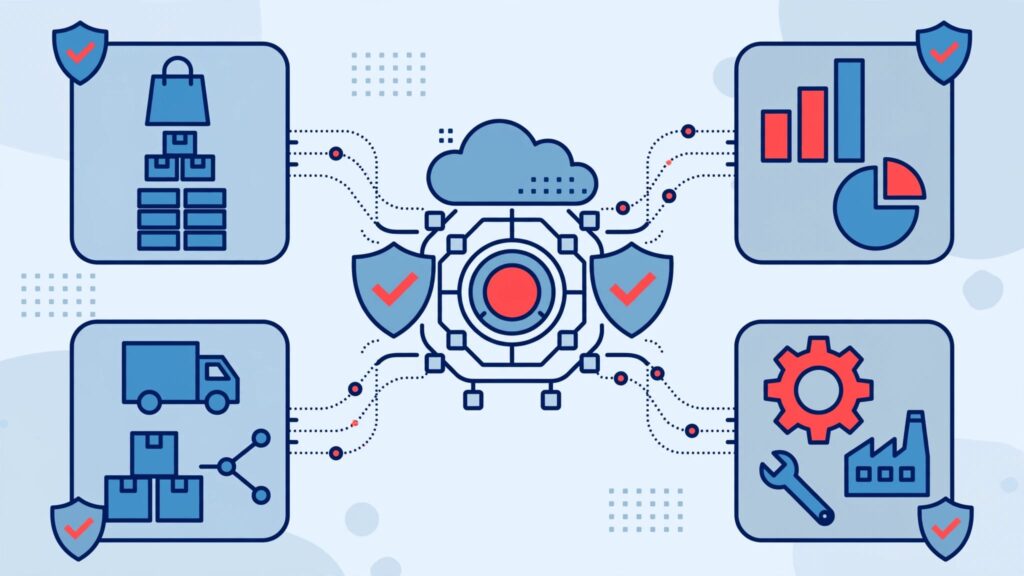
You can own several business units and still lack one reliable picture of technology cost, risk, and performance. Each unit keeps moving, but shared customers, financial reporting, and security can expose the gaps between them.
A unified approach can give you clearer control, provided you protect the workflows that make each business effective. Start by deciding what must be shared, what should stay local, and who settles the tradeoffs.
Key Takeaways for CEOs
- Centralize security standards, digital workspace guardrails, and major vendor decisions where inconsistency creates business risk. Use data centralization for shared definitions, not every data decision.
- Give business units authority over local workflows within clear boundaries.
- Name one executive owner, then migrate in stages with business acceptance and recovery checks.
- Measure technology centralization through financial results, operating performance, and risk visibility, not the number of systems removed.
Choose What Technology Centralization Should Control
Centralization brings selected systems, standards, budgets, and decisions under shared authority. Those choices don’t all need the same operating model.

Understand the central and local tradeoffs
A centralized IT model gives one team authority over shared technology decisions. That can improve purchasing discipline and consistency. It can also create approval queues or make critical dependencies a single point of failure.
A decentralized IT model gives business units more freedom. Local teams can shape digital workspaces around customer needs and respond without waiting for corporate approval. The tradeoff is harder enterprise oversight when each unit chooses different tools, controls, and reporting definitions.
Your decision should reflect how closely the businesses operate together. Common ownership alone doesn’t mean identical operating needs.
Use a federated model where differences matter
A federated model is a hybrid approach that combines shared guardrails with delegated decisions. Central leadership owns enterprise standards. Business units retain authority over approved local choices through distributed technology management.
You might share identity management, security requirements, financial definitions, and vendor due diligence. Data centralization can establish common definitions and controls while leaving locally specific data needs with each unit. Shared digital workspaces can provide consistent access while specialized production or customer-service applications support local workflows.
Make the boundary explicit. Your technology governance for CEOs should define which decisions are shared and which remain local. It should also clarify data governance and how exceptions get resolved.
Put Decision Rights Before Platform Decisions
Consolidation stalls when everyone has input but nobody has authority. Establish ownership before asking teams to consolidate systems.
Name the executive and business owners
One executive should own the overall business technology strategy and enterprise tradeoffs. That person needs authority over priorities, architecture standards, and escalation.
Each critical service also needs a business owner and a technology owner. Finance validates costs. Legal advises on obligations. Security evaluates exposure. Vendors provide evidence and delivery capacity.
Document these responsibilities in a decision rights map that includes data governance. “IT owns it” doesn’t identify who accepts disruption, approves spending, or answers for the result.
Your CEO role is to establish authority and resolve competing business priorities.
Give exceptions a controlled path
Local exceptions need a business reason, an accountable owner, funding, a review of risks and security measures, and a review date. Keep permanent exceptions visible.
Escalate decisions involving data centralization, shared customer data, critical operations, security standards, digital workspaces, or material vendor commitments. Delegate routine choices within approved boundaries to support distributed technology management.
The NIST Cybersecurity Framework 2.0 includes a Govern function covering cybersecurity strategy, responsibilities, and supply-chain risk. Use that structure to connect cybersecurity oversight with enterprise decisions.
An approval process also needs response expectations. Otherwise, frustrated teams will find workarounds.
Build a Systems Inventory Around Business Dependencies
Before you retire applications or begin data centralization, understand what depends on them.
Your systems inventory should cover applications, IT infrastructure, integrations, data stores, digital workspaces, vendors, contracts, licenses, SaaS management, and key-person dependencies. Record the business owner, renewal date, critical workflows, and recovery requirements.
For effective distributed technology management, interview operators across every unit. Ask where staff re-enter data, reconcile spreadsheets, wait for approvals, or compensate for unreliable systems. Those answers reveal operational friction that purchasing records won’t show.
Rank systems by their effect on revenue, customers, financial reporting, data quality, compliance, and service delivery. Two overlapping tools may support different workflows or regulatory requirements.
During post-merger technology integration, this baseline also supports technical due diligence. Don’t treat an acquired company’s incident-free history as proof that its controls are sound.
A duplicate application becomes a retirement candidate only after you identify the workflows, records, and obligations it supports.
This is application portfolio rationalization grounded in business consequences, rather than a software-count reduction exercise.
Choose Shared Platforms Around Real Operating Needs
A software platform evaluation should begin with requirements and business acceptance criteria. Familiar brands don’t settle the decision.
Separate shared access from shared applications
Identity platforms such as Microsoft Entra ID and Okta help evaluate shared access management, including secure digital workspaces for remote work. An ERP platform addresses a different question: which finance and operational processes should use a common system?
You may need consistent access controls before you’re ready to replace local applications. Data centralization can support shared financial reporting without moving every unit onto one ERP.
Common platform standards support distributed technology management while allowing units to retain local application choices. Digital workspaces should also fit how people collaborate and complete daily tasks.
Evaluate integration effort, support coverage, security, migration complexity, vendor exit arrangements, and cloud computing options. Include end users in demonstrations and reference checks. A purchasing discount won’t compensate for a broken workflow.
Define data before consolidating it
Before data centralization, agree on what information means and how it will be used. Data warehouses support structured reporting and analysis, while cloud data lakes can hold broader datasets.
Neither resolves conflicting definitions of customer, revenue, or inventory. Consistent definitions can establish a single source of truth.
Your data governance framework needs named owners, agreed definitions, validation rules, and access controls. These practices protect data quality before records are copied or consolidated.
Set data governance requirements for data privacy, data security, and retention before moving records into a shared repository. The European Commission’s GDPR processing principles include purpose limitation, data minimization, and storage limitation. Central storage doesn’t remove those obligations.
Apply the same discipline to artificial intelligence governance. Shared AI tools need acceptable-use rules, approved data access, and AI vendor due diligence.
Migrate in Stages Without Losing Operational Control
A successful pilot must become a supported service. Fund migration, training, change management, security validation, and ongoing support, with clear ownership.
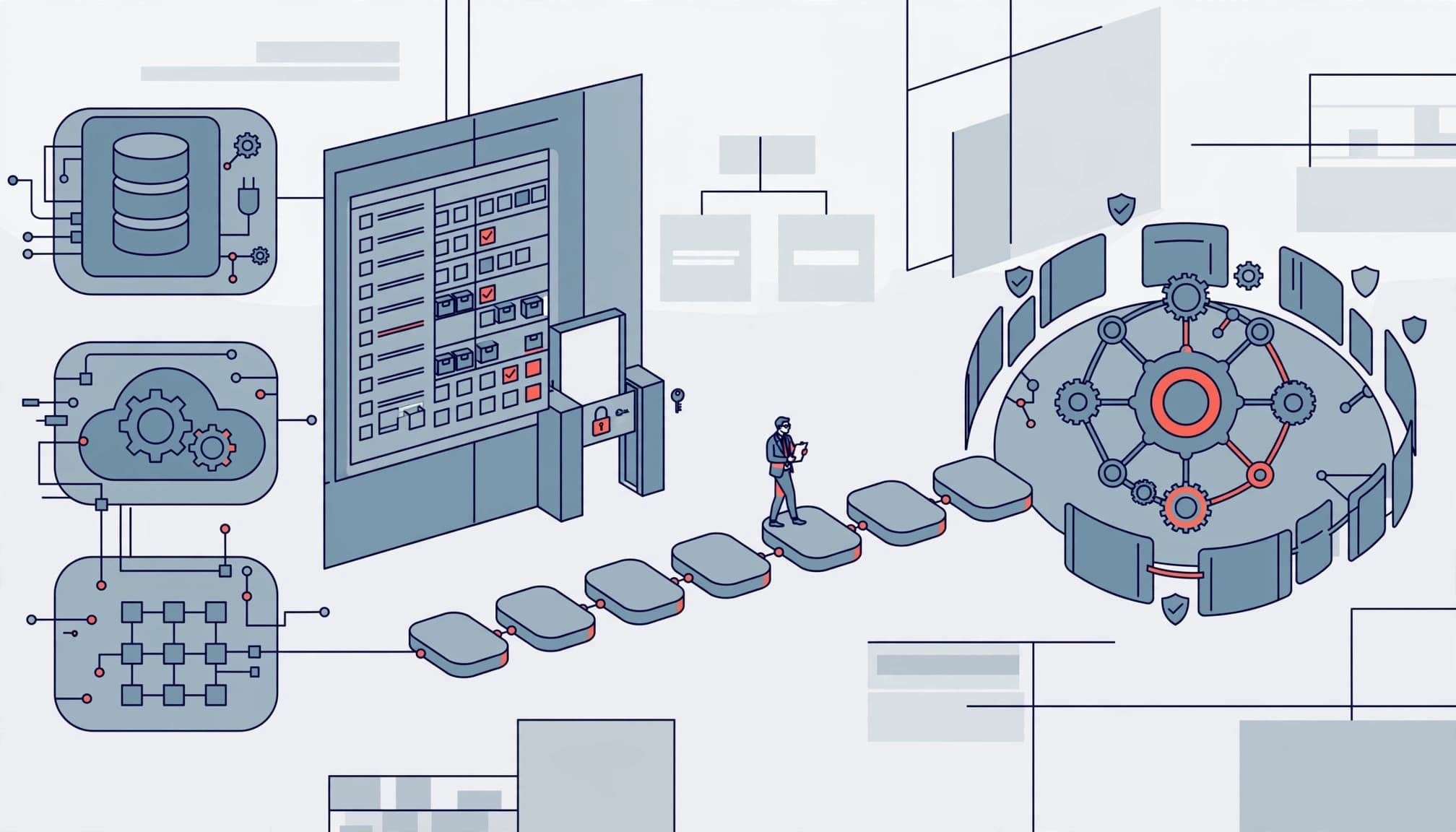
Use a sequence with explicit decision gates:
- Establish the inventory, dependencies, baseline costs, and operating measures before selecting candidates for data centralization.
- Stabilize material access, backup, and recovery weaknesses before expanding shared dependencies, including those tied to cloud computing.
- Pilot one bounded capability, such as digital workspaces, with a business unit that can provide meaningful operating feedback. Preserve defined local control through distributed technology management.
- Expand only after business acceptance, data quality checks, data reconciliation, support readiness, and rollback arrangements are confirmed.
- Retire replaced services after resolving contracts, records, integrations, and vendor offboarding obligations.
Put the major moves into a board-ready technology roadmap. Each initiative needs an owner, dependency, budget assumption, acceptance criterion, and decision date tied to intended business transformation outcomes.
Your 12-month technology roadmap is a planning horizon, not a promise that every migration will finish within it.
Fund staff training, change management, and temporary operating capacity. Teams still have customers to serve while systems change.
Before consolidating critical services, test business continuity and disaster recovery arrangements. A shared platform can become a single point of failure and widen the impact of an outage. Check emergency access, backup separation, and restoration evidence.
Pause expansion when the pilot exposes unresolved operational harm. A working demonstration doesn’t establish production readiness.
Calculate Technology ROI Without Hiding Transition Costs
Technology spend optimization requires a complete cost picture. Resource consolidation should reduce shared-service costs, not just software counts.
Compare the current operating baseline with the proposed model.
| Cost area | Current baseline | Proposed model |
|---|---|---|
| Software | Contracts, licenses, unused seats | Shared contracts, justified local tools, and data centralization |
| Delivery | Internal labor and external support | Central services, local capacity, support obligations |
| Integration | Existing maintenance and manual work | New interfaces, data cleanup, ongoing maintenance |
| Transition | Existing commitments | Migration, training, parallel operation, exit fees |
Separate recurring operating costs from one-time transition costs. Otherwise, a lower future run rate can obscure an expensive change.
Assess cost effectiveness by calculating net recurring savings after retained local systems, added central support, and data centralization costs. For a cash-saving initiative, payback is one-time transition cost divided by monthly net cash savings.
Don’t count staff time as cash savings unless it changes actual spending. Track released capacity separately and specify how the business will use it.
Measure operational efficiency through outcomes such as cost per order, onboarding time, financial-close effort, and customer-service turnaround. Record baseline measures, including data quality, before migration.
Don’t count the same improvement twice. Reduced manual reconciliation can improve operating capacity and reporting speed, while data quality helps verify that reporting is reliable.
Keep risk reduction distinct where you can’t support a credible financial estimate. A simpler platform estate doesn’t automatically mean lower risk.
Give Leadership a Reporting Rhythm It Can Trust
Central standards need ongoing oversight. Without it, exceptions grow and the roadmap becomes a list of competing requests.
Report decisions, exposure, and outcomes
Use a monthly technology operating rhythm with business-unit leaders, Finance, and the executive technology owner. This connects enterprise oversight with distributed technology management.
Review financial results, IT operations, service performance, critical risks, adoption problems in digital workspaces, and upcoming decisions. Track data quality and whether data centralization improves visibility without obscuring unit-level accountability.
Your board-ready reporting should show material changes, accountable owners, actions, and risks above the agreed cyber risk appetite.
Include concentrated vendor dependencies and recovery-test results. Use technology dashboards and data warehouses, where appropriate, to help you decide whether to continue, correct, or pause an initiative.
Review access and support outcomes for digital workspaces so adoption issues don’t hide in service metrics.
The board needs evidence that management understands the exposure. A green project status alone doesn’t establish control.
Close the technology leadership gap deliberately
Your IT manager or managed provider may handle IT service management well without authority over enterprise tradeoffs. Assess whether your executive technology leadership covers that responsibility.
Fractional CTO services can provide ongoing executive ownership when the scope doesn’t require a full-time role. Interim CTO services fit a defined leadership transition.
A fractional CIO may suit business systems and service governance. A fractional CISO may be needed for security leadership. Choose the role around the decisions you need owned.
Keep business accountability inside your leadership team, regardless of who supplies delivery capacity.
Frequently Asked Questions
Does centralization guarantee GDPR compliance?
No operating model guarantees compliance. Where GDPR applies, identify controller responsibilities, lawful processing, access requirements, and retention obligations.
The European Commission’s guidance on GDPR accountability states that controllers must comply with processing principles and demonstrate compliance. Data centralization can support reliable evidence collection when data quality and ownership are clear, but it does not transfer accountability.
Should every business unit use the same ERP?
That decision depends on process similarity, reporting needs, regulatory requirements, and integration cost. Start with common financial definitions and controls.
Consolidate ERP systems where the business case supports it. Preserve justified local capabilities where replacement would damage operations or create disproportionate transition costs.
Start With One Clear Leadership Decision
Technology centralization works when shared authority reduces drag without weakening local execution. Your first decision is who owns the enterprise tradeoffs.
Establish the boundaries, verify the dependencies, and sequence changes around business outcomes. Clearer ownership makes the next investment easier to judge.
If those decisions remain scattered, Get an Executive Technology Clarity Check to identify what needs executive attention first.