
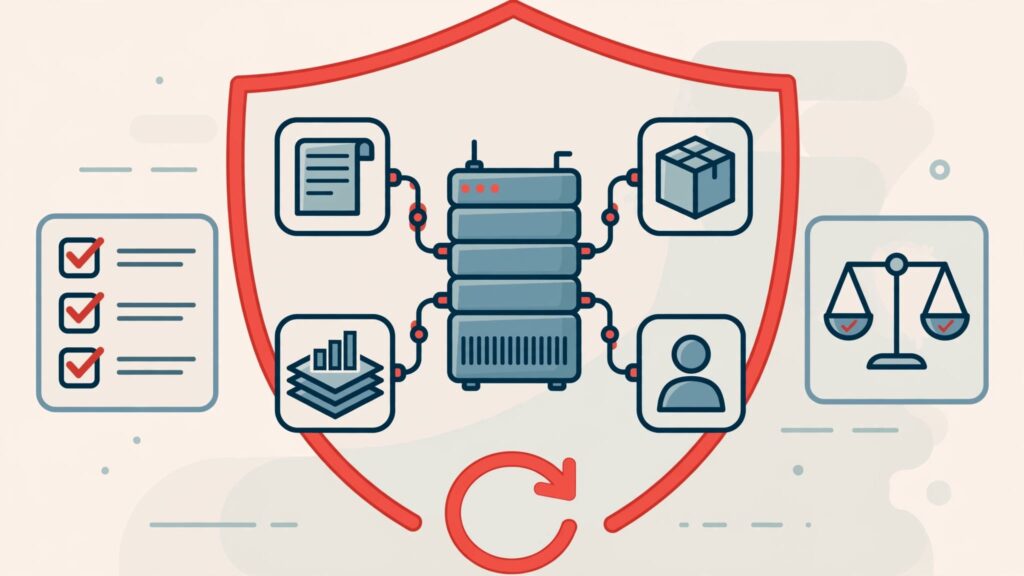
Your new core system can go live while the business loses confidence in its numbers. A useful data migration risk assessment shows you what could interrupt billing, distort inventory, expose sensitive records, or leave Finance unable to close.
You need evidence of readiness, clear ownership, and an executable recovery plan before approving the replacement.
Start by identifying which business capabilities must survive the change and what would prove they remain dependable.
Key Takeaways
- Assess a migration strategy against exposure across revenue, operations, financial reporting, and customer commitments before choosing tools.
- Require reconciliation of records, balances, permissions, and business workflows, with named owners for exceptions.
- Approve cutover only when recovery, decision rights, and post-migration monitoring are tested and understood.
Start Your Data Migration Risk Assessment With Business Exposure
Your systems inventory needs to show what depends on the platform, not simply which applications exist.
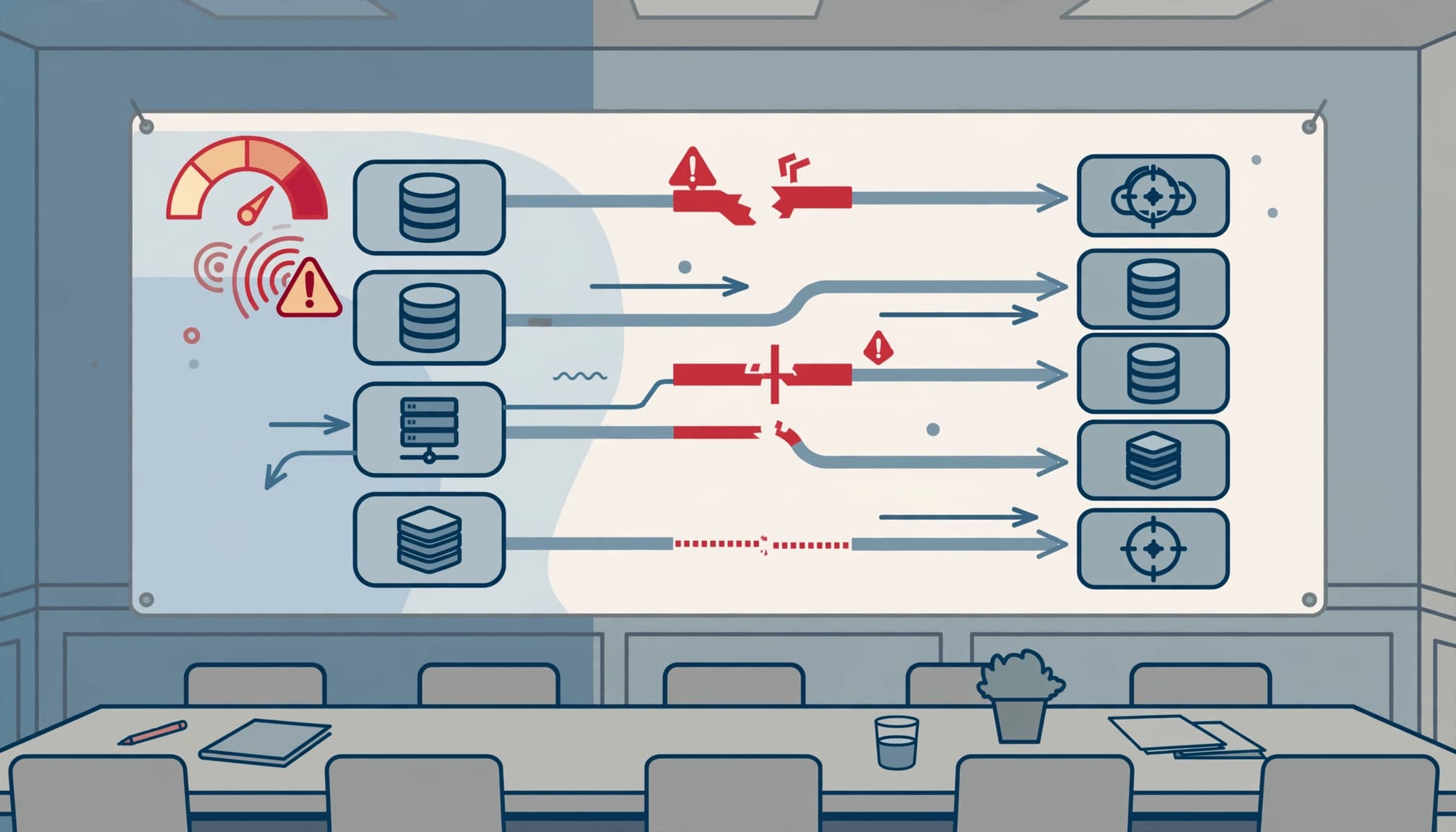
Identify the capabilities you must protect
Trace order-to-cash, procure-to-pay, payroll, inventory, customer service, and financial close wherever they depend on the replacement.
Record the upstream sources, downstream interfaces, spreadsheets, reports, and people supporting each capability. Include identity services and administrator access. A complete database transfer won’t help if employees cannot authenticate or customers receive incorrect communications.
Use the ERP replacement readiness checklist to connect these dependencies with selection and implementation decisions before signing.
Set decision rights before technical work starts
Name an executive sponsor, delivery lead, Finance owner, security owner, and business process owners. Your governance framework should distinguish execution authority from authority to accept business risk.
Confirm who can stop cutover, approve emergency spending, contact vendors, and manage stakeholder communication with customers. Assign alternates.
This is technology governance under pressure. If those decisions depend on one unavailable person, your migration carries an avoidable continuity risk.
Build a Risk Register Leadership Can Use
Describe each failure as a business consequence. “Mapping issue” gives you less useful information than “credit balances may become amounts customers owe.”
Use a compact register to connect exposure with proof.
| Failure mode | Business exposure | Required evidence | Accountable owner |
|---|---|---|---|
| Missing open invoices | Billing and cash collection disruption | Invoice-level reconciliation and approved balances | Finance |
| Incorrect item units | Purchasing and inventory errors | Approved unit conversions and transaction tests | Operations |
| Broken customer identifiers | Orders linked to incorrect accounts | Relationship checks and end-to-end order tests | Customer operations |
| Excessive migrated permissions | Unauthorized access to sensitive records | Role review and access-removal tests | Security |
| Inaccessible history | Audit, legal, or customer-service gaps | Archive retrieval and retention tests | Records owner |
Add the current control, unresolved exception, corrective action, evidence location, and decision deadline to each entry.
Prioritize operational risks by business impact, likelihood, and difficulty of detection. A mismatch discovered during loading is different from one that survives until financial close.
Your board-ready risk summary should show remaining exposure and decisions needed. Avoid reporting readiness as a single percentage that hides material gaps.
Profile and Map Data Before Approving the Replacement
Poor data quality becomes more expensive under a new operating model. Resolve definitions before weighing migration speed.
Profile the records you intend to move
Before database migration, examine duplicates, missing identifiers, invalid dates, inconsistent units, orphaned records, and conflicting account statuses. Check attachments and audit history alongside transaction tables.
Separate records into migrate, archive, and exclude categories. Business owners should approve those choices and any data cleansing rules.
Keep the original extract and a traceable record of changes. Otherwise, your team may correct a balance without being able to explain why.
The data quality checks before ERP migration connect this work with broader implementation readiness.
Test meaning, not only field compatibility
Data mapping should connect source fields to target fields and confirm their business meanings. Review currency, time zones, rounding, status codes, identifier lengths, and parent-child relationships.
Pay attention to open orders, credit notes, partially fulfilled transactions, and inactive customer accounts. Their treatment affects live work.
Document every transformation and name its approver. Select one system of record for each critical dataset during overlap.
That reduces conflicting updates and prevents teams from treating competing reports as equally authoritative.
Choose a Migration Pattern Your Business Can Sustain
Batch migration moves data in scheduled groups. Incremental migration transfers changes after an initial load. Change data capture identifies inserts, updates, and deletes for replication; real-time requirements define how quickly those changes must reach the target.
These describe data movement. Big-bang and phased approaches describe how you introduce the new system to the business.
Choose both deliberately. Define where users can write during overlap, how deletions are handled, and which validation processes establish a consistent reconciliation point.
Your migration process and technology roadmap must account for data cleansing, rehearsals, staff availability, temporary support, and overlapping license costs. Include those transition costs in technology ROI calculations.
During vendor due diligence, confirm export rights, formats, extraction time, fees, subcontractor access, and termination support for legacy systems. For a database migration, request a representative extract before committing, especially if the replacement also includes a cloud migration.
If the vendor alone understands the data model, knowledge transfer belongs in the migration scope. Your exit plan needs enough documentation and access for another team to operate it.
Tie Privacy and Retention Obligations to Evidence
Your governance framework should connect each obligation to a control, an owner, and a test result. A generic compliance label gives leadership little assurance.
Control sensitive data throughout the transfer
Identify personal, financial, employee, and regulated records in production, staging, test environments, and backups. For a cloud migration, include each of these environments in the assessment.
GDPR Article 5 principles include accuracy, storage limitation, integrity, and confidentiality. Translate applicable compliance requirements into approved retention rules, restricted access, protected transfer methods, and documented exception handling.
If HIPAA applies, include electronic protected health information across environments that create, receive, maintain, or transmit it. Engage privacy and legal owners on jurisdiction, transfer, and contractual questions that affect regulatory compliance.
Keep required history usable and controlled
Historical records may belong in a read-only archive rather than the replacement platform. That choice still needs an owner.
Test retrieval, access restrictions, retention enforcement, and the relationship between archived records and active accounts. Keep required audit trails and supporting metadata understandable.
Record the obligation, affected dataset, control, evidence, and approval in one place. For acquisition readiness, this provides defensible information governance rather than an unsupported statement that historical data was preserved.
Prove Reconciliation, Workflows, and Recovery
A successful database migration load proves that data transfer ran, not that the business is ready. Your validation processes must show that teams can operate with the resulting data.
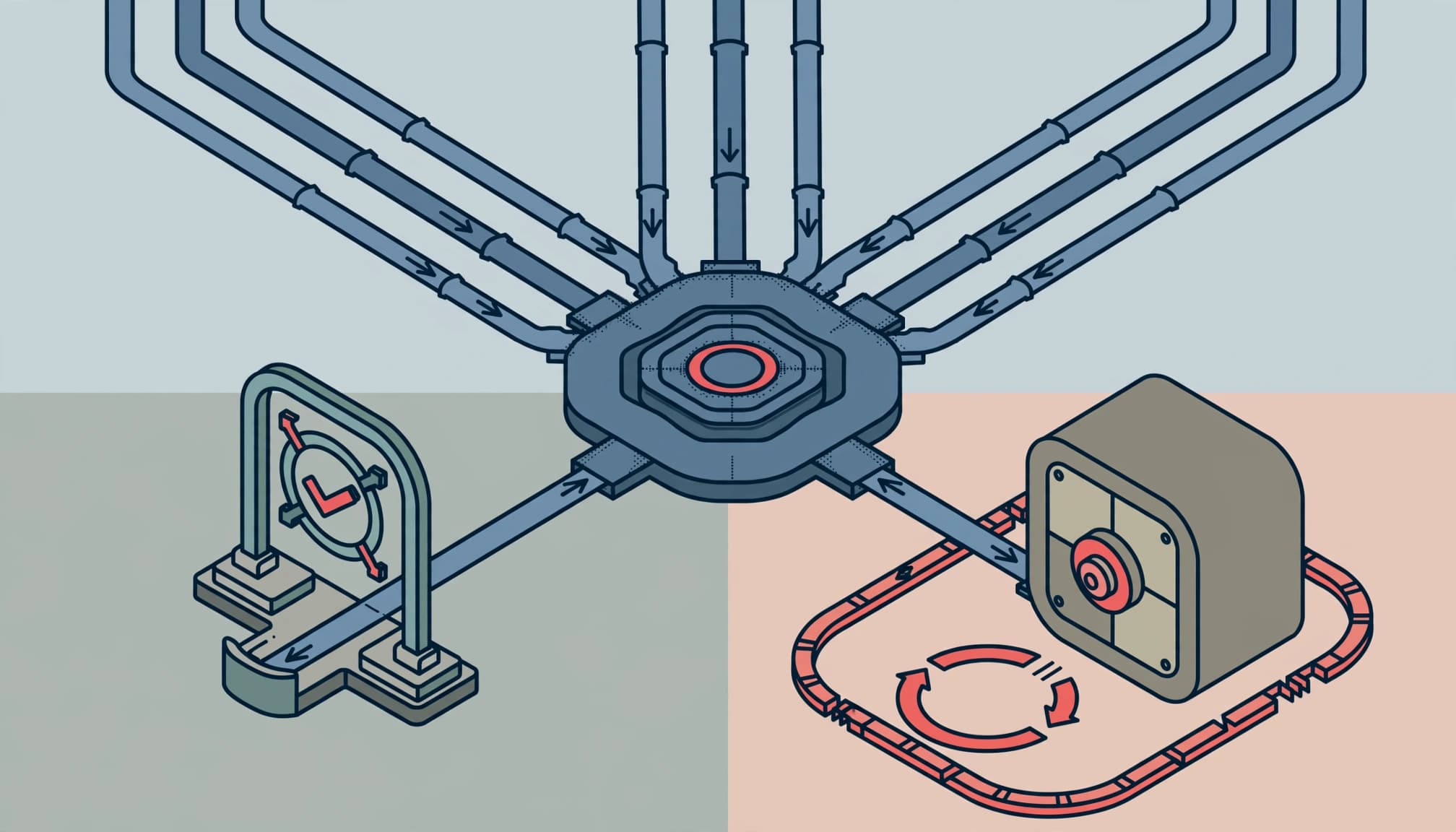
Reconcile against the same transaction boundary
Run mock conversions as part of the migration process. Use pilot testing to compare counts, balances, open transactions, inventory quantities, customer and supplier relationships, permissions, and downstream reports.
Counts alone miss substitutions, duplicate records, and incorrect values. AWS DMS data validation compares corresponding source and target rows. You still need business checks for transformed values and workflows.
Test order creation, invoice posting, customer communications, financial close, and access removal. Confirm compatibility across identity, reporting, and downstream interfaces.
Comparing a live source with an earlier target extract can create false mismatches. Reconcile both against a documented transaction boundary.
Rehearse failure and the cutover decision
Set business-approved go/no-go criteria before the final rehearsal. Unresolved material discrepancies and untested recovery should remain visible decision barriers.
Test restores from backup solutions, emergency access, vendor escalation, and business continuity procedures. Define recovery objectives around the services your business needs. If cloud migration is in scope, include provider recovery procedures in your tests.
Your cutover strategy must explain what happens to transactions entered after cutover. Restoring the old system can cause data loss by discarding legitimate new activity unless you capture and reconcile it.
Record timestamps, results, decisions, and unresolved findings. Give each high-risk dependency a fallback, an owner, and a clear stopping point.
Monitor Through the First Close and Reporting Cycle
Monitoring continues after launch, including through the first close and reporting cycle. Treat that period as a post-migration review. Some defects appear only when billing runs, reporting periods change, or downstream systems process migrated history.
Use daily validation processes during hypercare to review failed transactions, unreconciled balances, interface exceptions, access problems, support demand, and manual corrections. Set business-approved escalation thresholds and owners.
When a discrepancy appears, follow a repeatable diagnostic sequence:
- Confirm the source, target, and transaction boundary used in the comparison.
- Isolate affected records and trace them through extraction, transformation, loading, and downstream processing.
- Correct the cause, rerun reconciliation, and check whether related records share the defect.
AWS DMS data resync can repair inconsistencies detected by its validation. Investigate the cause and confirm the outcome before closing the issue.
Keep the legacy platform available until reconciliation, required archive access, and business acceptance are complete. Define hypercare exit criteria around stable operations and resolved findings, not elapsed time alone.
FAQs About Assessing Migration Risk
Does zero-acceptance sampling prove data integrity?
No sampling approach proves every migrated record is correct. Zero-acceptance sampling can reject the sampled population when it finds a defect under the approved plan.
In regulated work, your quality function should approve the rationale, coverage, and response to defects. Don’t treat sampling as a universal regulatory requirement. Use full-population checks for critical balances, relationships, and transformation rules.
What should you require from migration tools and leadership?
Check coverage for your data types, transformations, change capture, validation, exception reporting, and reruns. Review when validation happens: AWS DMS validation task settings describe checks that begin after a table’s full load when enabled.
Your business owners approve usability and correctness. An interim CTO or fractional CTO can coordinate evidence and tradeoffs when you have a technology leadership gap. The executive sponsor remains accountable for accepting residual risk.
Approve the Replacement With Evidence You Can Defend
Before committing to cutover, require clear scope, named owners, reconciled results, and tested recovery. Keep residual risk visible through a post-migration review until the business has accepted it.
You don’t need personal knowledge of every transformation. You need evidence that supports the decision.
If ownership or readiness remains unclear, Get an Executive Technology Clarity Check before the replacement becomes an operating problem.