
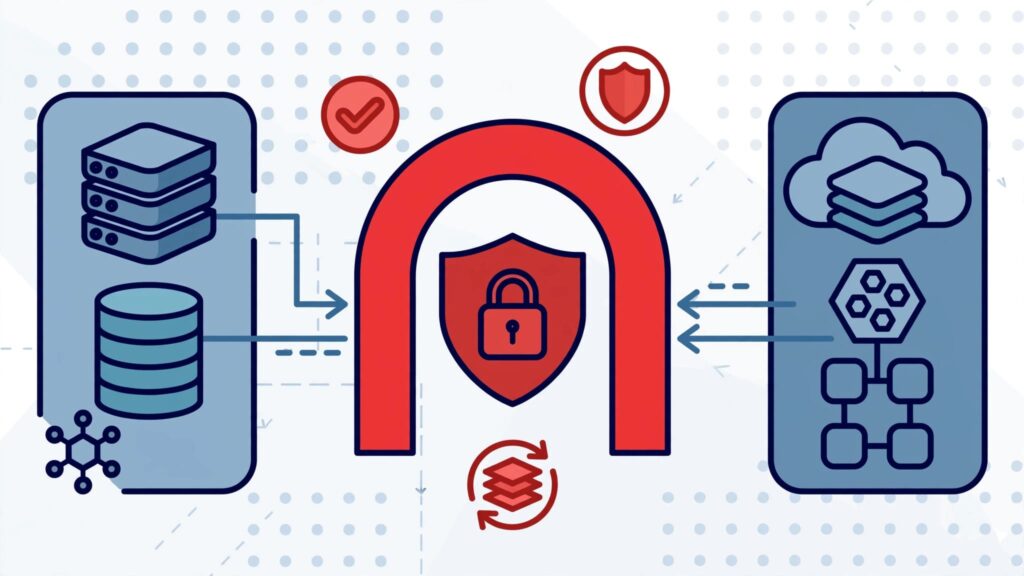
Your joint venture can inherit a partner’s technology risk before it delivers its first customer outcome. A shared account, data feed, or vendor connection can create obligations your leadership team hasn’t agreed to own.
Joint venture technology governance gives you clear authority before those connections become operational dependencies. You need to know what can be shared, who approves it, and how the business keeps operating if the relationship changes.
Start with those decisions before you approve the integration schedule.
Key Takeaways
- Define decision rights through corporate governance before granting system access or committing technology spend.
- Confirm data, software, and AI rights against contracts and operating evidence.
- Make connectivity conditional on tested access controls, recovery, and incident authority.
- Agree on separation and vendor offboarding while both partners still have aligned interests.
- Use risk management to give leadership a short view of material risks, accountable owners, and decisions due.
Make Joint Venture Technology Governance Executable
Match the operating model to the legal structure
A contractual joint venture relies on partner agreements without creating a jointly owned entity, as some strategic alliance arrangements do. An equity joint venture uses equity ownership in a jointly owned entity, sometimes organized as a limited liability company. Counsel should confirm how the chosen legal structure and jurisdiction affect corporate governance.
Either structure needs explicit technology responsibilities and governance mechanisms aligned with its operating model. An equity stake doesn’t establish who controls cloud administration, customer data, software releases, or security exceptions.
Define which services the venture operates itself and which it receives from each parent. Identify funding responsibilities, service commitments, and dependencies that could interrupt delivery or threaten financial stability. Align the management structure and operational design with these responsibilities. The venture’s legal and technology arrangements should describe the same business.
Separate recommendations, approvals, and oversight
Create a decision rights map for architecture, spending, data access, vendors, and material risk acceptance. Use governance mechanisms to separate recommendations, approvals, and oversight.
Name one executive accountable for the overall technology answer. Operations owns business requirements. Finance validates funding. Legal defines contract provisions and regulatory requirements. Technical leaders recommend and deliver.
Reserve major commitments and risks outside approved limits for the appropriate board or partner committee. Define escalation deadlines and dispute resolution procedures in the joint venture agreement.
Routine decisions need delegated authority. Otherwise, every change becomes a negotiation between parent companies, and delivery slows while costs continue.
Define the Boundary Before You Share Access
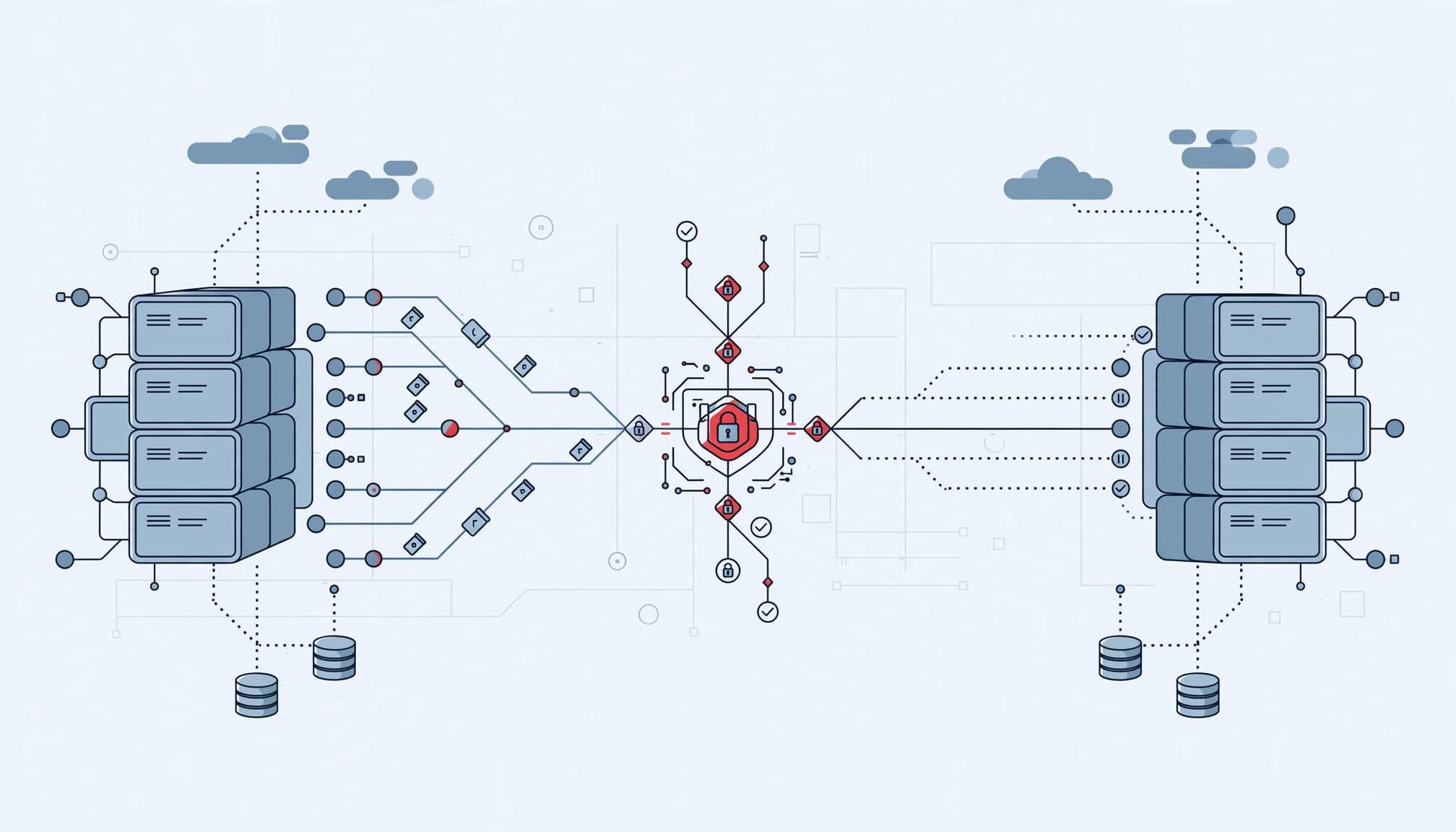
Build an inventory that explains business dependence
Your systems inventory should cover applications, infrastructure, identities, integrations, repositories, and critical vendors. Record each item’s owner, business purpose, data involved, and consequence of failure.
Trace parent-company dependencies. A venture may rely on a parent’s identity platform, finance system, backup service, or software agreement without having independent rights to use it.
Use the same evidence discipline as a technology due diligence checklist. Architecture diagrams, contracts, account records, and incident histories should support the story leadership hears.
Undocumented connections need attention before you add more.
Specify permitted data flows and users
Define what data crosses the boundary, why it’s needed, where it goes, and how long it’s retained. Include customer records, employee information, financial data, product designs, and operational telemetry.
Screen controlled technical data for export controls before granting access. Grant access only for approved tasks, rather than giving blanket access to a parent’s environment because it’s easier to configure.
Require named accounts, least privilege, multifactor authentication where supported, logging, and timely access removal. Separate administrative privileges from ordinary work.
NIST’s supply-chain cybersecurity guidance, SP 800-161 Rev. 1, Update 1, provides a useful reference for managing these dependencies. It doesn’t prescribe a single architecture for your venture.
Resolve Rights and Regulatory Limits Before Integration
Trace intellectual property to the actual assets
Distinguish the intellectual property each partner brings from technology developed within the venture. The joint venture agreement and related contract provisions should define ownership, licenses, improvements, and commercialization rights. They should also address continued use after termination and rights needed for agreed exit strategies.
Check chain of title against employee, founder, contractor, and vendor agreements. Repository history identifies contributors; it doesn’t prove the venture owns their work.
Review open-source obligations and restrictions on modification, hosting, distribution, or transfer. For AI, confirm model-use rights, training-data permissions, and whether vendors may reuse inputs.
Qualified IP counsel and your technology leader should review the same asset inventory. Contract language and engineering records must align.
Screen competitive and cross-border information sharing
If partners compete, counsel should review proposed access to pricing, customer, capacity, and strategic information. Corporate governance rules should limit access to approved purposes. A shared reporting environment can expose information beyond those limits.
The FTC and DOJ withdrew their collaboration guidelines in December 2024. Don’t rely on the old framework as current guidance or assume a JV creates a safe harbor.
For cross-border arrangements, obtain fact-specific legal advice on foreign direct investment review, privacy, and local regulatory compliance. Screen controlled technical data under export controls before granting access. Assess defense services separately under applicable export controls. Don’t assume every defense venture requires the same ITAR authorization. CFIUS jurisdiction and filing obligations also require case-specific advice.
Review Vendor Dependencies and Agree on Separation
Test whether contracts support the venture
A parent’s enterprise agreement may not cover a new entity or expanded data use. Confirm permitted vendor use, users, affiliates, assignment rights, hosting locations, and licensing in the joint venture agreement.
Vendor due diligence should cover security, privacy, subcontractors, breach notification, insurance, service levels, audit rights, and offboarding. Assess the venture’s financial stability and ongoing funding for critical services.
Assign vendor oversight through the venture’s corporate governance and management structure. Review contract provisions that could affect a later ownership change or constrain exit strategies.
Compare contractual promises with evidence. Can you access critical logs? Who controls backups? Can another provider restore service?
Turn the findings into board-ready vendor risk reporting. Leadership needs to see business dependence and unresolved exposure, beyond contract renewal dates.
Design the exit while cooperation is strong
Agree on data return, deletion, credential removal, license continuation, code access, and transition support before connecting systems.
Document which services must continue during a dispute or termination. Set responsibility for customer commitments, recovery work, and separation costs.
Specify dispute resolution, escalation, and a workable route through deadlock. Technical teams need authority to protect operations while executives resolve commercial disagreements.
Separation must be feasible, not merely permitted by the agreement. Test whether your exit strategies work by revoking partner access without disabling critical services. Confirm data return, credential removal, and offboarding are practical. Identify shared resources that require replacement, migration, or temporary support.
Make Connection Conditional on Evidence
Establish a pre-connection approval gate
Approve each connection against evidence, not a target launch date. Use the joint venture agreement to confirm who can authorize connections and isolation. Your gate should verify:
- The business purpose, data flow, owner, and required rights are documented, and export controls are screened.
- Access, logging, security monitoring, and emergency isolation have been tested.
- Recovery arrangements work, and each unresolved risk has an authorized owner and a risk management plan.
Use a limited connection first where practical. Expand access after you confirm the controls and business outcome.
Record exceptions with an expiry date and remediation owner. Permanent exceptions often begin as temporary workarounds that nobody revisits.
Rehearse decisions during an incident
A security policy doesn’t establish incident response readiness. Run an exercise involving both partners and critical vendors.
Test your exit strategies by confirming who can isolate a connection, suspend vendor access, approve downtime, preserve evidence, and authorize restoration. Legal, communications, insurance contacts, and customer-facing leaders need defined roles.
Include a scenario where a managed service provider is compromised. Confirm that independent logs and usable backups remain available.
NIST SP 800-61 Rev. 3, finalized in April 2025, is a useful incident-response reference. Your exercise should also test business continuity and disaster recovery against customer commitments.
A connection isn’t ready if both partners must negotiate permission to disconnect it during an incident.
Give Executives a Useful Operating Rhythm

Report business exposure and decisions due
Board technology reporting should show customer impact, service availability, financial stability, unresolved risks, spend against outcomes, and decisions requiring approval.
For each significant issue, show evidence, an accountable owner, the next action, and a deadline. Connect cyber risk appetite and authority in the joint venture agreement to clear thresholds for escalation and risk acceptance.
Use technology governance for boards to frame board governance as oversight, not execution. Directors should challenge assumptions and material tradeoffs. Management should run the work.
A green dashboard has limited value if neither partner can explain the remaining exposure.
Put accountable leadership behind the roadmap
Build a 90-day technology plan around control, visibility, and sequenced delivery. Corporate governance and the management structure should assign each priority an accountable owner. State what won’t change at launch. Forced consolidation can disrupt revenue, customers, and essential operations.
Then develop a 12-month technology roadmap tied to business outcomes. Include critical dependencies, technical debt, funding, vendor commitments, and measurable benefits.
If neither partner can provide executive technology leadership, a fractional CTO can close the gap. An interim CTO may fit a time-bound transition. A fractional CISO can support security oversight.
Define authority and handover expectations for each role. External leadership needs an explicit mandate to turn recommendations into accountable decisions.
Frequently Asked Questions
Do all systems need to connect before the venture launches?
No. Connect only what the initial operating model requires. Keep other systems separate until the business case, rights, controls, and recovery arrangements are clear. Your launch plan should identify both approved connections and systems that will remain unchanged. Broader integration can follow the technology roadmap.
Is the old U.S. competitor-collaboration guidance still current?
The agencies withdrew the 2000 guidelines in 2024. Their 2026 inquiry into business collaborations sought input on possible updated guidance. Have counsel confirm the current position when reviewing your arrangement. Don’t treat older guidance or the existence of a joint venture as permission for unrestricted information exchange.
Who should own technology risk in the venture?
Name one executive accountable for coordinating the full technology picture, with delegated service, data, security, and vendor owners. Material risk acceptance belongs with authorized management or governing bodies under the agreement. A technical team can investigate and recommend action, but it shouldn’t inherit undefined authority to accept business exposure.
Connect Systems After Ownership Is Clear
Your first shared connection should follow a clear agreement on authority, permitted use, operating controls, and workable exit strategies. That agreement makes corporate governance practical and gives your venture room to move. It also keeps leadership from inheriting dependencies nobody agreed to manage.
If those decisions are scattered, Get an Executive Technology Clarity Check. Bring the proposed connections, ownership questions, and unresolved risks.
The next step is a clear approval decision, supported by evidence your management team and board can trust.