
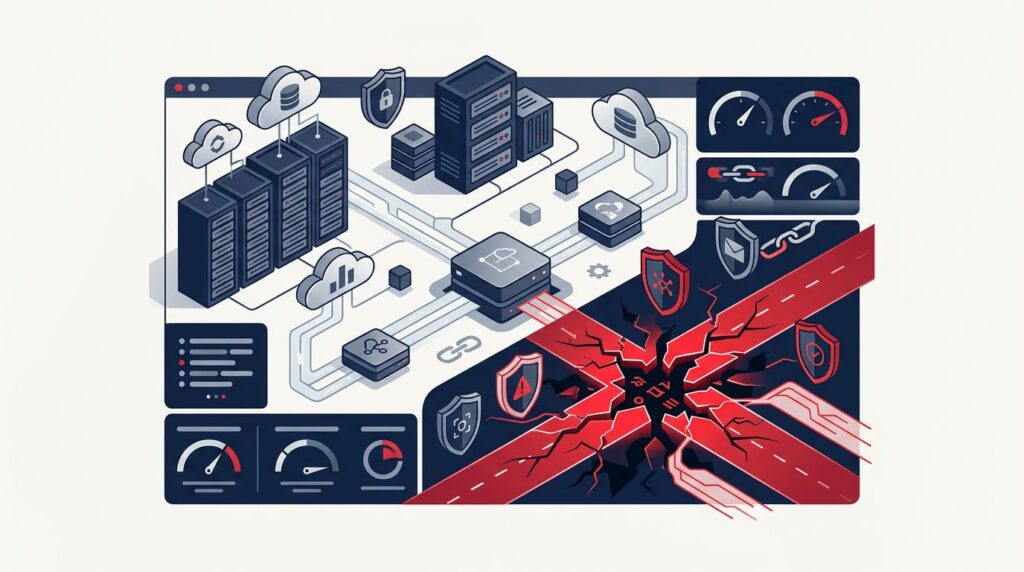
A target can look attractive on paper during mergers and acquisitions, but hidden technology problems can threaten revenue, post-close value, and the integration plan, making buy side due diligence essential. A buy side technology due diligence checklist helps you test whether the systems, people, vendors, data, security controls, and technology costs support the investment thesis.
The deal usually doesn’t fail because a platform is old. Rigorous technical due diligence protects the investor’s thesis and overall value creation by revealing risks that are hidden, poorly owned, too costly to fix, or impossible to address on the expected timeline before you sign deal agreements. Your job is to understand the price of ownership before you sign.
Key Takeaways for Your Deal Team
- Weak ownership creates more risk than an aging system with a clear remediation plan.
- Unreliable data, cyber exposure, vendor dependence, and technical debt can undermine expected value creation and change valuation.
- A serious finding doesn’t always mean you should walk away.
- Effective risk mitigation may include a price adjustment, escrow, stronger representations and warranties, a closing condition, or a funded post-close plan.
- Every material finding from technical due diligence needs evidence, a business consequence, an owner, a cost estimate, and a deal action.
- Decision-grade buy side due diligence connects technology evaluation to revenue continuity, margin, customer retention, compliance, and post merger integration success.
Start with technical due diligence guidance and the broader buy-side technology services available to your deal team.
What Buy-Side Technology Due Diligence Should Tell You Before You Sign
Technology diligence is not a tour of the target’s application list. In mergers and acquisitions, it is a test of whether the technology can support the promises behind the transaction and the operating model that follows.
You need to know what keeps revenue moving, what protects customer trust, what supports compliance, and what will require investment after closing. The review should also show whether projected savings, growth, margin improvement, and integration benefits are realistic as part of broader operational due diligence.
A document review tells you what management has provided. Decision-grade technical due diligence tests whether those claims match system evidence, contracts, billing records, engineering data, security records, and operating behavior. It should align with financial due diligence so technology costs and risks are reflected in the deal model.
The target’s technology should support its business plan. A technology strategy review and a business-aligned technology strategy give you a useful lens. Which technology investments support growth? Which protect the business? Which exist because nobody has stopped them?

### The Evidence You Need From Management
Ask for the systems and application inventory, software architecture diagrams, data flows, product and engineering metrics, contracts, licenses, cloud bills, budgets, project plans, incident records, recovery tests, security assessments, compliance reports, organization charts, developer documentation, and key-person dependencies. Review these files in the virtual data room, then trace the evidence back to the systems and teams that support the business.
You also need to determine whether the target’s proprietary intellectual property is documented, transferable, secure, and valuable beyond the knowledge of a few employees. In mergers and acquisitions, that distinction can materially affect the value of the deal.
Then compare the answers.
Missing records aren’t neutral. Inconsistent explanations aren’t neutral. Claims that cannot be tested should increase your concern, especially when they support revenue, customer retention, or the value assigned to intellectual property.
A technology roadmap review can help you test whether priorities are real. A one-page technology strategy can expose whether management can explain those priorities in plain business language.
How to Separate a Fixable Issue From a Deal-Level Risk
Rate each finding against six questions:
- How severe is the issue?
- What business activity does it affect?
- How long will it take to fix?
- What will remediation and ongoing ownership cost?
- How strong is the evidence?
- Is management willing and able to act?
Perform a scalability analysis alongside a structured technical risk assessment. Compare the findings with financial due diligence to determine whether the expected remediation costs, operating constraints, and investment needs fit the transaction model.
A dated platform may be manageable if the risk is understood, the replacement path is funded, and someone owns delivery.
An unknown data flow supporting revenue is different. So is an untested recovery plan, an unsupported system exposed to customers, or a founder who alone understands the product.
That is why a technology leadership gap analysis matters. Risk rises when no one has the authority to make tradeoffs. Strong executive technology leadership can turn scattered technical concerns into decisions before the transaction closes. That makes technical due diligence more useful to the deal team, not just to the technology function.
The Technology Problems That Actually Kill Deals
The problems that threaten a transaction are the ones that can interrupt revenue, create legal or regulatory exposure, require major unplanned spending, block integration, or make future growth assumptions unreliable.
A useful technical due diligence review should rank those conditions by business consequence, not by how technical they sound.

### Security, Privacy, and Resilience Failures
Undisclosed breaches, weak identity controls, poor patching, unsupported systems, exposed customer data, and gaps in data privacy compliance can change the terms of a deal quickly. A cybersecurity audit should also examine vulnerability exposure across the target’s cloud infrastructure.
Untested backups and paper-only incident response plans create a second problem. You may not know whether the business can recover from an outage, ransomware event, cloud failure, or critical vendor loss.
These findings can affect insurance, customer contracts, regulatory exposure, and other compliance risks tied to financing or closing conditions. They may also require immediate spending before you can safely integrate the business.
Your board needs more than a list of security tools. It needs board-ready cybersecurity reporting, clear answers about what to report to the board about cyber, and visibility into third-party risk reporting.
A useful cyber discussion frames risk as a business tradeoff. What loss could occur? What control reduces it? What will the control cost? What risk remains after the investment?
Technical Debt That Makes the Growth Story Unbelievable
Brittle code, weak code quality, manual processes, poor test coverage, unsupported dependencies, and emergency-driven backlogs can turn projected growth into a costly rebuild. Technical debt in software development practices often signals that the target’s engineering execution is weaker than its growth story suggests.
You don’t need false precision. You do need a credible range for remediation effort, required skills, outside support, lost delivery capacity, and the time before the business can return to planned work.
Ask what is complete, tested, usable, and adopted. Ask what remains, including integrations, data conversion, security work, training, open source components and licensing obligations, and vendor dependencies. Lack of automated deployment can make even routine changes slower and riskier. If nobody can explain what it will take to finish, you don’t have a delivery plan. You have a forecast built on hope and technical debt.
Connect engineering capacity and remediation cost to the financial model. Stock-based compensation, capitalized development, implementation costs, and outsourced engineering can affect Adjusted EBITDA and cash needs. Your technology spending ROI analysis should distinguish activity from measurable business value.
Vendor Dependence, Tool Sprawl, and Contract Traps
Reliance on third party vendors may give one provider control over a critical process, data set, integration, or product decision. Automatic renewals, weak service levels, unclear data ownership, termination costs, and undocumented integrations can become expensive after closing.
Tool sprawl is not only a licensing problem. It creates duplicate data, access risk, integration failures, and unclear accountability, while making cloud infrastructure more expensive and difficult to manage. Read about tool sprawl as a governance problem and how to stop vendors from driving your roadmap.
If the target’s roadmap is shaped by vendor sales cycles, your growth assumptions may already be compromised. Fractional CTO services can provide executive oversight when no one owns the full vendor and technology picture.
Key-Person Risk and Missing Technology Ownership
A deal becomes fragile when key person risk leaves one founder, engineer, contractor, or vendor holding critical system knowledge or approval power.
Look for undocumented processes, weak succession plans, unclear decision rights, thin engineering leadership, and teams that cannot explain what is supported, tested, complete, or adopted.
A fractional CTO may help when you need steady executive judgment without a permanent hire. Interim CTO support fits better when the seat is open or the business needs immediate stabilization. You can also review technology leadership services when the gap extends beyond engineering.
A Technology Budget That Doesn’t Match the Deal Thesis
Rising cloud costs, duplicated tools, outsourced engineering, deferred maintenance, and missing post-close investments can change the target’s real earnings and cash requirements.
Evaluate technology spending alongside parallel financial due diligence, and separate recurring operating costs from one-time remediation and integration costs. Trace major technology expenses to invoices, contracts, audited financial statements, margins, and cash flow before relying on long-term value creation projections.
Don’t accept unsupported savings claims. If a planned reduction removes a system, identify the replacement process, transition cost, owner, and customer impact. The number only matters if you can trace it to an action.
Your Buy Side Technology Due Diligence Checklist
Organize your buy side technology due diligence checklist, or broader it due diligence checklist, by workstream:
- Business continuity, disaster recovery, and testing of the disaster recovery plan
- Product, engineering, architecture, technical debt, and intellectual property
- Data ownership, quality, flow, and conversion
- Cybersecurity, privacy, and compliance
- Vendors, contracts, licenses, and renewal terms
- People, decision rights, key-person dependencies, and succession
- Technology spend, financial treatment, and post-close investment
- Integration readiness, system integration requirements, systems separation, and customer continuity
For every finding, record the evidence, business consequence, estimated cost, timing, accountable owner, and recommended deal action.
Your executive summary should resemble useful board technology reporting, not a technical inventory. It should also show how the findings affect alignment between technology and business goals.
Questions to Ask Before You Trust the Technology Story
Ask direct questions:
- What must keep working on day one?
- Which systems support revenue?
- What breaks if a key person leaves?
- What has never been tested, including the disaster recovery plan?
- Which costs are committed?
- Which projects are behind, and why?
- Who can approve scope, accept risk, or stop the work?
- What will system integration require from people, systems, data, and vendors?
- Where will legacy platforms, manual processes, or inconsistent data create operational friction?
Compare the answers with contracts, billing records, customer commitments, system evidence, and engineering data. Confidence comes from agreement between the story and the evidence.
How Findings Change Price, Terms, and the First Hundred Days
A material finding may support a valuation adjustment, escrow, indemnity, warranty, remediation covenant, retained employee agreement, transition services agreement, or funded integration plan. These measures provide practical risk mitigation when an issue cannot be resolved before closing.
Rank findings into three groups:
- Fix before closing
- Address immediately after closing
- Fund and schedule later
Use the diligence findings to build a practical post merger integration roadmap, including system integration dependencies, accountable owners, timing, and funding. A deal breaker is not the same as a known cost. If the cost is understood, priced, assigned, and governed, it becomes part of the transaction decision.
Use Prepare Technology for Diligence or Transition when acquisitions, leadership changes, or separation work expose weak ownership.
How to Run a Faster, More Defensible Technology Diligence Process
Start with the investment thesis and its critical assumptions. Name one buyer-side owner, request evidence early, and review the highest-risk files in the virtual data room first. Align technical due diligence with the broader mergers and acquisitions timeline and the operational due diligence workstream. Interview management and technical staff, then test the highest-risk claims before they affect the deal schedule.
Estimate remediation, integration, and post merger integration costs while the findings are still actionable. Produce an executive risk register and connect each issue to the investor’s value creation plan. Agree on deal actions with the investment team, CFO, counsel, operating partner, and board.
More data doesn’t create clarity by itself. Someone still has to make the tradeoffs.
For executive technology oversight, a technology clarity check, or focused technology diligence support, start with the question that matters most: what could change the transaction decision?
If the answer is still unclear, Get an Executive Technology Clarity Check.
What Good Final Reporting Looks Like
A buyer-ready report is short enough for an investment committee and detailed enough for counsel and the operating team. In complex mergers and acquisitions, it should translate technical due diligence findings into clear recommendations for integration execution and value creation.
It should include an executive summary, confidence level, material findings, evidence gaps, financial impact, integration impact, risk owners, deal recommendations, and a first 100-day action plan. Keep technical detail in an appendix.
Everyone should be able to make the same decision from the same facts. Good board technology risk oversight follows that same standard.
Frequently Asked Questions
What is included in a buy-side technology due diligence checklist?
A buy-side technology due diligence checklist should cover systems, architecture, data, cybersecurity, vendors, contracts, people, intellectual property, technology spend, and integration readiness. It should also connect each finding to evidence, business impact, cost, ownership, timing, and a recommended deal action.
What technology issues can become deal breakers?
Deal-level risks include security or privacy exposure, untested recovery capabilities, unreliable data supporting revenue, severe technical debt, critical vendor dependence, and key-person risk. These issues become more serious when they are poorly understood, expensive to remediate, or impossible to address within the transaction timeline.
Does outdated technology automatically mean the buyer should walk away?
No. An aging platform may be manageable when the risks are understood, the replacement path is credible, the cost is funded, and an accountable owner is in place. The concern is not age alone, but whether the technology can support revenue, customers, compliance, and the investment thesis.
How should technology findings affect deal terms?
Material findings may support a price adjustment, escrow, indemnity, stronger representations and warranties, a closing condition, or a funded post-close remediation plan. The appropriate response depends on the evidence, business consequence, timing, cost, and ability to assign ownership.
What should the final technology diligence report include?
The final report should include an executive summary, confidence level, material findings, evidence gaps, financial and integration impacts, risk owners, deal recommendations, and a first 100-day action plan. Technical detail can remain in an appendix, while the main report should help the investment committee and operating team make the same decision from the same facts.
Conclusion
Technology due diligence doesn’t exist to punish the seller or slow the transaction. Thorough buy side due diligence, including structured technical due diligence, helps you understand the price of ownership and prevent costly surprises in modern mergers and acquisitions.
The most dangerous risks are the ones nobody owns, measures, or prices. Turn findings into clear deal terms, named owners, funded actions, and a realistic post-close roadmap that supports effective post merger integration.
When the technology story is uncertain, Book buy-side tech diligence support to move from untested claims to clear insights for post-close operations and confident transaction decisions.