
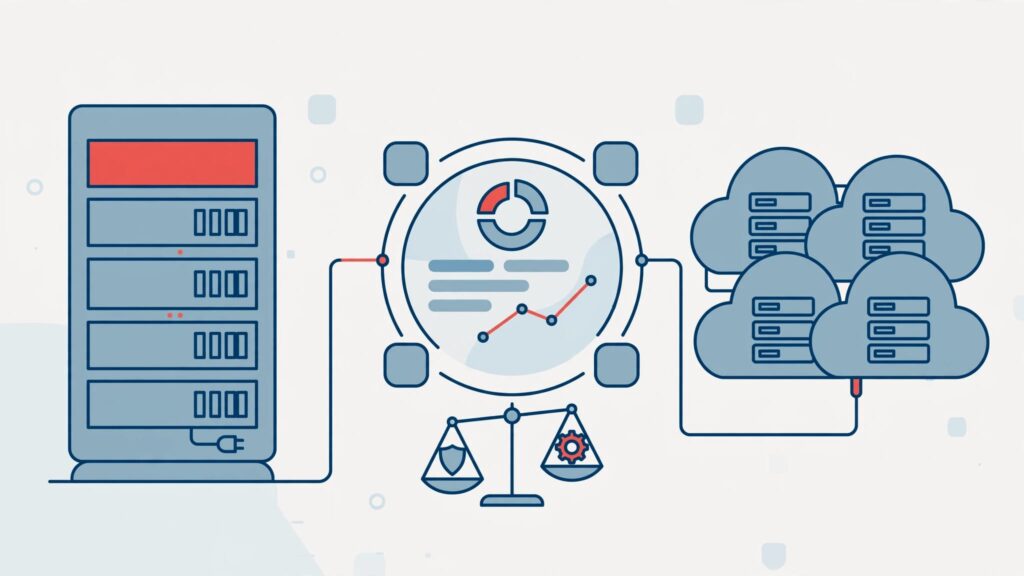
Choose single-tenant hosting when a defined customer requirement or measurable business benefit justifies its higher delivery cost. Your decision should rest on isolation requirements, operating capacity, and margin, not the assumption that dedicated infrastructure is automatically safer.
Enterprise buyers may ask for dedicated environments before your team has priced the ongoing work. Before you make that commitment, separate what the customer needs from what your business can reliably deliver.
Key Takeaways
- Single-tenant hosting gives one customer a dedicated application environment. It doesn’t automatically mean dedicated physical hardware.
- Multi-tenancy shares costs and simplifies fleet-wide operations, but requires strong tenant isolation and resource controls.
- Compliance obligations require specific controls and evidence. A dedicated environment alone doesn’t establish compliance.
- Before expanding, approve the delivery economics, recovery requirements, operating owner, and customer exit path.
Define What Single-Tenant Hosting Actually Includes
Separate software tenancy from infrastructure tenancy
In a single-tenant architecture, single-tenancy means one software instance and its supporting environment serve one customer. A multi-tenant architecture uses one instance to serve multiple customers, with their data logically separated.
You’ll also hear dedicated hosting and shared hosting. Those labels need qualification because application isolation and physical hardware isolation are different decisions.
Your architecture defines the boundaries between customers. Your hosting arrangement determines where those components run. A separate database doesn’t necessarily mean a separate application, network, or server.
Ask engineering to show the data isolation boundary across compute, databases, storage, backups, identity, and deployment tools. Check whether each tenant can access only its own records. A shared database can still work when authorization and separation controls preserve that boundary.
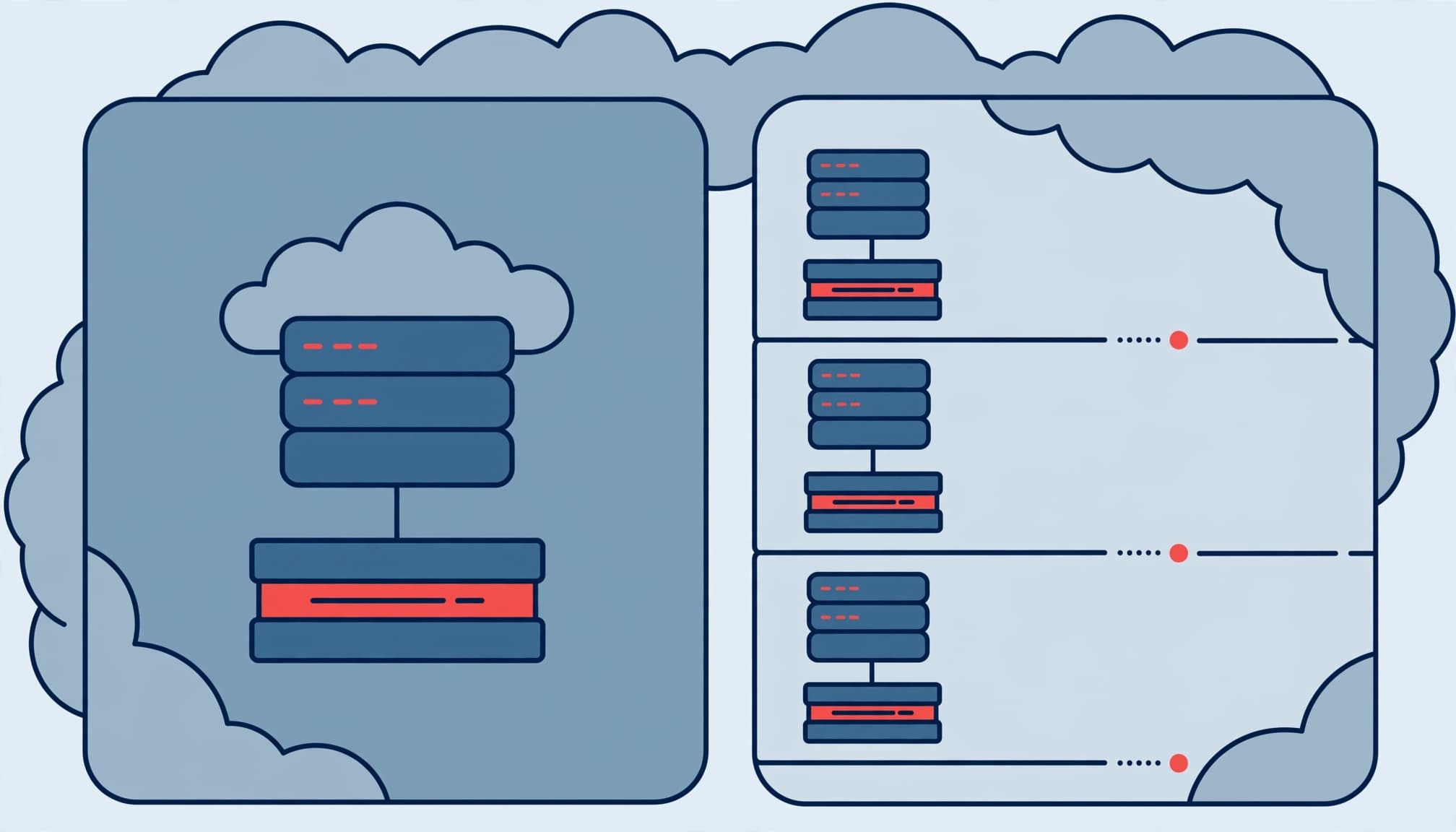
Choose the infrastructure deliberately
You can run isolated customer environments on AWS, Azure, or Google Cloud. Public cloud doesn’t require a shared application.
Your options include separate cloud accounts or subscriptions, isolated virtual networks, private cloud, dedicated servers, and customer-managed hosting. Each creates different responsibilities.
A virtual private cloud provides network isolation. It doesn’t, by itself, reserve physical hardware. Amazon EC2 Dedicated Hosts provide physical servers dedicated to your use.
Also separate configuration rights from ownership rights. A dedicated software deployment doesn’t give your customer access to the underlying source code. Self-hosting adds responsibility for operating the environment without automatically changing the software license.
Compare the Operating Models Before Committing
Multi-tenant hosting is standard across enterprise SaaS because it spreads delivery costs across customers.
Use this comparison to frame the tradeoffs.
| Decision area | Single-tenant | Multi-tenant |
|---|---|---|
| Infrastructure cost | Dedicated capacity per customer | Shared capacity and cost |
| Isolation | Separate customer environment | Logical tenant boundaries |
| Operations | Repeated across environments | Centralized across customers |
| Capacity | More customer-specific control | Better pooling, with contention risk |
The important question is whether the added control supports enough business value to cover the operating burden.
Test performance isolation under load
The noisy neighbor problem occurs when one customer’s compute, storage, or I/O spike slows service for others sharing those resources. Your largest customer may experience this as unreliable performance during its busiest hours.
Dedicated application resources reduce that contention, but shared databases, storage services, or network dependencies can remain.
Require load tests that reflect actual customer usage. In shared environments, evaluate quotas, workload scheduling, rate limits, and tenant-level performance monitoring before assuming a separate deployment is necessary. Set a latency and error-rate objective for each tenant.
Understand releases and onboarding
A shared environment can receive one software upgrade for every customer. Scheduled work on that environment can affect customers together, although staged releases and redundant infrastructure can reduce disruption.
Separate environments require coordination across a fleet, including tested upgrades and ongoing maintenance. Update timing depends on your service agreement and release design. Customer-specific versions can create technical debt and delay security fixes.
Without automated provisioning, each dedicated environment adds startup work: configuration, integrations, migration, testing, and monitoring. Significant customization makes onboarding slower still. Price that work before promising a launch date.
Price the Full Delivery Obligation
Build a complete customer-level cost model
The primary disadvantage of single-tenant hosting is cost. Your business carries dedicated infrastructure, unused capacity, backups, disaster recovery, monitoring, patching, updates, and support.
A managed provider may perform some tasks. Those responsibilities still need funding and clear ownership.
Build a 12-month view that includes onboarding, recurring delivery, expected growth, recovery capacity, and offboarding. Track onboarding labor, recurring infrastructure use, support hours per customer, and recovery capacity separately. Separate one-time implementation work from recurring subscription delivery.
Use the same cost definitions when comparing models. Otherwise, a dedicated environment can appear profitable because engineering labor or shared security tooling sits outside the calculation.
Protect gross margin without hiding shared costs
Assign dedicated resources directly to the relevant customer or product tier. Allocate shared compute, storage, data transfer, and operational tooling through documented cost pools.
Your finance, product, and engineering leaders should explain the same numbers. A practical approach to SaaS gross margin connects infrastructure consumption with subscription delivery costs.
Before expansion, finance and product leaders should set a minimum acceptable gross-margin threshold for the dedicated tier. Compare the 12-month forecast with that preapproved threshold.
Calculate dedicated-tier gross margin as subscription revenue minus attributable delivery costs, divided by subscription revenue.
Then test the forecast against lower utilization, higher support demand, and slower onboarding. Record whether each scenario passes or fails the preapproved margin threshold. Keep implementation revenue separate so low-margin services don’t obscure subscription performance.
Your technology ROI depends on the revenue and retention this option supports. A lower cloud bill alone doesn’t establish a better business outcome.
Evaluate Security and Compliance at the Boundary
Examine shared access beyond the application
A compromise confined to one properly isolated single-tenant environment should not spread to other tenants. Shared credentials, deployment pipelines, recovery systems, and support tools can undermine that boundary. A compromise of support or administrator tooling can expose customer environments and cause a data breach, regardless of application isolation.
Multi-tenant systems place more customers on shared infrastructure. A failure in tenant authorization or privileged access can therefore expose multiple customers. That requires strong controls, not an automatic rejection of the model.
Okta’s 2022 compromise investigation involved third-party support access. Its 2023 incident investigation addressed unauthorized access to customer-support systems.
Include those operational access paths in your vendor due diligence and cybersecurity risk assessment.
Map obligations to controls, not labels
Healthcare, payment processing, financial reporting, and government contracts impose different duties. HIPAA, PCI DSS, SOX, and FedRAMP don’t create a universal requirement for separate customer servers.
For covered entities and business associates handling electronic protected health information, HHS cloud computing guidance addresses responsibilities that remain when cloud services are involved.
Translate each applicable obligation into evidence: access restrictions, encryption, logging, data location, recovery, and contractual commitments. For each backup, verify access restrictions, encryption, retention, and restore-test evidence. A customer contract may require more isolation than the underlying framework.
A separate customer environment can still depend on shared administrator credentials. Your security claim must describe both the customer boundary and the access paths that cross it.
Define notification deadlines, enforced MFA for remote administration, log retention, incident recovery duties, and exception approval in contracts.
Decide Where Dedicated Isolation Earns Its Cost
Hybrid tenancy often gives you a practical middle ground. Mature SaaS products can combine dedicated components for selected customers with shared services elsewhere. Evaluate scalability by tracking how capacity, provisioning effort, and support workload change as dedicated customer environments grow.
You might dedicate application and database resources while sharing deployment tooling. You can also isolate a demanding workload without creating a separate version of the whole product.
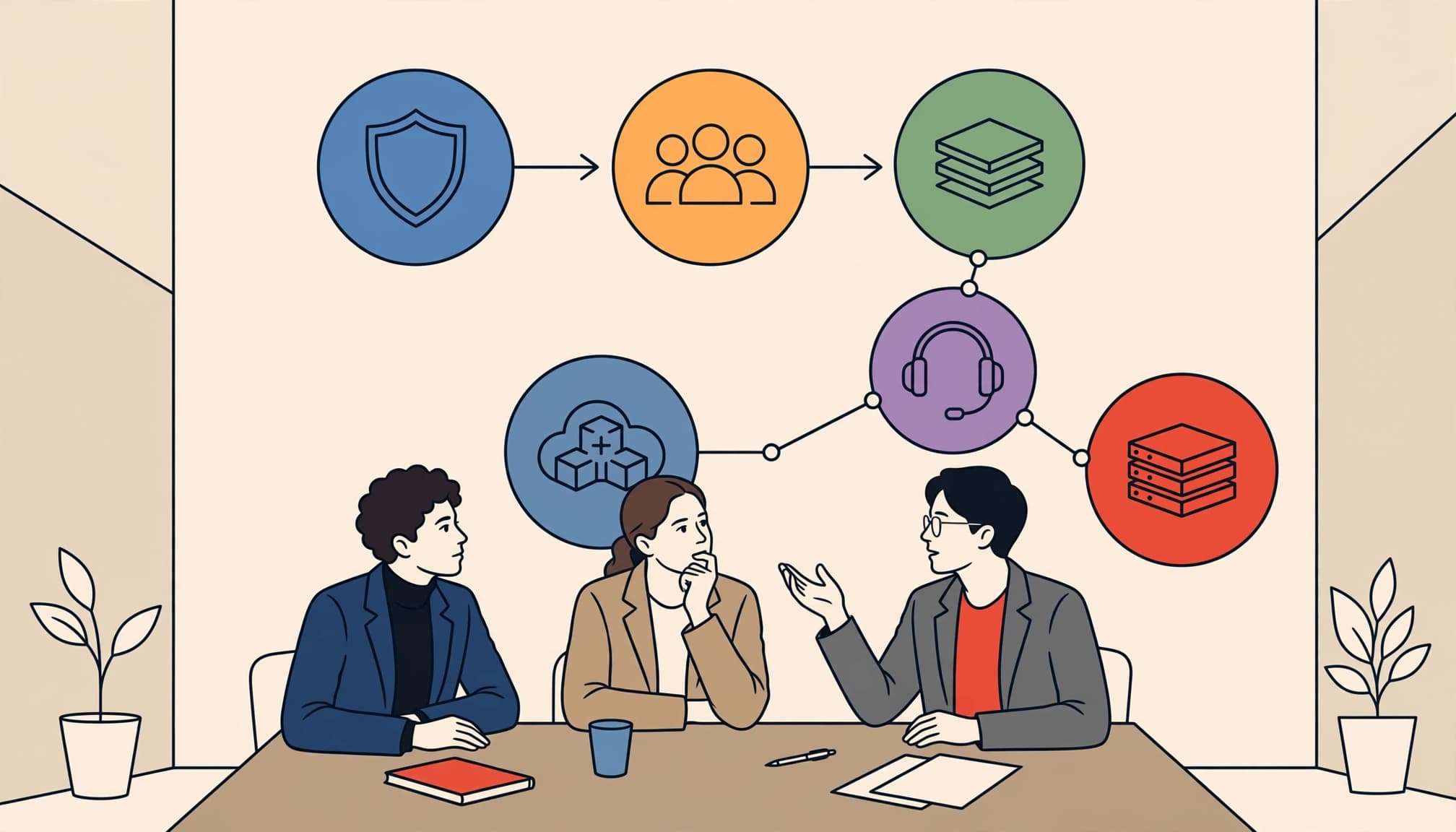
Before approving expansion, require three decisions:
- Define the requirement precisely. Is it contractual or strategic, and is it likely to recur across a customer segment? Record whether the customer needs performance isolation, data residency, separate encryption keys, recovery independence, or physical separation.
- Set the commercial boundary. Confirm the product can meet the need through a standard configuration, not a customer-specific version. Approve the price, minimum commitment, onboarding scope, support obligations, permitted customization, and finance-approved margin floor.
- Establish operating acceptance criteria. Before a pilot, leadership must set numerical thresholds for provisioning time, support hours, required margin, release lag, and recovery-test results. Require repeatable provisioning, access controls, monitoring, recovery testing, and rollback. Expand only if the pilot meets every threshold.
Hold expansion if delivery depends on undocumented manual work or uncounted support effort. Address any unmet criterion before adding more customers.
Assign Ownership Before Adding Environments
Your technology strategy needs an accountable executive owner. Engineering owns architecture and automation. Finance owns accounting integrity and margin reporting. Product and sales own demand assumptions and customer commitments.
One leader must reconcile those views.
A fractional CTO can close a technology leadership gap when you need executive ownership before a full-time hire. An interim CTO can carry that responsibility through a leadership transition. The mandate should connect delivery, risk, vendor management, and commercial decisions.
Put approved work into your technology operating plan. Your 12-month technology roadmap should show milestones, owners, funding, and decisions required.
Compare dedicated-tier margin, provisioning time, release lag, recovery-test results, and unresolved isolation risks with thresholds set before the pilot. For each measure, report the target, current result, accountable owner, and whether the result supports expansion, a pause, or remediation.
Business continuity planning also needs a workable exit path. Require usable data exports, schemas, infrastructure configuration, integration documentation, and transition assistance. Source code alone won’t restore customer data or recreate a running service.
Test whether an export can be imported elsewhere. A downloadable file isn’t enough evidence of continuity.
Frequently Asked Questions
Is SaaS single-tenant or multi-tenant?
SaaS can use either model. Multi-tenancy is common because shared infrastructure and centralized operations improve delivery efficiency. You can also offer dedicated environments as a separate tier, or use hybrid tenancy when customer requirements differ.
Does single-tenant hosting eliminate noisy neighbors?
It reduces contention within dedicated resources. It doesn’t eliminate contention in shared storage, networks, managed services, or other dependencies. Your performance claim should match the resources you have actually isolated and the load tests you have completed.
Who handles backups and updates?
Your service agreement assigns those duties. As the SaaS provider, you still need accountable ownership for recovery, patching, release coordination, and evidence that the work happens. Delegating execution to a hosting partner doesn’t remove your customer commitments.
Make the Expansion Decision Defensible
Single-tenant hosting earns its place when the requirement is clear, the economics work, and your team can operate it consistently. The strongest decision gives you clearer ownership of both the benefit and the ongoing obligation.
Approve the isolation boundary, delivery model, and risk acceptance together. That creates a business commitment your leadership team can explain and support.
If those decisions remain scattered, Get an Executive Technology Clarity Check before you expand.