

Review enterprise sales commitments before your team puts customer-specific promises into proposals, security questionnaires, or contracts. You need evidence that the business can deliver the scope, absorb the cost, and carry the risk.
A disciplined enterprise sales strategy makes customer obligations visible before the company decides whether to approve, narrow, or defer them. A promising account can pull scarce people away from existing customers and reshape your technology roadmap.
Key Takeaways for Enterprise Sales Commitments
- Separate capabilities available today from funded development, dependencies, and unapproved requests.
- Require named owners, delivery evidence, full-cost economics, and measurable acceptance criteria before approving customer-specific work.
- Use pilot and expansion gates, with approval thresholds based on business exposure as well as deal size.
Understand What the Enterprise Deal Requires
Longer cycles create more opportunities for promises to change
Qwilr and Jiminny describe enterprise sales as selling to large organizations through longer sales cycles, larger buying groups, and higher price tags. Transactional and SMB sales generally involve fewer participants and more standardized offers. Enterprise deals can also involve changing requirements and delivery assumptions.
DemandFarm’s enterprise sales guide cites McKinsey on deals taking six to 18 months to close. It also says agreements exceeding $250,000 typically require at least six months of planning and execution.
Treat those figures as planning context. In enterprise sales, revisit approval before the final proposal if requirements, staffing, or vendor capabilities have changed during a long negotiation.
Qualify the opportunity and its route to market
Use BANT: Budget, Authority, Need, and Timeline. It helps you establish whether a prospect can buy. A high-value deal doesn’t prove your team can deliver profitably.
Qwilr describes three go-to-market motions: bottom up through product-led growth, middle out through a team or department, and top down through executives.
Your commitment should fit that motion. A departmental success doesn’t establish company-wide readiness. An executive sponsor doesn’t establish that integrations, security, or adoption are ready.
Map Buyers and Put Review Gates Into the Sales Process
Give your champion a defensible business case
Consensus describes enterprise buying committees of six to 10 people. Its B2B Buyer Behavior Report says buyers spend only about 17% of their purchase journey meeting potential suppliers.
Your internal champions need a concise business case they can circulate without you present. Map the decision-makers they need to reach, and train champions to share only accurate, approved scope and flag unapproved requests.
The brief should cover pain points, value proposition, outcomes, ROI assumptions, scope, dependencies, and exclusions. It also supports sales enablement by giving reps consistent guidance on what they may promise.
Qwilr recommends that each rep identify 10 target accounts and map all buying influences. Its suggested engagement rhythm is monthly for day-to-day contacts and quarterly for C-suite stakeholders. Use that as a starting point, then adjust around actual decisions.
Review commitments at the handoffs
Jiminny’s enterprise sales model uses Discovery, Diagnosis, Development, and Delivery. Qwilr’s FAQ uses discovery, diagnosis, design, and delivery.
Both provide useful places to review obligations. During discovery, capture the requested outcome without accepting a delivery date. During diagnosis, establish technical constraints and the buying process.
During development or design, approve the proposed scope, economics, and exceptions. At delivery, confirm that the signed agreement matches the funded plan.
A change in scope, liability, data handling, or deadline should reopen the approval.
Test Delivery Evidence Before Approving Scope

Ask what has been demonstrated
Request working software, research findings, integration tests, or pilot results appropriate to the commitment. Ask what failed and which assumptions remain unresolved.
Review existing systems, data quality, and technical debt. A small feature can depend on substantial cleanup that the proposal leaves out.
Name the business sponsor, delivery lead, and adoption owner. Then examine their available capacity. Several projects may depend on the same engineer or operations manager.
Your delivery predictability measures should show completed work, aging work, rework, and blocked dependencies. An attractive release calendar doesn’t establish capacity.
Calculate the full economic obligation
Include implementation, internal labor, infrastructure, security work, ongoing support, and displaced roadmap work. Separate reusable product investment from customer-specific maintenance.
Qwilr’s enterprise sales example prices 20 accounting seats at $99 monthly: $23,760 annually and $237,600 over ten years. That arithmetic assumes continued payment. It doesn’t establish margin or retention.
DemandFarm cites Salesforce on enterprise lifetime values up to five times SMB levels. It cites Forrester on acquisition costing five times retention.
Those claims explain the attraction of long-term relationships. Your approval still needs deal-specific economics, including what happens if delivery takes longer or expansion never arrives.
Put Security and Contract Duties in Writing
Your security questionnaire, proposal, demonstration, and contract should describe the same capability. Label planned controls and unavailable features clearly.
Define protected systems, data, access controls, encryption, patching, incident notification triggers, recovery duties, and customer responsibilities. Set realistic evidence and response requirements.
For enterprise clients, assess whether data residency commitments change hosting, support access, subcontractors, or operating costs. Include data return or destruction and transition support.
Review critical suppliers against the promise you intend to make. If your vendor cannot meet a customer obligation, you retain the obligation you signed. Narrow the promise, strengthen supplier terms, or fund another delivery approach.
A supplier’s certification doesn’t establish that its contract supports the recovery, notification, or data-handling duties you are promising.
Technology, security, legal, finance, and operations should review their respective exposures. One accountable executive must resolve disagreements.
Apply your cyber risk appetite to exceptions. Record the accepted exposure, owner, remediation deadline, and escalation trigger. Where AI is involved, include model restrictions, training-data use, and AI vendor due diligence.
Sell a Proof of Concept, Then Prove Scale
Define what the pilot must establish
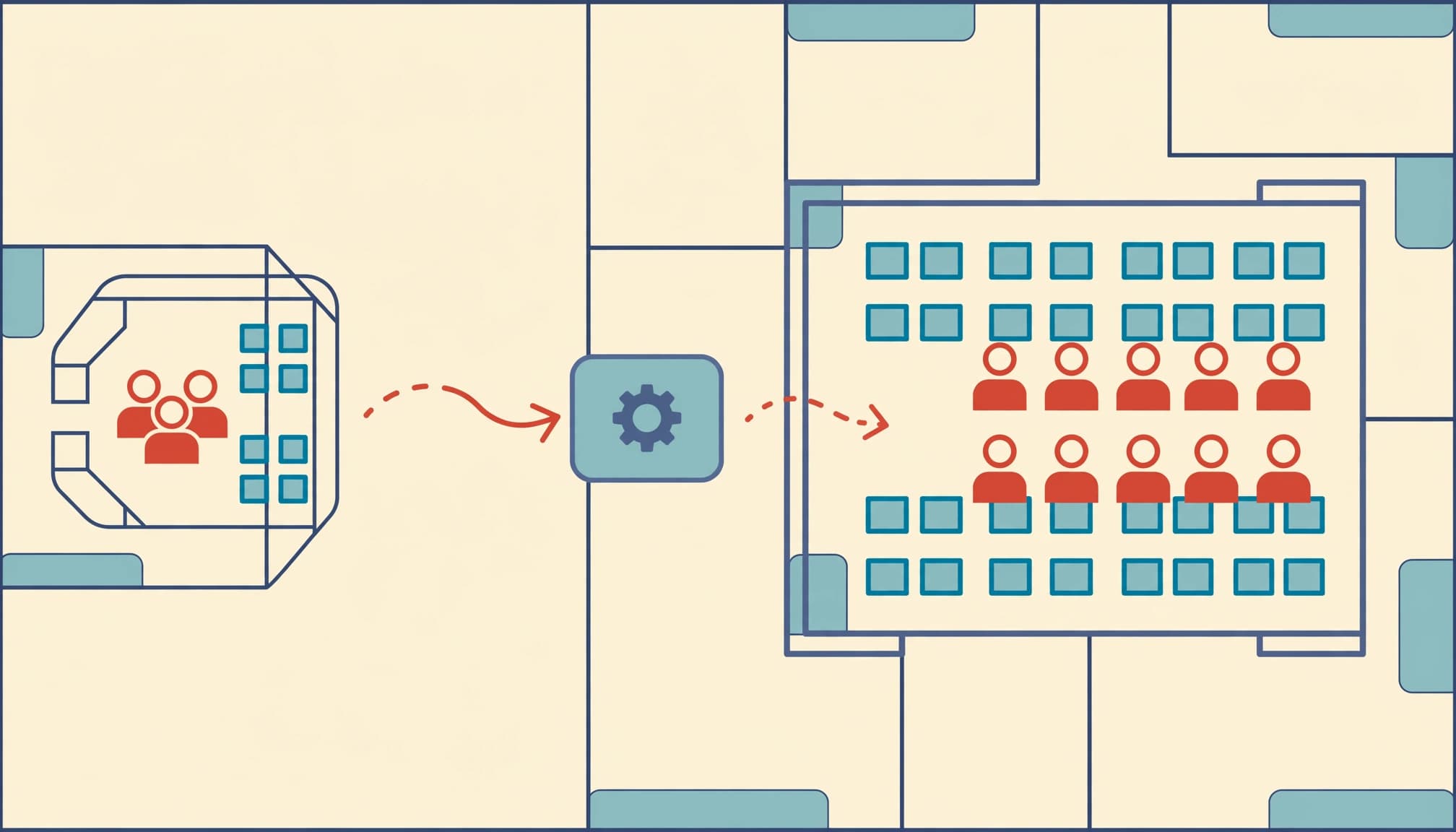
Jake Dunlap of Skaled Consulting advises a proof of concept followed by a proof of scale. He cautions against selling 2,000 seats immediately or forcing annual agreements.
Use the pilot to test the business outcome and the assumptions with the most uncertainty. Agree on scope, duration, customer participation, acceptance evidence, and a decision date.
Define what happens if the pilot fails or the customer delays. Include payment, data handling, exit responsibilities, and any continued access.
A demonstration of one workflow should support only the conclusion it has earned.
Make expansion a separate decision
Assign a customer success owner to track adoption and support needs before expansion approval. Before expanding, test workload, integrations, support demand, recovery capability, and adoption across the intended operating environment.
Reserve delivery capacity explicitly. Identify what existing work moves if the enterprise rollout proceeds.
Your commercial terms can use phased implementation, committed tiers, or ramp pricing where those structures match delivery and customer value. Tie expansion to measurable gates rather than an optimistic seat count.
The technology roadmap should show the prerequisites, owners, funding, and fallback options behind each phase.
Record the Decision and Track Deal Quality
Keep the approval record short and usable
Use a one-page commitment summary, supported by a technology investment memo when the decision requires more detail.
Capture the customer outcome, exact promise, acceptance criteria, full cost, capacity tradeoff, dependencies, risks, and accountable owners. Record whether you approved, narrowed, deferred, or declined the request.
Set decision rights according to financial exposure, customer impact, data access, contract duration, and reversibility. Routine commitments should move without CEO intervention. Material exceptions need executive review and, where required, board approval.
Board-ready reporting should show business exposure, decisions required, and overdue corrective actions. Keep the underlying commitment register current.
Measure obligations alongside pipeline
DemandFarm defines win rate as deals won divided by opportunities pursued. Ten wins from 50 opportunities gives a 20% win rate.
Its pipeline velocity formula is qualified leads multiplied by average deal size and win rate, divided by sales cycle length.
Those measures describe sales performance. Pair them with promised-versus-delivered milestones, implementation effort, support demand, margin, and unresolved exceptions. Otherwise, a faster pipeline can hide worsening delivery economics.
Qwilr recommends post-mortems and win/loss forensics after important deals. Examine why buyers chose competitors and whether your own commitments were clear and credible.
Review critical suppliers quarterly, monitor material changes between reviews, and track corrective actions with owners and deadlines.
Frequently Asked Questions
Should a growing company pursue enterprise sales?
Yes, when the opportunity fits your business strategy and you can fund the sales cycle and delivery obligations. Start with a bounded commitment. Decline work that depends on unsupported security promises or consumes capacity you cannot replace.
Who should own the review when you lack a CTO?
Keep one executive accountable. A fractional CTO or interim CTO can assess feasibility, capacity, technical dependencies, and roadmap tradeoffs. Legal, finance, operations, and security retain their responsibilities. External leadership should strengthen internal ownership.
What if sales has already made an unsupported promise?
Pause further commitments and establish exactly what was communicated. Bring sales, delivery, legal, and the accountable executive together. Agree on a deliverable alternative, address contractual exposure, and correct the customer communication. Record the decision and the approval failure behind it.
Make the Next Promise Easier to Defend
Your next enterprise deal should leave you with clearer ownership, credible delivery expectations, and risk you can see. Review the promise while you still have room to change it.
Bring the next material commitment into one leadership conversation before it enters the final proposal. If ownership, capacity, or tradeoffs remain unclear, Get an Executive Technology Clarity Check.