

You should govern AI model changes through named owners, risk-based approval gates, production monitoring, and a tested way to stop unsafe behavior. AI model governance needs to continue after launch because updates can change customer outcomes, operating costs, and business exposure.
Your role is to establish decision rights and risk boundaries without becoming the release manager. Start with what can change, who can approve it, and what evidence they need.
Key Takeaways for CEOs
- Govern changes to models, prompts, data, and connected tools.
- Require stronger validation when a change affects money, employment, privacy, safety, or customer eligibility.
- Give someone explicit authority to pause production, restore a safe workflow, and escalate material risk.
Define What AI Model Governance Controls
AI model governance is the system of policies, processes, and technical controls used to document, monitor, audit, and manage AI and machine learning models across the model lifecycle.
That includes data intake, development, deployment, updates, and retirement. Five pillars keep the work grounded: security, compliance, accountability, transparency, and fairness. An AI governance framework turns these pillars into clear ownership, approval gates, and evidence requirements.

The need extends beyond technical performance. Stanford’s 2025 responsible AI findings recorded 233 reported AI-related incidents in 2024, up 56.4% from 2023.
Your control boundary should cover model weights, system prompts, retrieval sources, decision thresholds, access permissions, and vendor updates.
An unchanged model version can produce materially different business outcomes after its data sources or tool permissions change.
Give Every Change a Named Decision-Maker
Your decision rights map should separate implementation, independent challenge, risk acceptance, and emergency action.
Assign Executive Accountability
Name one business owner for each production use case. That person owns the outcome, customer impact, and operating limits.
Your technology leader owns implementation and release controls. Security, privacy, legal, and operational leaders review changes within their remit.
A fractional CTO can coordinate this work where executive capacity is thin. A fractional CISO can support security oversight. Neither arrangement removes management’s responsibility for accepted risk.
Reserve CEO approval for material exceptions, major commitments, or risk outside established boundaries.
Choose the Right Operating Model
Centralized governance puts validation with a common team. Federated governance gives business units more responsibility. A hybrid model combines shared standards with local ownership and central review for higher-risk changes.
Centralization can create delays. ValidMind describes some centralized validation paths taking six to 18 months per use case. Set review deadlines and escalation paths.
For a midmarket company, a hybrid approach often keeps routine improvements moving while preserving independent challenge.
Keep Your Inventory and Risk Tiers Current
Record the System You Actually Operate
Your model inventory should cover internally developed, third-party, open-source, and embedded models.
Record the owner, purpose, version, data sources, business impact, affected users, and production dependencies. Include the provider’s version identifier and whether updates can arrive automatically.
Keep model documentation with a model card, data lineage map, validation report, approval record, and decision log. For generative AI, record prompt versions, retrieval sources, and connected tools too.
A governance platform can connect versions, lineage, approvals, and exceptions, but accountable owners still need to make decisions.
If these records don’t exist, use our AI governance implementation plan to establish the foundation before increasing autonomy.
Classify Consequences Before Complexity
Use risk classification to assign tiers based on decisions influenced, data sensitivity, affected individuals, autonomy, regulatory exposure, and potential harm.
As part of model risk management, a practical internal rubric can score each factor from zero to two. Use the total to prioritize review, then apply mandatory high-risk overrides. Loan approval and consequential pricing deserve high-risk treatment even when their models are technically simple.
Document low-, medium-, and high-risk boundaries. These internal tiers don’t replace legal classifications.
Reclassify whenever intended use changes. An employee drafting assistant needs a different review when it starts sending customer advice without approval.
Require Evidence Before a Production Change
Every release needs documented model validation before deployment. It should assess the proposed change’s impact and answer one question: what could it make worse?
Validate Against the Business Decision
Require back-testing against historical data, sensitivity analysis, stress testing, and comparison with alternative models or rules-based systems where appropriate.
Test affected customer groups separately with bias testing. An improved average can conceal algorithmic bias and worse outcomes for a smaller population.
SHAP and LIME support explainability by helping interpret tabular machine-learning outputs. For LLMs, retain retrieval-augmented generation grounding evidence and controlled prompt-and-response logs. These records support investigation; they don’t prove why a model generated an answer.
Include privacy, security, and human-review tests alongside output quality.
Make the Approval Gate Explicit
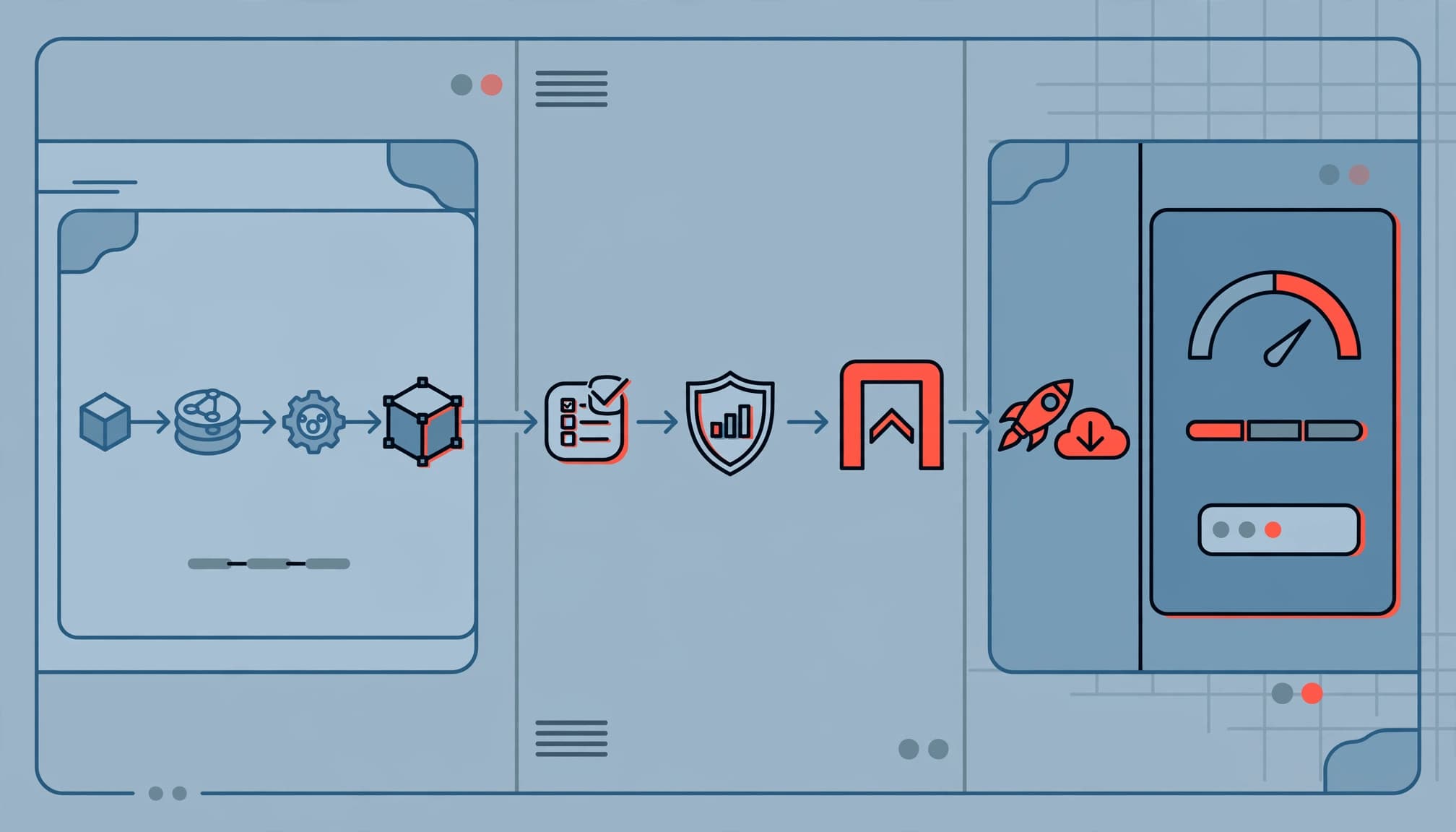
Use a short, repeatable release sequence:
- Document the change, intended benefit, affected workflows, risk tier, and accountable owner.
- Submit versioned test results, subgroup findings, security review, unresolved exceptions, monitoring thresholds, and a rollback plan.
- Obtain the required approvals, release to a limited audience, and expand only after production evidence meets agreed limits.
Require independent validation and executive risk acceptance for high-risk changes. Permit lighter approval for routine changes within established boundaries.
Expanded autonomy, sensitive-data access, new customer populations, model substitutions, or altered decision thresholds should trigger revalidation.
Emergency fixes still need records and retrospective review.
Monitor Outcomes and Make Stopping Routine
Use model monitoring on your dashboard to track whether the system remains useful, safe, and economically worthwhile.
Track task success, unsupported answers, human overrides, complaints, subgroup performance, data quality, latency, and cost per successful outcome. Monitor model drift in inputs separately from changes in observed outcomes.
Thresholds need context. For each alert, record the metric, approved baseline, minimum sample size, measurement window, tolerance, and required action. Set tolerances using validation variability and the business consequences of error.
A statistical drift alert should trigger investigation. A confirmed sensitive-data disclosure should trigger containment of the affected workflow.
Your incident response plan should name who can pause service, revoke access, restore a previous version, and activate a manual fallback. Test that path before you need it.
Vendor risk management belongs here too. Require update notices, version visibility, incident cooperation, retention terms, and an exit path. Where a supplier cannot support version pinning or rollback, document that dependence.
For agents, AI agent governance should restrict tool permissions and memory retention. Preserve a linked audit trail across agent handoffs. Reapprove any change that increases authority to spend, communicate externally, or modify records.
Use Frameworks Without Confusing Them With Legal Duties
Choose frameworks based on the assurance your business needs and how each reference supports AI risk management.
| Reference | Purpose | Post-launch use |
|---|---|---|
| NIST AI RMF | Voluntary guidance organized around Govern, Map, Measure, and Manage | Structure ownership, assessment, monitoring, and response |
| ISO/IEC 42001 | Certifiable international standard for establishing, implementing, maintaining, and continually improving an AI management system | Formalize records, audits, management review, and corrective action |
| EU AI Act | Binding, risk-based regulation | Apply relevant documentation, human oversight, monitoring, and incident duties |
NIST offers a flexible starting point. ISO certification covers your management system, not blanket approval of every model update. Where relevant to your use cases, you can formalize evidence expectations for explainability.
The EU AI Act imposes stricter requirements on high-risk AI systems, including certain uses in critical infrastructure, education, employment, and law enforcement. Provider obligations include post-market monitoring and serious incident reporting, subject to applicable scope and transition rules.
In US banking, SR 11-7 established expectations for model governance, validation, controls, and oversight. The April 17, 2026 revised model-risk guidance superseded it.
Our ISO 42001 and NIST comparison explains how the frameworks can work together. Neither replaces privacy law, contracts, or sector obligations.
Give the Board Decisions It Can Govern
Board-ready reporting should connect changes to revenue, service quality, customer harm, operating costs, and risk appetite.
Your board doesn’t need individual prompt histories. It needs confidence that management sees material changes and can control their consequences.
Use a short review checklist:
- Show material changes, affected business outcomes, and the executive accountable for each.
- Report threshold breaches, incidents, overdue exceptions, and whether fallback controls worked.
- State the decision required, remaining exposure, and next review date.
Keep routine approvals with management. Escalate material risk acceptance, significant investment, or exposure beyond agreed boundaries.
Our guidance on briefing the board on AI keeps that conversation focused on business choices.
A monthly management review can cover performance and pending changes. Material incidents need immediate escalation.
Frequently Asked Questions
What Should an AI Governance Audit Test?
An audit should test whether controls work in practice. Sample deployed versions against approvals, reproduce validation evidence, trace data sources, and examine exceptions.
Test whether authorized people can stop the system and restore service. Report findings with owners and deadlines. Complete records help, but they don’t establish that a control is effective.
How Does Model Governance Differ From Data Governance?
Data governance covers data quality, ownership, access, privacy, retention, and lineage.
Model governance adds intended-use boundaries, validation, decision authority, output monitoring, change approval, and retirement. You need both. Clean data doesn’t guarantee an appropriate decision, and a well-tested model can fail after its inputs change.
Does Every Change Need CEO Approval?
No. Delegate routine changes within approved limits. Keep material exceptions and significant risk acceptance with the appropriate executive.
The CEO should govern the approval system, receive escalations, and hold owners accountable.
Put Your Next Model Change Under Clear Ownership
Your next leadership conversation should establish who owns the deployed system, what triggers reapproval, and who can stop it. Ask for the evidence behind those answers.
Clear ownership and operating limits let your team improve AI without leaving business consequences unmanaged.
If those answers remain scattered, Get an Executive Technology Clarity Check to establish sharper priorities, clearer accountability, and a practical next step.