
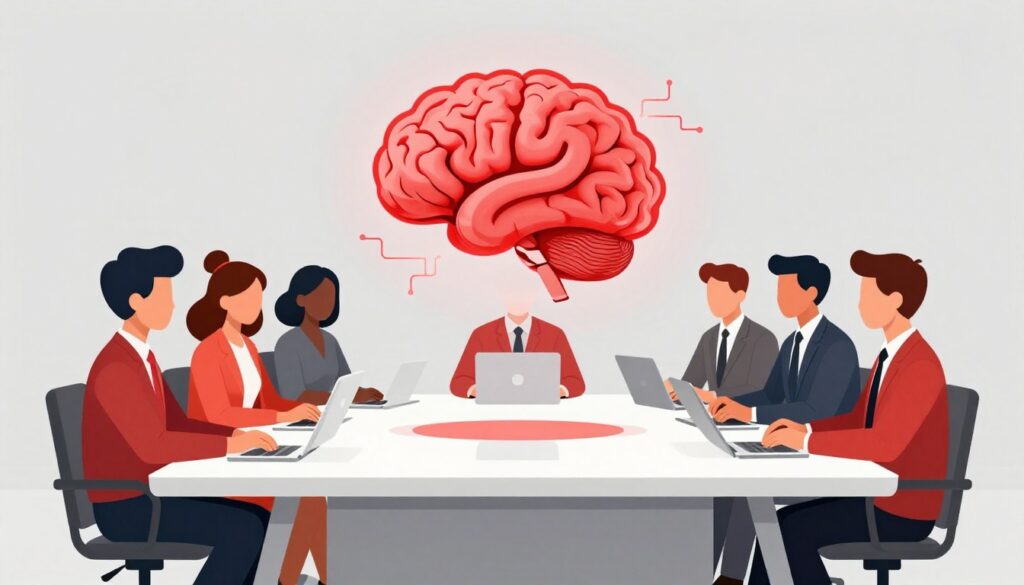
AI use spreads faster than ownership. Your marketing team may test generative ai models for writing, operations may automate documents, and customer teams may use AI summaries, while nobody holds the full picture of risk, cost, or artificial intelligence governance.
A clear AI governance committee structure gives you a place to make decisions without turning every useful experiment into a month-long approval process. For executive leadership, founders, board members, and technology managers, the goal is simple: name the right people, give them decision rights, and keep the group small enough to act.
Key Takeaways for Building an AI Governance Committee
- A 200-person company usually needs a cross-functional team of six to nine core members operating as a dedicated steering committee, not an overly large working group.
- Your committee needs executive sponsorship, technology leadership, legal and compliance input, data security oversight, finance review, business ownership, and employee perspective.
- It should establish a risk management framework, rank use cases, enforce human oversight where needed, track outcomes, and escalate material issues to executives or the board.
- Each member needs a defined role in approving, pausing, rejecting, or accepting risk.
- A short written charter should cover scope, authority, risk tiers, meeting cadence, approval thresholds, records, and escalation rules.
- Governance should help you reduce shadow AI, vendor-driven decisions, scattered tools, and unclear accountability.
Build an AI Governance Committee Structure That Fits a 200-Person Company
Your committee should cover business value, technology, risk, people, and compliance. It does not need a permanent seat for every department.
A practical cross-functional team has six to nine standing members. Invite subject matter experts when a use case involves their process, data, customers, or regulatory obligations. This keeps the committee informed without creating a room where every decision stalls.
The best artificial intelligence governance structure supports broader executive technology leadership. It should connect AI choices to revenue, margin, customer experience, operational capacity, and risk. If it becomes another approval layer with no authority, teams will work around it.
Give One Executive Clear Accountability
Your CEO, COO, or another senior executive should sponsor the committee. That sponsor owns the business outcome, resolves conflicts, approves risk tolerance, and makes sure decisions carry weight across departments.
The board should oversee material investment, risk, and reputation exposure. It should not manage daily tool reviews or prompt-writing practices. Give directors short, decision-focused updates that follow the discipline of effective board technology reporting.
The committee can recommend a decision, but an executive sponsor must own the tradeoff when speed, cost, and risk point in different directions.

### Put a Technology Leader in Charge of the Operating Model
Your CTO, CIO, head of technology, or qualified technology executive should coordinate the committee. This person maintains the AI inventory, sets architecture standards, reviews integrations, challenges vendors, and identifies where weak data or technical debt could undermine a use case.
They should also establish controls across the ai development lifecycle and enforce third-party risk management as vendor models and retention terms evolve. Your operating model needs a way to review those changes.
If you do not have a full-time executive technology leader, fractional CTO services can provide the senior judgment needed to establish the committee and run its first decisions.
Include Legal, Privacy, Security, Finance, and Business Owners
Legal, privacy, and security leaders review contracts, data privacy standards, intellectual property, data security controls, and regulatory obligations before sensitive data is uploaded. They help define safe conditions for use across your organization.
Security reviews identity controls, access permissions, sensitive data handling, monitoring, model-related threats, and incident response. Finance tests cost, expected value, budget impact, and whether a pilot has a credible path to measurable results.
Business owners explain the process being improved. They remain accountable for adoption, process changes, and results after approval. That matters because an AI tool cannot fix a broken workflow with unclear ownership.
Add Employee and Customer Perspectives Before Problems Surface
Include an HR, people operations, employee experience, or change leader. Rotate representatives from teams that will use AI in daily work.
These voices bring practical ai ethics into the room, surfacing bias and fairness issues, workflow disruption, data privacy concerns, and human oversight needs before tools reach production. Employee representation gives you evidence from real work. It does not give every user a veto.
What Each Member Should Decide, Review, and Escalate
A committee fails when it only discusses AI. Your charter should name who can approve a pilot, pause a deployment, accept a risk, or escalate a decision.
Use this decision model to keep authority clear.
| Use case | Typical review | Final decision |
|---|---|---|
| Low-risk internal productivity use | Technology registration and user training | Technology leader |
| Production workflow automation | Security, privacy, business owner, finance | Committee |
| Sensitive data processing | Legal, privacy, security, executive sponsor | Committee with executive sign-off |
| Customer-facing automation and high-risk systems | Business, security, legal, customer leader | Executive sponsor |
| Autonomous agentic ai, employment, credit, health, safety, or legal decisions | Full review, model explainability, and compliance requirements | Executive team or board-level escalation |
| Policy exception and regulatory frameworks review | Risk owner and technology leader | Executive sponsor |
Tie every decision to a business-aligned technology strategy. A use case should answer a plain question: what business result will improve, who owns it, and what could go wrong?
Set Approval Tiers Based on Use Case Risk
Low-risk internal tools may only require registration, approved terms, basic training, and a named owner. This tier can move quickly because the data and impact are limited. Your acceptable use policy should clearly define these boundaries.
Production use requires a stronger review. Check data flows, access controls, vendor terms, integration points, expected cost, process ownership, and how you will measure results.
High-impact uses and high-risk systems demand strict transparency requirements, model explainability, and compliance requirements under relevant regulatory frameworks. This includes AI that affects employment decisions, customer eligibility, legal outcomes, health, safety, or sensitive customer data. Approve the conditions for use, not simply the software product.
Track the AI Inventory, Vendors, Data, and Outcomes
Maintain one current record of approved and unapproved AI tools. For each entry, capture the owner, users, purpose, vendor, contract status, data types, integrations, access rules, retention terms, review date, costs, incidents, and expected outcome.
You also need visibility into vendor dependency. Can you export your data? What happens when a vendor changes the model or raises prices? Who can disable the tool if an incident occurs?
That inventory forms the bedrock of sound data governance and technology risk oversight, maintaining complete audit trails for every integrated platform. Scattered updates from vendors, security teams, and department heads do not give leadership a usable risk picture.

### Escalate Material Risk to Executives and the Board
Escalate serious privacy events, security incidents, customer harm, major financial exposure, regulatory concerns, material vendor failure, or AI use that could affect your reputation or enterprise value. Ensure security incidents trigger your existing incident response plan and follow the broader enterprise risk management framework.
Your board update should state the issue, business consequence, owner, current action, deadline, and decision needed. Technical detail belongs behind the summary. A board-ready cybersecurity reporting template offers a useful model for keeping reports clear and actionable.
How Your AI Governance Committee Should Operate Without Slowing Innovation
Run a monthly committee meeting and provide quarterly executive or board reporting. Give urgent or high-risk use cases a faster review path with published service levels.
Keep intake lightweight. A short form should capture the use case, owner, data involved, users, vendor, expected value, and risk tier. Record decisions and conditions in the same place so teams can find them later.
This operating rhythm helps you control tool sprawl without forcing low-risk work through executive meetings. It also gives teams clear boundaries, which reduces the temptation to hide AI use.
Write a Charter That Defines Scope and Decision Rights
Your charter should fit on a few pages. Include the purpose, scope, members, chair, approval rules, risk tiers, responsibilities, meeting cadence, intake process, escalation triggers, reporting duties, records, and annual review date. Your charter defines accountability mechanisms, aligns with your acceptable use policy, and establishes clear risk management framework boundaries.
Write it in plain language. If leaders cannot tell who decides what, the charter will not prevent delays.
Download the committee charter template, customize it for your risk tolerance, and circulate it before the first meeting. Name the executive sponsor and chair at the same time.
Measure Value, Risk, Adoption, and Control Health
Track results that matter to the business: hours saved, cycle-time reduction, error rates, revenue or margin impact, user adoption, customer outcomes, vendor costs, training completion, policy exceptions, and unresolved risks. Establish continuous monitoring around data privacy adherence, data security metrics, compliance requirements, and ai ethics guidelines alongside productivity gains.
Do not measure success by the number of tools launched. Stop, redesign, or retire use cases that add complexity without meaningful value.
Keep Governance Separate From Day-to-Day AI Delivery
Product, operations, engineering, data teams, and vendors can build and run approved solutions. Your committee sets rules, reviews material risk, checks results, and resolves cross-functional conflicts while reinforcing strong accountability mechanisms across departments.
That separation keeps governance strategic. It also prevents committee meetings from becoming weekly project status calls.
Frequently Asked Questions
Who should be on the AI governance committee for a 200-person company?
A practical committee should include six to nine core members representing executive sponsorship, technology leadership, legal and compliance, data security, finance, and key business owners. You can also rotate employee representatives into the group to provide real operational context.
How often should the AI governance committee meet?
The committee should hold a standard monthly meeting to review pending use cases, evaluate risk tiers, and track outcomes. For urgent or high-risk requests, you should establish a faster review path with published service levels to prevent unnecessary delays.
What is the difference between low-risk and high-risk AI use cases?
Low-risk internal tools generally require only basic tool registration, approved vendor terms, and employee training. High-risk systems involve sensitive customer data, automated decisions that impact employment or credit, and complex integrations that demand strict transparency and executive sign-off.
Put Clear Ownership Around AI Before It Spreads Further
A 200-person company does not need a large bureaucracy to implement effective artificial intelligence governance. By establishing a focused ai governance committee structure with a lean cross-functional team, you maintain essential human oversight while keeping business context, technical depth, and security intact.
Name the executive sponsor, set risk tiers, build the inventory, and schedule the first review date. If AI decisions already feel scattered or nobody owns the full picture, Get an Executive Technology Clarity Check to establish sharper priorities, clearer ownership, and a practical next step.