

Digital transformation usually looks expensive before it looks useful.
You approve new platforms. The teams promise better reporting, faster execution, cleaner customer experience, and less manual work. Then six months later, costs are up, delivery is slower, and the update in the leadership meeting still sounds like this: “We're making progress, but there are dependencies.”
That's not a tooling problem. It's an operating problem.
If you're asking about the challenges of digital transformation, the most important answer is this: the hard part isn't adopting new technology. The hard part is creating clear ownership, decision rights, and a working cadence that turns technology into repeatable business results.
The Transformation Tax When More Tech Means More Chaos
You've probably seen the pattern.
A team buys a new CRM, analytics stack, workflow tool, or cloud platform. Another team keeps the old process alive “for now” because the migration isn't finished. Finance still exports data into spreadsheets. Operations builds a workaround. Security is asked to review everything late. The executive team gets updates, but nobody can say cleanly who owns the outcome.
That hidden cost is what I call the transformation tax. It's the drag created when change happens without coordination.

Post-COVID, the pressure intensified. One market overview reports that 97% of IT decision-makers were pursuing digital transformation projects out of necessity, and that by 2024, 25% of large-corporation CIOs were expected to be held accountable for digital business operating results, effectively becoming “COO by proxy” in some organizations (digital transformation statistics). That shift matters because the job is no longer just “deliver the system.” It's “deliver the business outcome.”
What the tax looks like in real life
It rarely shows up as one dramatic failure. It shows up as a collection of leadership irritants:
- Projects keep slipping: The date moves because one team is waiting on another team that didn't know it owned a decision.
- Reporting gets weaker: Different systems produce different answers, so meetings drift into reconciliation instead of action.
- Good people burn time on glue work: Senior staff spend their week chasing status, fixing handoffs, and translating between vendors.
- Risk accumulates: Data moves through tools and processes no one has mapped end to end.
The first sign of a weak transformation isn't technical failure. It's management fog.
If this feels familiar, the problem is bigger than one project. You're paying for complexity faster than you're getting value from change.
A useful parallel comes from security operations. Teams that improve consistently usually don't start with more tools. They start with a repeatable operating model, clear maturity stages, and visible ownership. That's why resources like steps for predictable security teams are worth reading even outside security. The lesson applies directly to transformation work.
Why leaders misread it
Executives often assume the chaos is temporary. They treat it as a rough patch between old systems and new systems.
Sometimes that's true. Often it isn't.
When the same vagueness shows up month after month, you're not in transition. You're in a poorly governed operating environment. If you want a sharper picture of what this kind of complexity costs, this breakdown on the hidden cost of tech chaos is a useful companion.
The Real Challenges Are Not What You Think
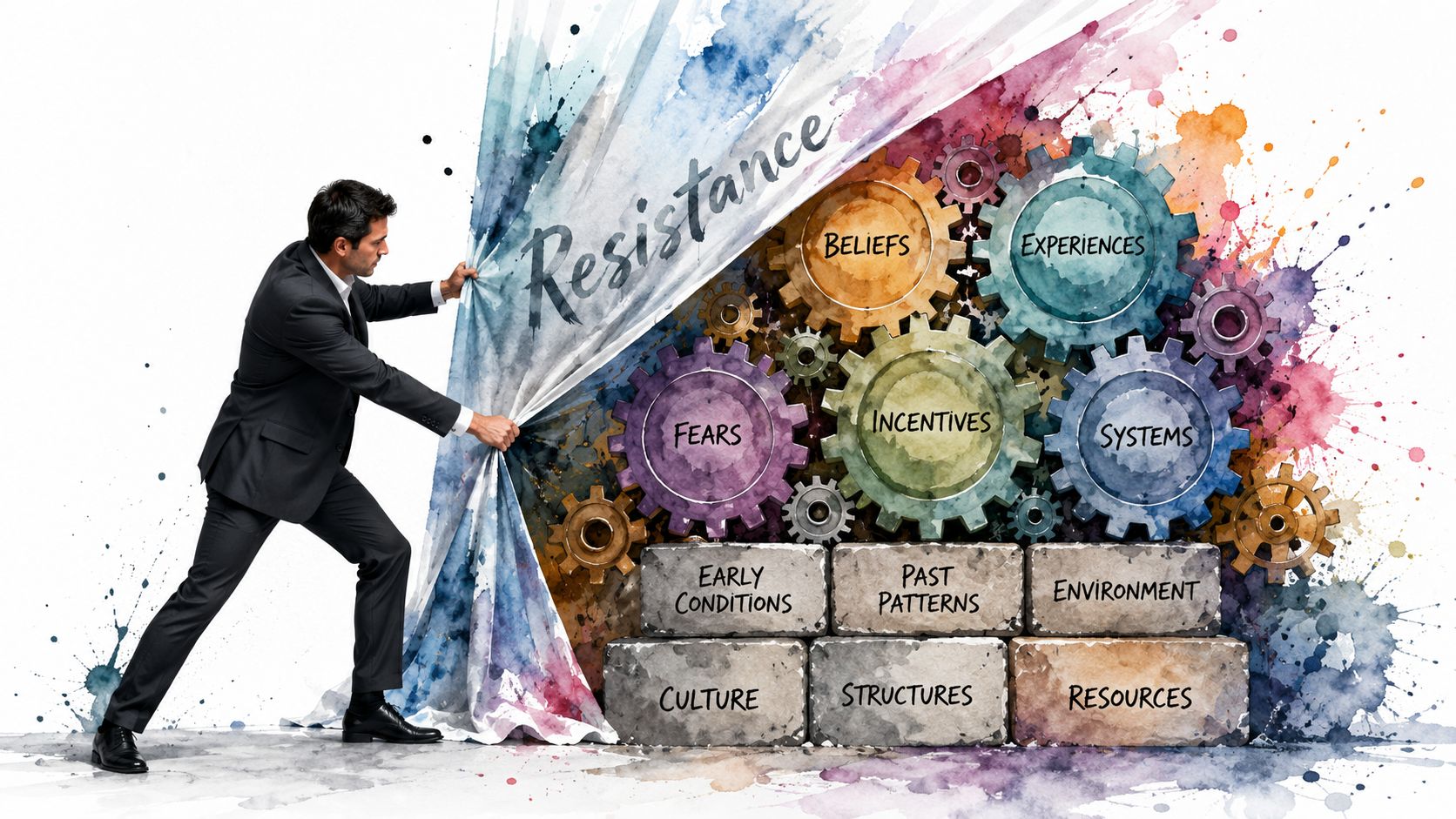
Most articles on the challenges of digital transformation recycle the same list. Resistance to change. Weak culture. Skills gaps. Legacy systems. Poor communication.
Those issues are real, but they're too shallow to help you run the business better.
The deeper problem is governance. Recent coverage summarized by Prosci points to governance and decision rights as the main bottleneck, noting that adapting operating models is a core challenge and that many transformations fail in execution because they lack a durable cadence with named owners, clear decision rights, and measurable accountability (digital transformation challenges).
Fuzzy ownership breaks transformation first
When nobody has unambiguous ownership, everybody participates and nobody decides.
You see it in phrases like “shared responsibility,” “joint accountability,” and “cross-functional initiative.” Those sound collaborative. In practice, they often mean the decision can float indefinitely.
A transformation effort needs named owners for outcomes, not just contributors to tasks. Someone has to own customer data quality. Someone has to own migration sequencing. Someone has to own vendor performance. Someone has to own the final call when priorities conflict.
If that owner doesn't exist, your business runs on escalation and personality.
Brittle decision-making slows everything down
Some companies make decisions slowly. Others make them quickly, then reopen them every week.
Both are destructive.
Brittle decision-making shows up when architecture choices, vendor selections, process changes, and security exceptions don't stick. Teams re-litigate the same issue because there's no agreed decision forum, no decision record, and no authority structure people respect.
That hurts more than speed. It teaches the organization that decisions are provisional. Once that happens, execution quality drops because people hedge, wait, and create side paths.
Practical rule: If a decision can be reversed by the next loud meeting, it was never really made.
Missing operating rhythm kills follow-through
This is the least discussed issue and often the most damaging.
A transformation without cadence becomes a sequence of updates, not a system of execution. Leaders hear status. Risks stay vague. Dependencies surface late. Nothing forces trade-offs into the open.
A good operating rhythm is simple and disciplined:
- Weekly decision forum: A place where blockers get resolved, not admired.
- Named owners: Each priority has one accountable leader.
- Visible risk review: Security, delivery, and operational impacts are discussed before they become surprises.
- Short progress loop: Teams show what changed, what slipped, and what needs a leadership call.
That's why I push back on the usual “culture” explanation. Culture matters, but a lot of what leaders call cultural resistance is structural confusion. People resist chaos more than they resist change.
Why These Hidden Problems Stall Growth and Increase Risk
The business case is straightforward. Weak governance slows growth, raises cost, and increases risk at the same time.
This isn't a fringe issue. BCG research across more than 850 companies found that only 35% of digital transformation initiatives achieve their objectives, meaning roughly two-thirds fall short. Broader research summarized in the same source notes that failure rates commonly cluster around 70% or more (digital transformation challenge statistics).
The key point is not that transformation is hard. The key point is where it fails. It usually doesn't fail when companies buy software. It fails when they can't convert that software into repeatable operating behavior.
The business impact of weak governance
| Systemic Failure | Impact on Growth | Impact on Profit | Impact on Risk |
|---|---|---|---|
| Fuzzy ownership | Priorities compete, launches stall, and cross-functional work waits for escalation | Teams duplicate effort, leaders spend time on status hunts, and expensive projects drift | Critical controls and customer-impacting issues fall between teams |
| Brittle decision-making | Roadmaps keep changing, so execution loses momentum | Vendors, consultants, and internal teams keep working around unresolved choices | Exceptions pile up, architecture fragments, and nobody can explain the current state cleanly |
| Missing operating rhythm | Work starts but doesn't finish, so the business gets motion without throughput | Long-running initiatives absorb budget without producing usable outcomes | Boards and executives get vague updates instead of auditable visibility |
The CEO view
You don't need a technical deep dive to spot the damage.
If sales says the system slows quoting, operations says reporting is unreliable, finance doesn't trust the numbers, and the tech team says “it's complicated,” you already have a business issue. The organization is absorbing coordination cost instead of compounding value.
That cost shows up in three ways:
- Speed drops. Teams wait on unresolved decisions and hidden dependencies.
- Profit erodes. You pay for tools, vendors, rework, and management time.
- Risk rises. Fragmented systems and unclear ownership weaken control.
A transformation that adds complexity faster than it removes friction is not progress. It's overhead with a strategy deck.
Why boards lose confidence
Boards don't expect perfection. They do expect clarity.
When leadership can't explain who owns the top initiatives, what risks remain open, and whether simplification is happening, confidence drops. Once confidence drops, scrutiny rises. Then every technology update turns into a trust problem.
That's why governance matters so much. It's not bureaucracy. It's the mechanism that turns spending into outcomes and updates into evidence.
The Root Cause of Most Failed Transformations
Most failed transformations have the same root cause. Leadership treats transformation as a project to buy instead of an operating model to build.
Buying software is easy. Signing an implementation partner is easy. Announcing a modernization initiative is easy.
Building the internal system that governs ownership, decisions, sequencing, migration, and accountability is the hard part. That's the part many companies underfund, delegate too far down, or never define at all.
A major technical bottleneck in digital transformation is legacy-system integration, but that technical pain is often a symptom of a deeper operating model failure. Organizations struggle to move away from rigid older platforms because they lack the governance and execution discipline required to manage the migration safely and consistently (legacy-system integration in digital transformation).
Buying tech is not the same as building capability
Legacy systems become the villain in almost every transformation story. Sometimes they deserve it.
But old systems usually become dangerous because the organization hasn't decided how migration decisions get made, who can force standardization, or what gets retired first. The technical debt remains because the business never built the authority structure to reduce it. If you want a practical view of that connection, this piece on how to reduce technical debt is directly relevant.
If your transformation depends on heroics, it isn't a transformation. It's a temporary rescue operation.
Technology leadership at this stage is not an IT support function. It's an executive capability. Someone has to design the operating system that lets change happen without creating more chaos than value.
A 90-Day Plan to Restore Control
You don't need a grand reinvention first. You need legibility, cadence, and a few visible wins.
That sequence matters. If you skip straight to “move faster,” you'll just speed up the chaos. If you stay in assessment mode too long, people lose patience. The first ninety days should restore control and prove that the business can reduce complexity without freezing delivery.
IBM's 2024 Cost of a Data Breach report, as cited in Svitla's summary, found the global average breach cost reached USD 4.88 million, which is why transformation now has a direct risk-management dimension, not just an innovation dimension (digital transformation challenges and breach cost context).
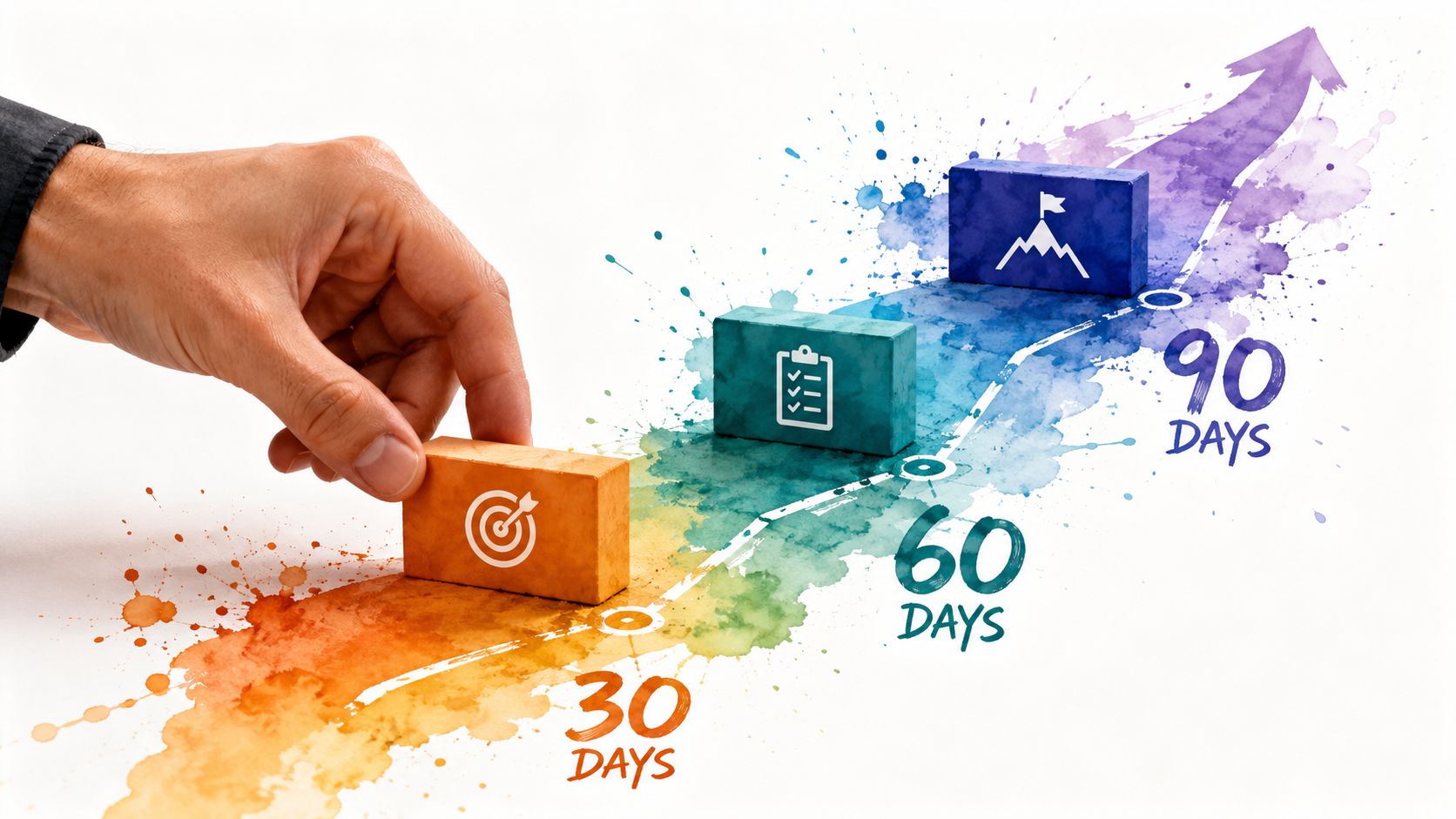
Days 1 to 30 make reality legible
Start by mapping the environment you have, not the one people assume exists.
Create one working view of the core systems, key vendors, business-critical workflows, major risks, and current owners. Don't overcomplicate this. A plain operating map beats a polished fiction every time.
Focus on a few questions:
- Which systems matter most: Revenue, service delivery, finance, customer data, and security-relevant platforms.
- Who owns each outcome: Not who touches it. Who is accountable when it breaks, drifts, or stalls.
- Where decisions are stuck: Vendor choice, migration sequencing, data ownership, integration priorities.
- Which workarounds keep the business alive: Spreadsheets, manual reconciliations, side systems, and key-person dependencies.
This first month is about exposure. You are turning ambiguity into something leadership can inspect.
A practical output at the end of this phase should include:
- A system and owner map: One page is enough if it's clear.
- A top-risk list: Short, ranked, and tied to business impact.
- A decision backlog: The unresolved calls that are delaying progress.
If you want a more detailed reference for structuring this phase, a 90-day technology plan is a good model for the level of clarity required.
Days 31 to 60 install a working cadence
Once reality is visible, put a management rhythm around it.
Most organizations don't need more committees. They need one decision forum that has authority, attends to the right issues, and produces outcomes teams can act on.
Set a weekly cadence with a tight agenda:
- Review the top priorities.
- Surface blockers and dependencies.
- Make the pending decisions.
- Confirm owners and dates.
- Track risk and control impacts.
This should not become a status theater meeting. If updates dominate and decisions drift to “offline,” the cadence is broken.
During this phase, clean up decision rights. Be explicit about which choices sit with the executive sponsor, which belong to the product or operations owner, which require security review, and which the technology lead can make independently.
Days 61 to 90 ship visible simplification wins
Now earn trust.
Pick a handful of changes that reduce coordination tax quickly. Don't chase the biggest transformation milestone first. Chase the clearest reduction in friction, risk, or ambiguity.
Good candidates include:
- Retire one duplicate tool: Especially where two systems create conflicting data or duplicate process.
- Fix one high-friction workflow: A handoff between sales and ops, finance and operations, or customer support and engineering.
- Close one ownership gap: Assign and document an accountable owner for a business-critical platform or process.
- Tighten one audit trail: Improve access reviews, data handling, or approval visibility where the current process is murky.
These early wins matter because they do two things at once. They reduce complexity and they prove that the new operating cadence produces outcomes.
The right first win is not the most impressive one. It's the one that makes the organization feel immediate relief.
What leadership should expect by day 90
By the end of this window, the business should be able to answer basic questions crisply.
Who owns the major systems? What decisions are pending? Which risks are open? Where is complexity shrinking? What has shipped?
That's also the point where external support can be useful. Some companies use an internal executive to drive this. Others bring in a fractional leader or advisory support. CTO Input is one option for that kind of work, focused on mapping current reality, clarifying decision rights, and installing an execution rhythm that leaders can inspect.
The standard is simple. By day ninety, leadership should feel less confused, not more informed.
What Success Looks Like A Calmer Faster Organization
Success in digital transformation isn't a prettier dashboard or a bigger software budget.
It's a business where decisions stick, reporting is cleaner, work finishes, and risk is visible before it becomes a public problem. The organization feels calmer because people know who owns what, how priorities get resolved, and where to take the next issue.
The before and after is obvious
Before, every initiative feels urgent and unfinished. Teams carry side spreadsheets. Vendors shape the roadmap because internal leadership hasn't. Board questions trigger scramble mode. Good operators spend too much time translating across functions.
After, the business runs differently:
- Priorities are fewer and clearer
- Owners are named
- Decision paths are understood
- Updates show movement, not just activity
- Risk is discussed in operational terms, not abstract policy language
That shift changes more than delivery. It improves board confidence, spend discipline, customer experience, and leadership trust in the numbers.
What executives should demand
If you're funding transformation, ask for evidence of operating control, not just implementation effort.
Ask these questions:
- Who owns the outcome
- What decisions are unresolved
- What has been simplified
- Which risks are still open
- What can the business do now that it could not do before
If the answers are fuzzy, the transformation isn't under control yet.
A healthy technology environment feels boring in the best possible way. Fewer surprises. Cleaner handoffs. Better decisions.
That is the ultimate goal. Not digital theater. Not endless modernization language. A business that can change without losing grip.
If technology is creating drag, weakening visibility, or raising avoidable risk, a conversation with CTO Input can help make the situation legible. The goal is simple: identify the ownership gaps, decision failures, and operating issues that are taxing the business, then outline the first practical moves to restore control.