

A cyber incident can create financial damage long after the systems come back online. Lost revenue, emergency recovery work, customer communication, legal review, and regulatory questions can all arrive at once.
The right cyber insurance coverage reduces the financial shock. It does not make the business safe, and a large headline limit does not guarantee the loss is covered.
Start with the loss your business could face, then work backward to the policy, controls, and risk you are prepared to retain.
Key Takeaways for Cyber Insurance Coverage
- Size coverage against realistic loss scenarios, not revenue alone. Model downtime, recovery, breach response, ransomware, vendor failure, and third-party claims.
- Separate first-party costs, which hit your own business, from third-party liability to customers, partners, and regulators.
- Read sublimits, retentions, waiting periods, exclusions, and consent rules before comparing premiums.
- Treat the underwriting application as a record of your actual security posture. Do not attest to controls that only exist in a policy document.
- Review limits after an acquisition, major cloud migration, new data type, critical vendor change, or material operational shift.
Start With the Loss, Not the Policy Limit
The question is not, “Can we buy a $5 million policy?” The question is, “What would a serious cyber event cost after insurance, deductibles, waiting periods, and exclusions?”
A business with modest revenue can still carry large exposure if operations depend on a payment platform, cloud application, logistics provider, or small group of critical customers.
Map your likely financial exposure
Bring finance, operations, technology, legal, and your broker into the same conversation. Model four scenarios: a ransomware shutdown, a customer data breach, a critical vendor outage, and a third-party claim after a service failure.
For each scenario, estimate lost income, payroll, overtime, forensic investigation, legal costs, public relations, restoration work, customer support, notification, and contractual exposure. Use ranges. False precision can create false confidence.
Your cyber risk appetite should set the boundary. If leadership has not agreed on acceptable downtime, uninsured loss, and vendor disruption, the coverage limit is only a number. A technology risk appetite framework gives leaders a practical way to make those tradeoffs visible.
Separate first-party and third-party exposure
First-party coverage addresses your own costs after an incident. It may include forensics, data recovery, business interruption, notification, credit monitoring, crisis support, and cyber extortion response.
Third-party coverage addresses claims from others. That may include customer lawsuits, contractual claims, legal defense costs, and some regulatory response expenses. The NAIC explanation of first-party and third-party coverage is a useful starting point.
The distinction matters because one event can create both. A cloud outage may stop your operations, expose customer data, and trigger claims from clients who could not use your service.
Size Cyber Insurance Coverage Around Real Scenarios
Mid-market companies often receive quotes ranging from $1 million to $10 million or more. Those figures are not a sizing method. Two companies with the same revenue can have very different risk.
A manufacturer with an outage-sensitive plant, a healthcare provider with sensitive records, and a professional services firm holding client data should not buy coverage the same way.

Model a ransomware shutdown
Ransomware attacks can affect far more than files. Your ERP, payroll, customer support, inventory, email, and payment systems may all be unavailable. Staff may revert to manual work. Orders may stall. Customers may wait.
Build the scenario around the time required to restore the business, not the ransom demand. Include lost margin, delayed collections, overtime, outside recovery specialists, data recovery, and customer notifications.
Build low, base, and severe scenarios for comparison. Estimate downtime hours or days multiplied by lost contribution margin. Add fixed payroll and operating costs during the outage, incident-response and forensic costs, data recovery, customer notifications, credit monitoring services, legal and regulatory response, ransomware and extortion costs, and third-party claims.
Adjust each scenario for revenue, data volume, industry regulation, technology dependencies, critical vendor dependencies, and customer concentration. A 30/60/90-day recovery comparison is illustrative only, not a universal limit recommendation. These scenarios model potential loss, but they don’t mean the cyber insurance policy covers every cost.
Cyber extortion coverage may include negotiation and ransom-related costs, but it can carry a separate sublimit and carrier approval requirements. Do not assume a ransomware payment is automatically covered.
Model a breach and vendor failure
A data breach insurance claim has a different loss profile from a ransomware shutdown. You may need forensic investigation, breach counsel, notification, credit monitoring services, call-center support, customer notifications, and a legal response.
Regulatory fines may be covered only where legally insurable and subject to the policy wording. Confirm which terms in your cyber insurance policy apply to vendor-held data, regulatory response, and related expenses.
Also test key providers. The FTC advises businesses to consider whether a policy covers attacks involving data held by vendors, not only systems you control directly. A cyber attack involving a cloud, payroll, payment, or managed service provider can create a separate loss. Review the FTC’s cyber insurance guidance alongside your cloud, payroll, payment, and managed service provider dependencies.
A technology leader for growing companies should keep a current systems inventory and third-party vendors list. Without it, you cannot size dependent business interruption exposure with confidence.
The Headline Limit Is Not Always the Usable Limit
A cyber insurance policy can show a $5 million aggregate limit and still leave a material gap. It may provide first-party coverage only when the relevant trigger, retention, and sublimit are satisfied.
Cyber insurance is made up of separate insuring agreements. Each can have its own trigger, retention, cap, waiting period, definition, and condition.
Read the declarations page, endorsements, exclusions, and claims provisions. A sales summary cannot answer the hard questions.
Check sublimits, retentions, and waiting periods
A sublimit is a smaller cap for a particular loss type. Ransomware, social engineering, funds transfer fraud, business interruption, dependent vendor downtime, and regulatory costs may have separate limits.
A retention is the amount your company pays before insurance responds. A waiting period can delay income-loss coverage for hours or days. That may be manageable for a short outage and painful for a business that loses revenue by the hour.
Payment fraud and social-engineering exposure should be modeled around approval failures, impersonation, and human error, not only a technical intrusion.
Ask your broker to map each major scenario against the specific coverage part, limit, sublimit, retention, and waiting period. Ask which insuring agreement responds, whether the limit is shared or separate, and whether the sublimit applies per event or in the aggregate.
Also ask what coinsurance and definitions apply, and whether the policy covers vendor outages and social-engineering losses. Put the answers in writing.
Check claims conditions before an incident
Many policies require prompt notice and carrier consent before you hire breach counsel, forensic investigators, negotiators, or public relations firms. Some require use of approved panel vendors.
Ask whether carrier consent is required before selecting counsel, negotiators, forensic investigators, or public-relations firms. Document these requirements in your incident-response plan, including the carrier’s breach hotline, your broker, counsel, decision rights, and escalation path.
That does not mean you should wait for insurance approval to protect people or contain an active threat. Immediate containment and safety decisions still come first.
A claim can become harder to defend when normal operating losses are mixed with incident-related losses. Keep records of downtime, recovery work, costs, and decisions from the first day.
Security Controls Affect the Coverage You Can Buy
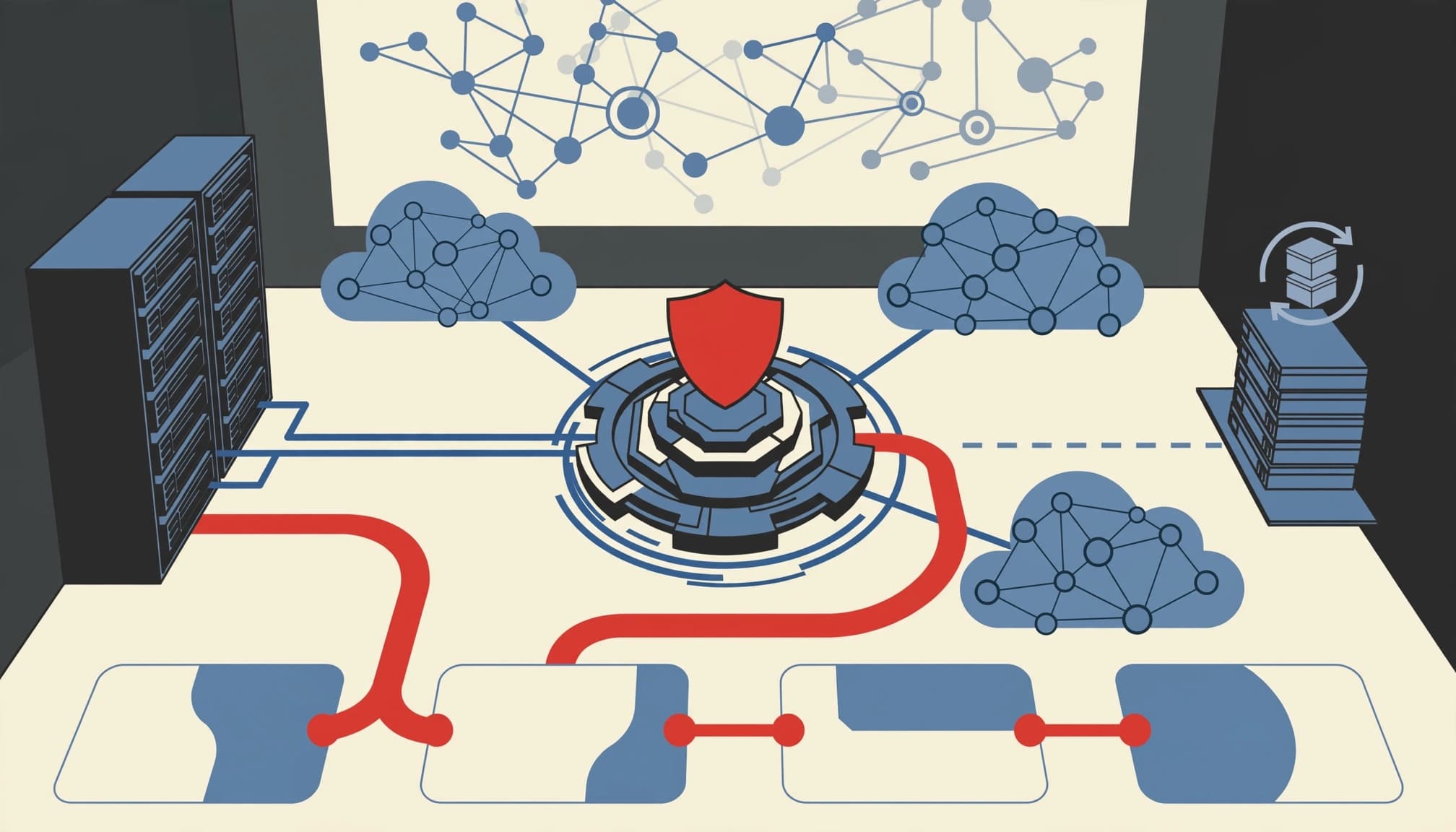
Insurance is not a substitute for security. It is a financial backstop after controls fail. Carriers increasingly want evidence that the stated security posture operates consistently across the business, not just a list of tools purchased years ago.
This is where executive technology leadership matters. A fractional CTO, fractional CISO, or interim CTO can help close a technology leadership gap when no one owns the connection between security controls, vendor risk, recovery readiness, and board reporting.
Prove the controls are operating
Underwriters commonly ask about multi-factor authentication, endpoint detection and response, patching, privileged access, email protection, and protected backups. These controls can reduce the likelihood and severity of malware infections, but they don’t replace a cyber insurance policy.
They also care whether controls operate consistently for administrators, remote workers, acquired businesses, and critical vendors. Strong evidence may affect insurability, available limits, and premium terms.
CISA recommends maintaining offline, encrypted backups and regularly exercising an incident response plan. Its ransomware response guidance is useful because it focuses on recovery, communications, and decision-making under pressure.
Don’t submit an application based on assumptions. Test backup restoration. Review privileged accounts. Confirm who owns patching exceptions. Document gaps and remediation dates.
Treat vendor risk as part of your exposure
Your business may depend on third-party vendors for payroll, hosting, payments, customer support, data storage, and core applications. A failure at one of them can create your own business interruption, even when your internal systems remain secure.
Third-party risk management should document which third-party vendors hold sensitive data, administer privileged access, support essential operations, or have recovery-time commitments. This evidence helps estimate dependent downtime and supports underwriting, but it doesn’t create coverage by itself. Strong third-party risk and cyber insurance oversight gives underwriters and leadership a more credible view of exposure.
Common Gaps That Can Put a Claim at Risk
Coverage disputes often begin with small gaps, not dramatic failures. Late notice, inaccurate application answers, missing records, an unapproved response vendor, or a control that was not operating can all create problems.
Policy wording controls the outcome. Treat every broad coverage label as a question that needs a specific answer.
Watch for narrow triggers and exclusions
Business interruption coverage may require a defined cyber event and a direct link to your financial loss. A routine technology failure or pre-existing operating issue may not qualify.
Other restrictions can involve prior known incidents, failure to maintain stated controls, sanctions concerns around extortion payments, war-related exclusions, or social engineering losses that require a separate endorsement. Regulatory costs or fines may also be limited by applicable law and policy wording.
A business owner policy may include limited data breach insurance, but that endorsement may not address business interruption, vendor failure, extortion, or broader liability exposure. If technology and data are material to your operations, evaluate standalone cyber liability insurance rather than assuming a bundled endorsement is enough. Technology errors and omissions coverage addresses a different professional or service-performance exposure, so it shouldn’t be treated as a substitute for cyber coverage.
Keep the application aligned with reality
Your cyber insurance renewal should start by reviewing the cyber insurance policy, endorsements, last year’s application, claims history, and business changes together. Compare every answer with the company’s current security posture.
That includes new cloud providers, acquisitions, remote-access paths, privileged accounts, sensitive-data categories, AI providers, and critical systems. Record material changes and ask the broker whether any endorsement, exclusion, or sublimit changed. A renewal-focused cybersecurity risk summary can help management separate material gaps from technical noise.
Give the Board a Decision-Ready View
Board cybersecurity reporting shouldn’t be a stack of alerts or a copy of the insurance questionnaire. Directors need the financial exposure, control status, recovery evidence, vendor concentration, insurance gaps, and decisions management needs.
A board-ready risk summary should show the policy limits that apply to each major scenario, not only the headline aggregate limit. It should also identify the retention, key exclusions, unresolved control gaps, and any risk leadership has chosen to accept.
For each major scenario, show the following:
- Ransomware: modeled gross loss, expected insurance response, applicable sublimit, retention, waiting period, exclusions, and estimated uninsured amount.
- Breach: modeled gross loss, expected insurance response, applicable sublimit, retention, waiting period, exclusions, and estimated uninsured amount.
- Vendor outage: modeled gross loss, expected insurance response, applicable sublimit, retention, waiting period, exclusions, and estimated uninsured amount.
- Third-party liability: modeled gross loss, expected insurance response, applicable sublimit, retention, waiting period, exclusions, and estimated uninsured amount.
This format helps leadership decide whether to increase limits, negotiate sublimits, improve controls, or knowingly retain the exposure.
Assign one executive owner
Someone must own insurance readiness, incident response readiness, vendor oversight, and reporting. That doesn’t mean one person performs every task. It means ownership is clear when a renewal question, control failure, or incident appears.
This is practical technology governance for CEOs. It also creates better board-ready reporting and fewer last-minute surprises.
Review when the business changes
Review cyber coverage at least twice a year and before renewal. Revisit it after revenue or data-volume changes, new regulatory exposure, an acquisition, or a leadership transition.
Also review coverage after a cloud migration, critical third-party vendor change, new technology dependency, or material change to recovery time objectives. Major vendor changes, post-merger technology integration, and new data categories also warrant a fresh review.
If risk visibility is weak, Build a Board-Ready Technology Risk View before the next renewal or board meeting. The goal is clearer exposure, stronger ownership, and confident decisions.
Frequently Asked Questions
Is a $5 million cyber policy enough?
Maybe, but the number alone doesn’t answer the question. A $5 million aggregate can include smaller sublimits for ransomware, fraud, downtime, regulatory response, or vendor disruption.
Compare the usable limit against your modeled loss after sublimits, retentions, waiting periods, exclusions, and uninsured recovery costs.
What does cyber insurance typically cost?
Premium costs vary by industry, revenue, claims history, data sensitivity, security posture, limits, retentions, and selected terms. Directional market estimates for mid-market organizations range widely, from several thousand dollars annually for lower limits to tens of thousands for larger limits.
A small business may have lower revenue but still face significant exposure if it depends on a payment platform, cloud provider, sensitive data, or a small number of customers.
Compare retained risk, not premium alone. A lower-priced policy can have a higher retention, weaker vendor-outage coverage, or narrower business interruption terms.
Does cyber insurance replace a cybersecurity program?
No. Insurance pays according to policy wording after a covered loss. It doesn’t replace access control best practices, tested backups, disaster recovery planning, incident response readiness, or vendor due diligence.
The FTC’s data breach response guide is a useful reminder that notification, legal duties, containment, and customer communication still require leadership action.
The Right Limit Starts With Clear Ownership
Enough coverage isn’t the biggest limit you can afford. It’s the level of transferred risk that matches your real exposure, recovery capability, and cyber risk appetite.
Read the policy as a set of separate promises. Test the controls behind the application. Make vendor dependence and uninsured risk visible to leadership and the board.
Cyber insurance is one part of risk management. It doesn’t replace cybersecurity controls, recovery planning, or clear ownership. That’s how cyber insurance becomes part of a business-aligned technology strategy, not another document discovered during a bad week.
This article provides educational information, not legal or insurance advice. Confirm policy interpretation, coverage decisions, and regulatory questions with your broker, insurer, and qualified counsel.