

Cyber insurance underwriting has changed. Carriers are no longer satisfied with a list of tools or a signed questionnaire. They want evidence that security controls work across the systems attackers are most likely to target.
That puts cyber insurance MFA EDR requirements in front of CEOs, COOs, founders, CFOs, and boards. Identity protection, especially multi-factor authentication, remains a leading underwriting concern. A missing control can lead to a decline, restrictive terms, higher pricing, or claim denials, depending on the policy and the carrier’s interpretation. Requirements still vary by carrier, industry, company size, and coverage, so management should present the company’s actual security posture honestly.
Start by treating the application as a business risk review, not an IT form.
Key takeaways: what you need before seeking a cyber insurance quote
Most underwriters expect a working baseline, not a perfect environment. That baseline usually includes:
- Multi-factor authentication for high-risk identities, email, remote access, privileged users, and cloud administration.
- Endpoint detection and response across the devices that run the business, with coverage reports available.
- Isolated data backups with recent, recorded restore tests.
- Privileged-access controls, timely patching, vulnerability management, and email security.
- Security awareness training and an exercised incident response plan, not just a written document.
Carriers increasingly ask for artifacts to validate controls against their underwriting requirements. Keep MFA and EDR coverage reports, vulnerability summaries, backup restore records, penetration testing results, and tabletop exercise notes. Scope and testing frequency for penetration testing depend on the business and its exposure. Coalition’s overview of common cyber insurance requirements also notes that requirements vary by carrier and policy form, with MFA, training, backups, and identity controls remaining central concerns.
A control written in a policy, or promised by a vendor, isn’t complete until it operates in practice and someone owns it.
What cyber insurance MFA EDR requirements mean for your quote
Cyber insurance MFA EDR requirements are often the first underwriting threshold because stolen credentials and unmanaged devices create fast paths into a business. Carriers use different application forms and thresholds, so confirm exact wording with your broker before you attest to anything.
A practical cyber insurance renewal plan starts with scope. Identify the users, systems, cloud tenants, administrators, vendors, and locations included. Review internet-facing systems and high-risk attack paths, using penetration testing where appropriate. “Most systems” is not the same answer as “all systems in scope.”

MFA must protect the paths attackers use most
MFA should protect email, Microsoft 365 or Google Workspace, VPN and remote access, cloud administration, privileged accounts, backup systems, finance applications, and critical vendor portals.
Administrative accounts should be covered, along with service accounts where technically feasible, contractors, and approved exceptions. Password complexity and forced password changes don’t replace MFA. They don’t stop phishing, credential reuse, or a stolen session.
Missing MFA on email or administrative access can trigger a decline, a restriction, or a hard underwriting conversation. Review the method as well as the coverage. Options such as phishing-resistant MFA, including FIDO2 security keys, may receive favorable treatment in some reviews, but they aren’t universally required.
Export identity-provider enrollment reports, conditional-access settings, exception lists, and coverage percentages for the application. Be candid about shared mailboxes, contractors, service accounts, and approved exceptions. Current underwriting control guidance makes the same point: an MFA claim needs to match the real environment.
Endpoint detection and response coverage matters only when someone responds
Traditional antivirus may still have a place, but it may not meet current expectations for endpoint detection and response. EDR should cover laptops, desktops, servers, important virtual machines, administrator devices, and remote or temporary devices.
Buying the software is only the first step. You also need a clear answer to four questions:
- Who receives alerts after hours?
- Who investigates suspicious activity?
- Who can contain a device or account?
- When must a managed provider notify your leadership team?
An EDR versus antivirus comparison for small businesses is useful background when a provider calls basic antivirus “endpoint protection.” Antivirus, EDR, and managed detection and response aren’t interchangeable. The relevant issue is detection, monitoring, and response across your actual environment.
A managed detection and response provider may deliver alert triage, containment, and escalation. Management still needs defined response ownership and notification terms. Keep deployment reports, alert records, response procedures, provider terms, and examples of closed investigations as application evidence. If no senior person owns those answers, a fractional CISO support option can help close a real technology leadership gap without forcing a rushed full-time hire.
Backups, access, and patching show whether you can recover
Insurers are looking beyond isolated products. They want to know whether your technology risk management can prevent spread, restore operations, and support clear decisions during an incident.
Protected backups and tested recovery are now essential
A successful data backups job proves that data was copied. It does not prove that your business can recover.
Your recovery design should separate backup administration from ordinary user credentials. Immutable backups can reduce the chance that ransomware attacks take out production and recovery at the same time. A 3-2-1-1-0 approach is one useful model, not a universal rule.
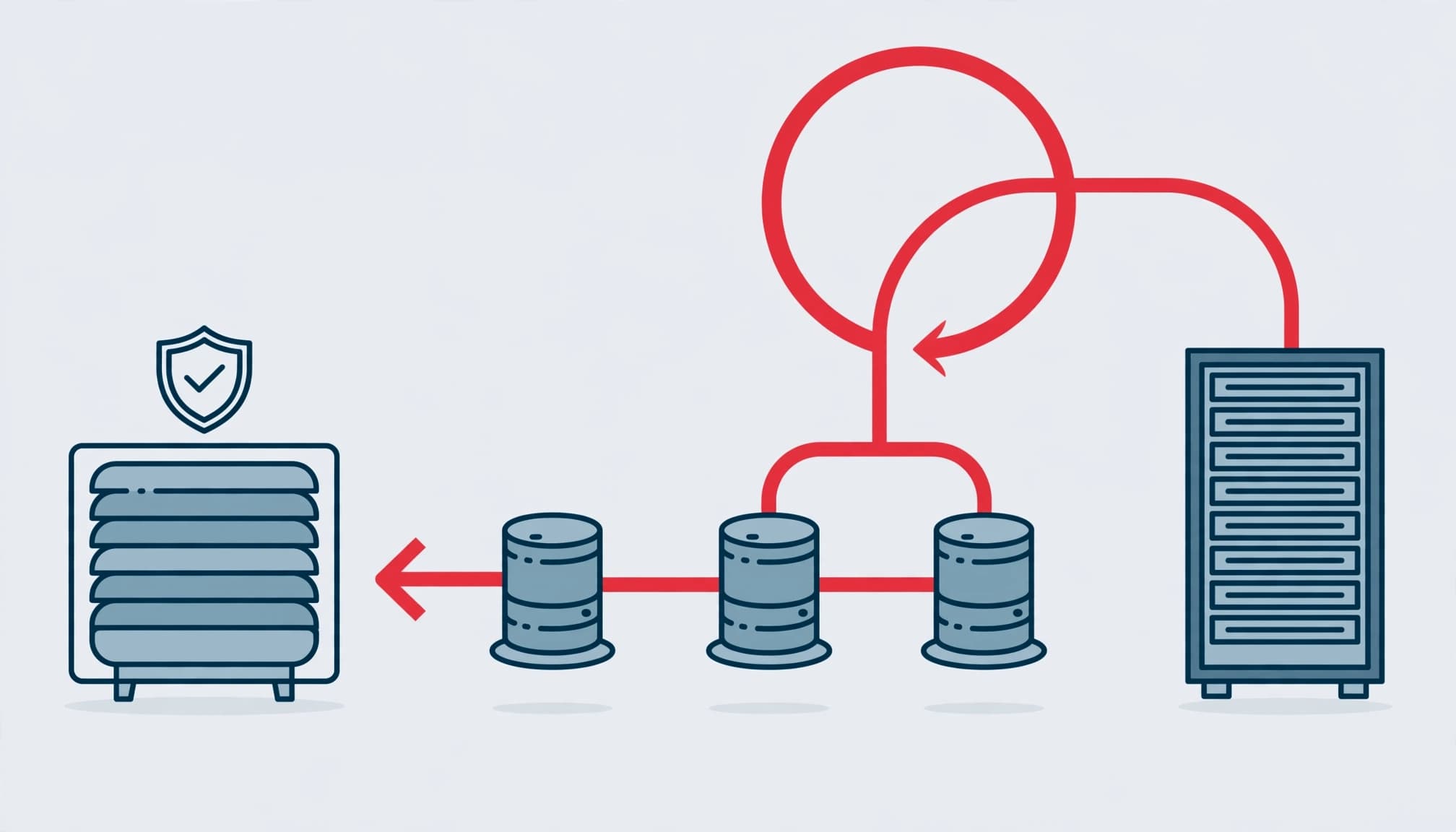
Run restore tests for representative files, applications, and systems. Record the date, outcome, recovery time, failures, and corrective actions. Some underwriters ask for recent testing, and ESET’s insurance readiness overview also highlights protected backup and continuous monitoring practices.
Immutable backups help isolate recovery data, but they don’t guarantee recovery. Test whether your recovery process works under realistic conditions.
Your recovery time objective, or RTO, is how quickly a system must return. Your recovery point objective, or RPO, is how much data loss the business can tolerate. Ask which systems return first, and when you can safely resume revenue-producing work.
A green backup dashboard is not proof of recovery. A recorded restore test is.
Privileged access and patching reduce the blast radius
Separate administrative accounts from everyday user accounts. Apply least privilege and use zero trust principles where practical. Review access regularly. Offboard employees and contractors promptly.
Privileged access management can support credential vaulting, just-in-time access, and session monitoring where the risk warrants it. Keep evidence of privileged-access reviews, approvals, and timely account removal.
Pay special attention to service accounts, former employees, vendor accounts, domain administrators, cloud administrators, and line-of-business systems. These accounts often sit outside normal user reviews, yet they can provide broad access.
Patching needs the same discipline. Patch management should include a systems inventory, vulnerability scanning, remediation deadlines, and documented exceptions. Vulnerability management is broader than patch deployment alone, and internet-facing systems deserve faster attention.
Use risk-based penetration testing to validate internet-facing systems. CISA’s Known Exploited Vulnerabilities catalog can help your team prioritize, but your actual service levels should reflect your systems and exposure. Penetration testing doesn’t replace vulnerability management.
Feed penetration testing findings into remediation priorities, with clear owners and due dates. Unsupported software needs removal, isolation, or a documented exception. Each exception should identify the owner, compensating control, and remediation date. That is practical technology risk oversight, not paperwork.
Email, training, and incident response complete the baseline
Most attacks still begin with a message, a credential, or a moment of confusion. Your controls must reduce that risk and give people a clear path when something goes wrong.
Secure email and train for real attacks
Email security should include SPF, DKIM, and DMARC enforcement where appropriate. It should also include spam filtering, malicious-link protection, and attachment analysis. Insurers view these controls as evidence that you actively manage email risk.
Security awareness training should cover phishing, impersonation, wire fraud, and reporting expectations. Keep participation records and follow up with people who miss training or repeatedly fail exercises. A 2026 cyber insurance control checklist also includes training and email defenses among common underwriting topics.
Training is not about catching people out. It helps staff pause before one bad click becomes an operational crisis.
Exercise the incident response plan with leadership
A written incident response plan should name decision-makers, legal counsel, the insurer, breach counsel, forensic investigators, communications support, and critical vendors. It should spell out notification duties, escalation times, emergency approval paths, and outage procedures.
The plan should also address privacy and regulatory consequences. A suspected breach may require data privacy assessment, regulator notification, or contractual notice. Requirements vary by jurisdiction, sector, contract, and the facts. Coordinate with breach counsel where applicable.
Run a tabletop exercise at least annually. Test a compromised mailbox, ransomware event, wire fraud attempt, or critical vendor outage. Exercise decision-making, communications, legal escalation, and recovery priorities. Keep the findings, decisions, and corrective actions, not only an attendance sheet.
Penetration testing provides complementary assurance. A tabletop tests governance and decisions, while penetration testing examines selected technical attack paths.
Your board should see material risks, recovery readiness, open decisions, and accountable owners. Board cybersecurity reporting should give directors a business view, not a dense list of technical activity.
How to prove your controls and avoid a delayed quote
The fastest way to slow a quote is to make broad claims that nobody can support. Management should verify every application answer. A vendor can provide technical input, but it shouldn’t make business representations about your risk posture or incident history.
Build an evidence packet before the application arrives
Create one dated evidence packet for MFA coverage, EDR deployment, backup configuration, restore tests, recovery objectives, patching cadence, vulnerability scans, penetration testing, email settings, training results, incident exercises, and vendor oversight.
Treat this as evidence documentation, not just a file collection. For each answer, note the control owner, evidence location, scope, exceptions, open issue, and decision date. This helps your broker separate a true control gap from a wording issue.
It also gives leadership a clearer view across business units, cloud platforms, locations, and third parties. If a control has no owner or no test, it isn’t complete.
For transaction buyers, an insurance application may contain representations about the company’s controls and loss history. An acquisition agreement separately allocates risk through representations and warranties, covenants, and closing conditions. Diligence should cover technology, data privacy, cybersecurity, intellectual property, open-source software, AI systems, IT infrastructure, vendor dependencies, and applicable regulatory obligations. Materiality qualifiers, disclosure schedules, indemnification, survival periods, escrow, and representations-and-warranties insurance (RWI) can affect the allocation of identified cyber risks. These requirements and legal effects vary by transaction, policy, and jurisdiction. A penetration testing report can inform diligence, but it doesn’t prove that vulnerabilities are absent or guarantee insurance coverage.
Disclose gaps honestly and read the policy behind the quote
Don’t answer yes when a control exists only on paper or covers only part of the environment. For every gap, state the current protection, business exposure, named owner, compensating control, and realistic remediation date. For example, describe the scope, method, exceptions, and remediation status of phishing-resistant mfa accurately. Inaccurate or incomplete answers can contribute to disputes or claim denials, subject to the policy language and applicable law.
Read the policy as carefully as the questionnaire. Review retentions, limits, ransomware exclusions or sublimits, prior-acts language, panel vendors, consent requirements, notification deadlines, material-change conditions, and business interruption coverage. Check waiting periods, system dependencies, contingent coverage, and reliance on payroll, hosting, payment, and customer-support vendors. Cyber policy guidance on notification and ransomware conditions is a useful reminder that a cyber liability insurance quote isn’t a promise every loss or ransom payment will be covered.
Coverage has to match the business you operate, including dependence on payment, payroll, hosting, and customer-support vendors. Ask how the policy treats dependent vendors and whether contractual risk allocation provides protection beyond the insurance.
Frequently Asked Questions
Do cyber insurers require MFA for every user and system?
Requirements vary by carrier, policy, industry, and company size, but insurers commonly expect MFA for email, remote access, privileged accounts, cloud administration, and other high-risk systems. Document approved exceptions, service accounts, contractors, and coverage percentages instead of claiming complete coverage when gaps remain.
Is antivirus enough to satisfy EDR requirements?
Basic antivirus may not meet a carrier’s expectations for endpoint detection and response. Insurers typically want evidence that laptops, servers, administrator devices, and other in-scope endpoints are monitored and that someone can investigate, contain, and escalate alerts.
What evidence should a company provide with its cyber insurance application?
Prepare dated MFA and EDR coverage reports, backup and restore-test records, vulnerability summaries, penetration testing results, patching reports, email security settings, training records, and incident response exercise notes. Each item should identify its scope, owner, exceptions, open issues, and remediation date.
Can a control gap cause a cyber insurance claim denial?
A gap or inaccurate application answer can contribute to restrictive terms, exclusions, disputes, or claim denial, depending on the policy language and applicable law. Management should describe the actual environment honestly, including compensating controls, business exposure, and a realistic remediation plan.
Put operating reality ahead of paperwork
The priority order is clear. Protect identity with MFA. Monitor endpoints and assign response ownership. Preserve recovery through isolated, tested backups. Limit privileged access. Patch known weaknesses. Secure email. Train users. Exercise incident response.
Insurance complements technology risk management. It doesn’t replace business continuity planning, disaster recovery planning, or clear executive ownership.
Begin 90 to 120 days before the policy renewal. Use that window for restore testing, penetration testing, MFA and EDR evidence review, and remediation of material findings. Don’t rely on a last-minute test to resolve an unresolved control gap.
Assign one executive owner. If the decisions, evidence, or accountability still feel scattered, Get an Executive Technology Clarity Check before the next policy renewal becomes another emergency.