
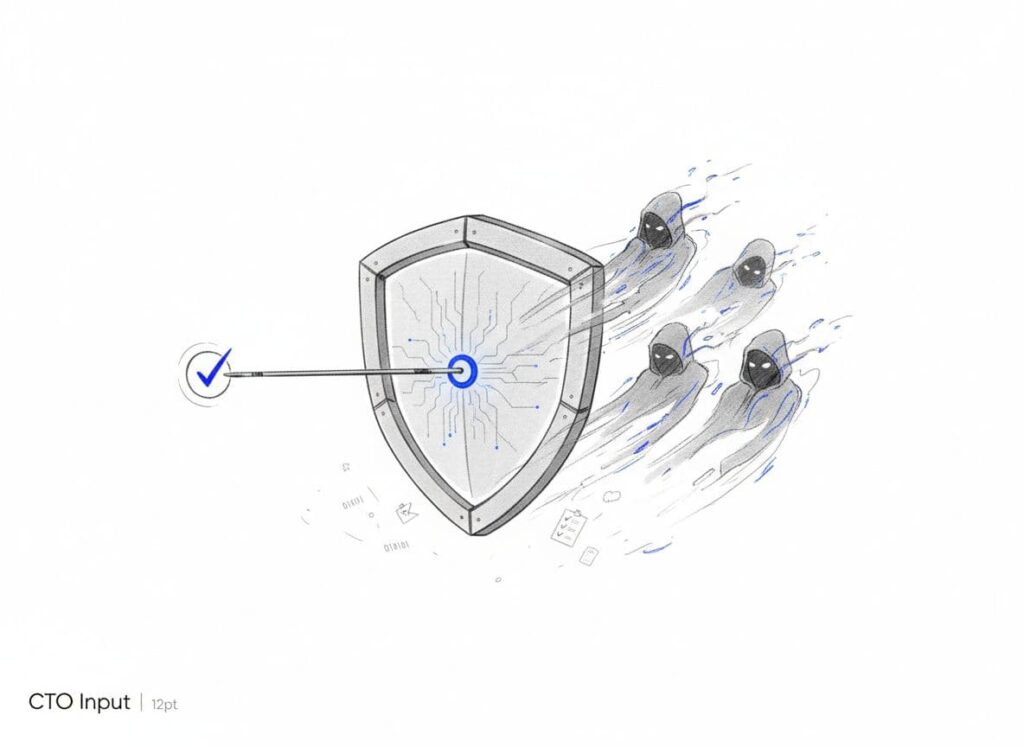
You are a CEO or founder who is spending more on tech and security and still not sleeping well. The first real cyber attack has not hit yet, but you can feel it coming. You are fielding board questions about leadership preparedness, hearing lenders ask about cyber risk, and you do not have a CISO you fully trust to own the answer.
You sign off on new tools, but the ROI is fuzzy. You have policies, but you are not sure how people would behave at 2 a.m. on a Sunday when customer data is at risk. That gap between what is on paper and what would happen in real life is where companies lose trust, money, and time.
A cyber resilience tabletop exercise, a discussion-based simulation, gives you a safe, simple way to test that gap before attackers do. It is a guided practice session where your leaders walk through a fake attack and see how they respond. At CTO Input, this is one of the core ways we help mid-market firms turn vague cyber fear into clear decisions and concrete next steps.
In this article, you will get a plain-language view of what a tabletop exercise is, how it works, and a short set of moves you can start in the next 30 days.
What Is a Cyber Resilience Tabletop Exercise and Why It Matters Now
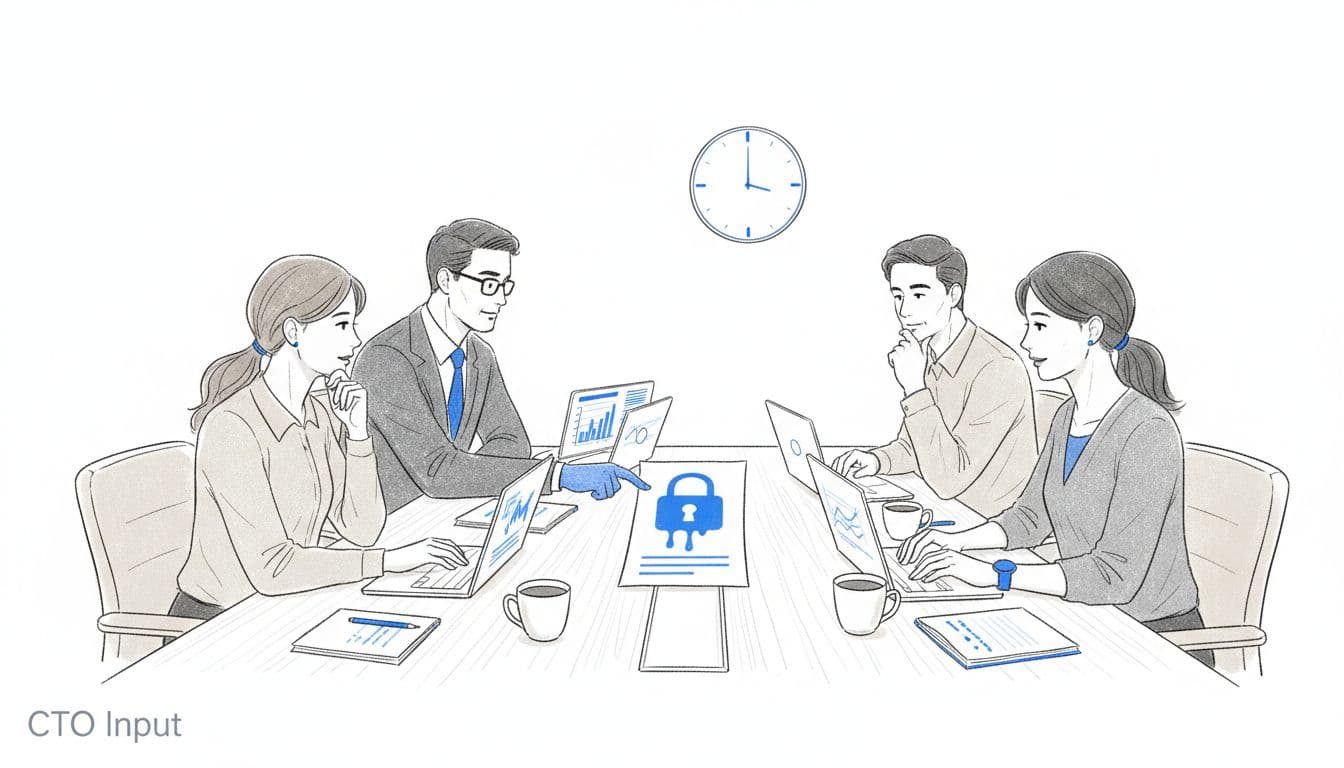
A cyber resilience tabletop exercise is a guided, low-stress meeting where your leadership team walks through a cyber incident and talks through what they would do at each step. Think of it as a fire drill for the business, not a technical test for the firewall.
Instead of technical personnel poking at systems, you and your team sit around a table and respond to a story to practice team coordination. A facilitator describes what is happening in the “attack,” usually in short time blocks. You decide who takes charge, which systems to shut down, what to tell customers, and when to involve law enforcement or regulators.
Public resources like CISA’s cybersecurity tabletop exercise tips and this overview of tabletop exercises in cybersecurity both make the same point. The real value is in how people think, decide, and coordinate during these scenarios, not just in what tools you own.
For an organization under board and lender pressure, a cyber resilience tabletop exercise delivers several wins:
- Fewer surprises when something breaks.
- Faster, cleaner decisions under stress.
- Clearer roles and responsibilities across leadership, not just IT.
- Better answers to “Are we ready?” in the boardroom.
- Early discovery of weak spots in backups, vendor contracts, and communication plans.
In short, you get to see the movie before it opens on the public stage.
How tabletop exercises test real decisions, not just your IT tools
Attackers count on confusion, not only weak firewalls. They win when leaders freeze, argue, or send mixed messages.
In a tabletop exercise, that confusion shows up in a safe way, helping to build decision-making skills and improve incident response. You might hear:
- “Can we legally shut that system off?”
- “Who tells customers their data may be exposed?”
- “Do we pay the ransom or not, and who decides?”
You work through tradeoffs like downtime versus data loss, or short-term pain versus long-term trust. You decide what you would tell your largest customer if their data sat in the affected system. You test who talks to the board and what you would actually say on that call.
This is business practice, not a technical drill. It looks a lot like a strategy session, only the stakes are “our ERP is locked” instead of “next quarter’s sales plan.”
The hidden risks you surface before attackers do
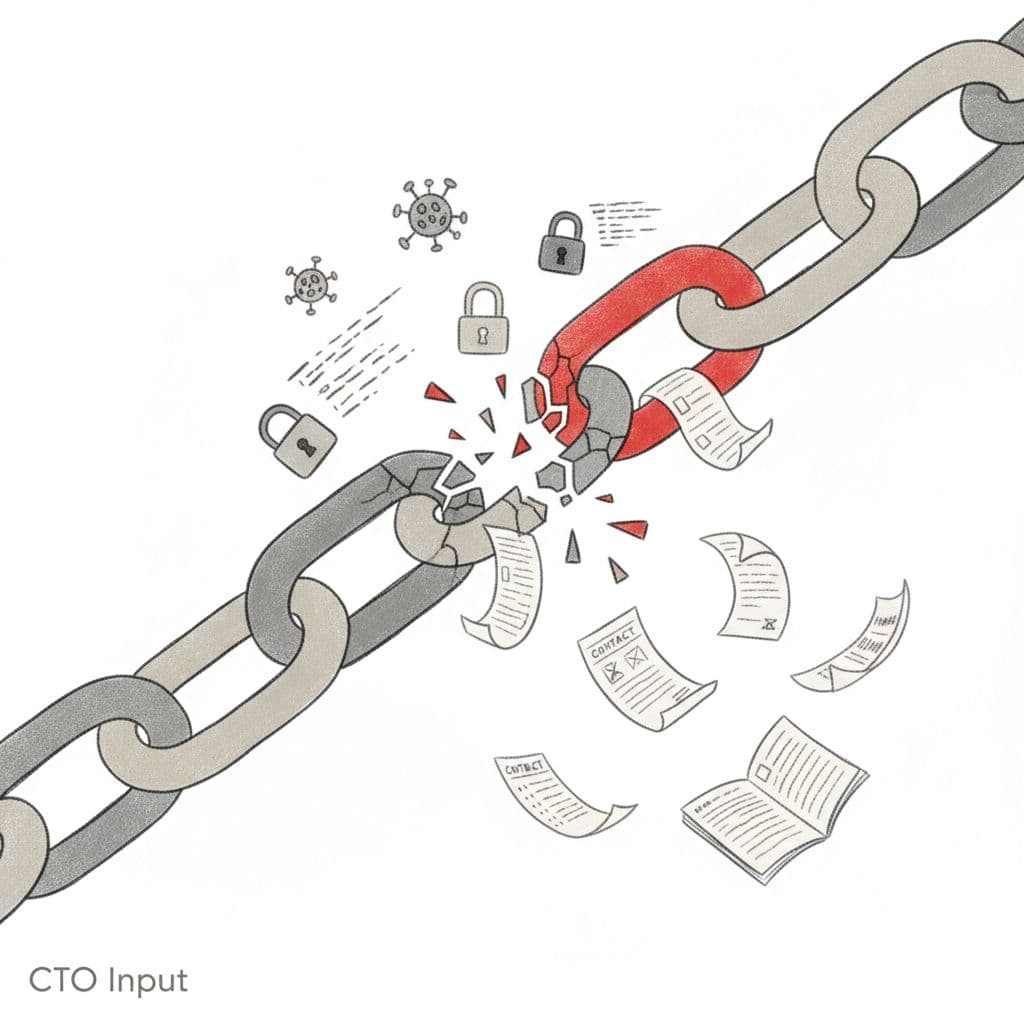
Most organization tabletop sessions expose the same family of identified gaps, and they are usually fixable:
- Outdated contact lists that still include people who left two years ago.
- Fuzzy decision rights about who can shut down a system, pull the plug on a vendor, or go public about an incident.
- Unclear vendor responsibilities in contracts, where it is not obvious who does what in an outage or breach.
- Missing playbooks for ransomware, email fraud, or loss of key customer data.
- Confusion around cyber insurance requirements and what you must document during an incident.
- Weak communication protocols for customers and board, either too slow or too vague.
Resources like the Center for Internet Security’s paper on six tabletop exercises to prepare your cybersecurity team show how common these gaps are, even in mature organizations.
When you surface these issues in a tabletop, you feel a bit exposed in the room. That is good. You are discovering the cracks while the lights are on and the clock is not ticking.
How To Run a Simple Cyber Resilience Tabletop Exercise in Your Company
You do not need a huge project plan or a full-time CISO to run a solid first tabletop. You need a focused scenario, the right people, and a clear way to develop actionable recommendations. You can also pull scenario ideas from CISA’s tabletop exercise packages or this guide on how to run a successful cybersecurity tabletop exercise.
Here is a simple playbook you can hand to your team.
Step 1: Choose one realistic attack scenario that hits where it hurts
Start with one scenario, not a full catalog. First, define the objectives for the tabletop exercise simulation.
Pick a scenario that matches your real risk:
- Ransomware attack that locks up your ERP or order management system.
- Phishing campaign that tricks finance into wiring out a large payment.
- Supply chain compromise involving customer records in your core platform.
- Insider threat targeting sensitive data.
- Zero-day exploit disrupting critical operations.
Ask a simple question: “Which systems can we not afford to lose for even one day?” Build the scenario on that system going down at the worst possible time, maybe month-end close or peak season.
Keep the script short. A one-page scenario with a few beats, such as “morning of the incident,” “end of day,” and “end of week,” is enough to start.
Step 2: Invite the right stakeholders and define clear roles before you start
The quality of the exercise depends on who is in the room.
At minimum, include:
- CEO or COO.
- Finance lead.
- Legal or outside counsel.
- HR.
- Communications or marketing.
- IT or engineering leadership.
- Security lead, if you have one.
Each role sees different risk. Finance worries about cash and fraud, legal about liability, HR about employees, comms about brand, IT about systems. In a real incident, misalignment between them slows everything.
Before you start, assign simple roles:
- Incident lead (the ultimate decision maker during the scenario).
- Communications lead for customers, employees, and the board.
- Business owner for the key affected system.
This keeps decisions from bouncing around the table with no clear owner.
Step 3: Walk through the attack, pause often, and ask, “What would we do next”
Now you run the movie.
A facilitator walks the group through the attack in small time jumps. For example:
- Hour 1: IT spots unusual activity and some users are locked out.
- Day 1: Ransom note appears, and customers are calling about issues.
- Day 3: A journalist emails asking for comment on a possible breach.
After each update, you pause and ask:
- What would we do now?
- Who decides?
- Who do we tell, and what do we say? Evaluate and clarify existing communication protocols.
- What information do we wish we had?
Keep a “no blame” rule. The goal is not to catch people off guard. The goal is to see where the plan is thin or missing.
In about 90 minutes, this format exposes unclear ownership, slow approval chains, and gaps in processes. It also builds shared muscle memory across your leaders.
Step 4: Develop actionable recommendations for your cyber resilience plan
The exercise is only as valuable as the actions that follow.
End with a 20 to 30 minute debrief. Ask:
- What worked well?
- What surprised us?
- Where did we lose time or clarity?
Then capture 5 to 10 specific actions, each with an owner and a due date. For example:
- Update and test the incident contact list.
- Clarify who can approve system shutdowns and public statements.
- Tighten vendor contracts and SLAs for key platforms.
- Develop or refine the incident response plan for ransomware or wire fraud.
- Define comprehensive recovery plans.
- Schedule the next tabletop in 6 to 12 months.
A seasoned outside partner can turn those actions into a simple 90-day plan that ties cyber resilience back to business goals, lenders, and customer expectations. That is the role CTO Input often plays for mid-market teams that want focus, not more noise.
From One Tabletop Exercise to a Repeatable Cyber Resilience Program
A single tabletop exercise is useful for building initial preparedness. A steady rhythm of them enhances your cybersecurity posture and becomes an asset.
Over 6 to 24 months, “good” for a mid-market company looks like this: leadership runs regular exercises, has a clear view of risk appetite, and holds better, calmer conversations about incidents in the boardroom. You get to a place where technology risk feels managed, not mysterious.
You can build that without hiring a full-time CISO if you have the right guide at your side.
How often to run exercises and what to track
For most mid-market “organizations”:
- Run 1 or 2 full sessions per year for the senior team, each followed by a debriefing session.
- Add smaller drills for finance, IT, or customer support on focused scenarios.
Track a few simple metrics:
- Time to key decisions in the exercise.
- Clarity of roles (how often did “Who owns this?” come up).
- Number of identified high-risk gaps found and fixed between sessions.
- Confidence level from the board and key customers over time.
You are not chasing perfection. You are building a habit of learning faster than attackers can exploit your blind spots.
When to bring in outside expertise so you are not testing in the dark
You should consider outside help, such as a fractional CISO, external facilitator, or advisory partner, when:
- Your team is unsure what “good” incident readiness looks like.
- Board or lender pressure around cyber risk is rising.
- You have had a near miss and know you were lucky.
Bringing in an external facilitator provides the benefit of objective expertise tailored to your needs. An external guide like CTO Input sits on your side of the table. The focus is on connecting cyber resilience to growth, margin, and trust, not on selling you another tool. You can explore more practical guidance on the CTO Input blog at https://blog.ctoinput.com or set up a focused conversation through https://www.ctoinput.com.
Conclusion
You cannot control when attackers show up, but you can control how prepared your leaders are when they do. A cyber resilience tabletop exercise gives you a safe space to see how your organization would respond, expose gaps early, and turn fear into a clear action plan that benefits the entire organization.
The path is simple. Grasp the concept, run a focused first session on a realistic scenario, turn the lessons into a short list of actions, and build a steady rhythm over time. Picture board meetings where you answer cyber questions and regulatory compliance concerns with calm facts, not guesswork. Picture cyber incidents that feel like managed crises, not chaos.
If you want to go deeper, start with more practical guides on the CTO Input blog at https://blog.ctoinput.com. When you are ready to design your next session with an experienced guide at your side, visit https://www.ctoinput.com to set up a short discovery call.