

You carry a justice mission that cannot pause for system outages, broken reports, or security scares. Staff are already stretched. Funders want clarity. Boards want proof.
A clear nonprofit technology roadmap is how you turn all that quiet strain into a plan you can defend. Not a wish list. Not a vendor slide deck. A 3-year, sequenced path that makes work easier in year one and safer and smarter by year three.
This guide lays out what that plan can look like for justice-focused organizations, and how to keep it honest, fundable, and grounded in your real constraints.
Key takeaways
- A good roadmap starts with stabilizing and seeing your full system, not buying new tools.
- Year 1 focuses on foundations: inventory, security, reporting, and basic governance.
- Year 2 connects systems and cuts manual work so staff get time back.
- Year 3 is about proof, growth, and deeper security that boards and funders can trust.
- You do not have to do this alone, but you do need a named owner and a simple process.
Why justice-focused nonprofits need a 3-year technology roadmap
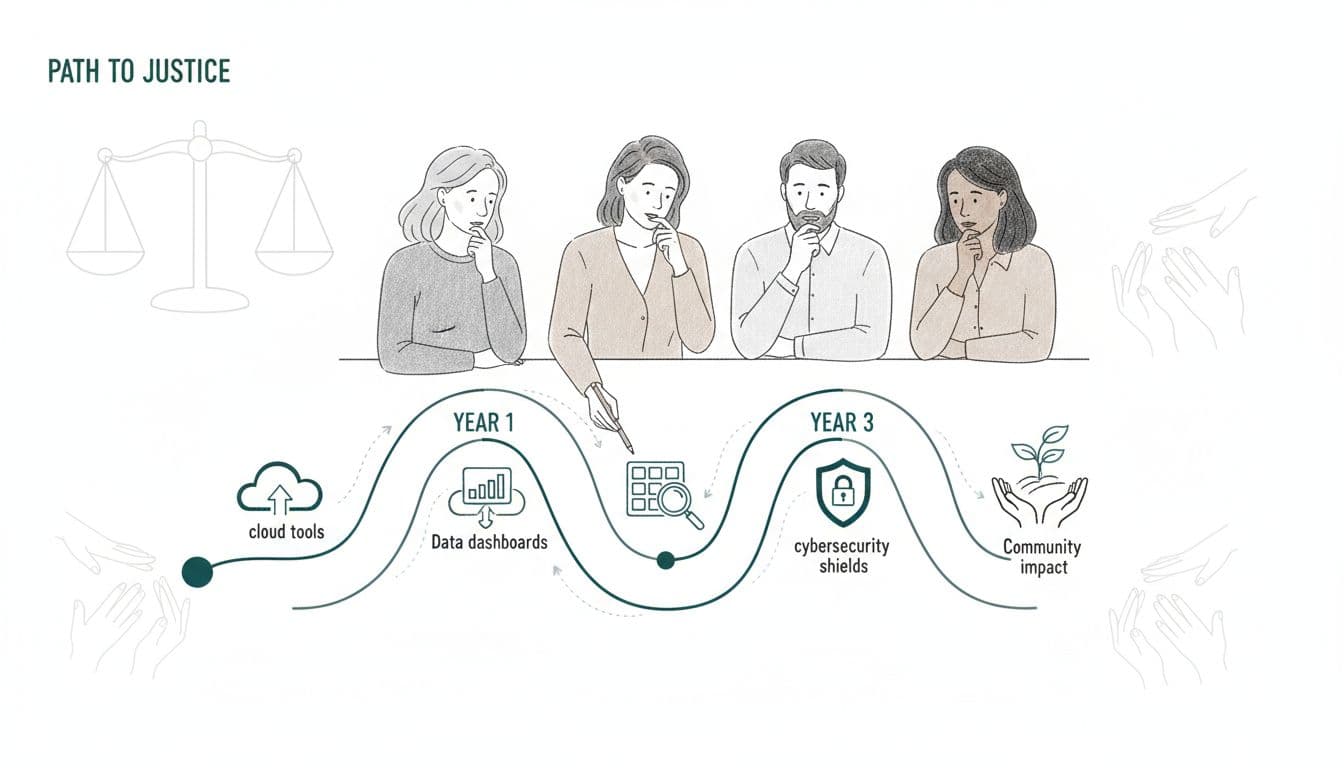
Justice-focused leaders aligning around a shared 3-year technology roadmap. Image created with AI.
Most justice organizations grew fast on top of fragile systems. Intake forms in one tool. Training data in another. Grants tracked in spreadsheets that only one person really understands. Every new project adds another patch.
If this sounds familiar, you are not alone. These are the same challenges facing legal nonprofits’ technology that show up again and again in our work at CTO Input: scattered data, reporting fire drills, and constant worry about privacy and security. You can see those patterns described in more detail in Technology Challenges for Legal Nonprofits.
The risk is not just inconvenience. It is staff burnout, lost opportunities, and quiet exposure for people who are detained, displaced, or criminalized.
A nonprofit technology roadmap gives you a structured way to answer three simple questions:
- What do we need our systems to do for the mission?
- What is broken or risky right now?
- In what order will we fix things so staff and clients feel the change?
If you want a broader primer, the Nonprofit Learning Lab has a helpful overview of what a technology roadmap for nonprofits looks like. The rest of this article focuses on what that looks like for justice work across three years.
Year 1: Stabilize, secure, and see the whole system
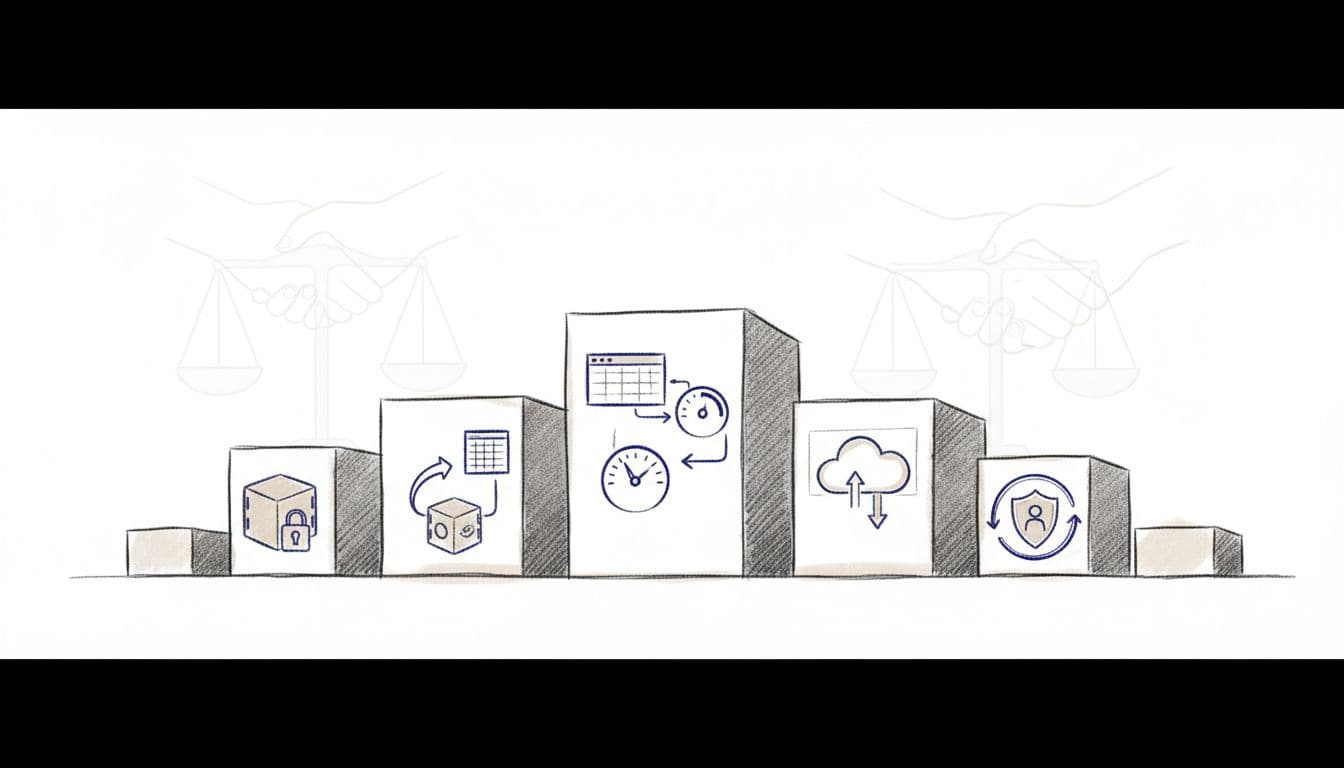
Laying a secure, organized technology foundation for a justice nonprofit. Image created with AI.
Year 1 is about getting out of crisis mode. The goal is not perfection. The goal is a stable floor everyone can stand on.
Core moves usually include:
- Inventory and map: List systems, files, and unofficial spreadsheets. Note who owns what and where sensitive information lives.
- Fix the worst risks: Lock down access around high-risk data, turn on basic security features, and clean up obvious sharing problems.
- Calm reporting: Standardize a few key metrics, tidy the underlying fields, and create simple exports or starter dashboards staff can use.
- Name governance: Decide who signs off on new tools, what “good enough” looks like for security, and how often you will revisit the plan.
The Hartford Foundation’s Nonprofit Support Program offers a practical introduction to strategic technology planning that aligns well with this phase.
By the end of Year 1, you should have a living nonprofit technology roadmap in plain language, with 10 to 20 concrete actions grouped into near term, next, and later. Staff should feel a bit more breathing room, not more pressure.
Year 2: Connect systems and give staff their time back
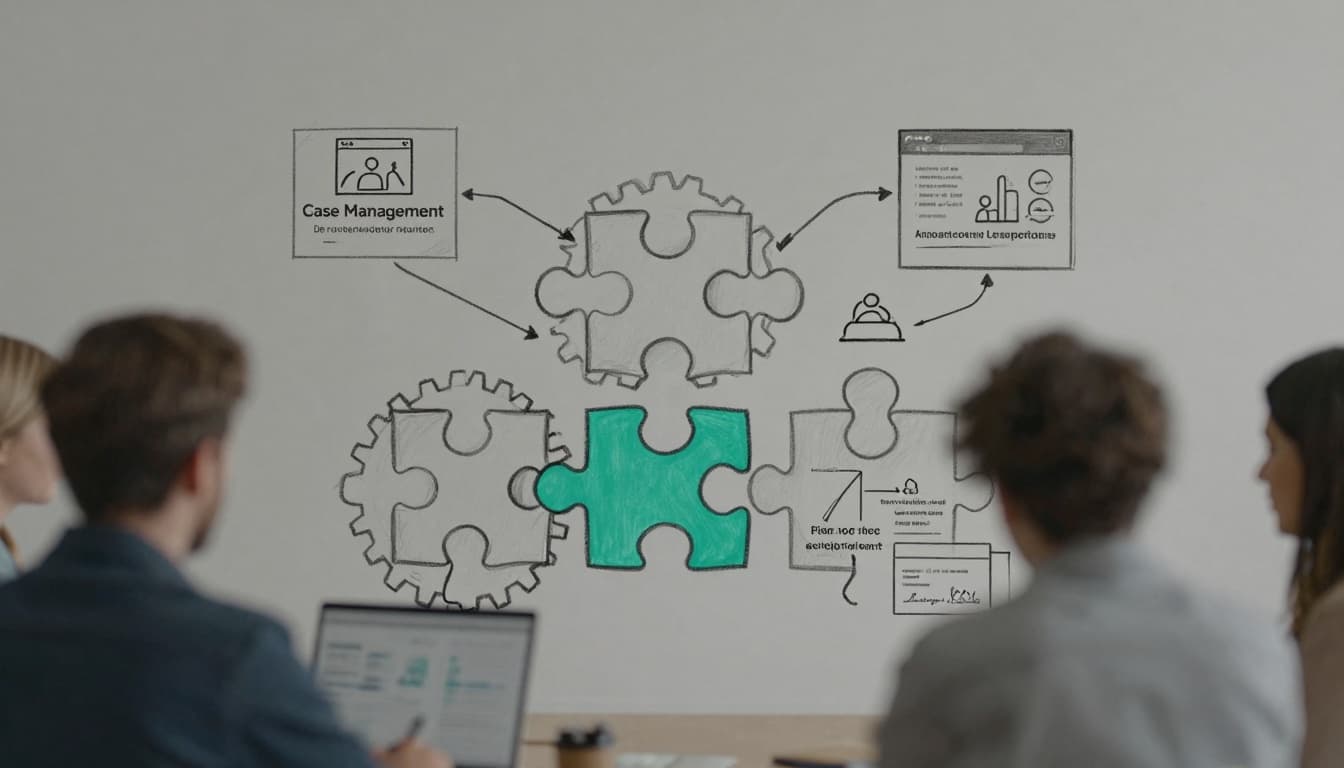
Integrated systems supporting case work, collaboration, and reporting. Image created with AI.
Once the floor is stable, the next step is to connect what you already have and cut down on manual work.
Year 2 often focuses on:
- Connecting case systems to CRMs and grant data so you enter information once and use it many times.
- Automating repeat reporting steps, like scheduled exports or basic dashboards that feed board and funder reports.
- Improving staff experience with clearer workflows for intake, referrals, training registration, and follow-up.
- Reducing tool sprawl, retiring low-value platforms and focusing on a smaller, more coherent stack.
For some teams, this is also a good time to run a short planning sprint using a resource like the Micro Strategic Plan Template for Nonprofits. It helps you pick one or two focused changes, rather than trying to fix everything at once.
If you want outside support with this sort of work, CTO Input’s legal nonprofit technology services overview shows common project shapes for reporting, data cleanup, and security.
By the end of Year 2, your staff should be spending less time stitching spreadsheets together and more time supporting advocates and partners.
Year 3: Prove impact and support growth safely
Year 3 is about building confidence. You now have cleaner data, fewer tools, and some early wins. Boards and funders start asking, “What can we see now that we could not see before?”
This is a good moment to:
- Refine dashboards that show outcomes by region, population, or partner, not just raw activity counts.
- Align network or coalition standards, so grantees and members report in ways that roll up cleanly.
- Deepen security and privacy practices with training, better incident response, and regular checks on high-risk systems.
- Plan for growth, so new programs or sites plug into existing patterns rather than inventing their own.
Nonprofit Hub describes this forward-looking posture in its piece on building a resilient nonprofit technology roadmap in uncertain times. The key is to treat technology as quiet infrastructure for justice work, not a side project.
By the end of Year 3, you should be able to tell a simple story: here is how our systems support people, here is how we manage risk, and here is what we will improve next.
Keeping your nonprofit technology roadmap realistic
A roadmap only works if people trust it. A few habits help with that:
- Keep the roadmap to a few pages, with clear owners and timeframes.
- Revisit it at least twice a year and adjust based on staff feedback.
- Tie each major item to a concrete mission or risk outcome, not just a tool.
When you want to see how this looks in practice, it can help to review case studies of legal nonprofit tech improvements from peer organizations.
FAQs
How detailed should our nonprofit technology roadmap be?
Detailed enough that someone could run a meeting from it, but not so detailed that it becomes a project plan. Think themes, key projects, and rough timing, with room to adapt.
Who should own the roadmap inside our organization?
Ideally a senior leader such as a COO, deputy director, or operations lead, paired with a technology or data lead. If you do not have in-house leadership in that space, a fractional CTO or advisor can help hold that role while you build internal capacity.
How do we pay for this work?
Many organizations use a mix of general operating funds, capacity-building grants, and project-specific support. A clear roadmap often makes it easier to write technology into proposals in a way funders understand.
What if we already picked tools that are not a great fit?
You do not need to throw everything out. Year 1 can include a simple review of what you have, what is working, and what needs to change. Sometimes a better setup or lighter scope is enough. Other times, you plan a careful transition over several budget cycles.
How CTO Input can help you build this roadmap
You do not need another vendor pushing platforms at you. You need a calm, justice-literate partner who starts with your mission, listens to how work really happens, and then helps you design a nonprofit technology roadmap you can stand behind.
CTO Input’s approach to justice tech roadmaps follows the same pattern described here: listen first, map reality without blame, then design a staged plan with quick wins in year one and deeper change over three years. Our client results across legal nonprofits and networks show what that can look like in practice, from freeing up mission dollars to calming audit risk.
If you are ready to stop carrying technology questions alone, you can schedule a strategy call with a senior technology leader. We will talk through your top system headaches, what is at stake for the people you serve, and what a realistic 3-year path could look like.
You can also explore more context and guidance on the main site at ctoinput.com and on the CTO Input blog at blog.ctoinput.com.
A roadmap your board can stand behind
A strong nonprofit technology roadmap is not about chasing trends. It is about quiet reliability, safer handling of sensitive stories, and staff who spend more time supporting advocates than fixing spreadsheets.
If you can look at a 3-year plan and say, “This matches our mission, our risk, and our capacity,” then you have something your leadership, funders, and communities can trust. The next move is simple: put your top three system problems on the table and start turning them into a real, sequenced plan.