
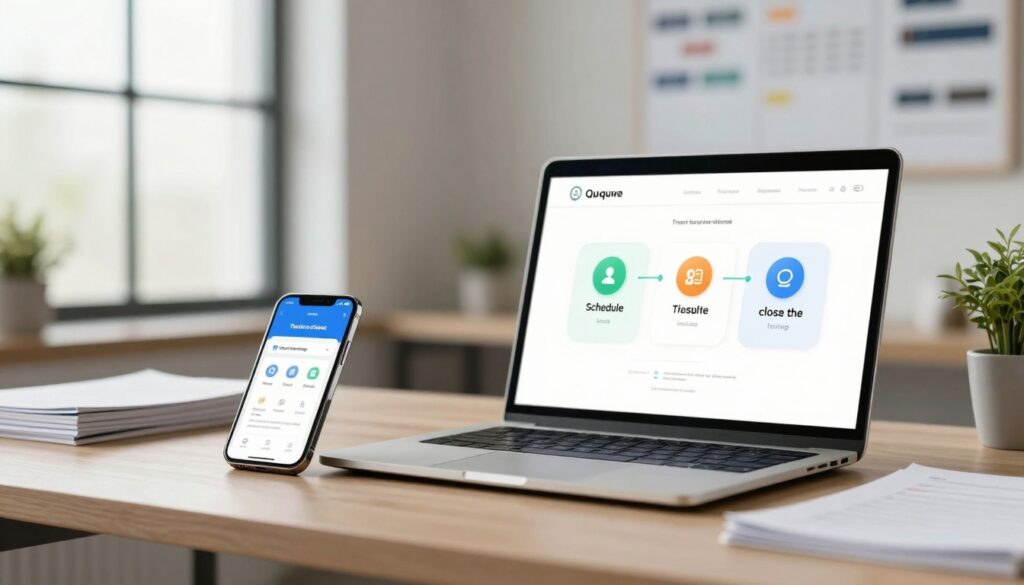
At 4:47 p.m., the voicemail light is still blinking. Someone left a message about an eviction notice. Another caller says they missed court paperwork because they “couldn’t get through.” A staff member has a sticky note with a number they meant to call back, but it’s now buried under intake forms.
This is a justice experience your team knows well. The problem isn’t effort. It’s that voicemail is an inbox with no subject lines, no owner, and no clock everyone agrees to follow. A simple callback workflow can turn that chaos into a predictable service promise in two weeks, without buying a new platform.
Key takeaways
- A callback backlog is a service delivery chokepoint, not a phone problem.
- A 3-step callback workflow (triage, schedule, close the loop) reduces rework and lowers risk.
- Decision rights matter: one owner sets rules, the team follows one queue.
- Measure wait time and closure rate weekly, adjust fast when numbers don’t move.
Why voicemail backlogs create harm (and staff burnout) faster than you think
When voicemails pile up, people call again. They repeat their story. Staff hunt for old messages. Referrals get lost in handoffs. Court deadlines don’t wait for your queue to clear. For communities already navigating confusing systems, a missed callback isn’t just inconvenience. It can mean a default judgment, a missed filing window, or someone giving up entirely.
Many legal aid and justice organizations now set clearer expectations around call-backs and access lines, including published hours and guidance for callers. Even small signals of reliability help people plan, like the posted call-back instructions on Legal Aid of Nebraska’s “Call for Help” page. Your internal process needs to match what the public sees.
The 3-step callback workflow (simple on purpose)
A working callback workflow has three moves:
- Triage every request into a small set of priority buckets.
- Schedule and route calls using protected time blocks and clear ownership.
- Close the loop with consistent outcomes, notes, and follow-up tasks.
The goal isn’t perfection. It’s a stable rhythm that reduces repeats, reduces missed deadlines, and builds trust for the person waiting.
Step 1: Triage in minutes (and stop treating all voicemails as equal)
Triage is where wait time shrinks, because you stop calling back in the order the phone system captured messages. You call back based on risk and time sensitivity. Set a triage standard your team can apply in under two minutes per message. Keep it tight:
- Urgent time-bound (court date, lockout, protection order, detention, benefit cutoff)
- High-need, not time-bound (housing instability, DV safety planning, wage theft)
- General info or referral (forms, clinic dates, “who do I call?”)
This step is also where you reduce privacy risk. Don’t require staff to copy full voicemail content into shared documents. Record only what you need to act.
If your organization has “workarounds on top of workarounds,” triage collapses first. That’s a signal of bigger system strain, like scattered intake tools and unclear data ownership. This pattern shows up in many common technology challenges for legal nonprofits: too many disconnected places where “the real info” lives, and nobody trusts the queue end to end (https://ctoinput.com/technology-challenges-for-legal-nonprofits).
Decision rights to set now: one named intake owner defines triage rules, what counts as urgent, and what gets escalated. If no one owns this, the team will revert to personal judgment, and the queue will drift back into chaos.
For a strong grounding in process improvement work in legal aid, LSC’s write-up on business process analysis is worth keeping nearby, because it frames intake as a system you can measure and improve, not a heroic act staff must absorb (https://www.lsc.gov/i-am-grantee/model-practices-innovations/business-process-analysis-legal-aid-how-florida-rural-legal-services-partnered-toyota-improve-its).
Step 2: Schedule and route calls like a clinic, not a scramble
A callback system fails when call-backs are treated as “extra” work. They have to be scheduled work. Set two daily call-back blocks (even 45 minutes each), protected on calendars. Route the queue into those blocks with clear rules:
- Who calls which bucket (intake specialist, paralegal, advocate, volunteer)
- What gets a warm handoff (urgent cases, language needs, safety concerns)
- What gets a cold transfer (never, if it drops people back into the maze)
Add one people-centered detail: define “best contact windows” for the caller when possible. Many clients can’t answer at work, can’t take calls on shared phones, or need an interpreter lined up. Courts and administrators are not downstream actors here. If your services depend on local court processes, self-help centers, or clerk requirements, the routing step should include a documented court-specific pathway (forms, filing methods, and deadlines) that staff can apply consistently.
Step 3: Close the loop so the queue doesn’t refill itself
Closing the loop is where organizations win back staff capacity. It prevents the same person from calling three more times and creating three more voicemails.
Every callback attempt ends in one of a few outcomes:
- Reached, completed service or next step set
- Reached, not eligible or not in scope, referral provided
- Not reached, follow-up scheduled (with a defined limit)
- Safety concern, escalated per policy
Use the same outcomes across the team. That turns “phone work” into data you can learn from.
A practical example of callback work in a legal aid setting is Community Legal Aid SoCal’s description of how call-backs connect people coming from online intake and referrals (https://www.communitylegalsocal.org/connecting-and-helping-clients-through-call-backs/). The key theme is consistent: call-backs are a delivery model, not a courtesy.
Your 14-day rollout plan (and what you stop doing to make room)
Two weeks is enough time to see movement, if you keep scope small.
Days 1 to 3: map reality
- Count the backlog and sample 30 messages.
- Agree on triage buckets and escalation rules.
- Assign a single queue owner and a backup.
Days 4 to 7: run a pilot
- Start with one program line or one region.
- Protect two call-back blocks per day.
- Track outcomes in a shared log.
Days 8 to 14: tighten and expand
- Fix the top two failure points (usually unclear urgency rules and missed call blocks).
- Expand to the next line or team, using the same rules.
Stop doing this (to create capacity): stop letting individuals keep “their own” callback lists in notebooks, sticky notes, or personal inboxes. It feels faster, but it makes the system un-auditable and fragile. One queue, one set of rules, one shared view.
What to measure weekly (so you know if wait time is really falling)
You don’t need a complex dashboard. You need a few numbers you trust.
| Metric | What it tells you | Simple target for 14 days |
|---|---|---|
| Median time to first callback | How long people wait | Down by 25 percent |
| Contact rate | Are you reaching people | Up by 10 percent |
| Closure rate | Is work finishing or recycling | Up by 15 percent |
| Urgent cases met SLA | Are time-bound needs protected | 90 percent or higher |
If the numbers don’t move, don’t blame staff. Adjust the rules, staffing blocks, and escalation paths. Then measure again.
For broader context on how intake is treated as a core operational function across the field, LSC’s intake resources can help frame your internal conversation with leadership and boards (https://www.lsc.gov/taxonomy/term/115).
FAQs
How many triage buckets should we use?
Three is usually enough. If staff can’t apply it fast, it won’t stick.
What if we don’t have enough staff to meet call-back times?
Start by protecting urgent calls and publishing realistic expectations. Reliability beats vague promises.
Should we text instead of calling?
Sometimes, but treat texting as a policy decision (consent, records, device controls), not an informal shortcut.
How do we handle language access?
Tag language needs at triage, schedule interpreter-supported call blocks, and document the plan so it isn’t ad hoc.
How CTO Input helps you make this real (without turning it into a “project”)
Callback backlogs usually sit on top of deeper issues: unclear decision rights, scattered intake data, and fragile handoffs that create repeats. CTO Input helps justice-focused organizations turn those chokepoints into a measured operating model.
The work is calm and practical: map how intake really happens, set light governance, put privacy guardrails in place, and track outcomes weekly. If you want a longer view after the 14-day fix, the technology roadmap for legal nonprofits shows how to sequence improvements without burning out staff (https://ctoinput.com/technology-roadmap-for-legal-nonprofits).
If your voicemail backlog is the symptom, here’s the next step: pick one line, one team, and one service promise you can keep. Then commit to measuring it for two weeks.
Learn more about CTO Input at https://www.ctoinput.com and explore additional field memos at https://blog.ctoinput.com. When you’re ready to assign decision rights and get a plan you can defend to staff and funders, schedule a call: https://ctoinput.com/schedule-a-call.
One honest question to take to your next leadership meeting: Which single intake chokepoint, if fixed this quarter, would earn back the most trust for the people you serve?