
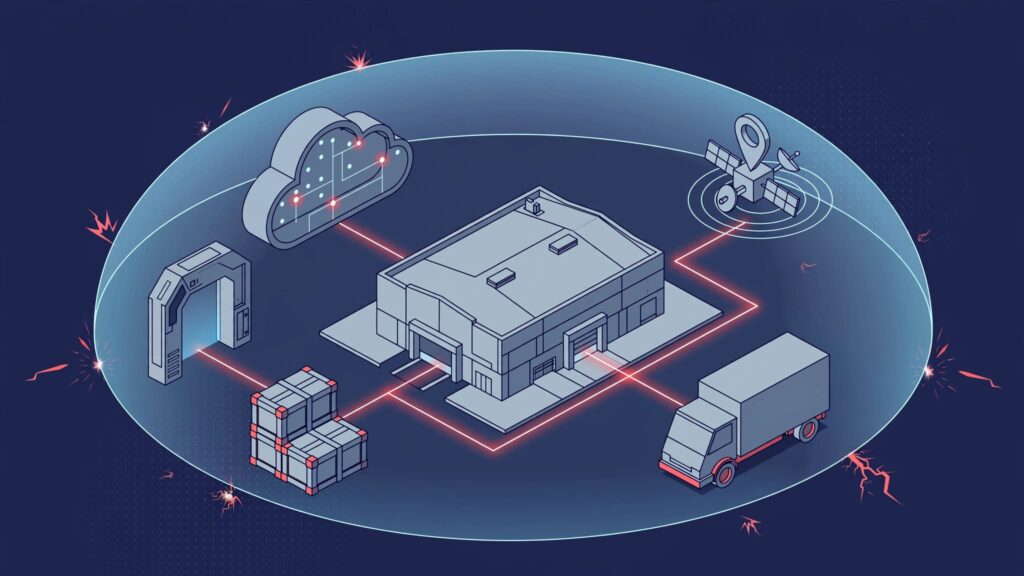
A delayed shipment is rarely caused by one broken system. In logistics, a warehouse platform, fleet application, supplier portal, or email account can affect the entire customer promise. That makes logistics cybersecurity an operational responsibility, not an IT side project.
The goal isn’t to buy more security tools. It’s to understand which systems keep products moving, who controls them, where failure could spread, and how quickly the business can recover. Mapping these factors creates the foundation for risk mitigation and business continuity. That starts with a clear operating picture.
Key Takeaways
- Strong logistics cybersecurity protects fulfillment, transportation, inventory, customer service, and revenue.
- Your attack surface includes warehouse systems, fleet telematics, RFID, GPS, cloud platforms, employees, suppliers, and subcontractors.
- Ransomware attacks, phishing, business email compromise, and supplier compromise can all create operational downtime. Security awareness supports technical controls, but doesn’t replace them.
- Network segmentation, multi-factor authentication, protected backups, monitoring, and tested recovery strengthen risk mitigation by reducing an incident’s operational impact.
- Supply chain security requires third-party risk management through vendor offboarding, not just when a contract is signed.
- NIST, ISO/IEC 27001, and CISA guidance can provide structure, but leaders still need ownership, funding, and clear decisions.
Why Logistics Cybersecurity Is an Operational Risk
One connected workflow, many shared dependencies
A logistics business may depend on warehouse management systems for receiving and picking, transportation management systems for scheduling, GPS for real-time tracking, and customer portals for delivery updates.
These platforms often share identities, APIs, data, vendors, and operational technology. A disruption in one place can create delays somewhere else. If the warehouse cannot process orders, the fleet may have nothing to collect. If the fleet platform fails, customer service may lose delivery visibility. If a supplier portal is compromised, payment or shipment instructions may change.
CISA’s Transportation Systems Sector guidance applies the NIST Cybersecurity Framework to transportation operators. The principle is useful for any distribution business: cyber risk must be connected to the physical services customers depend on.
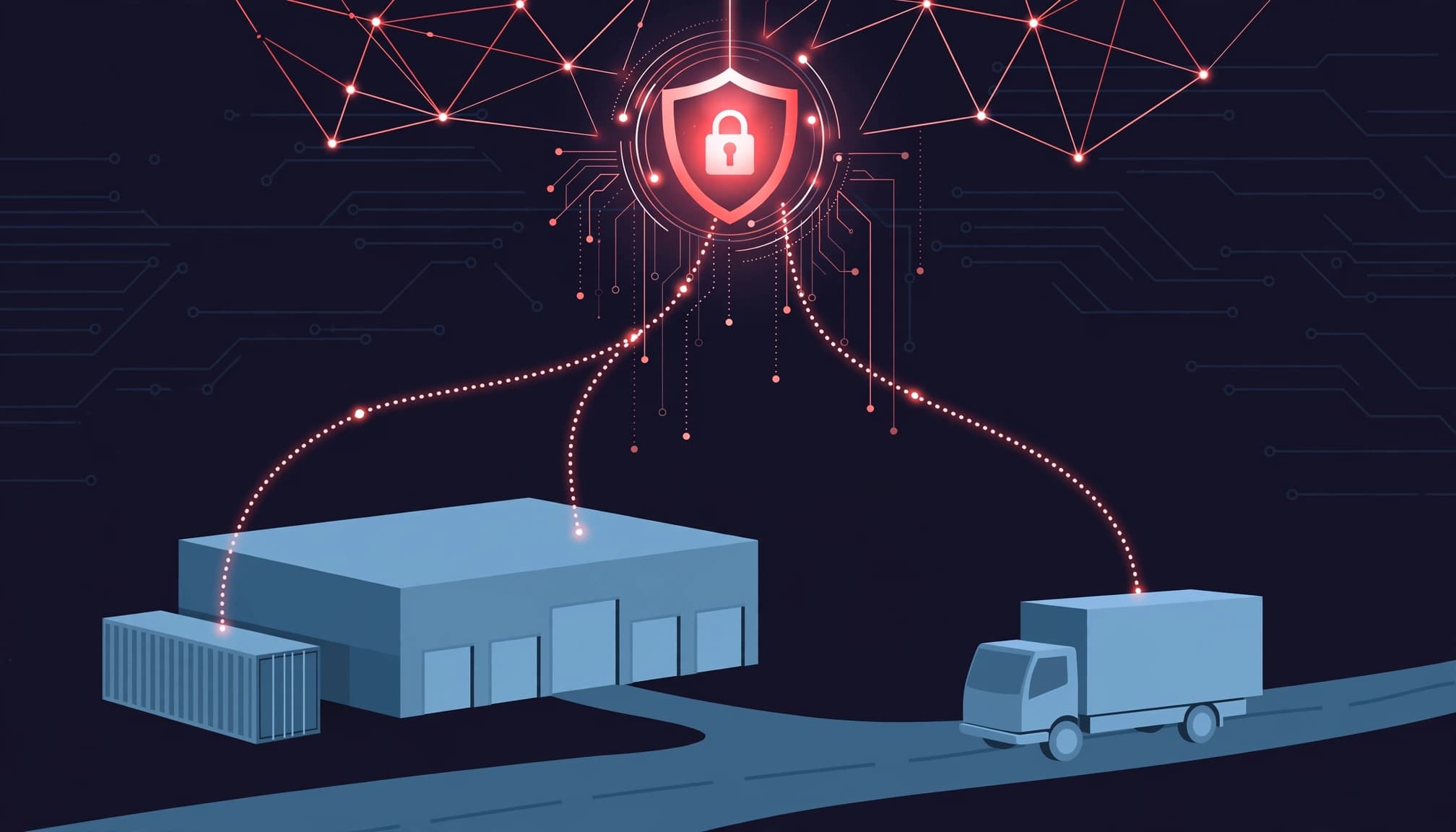
Downtime moves quickly into the business
Cyber attacks can interrupt dispatch, loading, invoicing, proof of delivery, and customer visibility. They can also force staff back to manual work.
That is why a cybersecurity risk assessment should show business impact, not only technical findings. Ask which processes must continue, which systems support them, and how long the business can operate without each one. Leaders should rank processes by operational impact and recovery priority to guide risk mitigation.
Threat intelligence can strengthen security operations and threat detection. Together, these capabilities help teams identify abnormal activity across warehouse platforms, carrier systems, APIs, and customer portals before an outage spreads.
This is also where a technology leadership gap becomes expensive. An IT team may keep systems running while no one owns the larger decisions about recovery priorities, vendor dependence, customer communication, or acceptable downtime.
The Attack Surface Includes More Than Your Network
Legacy systems and modern IoT devices
Legacy systems often remain in place because they support specialized equipment or difficult-to-replace workflows. They may lack current security updates, modern authentication, or useful logging. Replacing them may not be practical immediately, but ignoring them creates technical debt and recovery risk.
Modern IoT devices create a different problem. Scanners, sensors, cameras, telematics units, RFID readers, and connected warehouse equipment expand the number of devices requiring credentials, patching, monitoring, and clear ownership. These assets are part of operational technology and need recovery documentation.
Maintain a current systems inventory. Record the business process, owner, connection points, access level, vendor, and recovery requirement for each critical system. Include vulnerability management details, such as unsupported firmware, known weaknesses, patch status, and compensating controls.
Suppliers create shared exposure
Your attack surface includes providers that handle data, host systems, manage devices, process payments, or connect to internal networks. Their subcontractors and fourth-party dependencies create third-party risk you may never review directly.
NIST’s Cybersecurity Supply Chain Risk Management guidance provides a useful structure for identifying, assessing, and managing this exposure. In practice, rank vendors by operational impact and available alternatives to support risk mitigation.
A critical logistics vendor should have clear security requirements, named contacts, access limits, breach notification duties, recovery commitments, and a vendor incident response plan. Review access throughout the relationship, using threat intelligence to monitor for supplier compromise and abnormal access.
A policy in a shared folder is not proof of control. You need evidence that accounts are removed, credentials are changed, data is returned or deleted, and integrations are disabled.
For a board-level view, third-party technology risk should include fourth-party relationships and the business consequences of supplier failure.
The Main Threat Paths to Control
Ransomware and system unavailability
Ransomware attacks receive attention because they can stop operations. Entry points include stolen credentials, exposed remote access, unpatched infrastructure, phishing, and supplier compromise.
Protection starts with identity controls. Use multi-factor authentication for email, remote access, administrator accounts, cloud platforms, and vendor connections. Separate privileged accounts from ordinary user accounts. Remove access quickly when roles change or employment ends.
Network segmentation also matters. CISA explains that segmentation can limit ransomware spread by controlling traffic between subnetworks. Warehouse equipment, office systems, guest networks, fleet tools, and backup systems should not all sit in one unrestricted environment.
Threat intelligence and threat detection help prioritize exposed remote access, unusual sign-ins, vendor activity, and lateral movement.
The #StopRansomware Guide provides prevention and response guidance that can support your ransomware readiness work.
Phishing and business email compromise
A logistics company may process large invoices, urgent shipment changes, customs documents, and payment instructions. That makes business email compromise especially dangerous.
Use technical controls such as strong authentication, email filtering, domain protection, and alerts for unusual sign-ins. Pair them with operating rules. Payment changes, bank account changes, and urgent delivery instructions should require independent verification through a trusted channel.
Security awareness supports these controls, but training alone isn’t a control. Build approval steps that make a single deceptive message from phishing attacks less powerful.
Software and supplier compromise
A supplier can introduce risk through a compromised application, stolen credentials, insecure integration, or weak remote access. The issue isn’t whether every vendor can promise perfect security. The issue is whether you understand the relationship and have options when it fails.
Managing third-party risk requires due diligence covering security controls, data handling, subcontractors, incident notification, recovery capability, and access. Access limits, contract requirements, and offboarding also support risk mitigation.
Contracts should support investigation and recovery, not only service availability. A practical third-party vendor risk management process should continue after onboarding and include periodic review, exception tracking, and vendor offboarding.
A Practical Implementation Plan
1. Map the processes that keep product moving
Start with business services, not tools. Document receiving, storage, picking, dispatch, transportation, customer notification, invoicing, and returns.
For each service, identify:
- The systems and data it depends on.
- The internal owner and external vendors involved.
- Customer-facing capabilities, such as real-time tracking.
- The maximum tolerable downtime.
- The manual workaround, if one exists.
- The order in which systems must be restored.
This becomes the foundation for business continuity and disaster recovery planning. It also helps leadership prioritize risk mitigation and make better technology spending decisions.
2. Secure identities, devices, and network paths
Apply access controls consistently. Use multi-factor authentication, least-privilege access, separate administrator accounts, secure remote access, and timely removal of inactive accounts.
Segment networks according to business purpose and risk. Don’t allow warehouse devices, corporate laptops, supplier connections, and backups to communicate freely without a reason.
For connected equipment, record the device owner, firmware status, support period, credentials, network location, and replacement plan. Include vulnerability management in routine device reviews. Unsupported equipment and legacy systems may require isolation, compensating controls, and a defined replacement plan.
3. Make recovery a tested capability
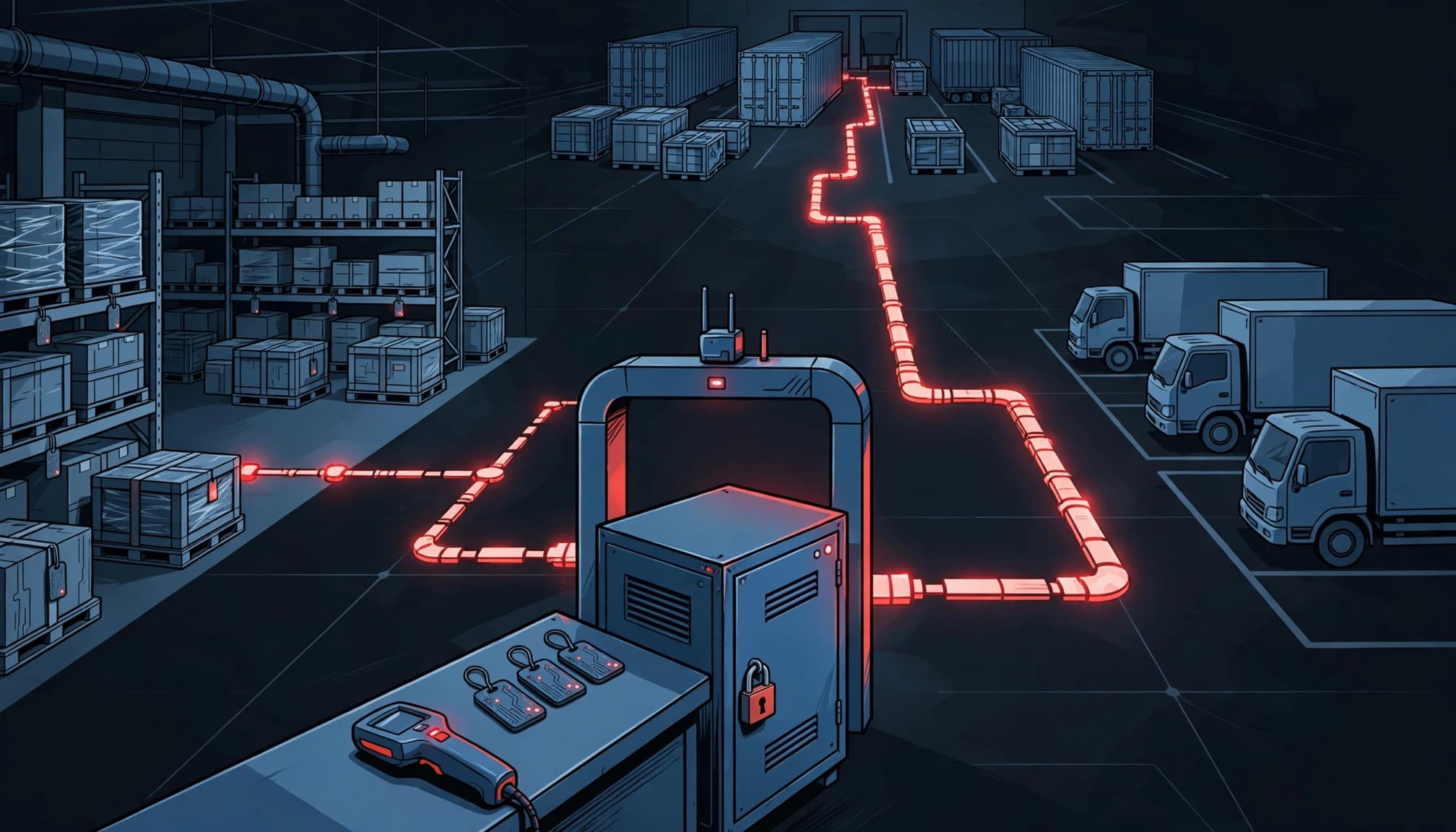
Automated backups are useful only when you can restore from them. Keep protected copies separate from production administration. Test representative restores for critical operational data, configurations, customer information, and financial records, including systems needed after data breaches.
Incident response readiness should name the CEO or COO, technology lead, legal counsel, communications owner, insurer, and vendor contacts. Coordinate security operations with threat detection and maintain an executive incident response checklist covering escalation, customer communication, evidence preservation, and approval rights.
Run tabletop exercises for a compromised email account, ransomware attacks in a warehouse environment, and loss of a critical supplier. These exercises strengthen cyber resilience by testing restores, manual workarounds, escalation, and recovery decisions. After each exercise, record unclear decisions and assign owners to improve security awareness, employee reporting, and escalation behaviors.
Aligning Security With NIST, ISO, and Business Priorities
Frameworks help organize work. They do not create accountability.
The NIST Cybersecurity Framework 2.0 organizes cybersecurity around govern, identify, protect, detect, respond, and recover. Its Detect function can incorporate threat intelligence from external indicators and industry sources. That structure works well for logistics because it connects daily controls to leadership responsibilities.
NIST SP 1305, published in October 2024, gives organizations a practical way to approach cybersecurity supply chain risk management. Use it to map connected providers and dependencies. Then assign supply chain security ownership across procurement, technology, operations, legal, and executive teams.
ISO/IEC 27001:2022 defines requirements for an information security management system. Framework assessments should include legacy systems in warehouses, manufacturing sites, carrier networks, and facilities. Certification can support governance and customer assurance. It doesn’t prove cyber resilience or guarantee that your warehouse can recover from an outage.
Your framework should also connect to data governance. Define who owns shipment data, customer data, employee information, credentials, and operational records. Set standards for data quality, privacy, retention, and access.
This is technology governance for CEOs and boards in practical form. The board doesn’t need every alert. It needs to know which systems matter, what could interrupt operations, who owns the exposure, and what decision is required.
Governance, Leadership, and Recovery
Close the technology leadership gap
A growing logistics company may have internal IT staff, an MSP, security products, and several capable vendors. It may still lack executive technology leadership.
A fractional CTO, interim CTO, outsourced CTO, virtual CTO, or part-time CTO can provide different forms of leadership during growth or transition. A fractional CIO may focus on enterprise technology and operating models. A fractional CISO, virtual CISO, or interim CISO may focus on cyber risk, controls, and response readiness.
The right choice depends on the problem. You may need fractional CTO services to create a technology roadmap, interim CTO services during a leadership change, or security leadership before a cyber insurance renewal.
The work should produce clearer ownership, a 12-month technology roadmap, a decision rights map, and reporting leaders can trust. It should also address tool sprawl, vendor dependence, technical debt management, and technology spend optimization.
Give the board a usable risk view
Board cybersecurity reporting should stay short and connected to decisions. It should include meaningful security operations trends, including monitoring, alerting, and response, alongside business impact. A board-ready risk summary should show:
- The critical systems and business services at risk.
- The top scenarios, including ransomware, identity compromise, and vendor failure.
- Current exposure and overdue controls.
- Recovery capability and recent test results.
- Evidence that security awareness is improving through employee reporting, privileged-access behavior, and role-specific training completion.
- The accountable executive and next deadline.
- The funding or decision needed from the board.
Your cyber risk appetite belongs in this conversation. If a supplier failure could exceed the outage or data loss the business is willing to accept, leadership needs a mitigation plan, alternate provider, stronger contract, or deliberate decision to carry the risk.
For a practical model, see this guide to board cyber risk reporting. If technology decisions feel scattered or too dependent on the wrong people, an Executive Technology Clarity Check can help identify what needs ownership first.
Frequently Asked Questions
Why does logistics face unique cybersecurity risks?
Logistics combines physical operations with highly connected digital systems. A cyber incident can affect inventory, dispatch, routing, customer communication, billing, and supplier coordination at the same time.
What cyber attacks threaten logistics companies?
Ransomware, phishing, credential compromise, business email compromise, and supplier compromise are common threat paths. The right priority depends on your systems, vendors, access model, and recovery capability.
How should you manage third-party risk?
Rank vendors by operational and data impact. Review access, security controls, subcontractors, incident notification, recovery commitments, and offboarding. Reassess critical providers instead of treating due diligence as a one-time questionnaire.
Which frameworks apply?
NIST CSF 2.0, NIST supply chain risk guidance, ISO/IEC 27001, and CISA transportation and ransomware guidance are useful references. The EU Cyber Resilience Act entered into force on December 10, 2024, with its main obligations applying from December 11, 2027. Its relevance depends on the connected products and supplier relationships involved, so obtain legal advice for your situation.
Conclusion
Protecting distribution and logistics requires more than securing office systems. You need to understand the services that move product, the vendors that support them, the devices that connect them, and the decisions required when something fails.
Start with the systems inventory, critical process map, vendor review, and recovery test. Then give leadership a clear view of exposure, ownership, and next steps. That is how cybersecurity for distribution and logistics becomes part of business control, not another technical program operating in the background.